

Staffordshire Pottery Pitcher
These Staffordshire pottery pitchers bring direct, earthy character to a room through centuries of British earthenware design.

Staffordshire Pottery Pitcher
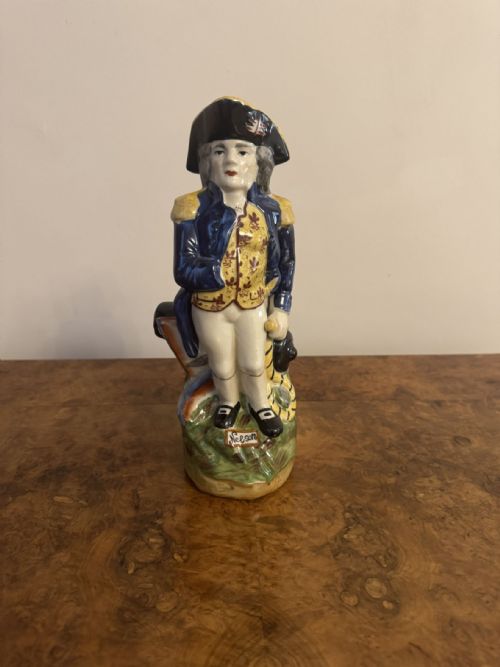
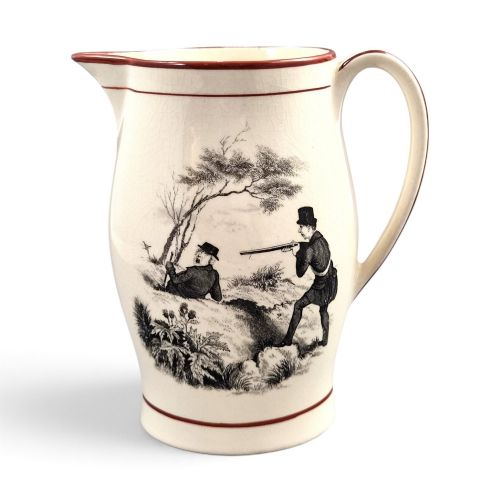
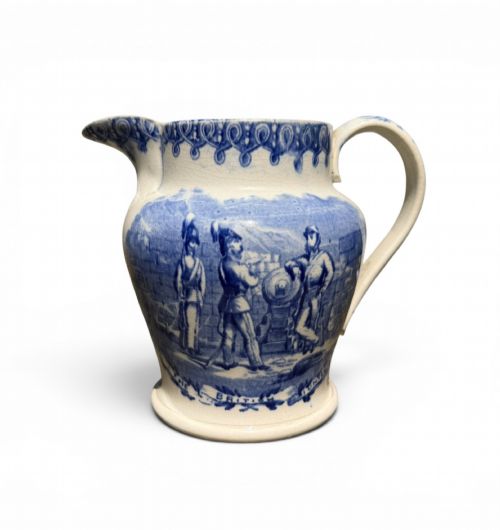
A staffordshire pottery pitcher represents a diverse lineage of British ceramics created for daily service, commemoration, and display. Buyers encounter everything from modest creamware vessels to large nineteenth-century water jugs and characterful toby jugs.
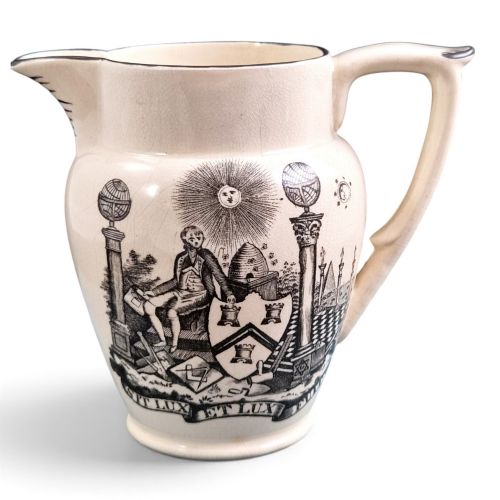
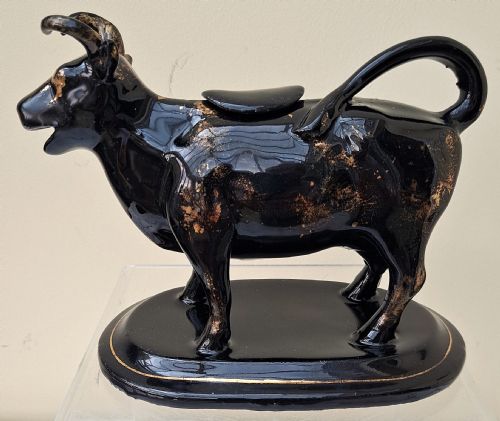
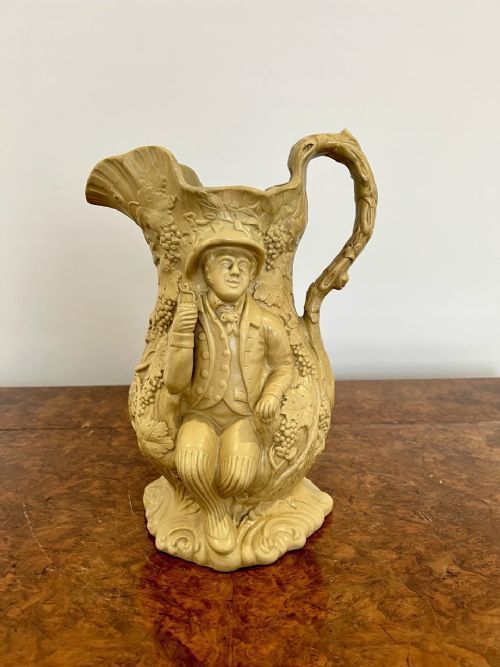
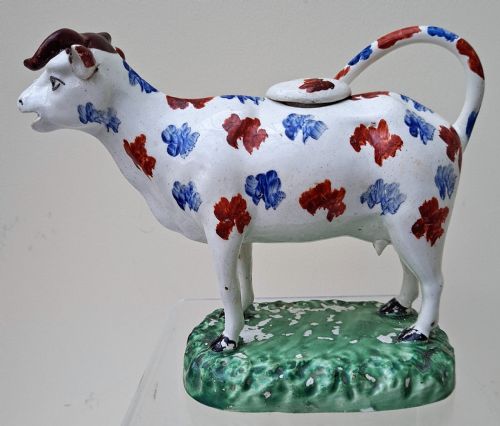
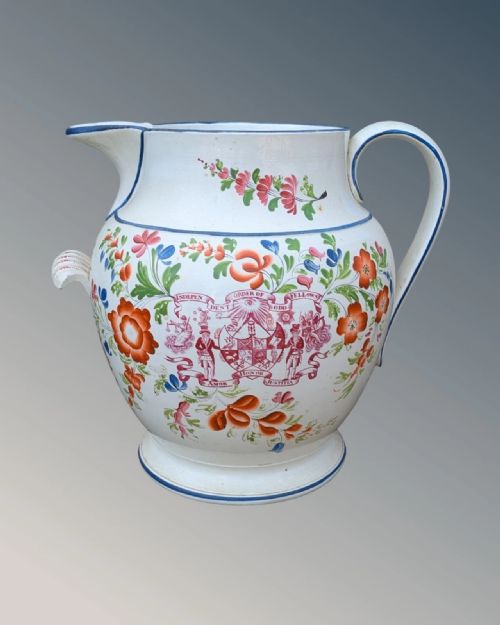
The forms span straightforward milk and water containers alongside specialised pieces like cow creamers, puzzle jugs, and commemorative vessels. Georgian pearlware and nineteenth-century earthenware dominate the selection, often carrying transfer-printed scenes or moulded relief decoration.
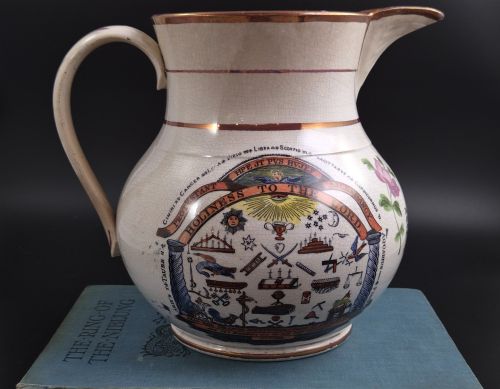
Makers produced these functional objects in the pottery districts of England to serve both domestic tables and local taverns. Surviving examples reflect changing tastes across the eighteenth and nineteenth centuries, moving from simple creamware bodies to vibrant polychrome and copper lustre finishes.
Materials and Manufacture
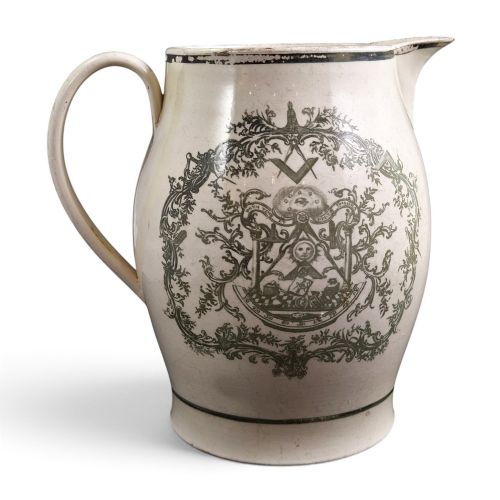
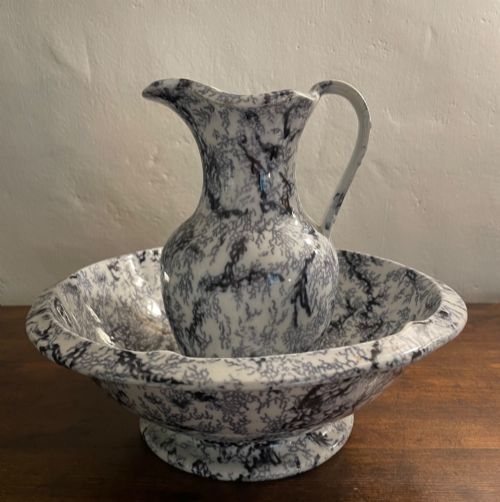
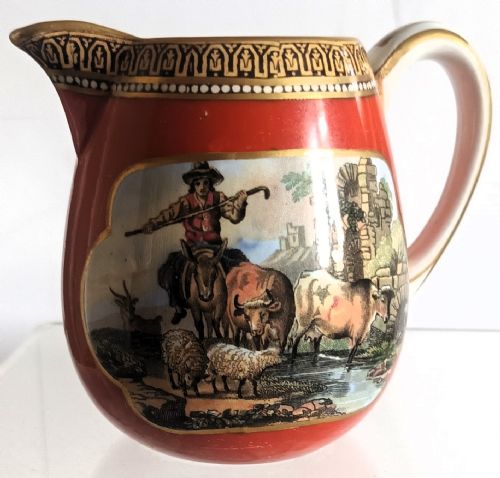
Potters shaped these vessels using earthenware, creamware, pearlware, and ironstone, applying glazes to seal the porous clay bodies. Surface decoration frequently involved black, blue, or purple transfer printing alongside hand-applied enamel colours.
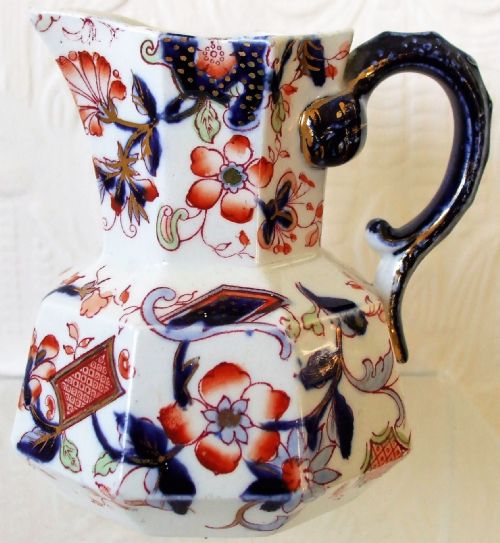
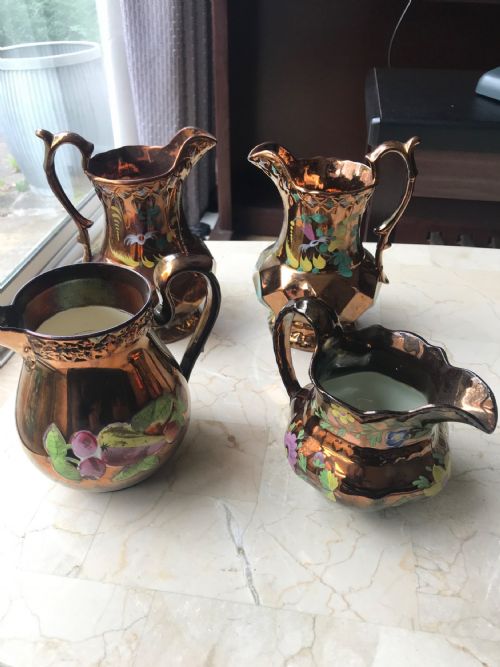
Makers utilised relief moulding techniques to build raised botanical or figural motifs directly into the ceramic body. Lustre finishes, including copper variants, added metallic sheens through specialised firing processes that bonded metallic oxides to the glaze.
Listings feature earthenware, pearlware, and creamware bodies decorated with transfer printing, polychrome enamel, and copper lustre finishes.
Evaluating Quality and Execution
The application of hand-painted polychrome enamels and copper lustre shows the hand of a skilled decorator rather than rushed factory production. Intact glazes and balanced, stable forms distinguish finer examples meant for display from heavily handled utility wares.
Keeling and Co·Jones and Walley·George Jones
The Staffordshire Pottery Pitcher Glossary
- Creamware
- A refined cream-coloured earthenware developed in Staffordshire during the eighteenth century. It replaced heavier salt-glazed stonewares for table service due to its lighter weight and smooth glaze.
- Pearlware
- An improved earthenware body featuring a pale bluish glaze designed to mimic Chinese porcelain. It gained widespread popularity through the late Georgian period.
- Transfer printing
- A decoration technique where an engraved copper plate transfers an ink design onto tissue paper, which is then applied to the ceramic biscuit before glazing. This allowed complex scenes to be reproduced rapidly.
- Toby jug
- A pottery jug modelled in the form of a stout, cheerful man usually holding a mug of beer and a pipe. These characterful pieces date primarily from the late eighteenth century onward.
- Cow creamer
- A hollow ceramic container shaped like a cow, filled through a hole in the back and poured through the mouth. They appear frequently in nineteenth-century Staffordshire and Welsh potteries.
Staffordshire Pottery Pitcher: Frequently Asked Questions
What is a staffordshire pottery pitcher used for?
These vessels originally served practical household functions such as pouring milk, water, or beer at the table and in taverns. Many pieces also served commemorative roles, recording political events, societies, or local figures.
Today, collectors use them primarily for decorative display, grouping graduated sets or character jugs on shelves and mantelpieces. Their varied forms and historic glazes bring historic British texture into modern interiors.
How do I date a staffordshire pottery pitcher?
Dating relies on identifying the underlying ceramic body, such as creamware, pearlware, or later ironstone, alongside the style of decoration. Transfer-printed subjects, palette choices like copper lustre, and moulded relief patterns offer clear chronological clues.
Examining the base, glaze pooling, and any impressed maker marks helps narrow the decade of production. Comparative pieces from the same regional potteries provide reliable benchmarks for age.
Are these pitchers waterproof?
Most of these historic vessels retain their original glazed ceramic interiors and remain capable of holding liquids safely. However, collectors generally avoid regular daily use to protect fragile nineteenth-century earthenware and delicate enamel decorations from wear.
Displaying them dry preserves the glaze and prevents any moisture from interacting with older, porous clay bodies over time. Gentle dusting is usually sufficient for ongoing maintenance.
What makes a toby jug different from a regular pitcher?
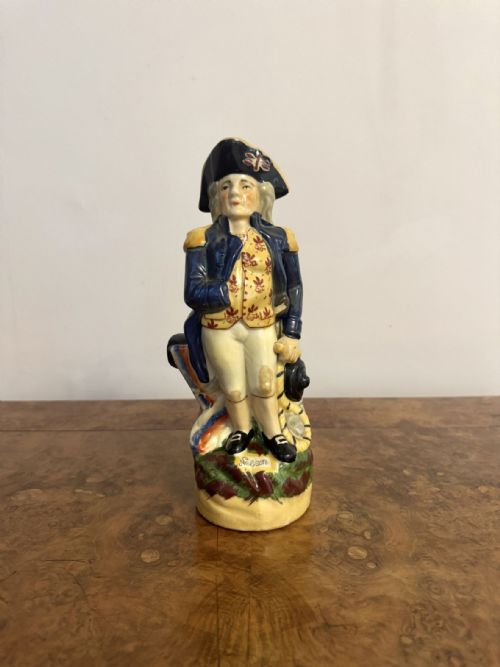
A toby jug specifically takes the sculptural form of a seated human figure, typically a jovial eighteenth or nineteenth-century gentleman in period attire. Standard pitchers feature a symmetrical vessel body with a simple pouring spout and handle.
While both share common Staffordshire earthenware materials, toby jugs function as figural sculpture as much as pouring vessels. They capture distinct social caricatures and popular folk archetypes of the era.