


Vintage Floral Pitcher
A vintage floral pitcher brings botanical charm to any room, offering both practical pouring use and decorative colour through hand-painted or transferred blooms.
Vintage Floral Pitcher
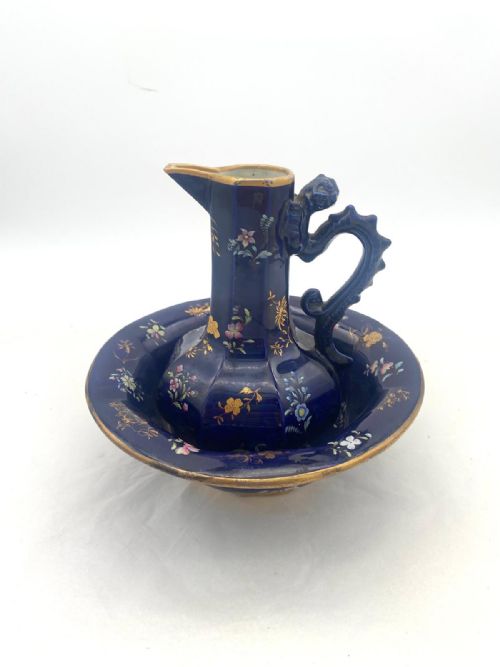
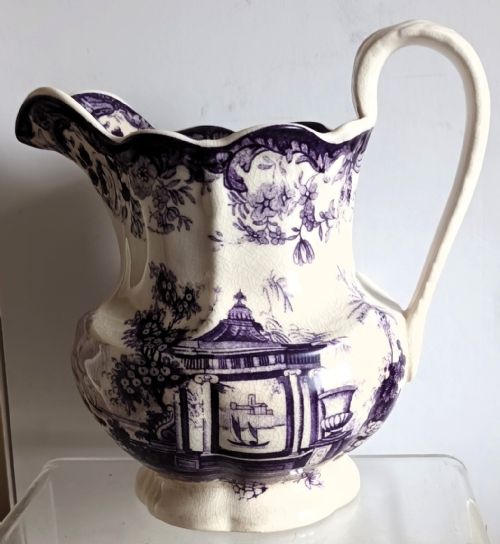
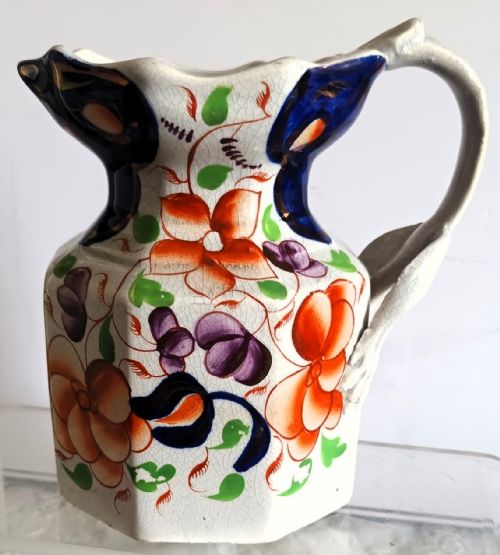
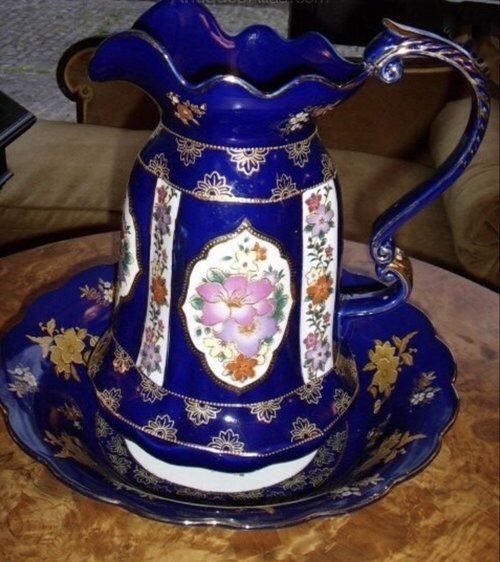
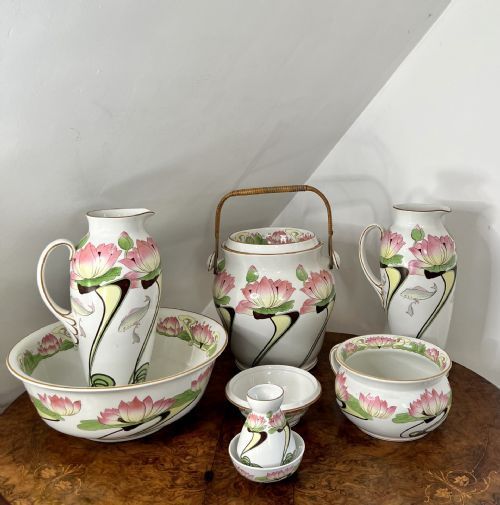
A vintage floral pitcher represents a broad tradition of ceramic, glass and metal vessels designed to hold liquids or simply display botanical motifs. These pieces range from substantial Victorian bathroom set ewers and Gaudy Welsh pottery jugs to delicate Georgian porcelain cream jugs.
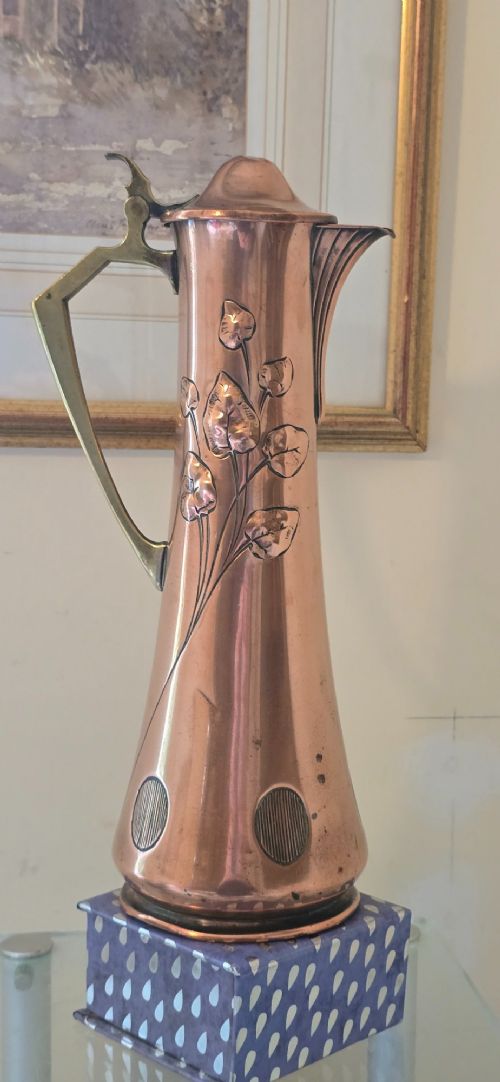
The selections available lean heavily towards nineteenth-century earthenware and porcelain, alongside Edwardian washstand sets and early twentieth-century copper Art Nouveau designs. Buyers encounter everything from transfer-printed Staffordshire wares to hand-painted porcelain featuring roses, grapes and abstract floral patterns.
How they were made
Makers utilised traditional ceramic bodies such as earthenware, ironstone, pearlware and porcelain, often shaping them with moulded reliefs like cabbage leaves or geometric panels. Surface decoration frequently combined transfer printing with hand-applied enamel colours and gold leaf gilding.
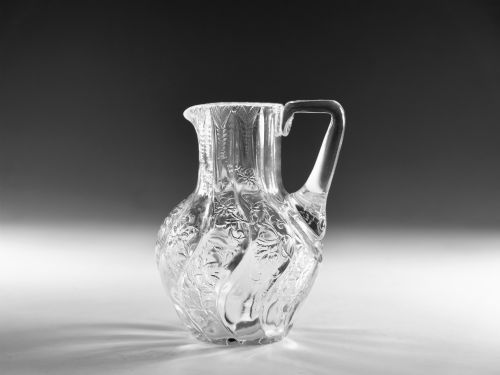
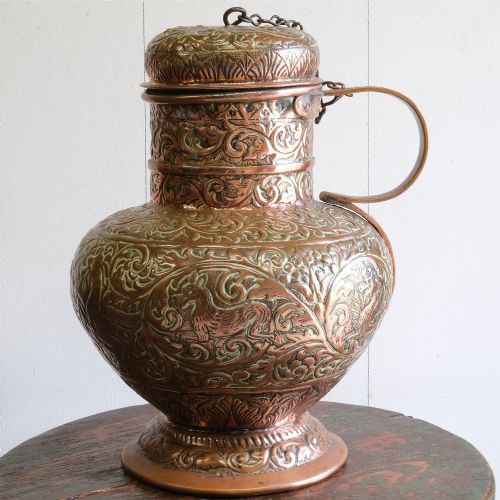
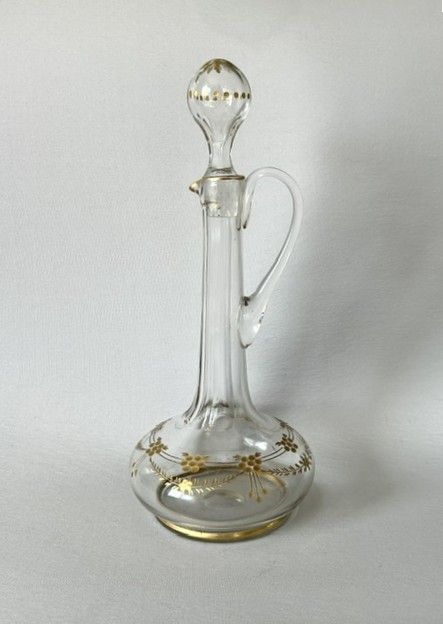
Metal versions rely on copper, brass and silverplate, shaped through hammering and relief work, particularly during the Art Nouveau period. Glass examples combine cut crystal or moulded bodies with applied handles and hand-painted floral enamelling.
Some nineteenth-century makers named their floral tableware patterns after Welsh valleys, leaving us with enduring names like Gower and Harlech.
What varies in quality
The crispness of the moulding and the delicacy of the hand-painted details separate standard utilitarian vessels from finer parlour pieces. Transfer-printed patterns show variation in alignment depth and colour saturation, whilst painted florals reveal the steady hand of the decorator in fine line work and shading.
Material composition also dictates the tier of the piece, moving from heavier utilitarian earthenware up to translucent bone china, clear cut glass and heavy gauge copper with hand-chased relief.
WMF·Stevens and Williams·Masons Ironstone·Joseph Sankey·Doulton Burslem·Mark Jones and Sons·Charlotte Rhead·Caughley Coalport
The Vintage Floral Pitcher Glossary
- Earthenware
- A porous ceramic body fired at lower temperatures, requiring a vitreous glaze to hold liquids. It forms the base of many regional pottery jugs.
- Transfer printing
- A method of applying complex decorative patterns to ceramics by pressing a paper sheet inked from an engraved copper plate onto the Bisque surface. This technique allowed for consistent repeatable floral designs.
- Gaudy Welsh
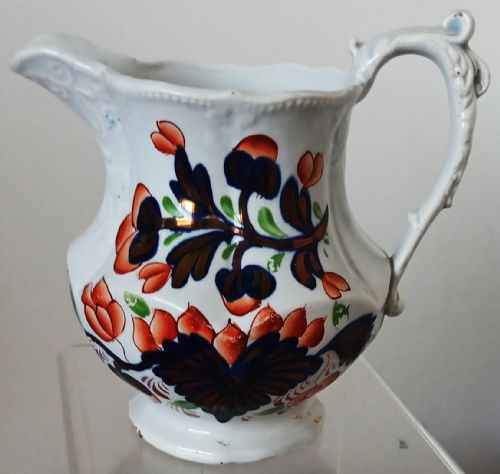
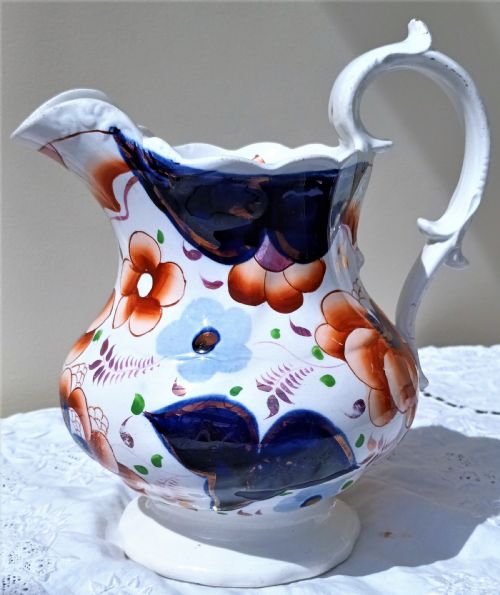
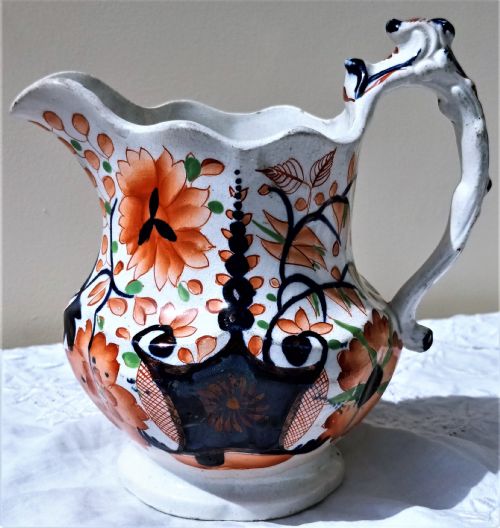
- A style of colourful pottery decorated with cobalt blue, copper lustre, iron red and green over white earthenware. The patterns often feature floral motifs like grape and tulip variations.
- Pearlware
- A refined earthenware developed in the late eighteenth century featuring a bluish glaze that pooled in recesses to mimic Chinese porcelain. It frequently carried botanical moulding.
- Ewer
- A large pitcher with a flared spout and an ornate handle, historically used for water at a washstand or for serving wine at table. They often appear in glass, ceramic and metal.
Vintage Floral Pitcher: Frequently Asked Questions
What were vintage floral pitchers used for?
These vessels served various domestic purposes depending on their scale and material, ranging from serving cream and wine at the table to holding washing water in a bedroom suite. Larger examples functioned as ewers within matching washstand sets alongside basins.
Smaller variants acted as creamers for tea service or simply displayed fresh or painted botanicals as decorative centerpieces in the home.
How do I style a pitcher in my home?
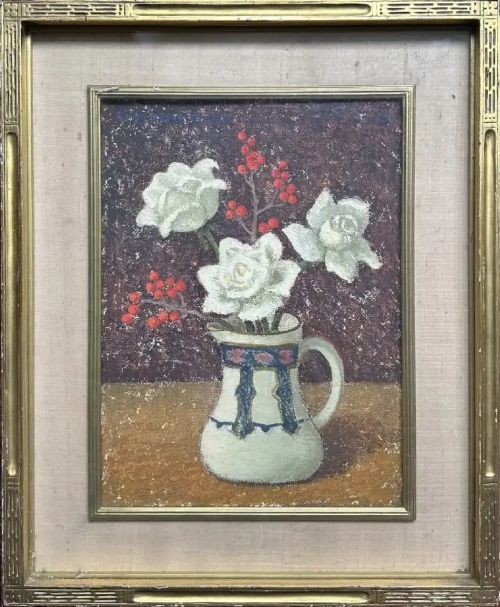
A pitcher works effectively as a standalone decorative object on a shelf or sideboard, highlighting its painted or moulded floral motifs. You can also utilise ceramic or glass jugs to hold dried stems or fresh garden flowers.
Grouping graduated copper or ceramic jugs together creates a focal point that highlights contrasting periods and surface finishes.
How do I tell different ceramic periods apart?
Distinguishing periods relies on observing the weight of the ceramic body, the type of glaze and the style of decoration. Earlier eighteenth-century pieces often feature pearlware bodies or delicate soft-paste porcelain with hand-painted sprigs.
Victorian and Edwardian items frequently display bolder transfer prints, Gaudy Welsh lustre palettes, or heavy ironstone construction designed for everyday utility.
Are metal pitchers heavier than ceramic ones?
Copper and brass ewers generally carry substantial weight due to the gauge of the metal and any applied relief work, often feeling heavier than standard earthenware pitchers. Silverplated and glass combinations vary depending on the thickness of the blown glass vessel and the metal mountings.
Ceramic weight depends heavily on whether the body is refined porcelain, heavy ironstone or thick Victorian utility pottery.