



Vintage Staffordshire Jug
A vintage staffordshire jug brings robust English folk art character and history straight to your shelf.
Vintage Staffordshire Jug
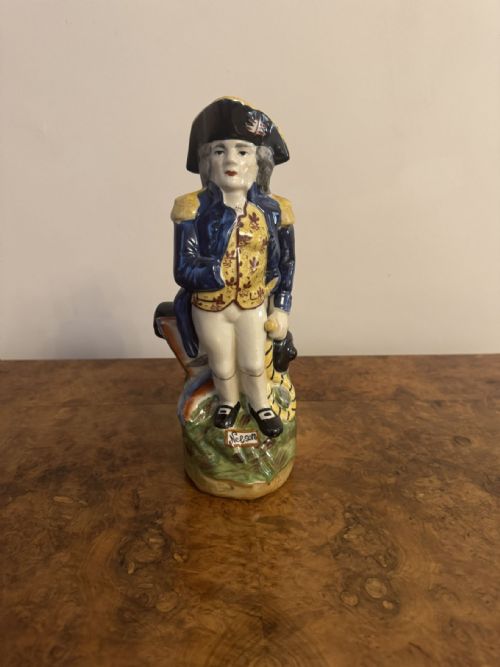
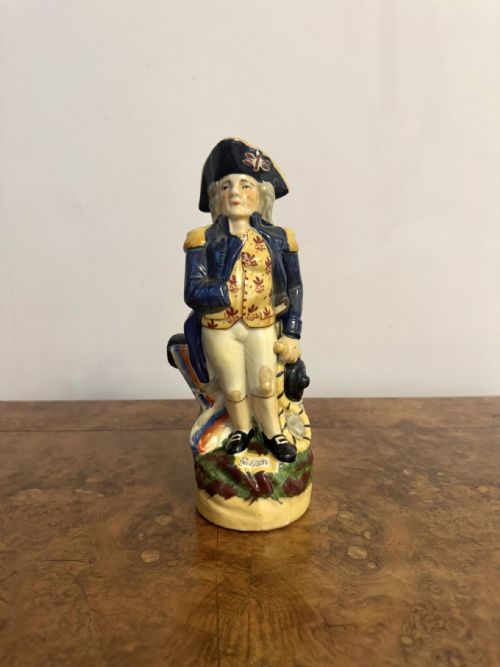
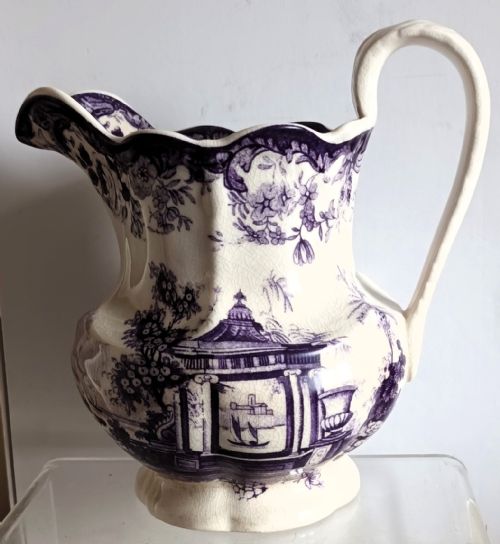
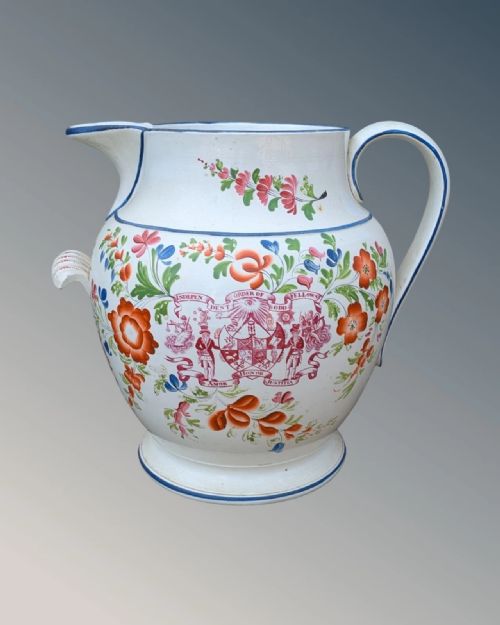
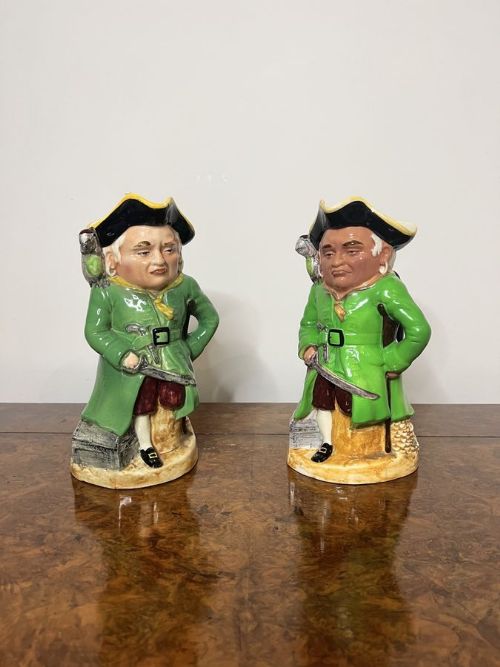
When you search for a vintage staffordshire jug, you encounter an array of earthenware and stoneware vessels that span from the Georgian period through the Victorian era. These pieces encompass characterful Toby jugs depicting figures like Lord Nelson and Mr Snuff, alongside charming cow creamers and transfer-printed pitchers.
The objects most frequently met on this page range from nineteenth-century Staffordshire pottery figures to graduated sets and relief-moulded designs. Makers such as Charles Meigh and Jones & Walley contribute to the diverse array of utilitarian and decorative forms available.
Collectors appreciate the breadth of styles, which stretch from English folk art and Georgian transferware to Victorian classical revival. Each vessel records the changing tastes and domestic habits of nineteenth-century Britain through ceramic form.
Assessing Quality and Execution
The standard of a piece rests upon the crispness of the moulding and the skill applied to the hand-painted enamel decoration. Finer examples display precise transfer printing and well-defined facial expressions on character jugs rather than blurred outlines or rushed glazing.
Weight, proportion, and the handling of the clay body distinguish superior examples from standard production pieces. Well-executed relief work and evenly applied glaze indicate a higher grade of manufacture within the Staffordshire tradition.
Vintage Staffordshire Jug Retail Price Guide 2026
Typical asking prices for vintage staffordshire jug among the pieces listed under this phrase on Sellingantiques today, from the lower quarter to the upper quarter. They describe what is for sale here now, not the wider market.
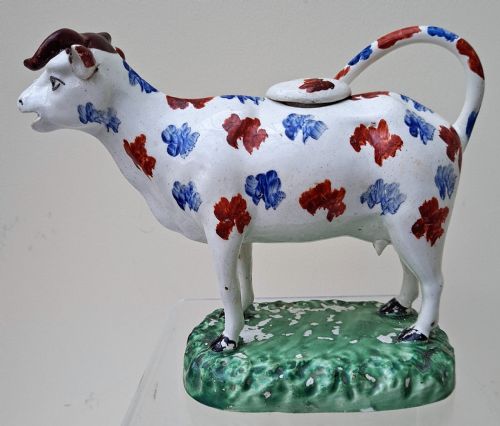
Early potters ensured cows kept their dignity by giving them cheerful expressions and gilded horns.
Charles Meigh·Jones & Walley·Copeland Spode
The Vintage Staffordshire Jug Glossary
- Pearlware
- A refined earthenware developed in the eighteenth century featuring a subtle blue-tinted glaze that pooled in recesses. It provided a whiter surface than standard creamware to mimic Chinese porcelain.
- Creamware
- A light-coloured refined earthenware perfected in Staffordshire during the Georgian period. Its warm, pale yellow tone comes from a lead glaze over a cream-coloured clay body.
- Toby Jug
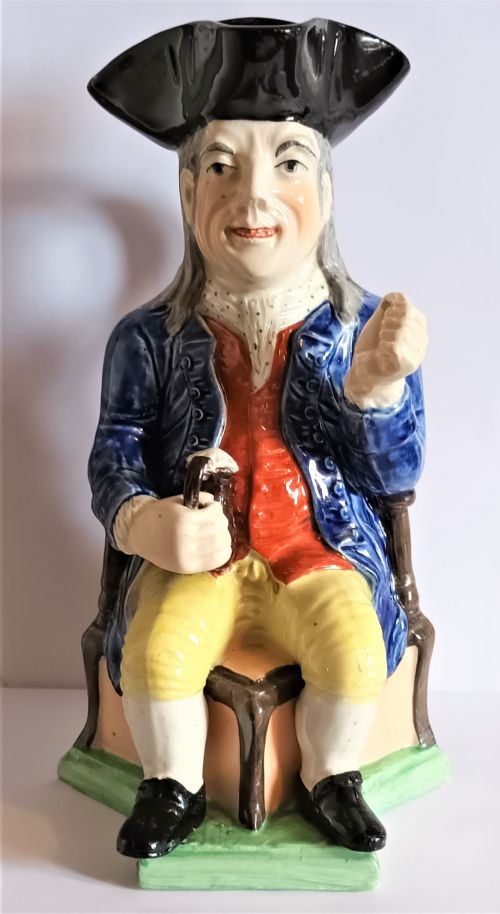
- A pottery jug modelled in the shape of a stout, jovial person, usually seated and holding a mug of beer or a pipe. These figures date back to the eighteenth century and became staples of Staffordshire potteries.
- Cow Creamer
- A ceramic container shaped like a cow, designed to hold cream for the tea table and poured through an opening on the back. They frequently appear in Welsh and English earthenware from the Georgian and Regency periods.
- Lustreware
- Pottery decorated with a metallic film that gives an iridescent sheen to the surface. It was achieved by applying metallic oxides during a secondary low-temperature kiln firing.
Vintage Staffordshire Jug: Frequently Asked Questions
What is a Staffordshire Toby jug?
A Toby jug is a pottery vessel shaped like a seated, full-length figure, typically depicted wearing eighteenth-century attire and holding a drink. Staffordshire potteries produced numerous variations representing historical figures, fictional characters, and archetypes.
These pieces served functional roles in homes and taverns before becoming collectable display items. Their characterful modelling reflects the popular culture and humour of the Victorian and Georgian eras.
How do I date an antique jug?
Dating relies on examining the ceramic body, glaze characteristics, and stylistic markers such as transfer-printing techniques or specific moulding styles. Pearlware bodies typically point towards the late eighteenth or early nineteenth century, while heavy relief moulding often suggests the Victorian period.
Marks on the base, where present, can also assist in identifying the manufacturer or registration date. Comparing the specific form against documented examples helps narrow down the decade of production.
What were cow creamers used for?
Cow creamers were used on the dining table to serve cream for tea or coffee during the Georgian and Victorian periods. Milk was poured through a hole on the animal's back, often fitted with a removable lid, and poured out through the mouth.
Despite their practical function, these whimsical vessels were designed to amuse guests as much as to serve tea. Their charming design made them popular decorative table items.
How do I care for antique ceramics?
Antique earthenware and pearlware require gentle handling and should be kept away from direct sunlight and sudden temperature fluctuations. Dust them gently with a soft, dry brush rather than washing them, especially if they feature delicate enamel or lustre decoration.
Avoid using chemical cleaners or immersing cracked pieces in water, as moisture can enter the porous clay body. Display them on stable, level surfaces away from high-traffic areas.