


19th Century Staffordshire Jug
These 19th century staffordshire jug examples bring tangible narrative history to a shelf, uniting practical utility with robust sculptural form.

19th Century Staffordshire Jug
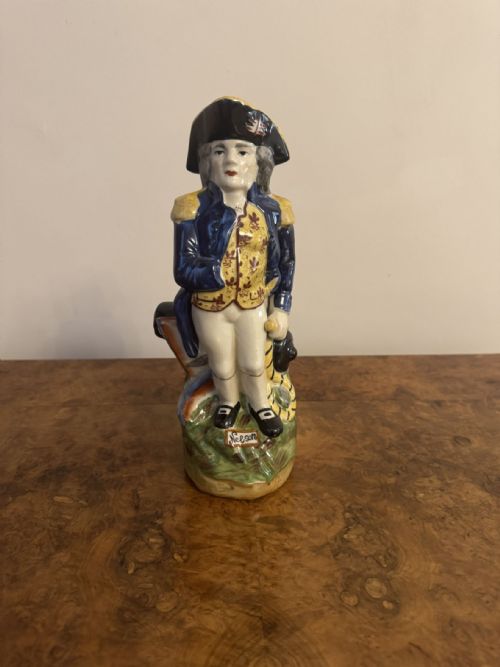
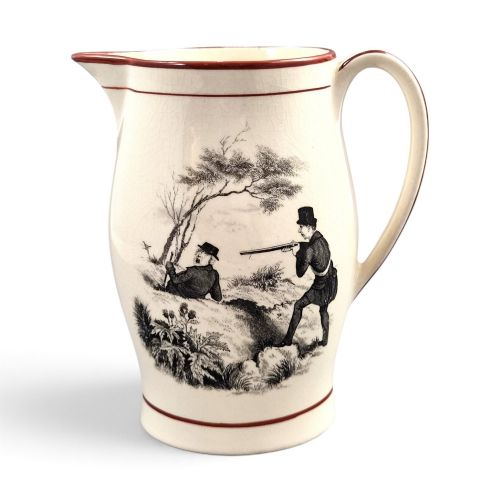
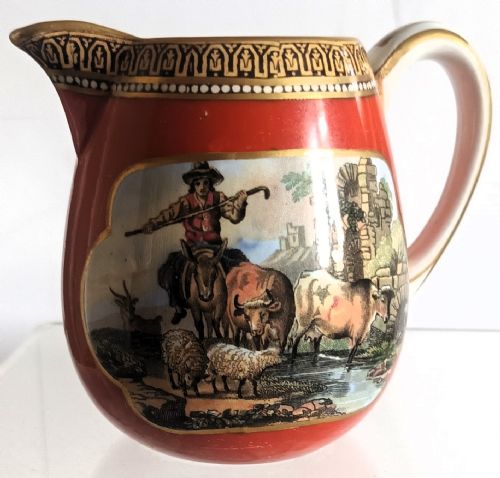
A 19th century staffordshire jug encompasses a diverse range of domestic and commemorative ceramic vessels produced across the potteries during the Georgian and Victorian eras. These items span functional creamers, large one-gallon vessels, puzzle jugs, and characterful figural representations including toby jugs and cow creamers.
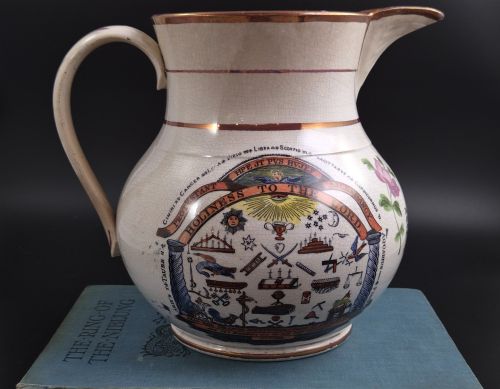
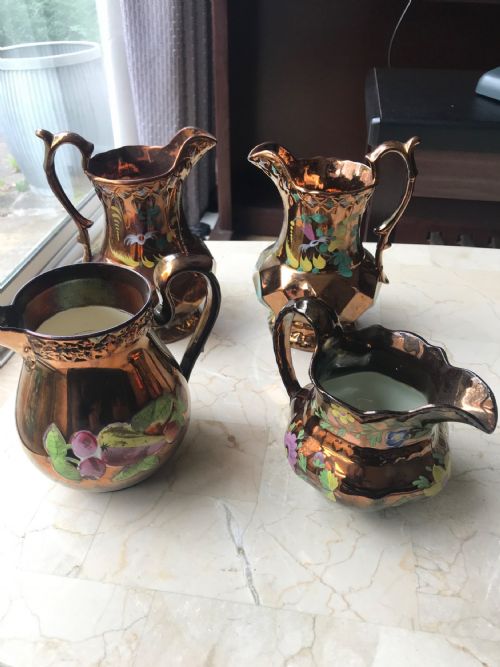
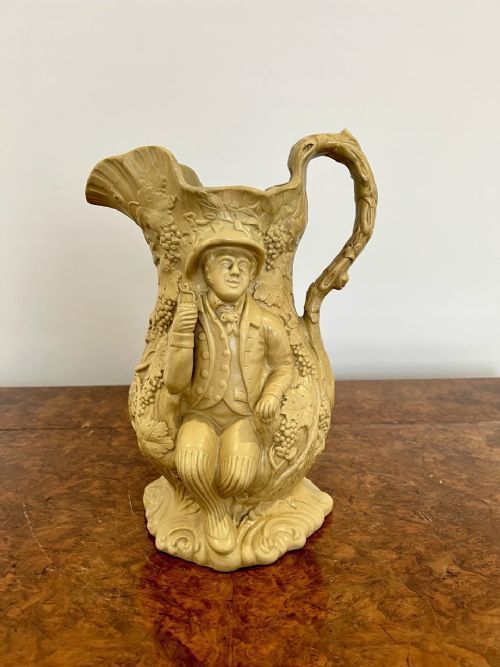
The versions most commonly met on this page include creamware and pearlware pitchers bearing transfer prints, alongside copper lustre milk jugs and relief-moulded earthenware pieces. Production dates stretch from the late Georgian period through the reign of Victoria, reflecting shifting domestic tastes and industrial techniques.
Materials and Working Methods
Potters relied primarily on earthenware, creamware, pearlware, and stoneware bodies, shaped either by hand-throwing, turning, or pressing into plaster moulds to achieve sharp relief details. Surface decoration involved hand painting with polychrome enamels, monochrome transfer printing, or the application of rich copper lustre glazes.
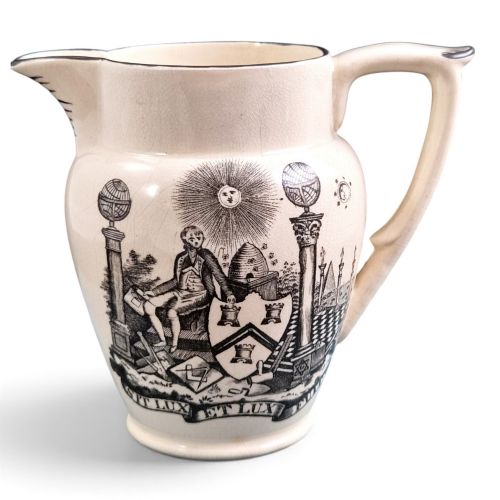
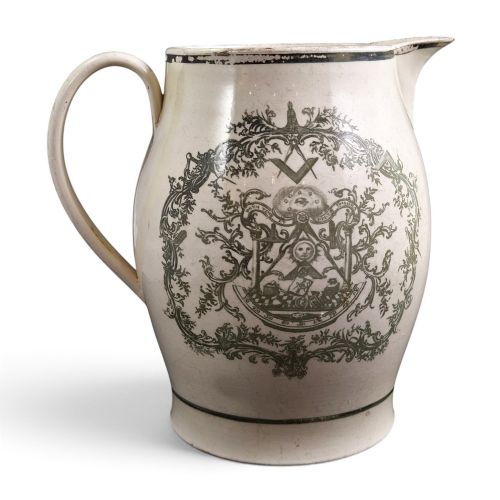
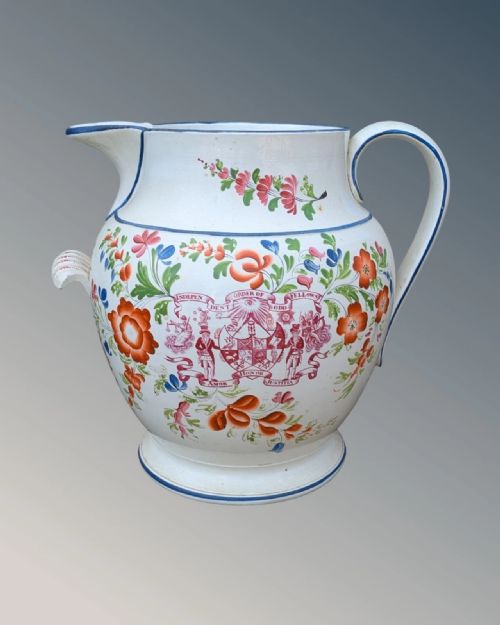
Vessels such as relief-moulded jugs required precise multi-part metal moulds to capture crisp botanical or figural motifs before firing in kilns. Transfer printing transferred engraved copperplate designs onto the ceramic body via tissue paper, permitting intricate historical and Masonic scenes.
Listings demonstrate that Staffordshire potteries utilised creamware, pearlware, and ironstone across the Georgian and Victorian periods to produce utilitarian and commemorative vessels.
Distinctions in Execution
The calibre of a 19th century staffordshire jug rests on the crispness of its moulding and the precision of its glaze or transfer application. Early pearlware and creamware pieces display finer potting bodies, whereas later Victorian relief-moulded examples derive their appeal from the depth and legibility of the pressed design.
Hand-painted polychrome decoration and controlled copper lustre finishes exhibit considerable variation in artisan skill. Pieces retaining sharp enamel colours and uniform glaze surfaces without excessive kiln pitting stand distinct from simpler commercial wares.
Charles Meigh·Jones And Walley·Mason's Ironstone·Mountford·Copeland Spode
The 19th Century Staffordshire Jug Glossary
- Creamware
- A fine earthenware developed in Staffordshire featuring a pale yellowish cream glaze. It gained widespread popularity during the Georgian period for domestic tableware.
- Pearlware
- An refined earthenware body invented by Josiah Wedgwood, characterised by a faint bluish tint in the glaze pooling in crevices. This hue resulted from small amounts of cobalt added to mimic Chinese porcelain.
- Transfer print
- A decoration technique where an engraved copperplate design is printed onto paper using metallic oxides and transferred onto the unglazed or bisque ceramic. This method allowed intricate scenes to be reproduced consistently.
- Copper lustre
- A metallic glaze finish imparting a coppery, reflective sheen to earthenware surfaces. It was achieved by applying metal oxides that reduced during the firing process.
- Relief-moulded
- A manufacturing method where pottery designs are pressed outward in low relief using metal or plaster moulds. This technique became common during the Victorian era for geometric and botanical motifs.
19th Century Staffordshire Jug: Frequently Asked Questions
What is a toby jug?
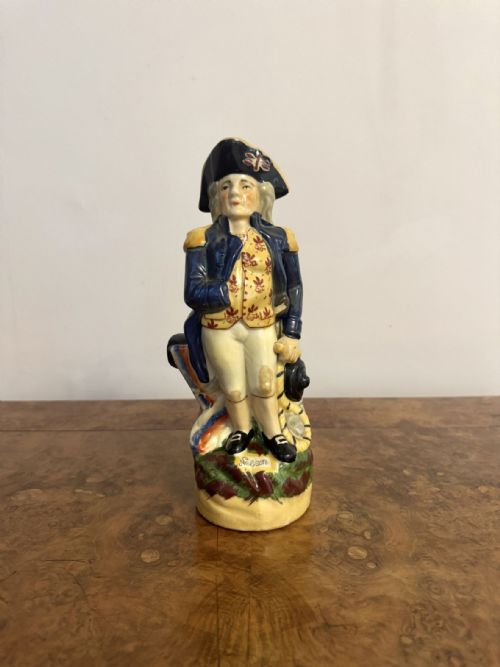
A toby jug is a pottery pitcher modelled as a full-seated figure, usually an amiable, stout historical or fictional person holding a mug of beer and a pipe. These figural vessels functioned as both humorous table ornaments and drinking jugs.
Potters in Staffordshire produced these character jugs in various sizes through the Georgian and Victorian periods, often hand-painting the coats and tricorn hats in bright polychrome enamels.
How do I date a creamware jug?
Dating creamware relies on the tone of the body, the colour of the glaze, and the shape of the footrim. Earlier pieces from the late 18th and early 19th centuries typically feature lighter, thinner potting and subtle green-yellow glaze pooling.
Transfer-printed subjects and commemorative inscriptions also provide strict terminus post quem dates. Historical events or Masonic emblems printed on the surface anchor the production window closely.
What are cow creamers?
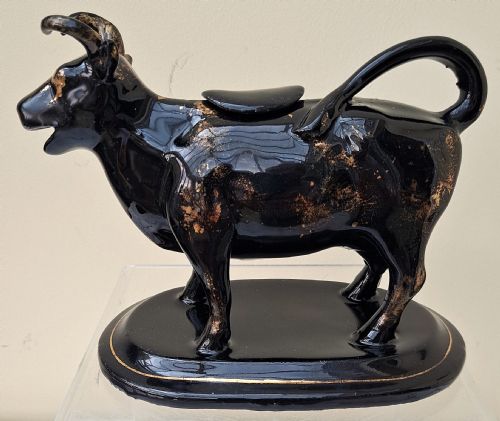
Cow creamers are hollow ceramic vessels shaped as dairy cows, often accompanied by a milkmaid figure, designed to pour milk or cream from their mouths. They served as whimsical novelties on tea tables throughout the Georgian and Victorian eras.
Users filled the hollow body through a hole on the back, sometimes fitted with a removable lid, making them charming examples of English folk art and animalier ceramics.