
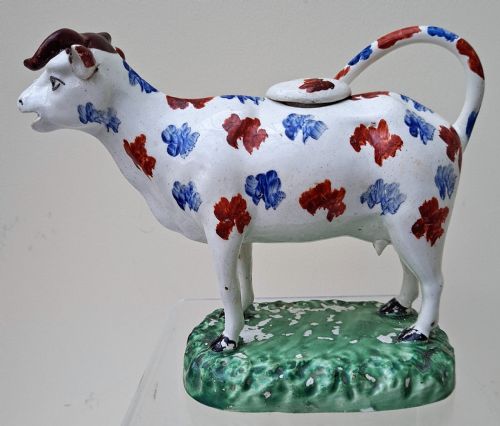


Pearlware Ceramic Jug
These pearlware ceramic jugs carry the blue-tinted glazes and robust forms of late Georgian potting, bringing character and utility straight to your table.

Pearlware Ceramic Jug
When you search for pearlware ceramic jug, you are looking at earthenware vessels produced primarily during the Georgian and Regency periods, spanning the late eighteenth and early nineteenth centuries. These domestic objects range from small creamers and cow creamers to large Sunderland lustre jugs bearing poetic panels.
The versions you are most likely to meet on this page include Staffordshire and Welsh pottery pieces, featuring forms such as character jugs, Toby jugs, and Dutch pitchers. They represent both domestic utility and folk art traditions of the era.
Originating predominantly from English and Welsh workshops, these items capture a transitional moment in ceramic history between salt-glazed stonewares and later Victorian whitewares. Their forms vary from simple utilitarian milk jugs to highly decorative commemorative vessels.
How they were made
Potters built these vessels using refined earthenware bodies, applying a thin lead glaze containing a small amount of cobalt to counteract the natural yellowish hue of the fired clay. This created the characteristic bluish pooling in crevices that defines true pearlware.
Decoration was achieved through multiple techniques, including cabbage leaf moulding, purple transfer printing, and the application of metallic lustre glazes. Some pieces also incorporated hand-painted polychrome details or Prattware colour palettes over the moulded surfaces.
Listings here feature earthenware and pearlware materials across Georgian and Regency periods, spanning the late eighteenth and early nineteenth centuries.
What varies in quality
Surface decoration further separates the range, distinguishing simple utility wares from richly adorned Sunderland lustre jugs with transfer-printed verses. The skill in applying metallic lustres and hand-painted pigments dictates the visual depth of the finished vessel.
The Pearlware Ceramic Jug Glossary
- Pearlware
- A refined earthenware developed by Josiah Wedgwood and adopted by other potters, featuring a glaze with a subtle bluish tint designed to mimic Chinese porcelain.
- Lustreware
- Earthenware decorated with a metallic film that creates a reflective, iridescent surface. It was commonly applied in copper, silver, or purple shades during the Regency period.
- Transfer printing
- A decoration technique where an engraved metal plate transfers a design onto paper, which is then stamped onto the ceramic body before glazing and firing.
- Prattware
- A type of early earthenware associated with PRATT and other potteries, characterised by underglaze colours, typically blue, ochre, brown, and green, used on figures and jugs.
- Toby jug
- A pottery jug modelled in the figure of a stout, jovial man usually wearing a tricorn hat and holding a mug of beer or a pipe.
Pearlware Ceramic Jug: Frequently Asked Questions
What is a pearlware ceramic jug?
It is an earthenware vessel from the late eighteenth or early nineteenth century, coated in a characteristic blue-tinted glaze.
These pieces were made in various forms, from small creamers to large commemorative jugs.
How do I identify pearlware?
Look for a pale earthenware body beneath a glaze that pools with a slight blue tinge, particularly around handles and recesses.
This distinct glaze formula was created to make earthenware appear whiter and closer to porcelain.
Were these jugs used daily?
Many served practical household functions such as holding milk, cream, or ale on dining tables.
Others, particularly large lustre jugs with poetic inscriptions, functioned more as commemorative or display pieces.
How do I care for antique jugs?
Keep them out of direct sunlight and wash them by hand in warm, mild water only when necessary.
Avoid submersing pieces with old repairs or metallic lustre decoration for extended periods.