


Transfer Printed Ceramic Jug
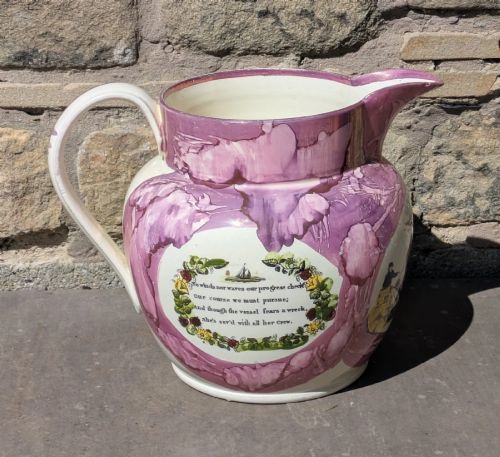
These transfer printed ceramic jug pieces bring narrative panels and maritime scenes straight to a country house dresser.
Transfer Printed Ceramic Jug
Every transfer printed ceramic jug on this page represents a utilitarian vessel decorated through applied engraved impressions rather than hand painting. Collectors encounter pieces originating across the Georgian, Regency, and Victorian periods.
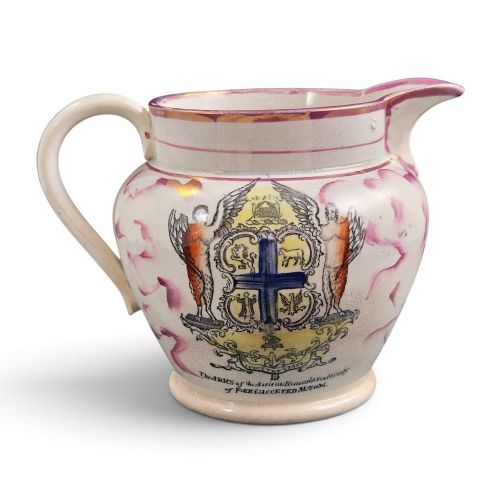
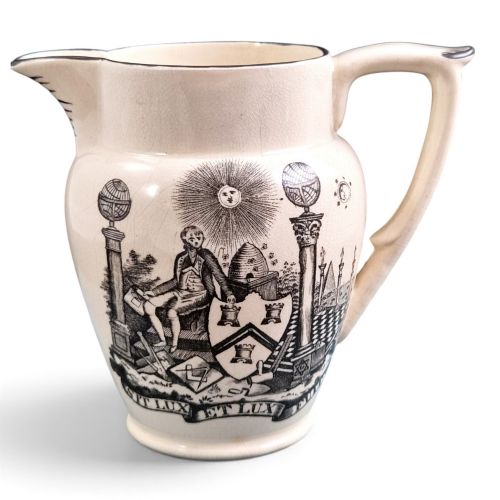
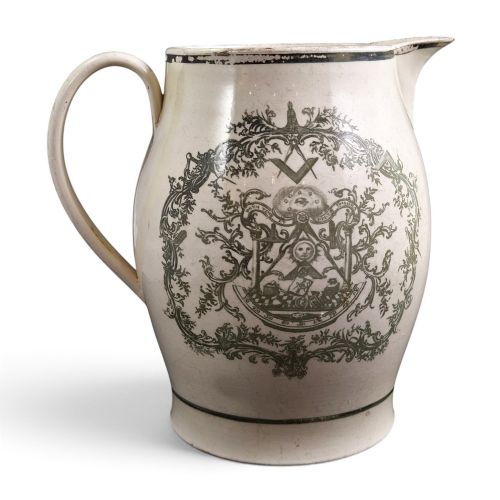
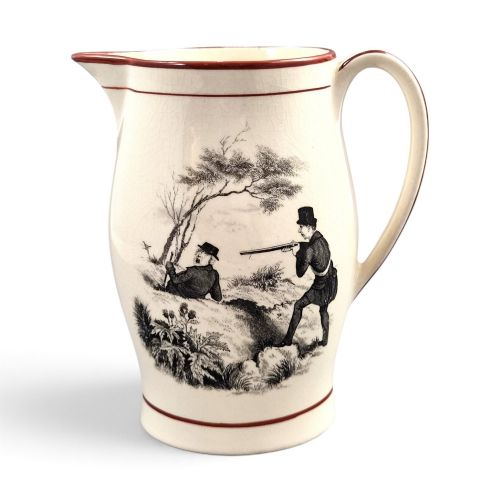
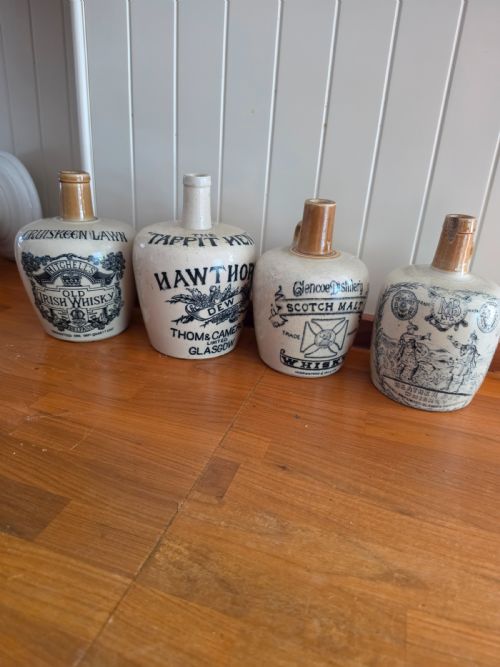
The forms span large one gallon blue and white vessels alongside tall pitchers and smaller advertising flasks. Many carry masonic symbols, poetic panels, or maritime themes across creamware and pearlware bodies.
How they were made
Potters shaped earthenware, creamware, and pearlware bodies before transferring inked engravings onto the damp clay surface. Artisans then applied clear glazes alongside metallic lustre finishes before final kiln firing.
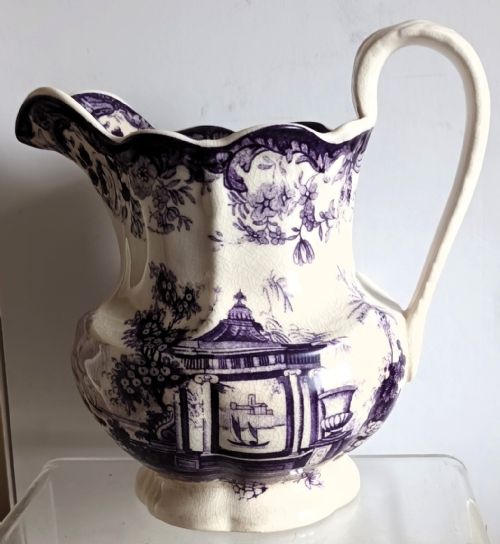
Stoneware versions relied on denser clay formulas designed to hold liquids securely without porous leakage. Printers inked copper plates to press intricate architectural views or clipper ships onto the curved ceramic walls.
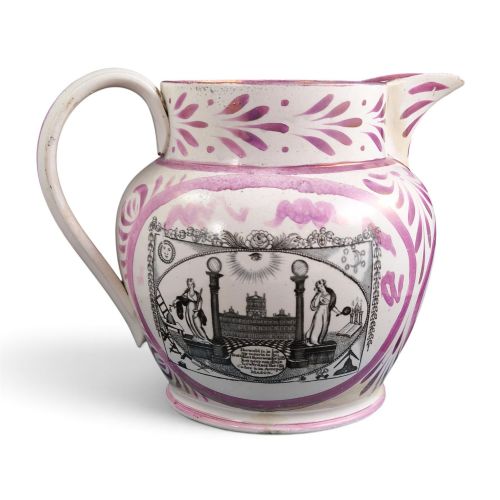
Listings feature creamware, pearlware, and stoneware bodies decorated with black, blue, and magenta transfer prints from the Georgian and Victorian eras.
What varies in quality
Clarity of the transferred design dictates visual success, separating sharp pictorial lines from smudged or blurred impressions. The crispness of masonic emblems or maritime rigging shows the precision of the original copper plate.
Surface treatment changes the character of the piece entirely, moving from simple black transfer prints to rich pink lustre glazes with multiple applied panels. The balance of the handle and the weight of the earthenware body complete the assessment.
The Transfer Printed Ceramic Jug Glossary
- Transfer printing
- A method of decorating ceramics by applying an engraved paper design onto a glazed or unglazed surface. This technique allowed intricate pictorial scenes to be replicated rapidly.
- Creamware
- A refined earthenware body with a pale yellow tone developed during the eighteenth century. It served as a primary canvas for early transfer printed designs.
- Pearlware
- An improved earthenware featuring a bluish glaze that pooled in crevices to mimic Chinese porcelain. It dominated Staffordshire production during the Regency era.
- Lustre glaze
- A metallic film applied to ceramics to create a shimmering iridescent surface. Pink and copper variations frequently highlight Sunderland production.
- Stoneware
- A heavy, vitrified ceramic fired at high temperatures until impermeable. It provided durable strength for advertising flasks and utility vessels.
Transfer Printed Ceramic Jug: Frequently Asked Questions
What is a transfer printed ceramic jug?
These vessels are earthenware or stoneware containers decorated using inked copperplate impressions transferred onto the clay body. They combine utility with detailed historical, maritime, or masonic iconography.
Potters produced them in various sizes, ranging from small spirit flasks to large one-gallon storage pitchers intended for daily domestic use.
How do I date a transfer printed ceramic jug?
Dating relies on identifying the underlying ceramic body, such as creamware for earlier Georgian examples or heavier stoneware for later Victorian pieces. Stylistic clues within the transfer print, like specific architectural landmarks or clipper ships, also help narrow the timeframe.
Glaze characteristics, including the blue tint of pearlware or the addition of pink lustre, provide further chronological markers.
Were these jugs used for serving?
Many of these vessels served practical roles on dining tables and in taverns for holding water, beer, or cider. Larger examples managed communal liquid distribution during meals or gatherings.
Others functioned as commemorative pieces or lodge items, celebrating events, fraternities, or prominent buildings rather than serving everyday table duties.
How should I display my jug?
Display these pieces on sturdy shelves or dressers where their printed panels and lustre finishes catch ambient light. Ensure the supporting surface remains stable and free from vibration to protect the earthenware body.
Keep them away from direct sunlight to preserve the integrity of the glaze and prevent any fading of the transfer design over time.