


Pink Lustre Ceramic Jug
These pink lustre ceramic jug examples bring bold metallic flash and transfer-printed maritime scenes straight from Georgian and Victorian potting floors to your shelf.
Pink Lustre Ceramic Jug
A pink lustre ceramic jug combines earthenware or pearlware bodies with a distinctive metallic glaze that catches the light in shades of pink, purple, and copper. When you search for this phrase, you encounter robust vessels produced primarily during the Georgian and Victorian eras, often associated with northern English potteries.
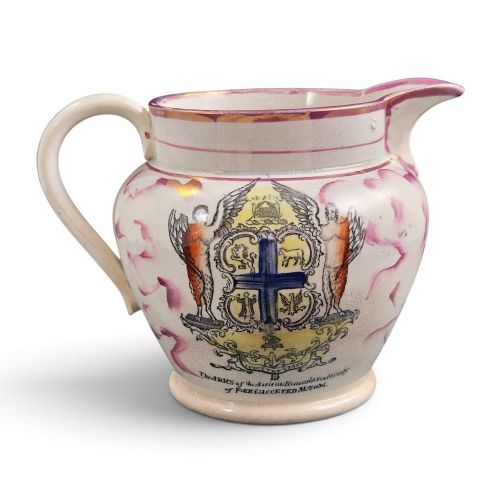
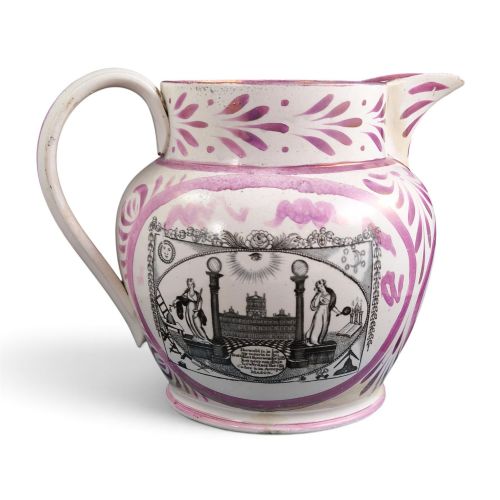
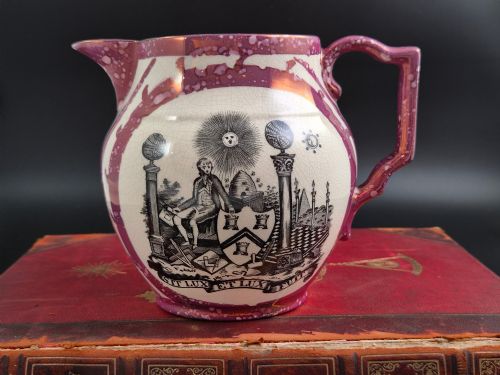
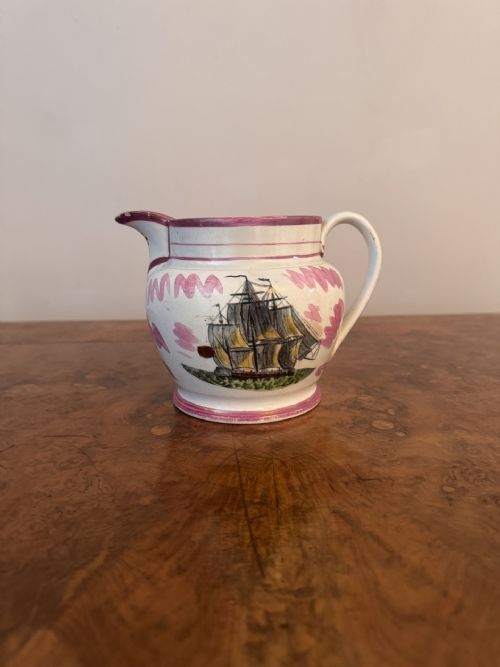
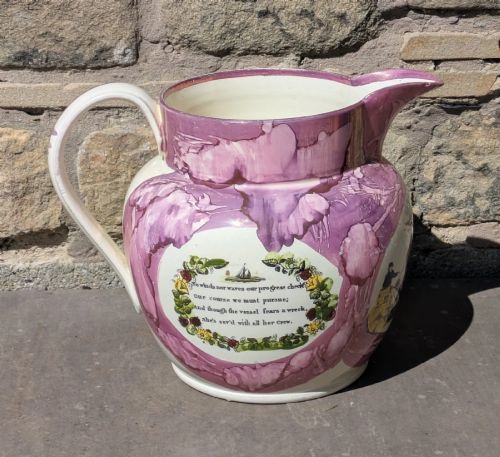
The most common versions on this page are Sunderland pieces decorated with transfer prints featuring tall ships, masonic symbols, or poetic panels. These jugs range from large display pieces to smaller utilitarian forms, frequently carrying hand-coloured enamel highlights alongside the characteristic splash lustre finish.
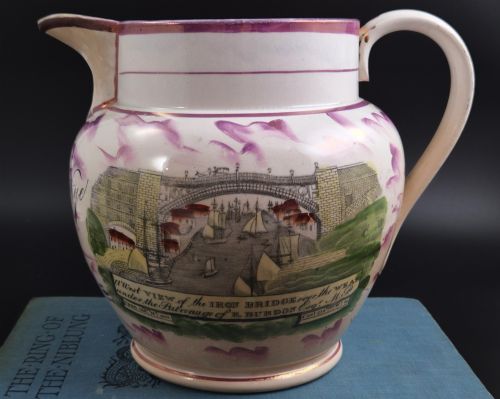
Makers focused heavily on narrative and commemorative subjects, recording local landmarks like the Iron Bridge over the Wear or celebrating naval heroes. The surviving examples showcase a distinct folk art sensibility that bridges domestic utility and commemorative display.
Materials and construction
Potters shaped these vessels from earthenware and pearlware, applying a metallic oxide glaze to achieve the signature sheen through specialised kiln firings. The technique relied on a thin layer of gold or platinum film suspended in the glaze mixture, which separated during firing to create the mottled pink and purple splash effects.
Decoration often combined black or purple transfer printing with hand-painted enamel colours to fill in details on ships, flags, and verses. Artisans then sealed these pigments beneath a clear glaze before the final firing to protect the fragile metallic surface.
Listings feature pieces spanning the Georgian and Victorian periods, utilising earthenware, pearlware, and metallic lustre glazes.
Assessing quality in lustre ware
Quality rests on the crispness of the transfer print and the vibrancy of the metallic lustre glaze, which can appear flat and dull on lesser examples or intensely iridescent on finer ones. Well-defined details in complex maritime scenes or masonic emblems distinguish superior vessels from routine production pieces.
The precision of the hand-applied enamel colouring over the transfer print dictates the visual success of the piece. Clean application without smudging and an even distribution of the pink splash effect separate standard factory output from more ambitious works.
The Pink Lustre Ceramic Jug Glossary
- Pink Lustre
- A ceramic finish created using a metallic oxide glaze that produces a pink or purple iridescent sheen when fired. This technique became popular on earthenware and pearlware during the nineteenth century.
- Pearlware
- A refined earthenware body developed in the late eighteenth century featuring a subtle bluish glaze that pooled in crevices. It served as a common base for transfer-printed lustre jugs.
- Transfer Printing
- A method of applying pre-printed paper designs onto ceramic surfaces using engraved copper plates. This allowed potteries to produce detailed maritime scenes and poetic verses consistently.
- Splash Lustre
- A specific application technique where droplets of metallic solution created a mottled or speckled pattern across the ceramic body. It appears frequently on Sunderland pieces.
- Earthenware
- A porous ceramic fired at lower temperatures, requiring a glaze to achieve impermeability. Most nineteenth-century jugs utilised this sturdy body.
Pink Lustre Ceramic Jug: Frequently Asked Questions
What are Sunderland lustre jugs?
Sunderland lustre jugs are earthenware vessels produced in the North East of England, known for their distinctive pink splash glaze and transfer-printed decoration.
They frequently feature maritime themes, masonic symbols, or moral verses, reflecting the maritime culture of the region during the Georgian and Victorian periods.
How old are these ceramic jugs?
The pieces available date primarily from the late eighteenth century through the mid-nineteenth century, spanning the Georgian and Victorian eras.
Most surviving examples cluster around the decades between eighteen hundred and eighteen sixty, identified through stylistic traits and occasional dated inscriptions.
What themes appear on these jugs?
Common subjects include tall ships, clipper ships, masonic emblems, and local landmarks such as the Iron Bridge over the Wear.
Potters also included patriotic sentiments, poetic panels, and commemorative boxing or maritime scenes to appeal to sailors and local communities.
How do I care for pink lustre ceramics?
These antique earthenware vessels require gentle handling and should be washed by hand in warm, mild water without harsh abrasives.
Display them away from direct sunlight and sudden temperature shifts to protect the delicate transfer prints and metallic glaze from degradation.