
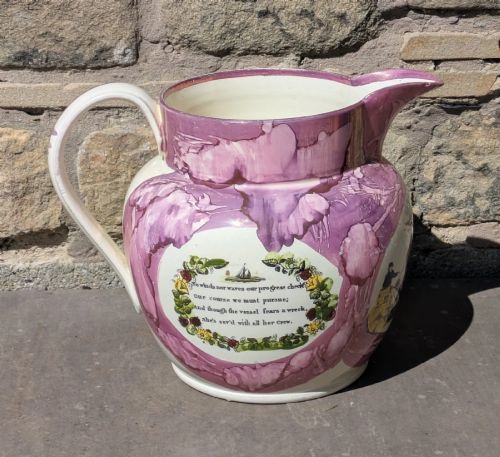


19th Century Sunderland Pottery
These 19th century sunderland pottery pieces are earthenware vessels carrying pink lustre and transfer prints, prized for maritime themes and masonic decoration.
19th Century Sunderland Pottery
When you search for 19th century sunderland pottery, you encounter earthenware jugs and bowls decorated with metallic pink lustre glazes. The forms span the Georgian and Victorian periods, with vessels celebrating ships, bridges, and fraternal orders.
The jugs and pitchers dominate the selections, ranging from standard sizes to large presentation pieces. Pearlware variants appear alongside standard earthenware bodies, often featuring transfer-printed verses or commemorative panels.
How they were made
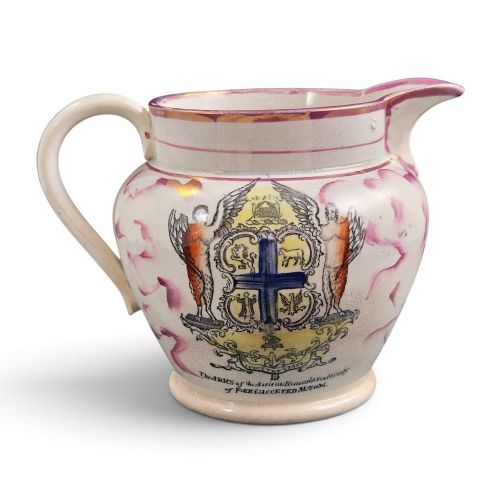
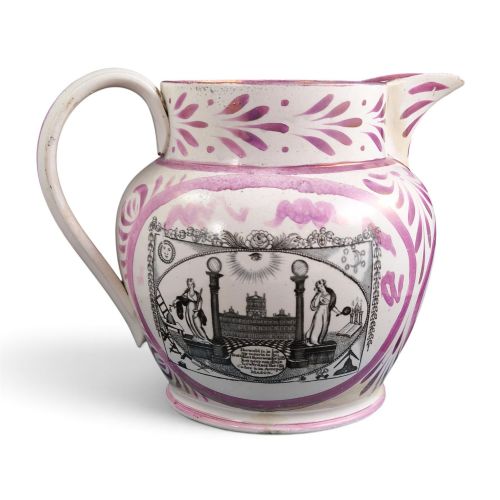
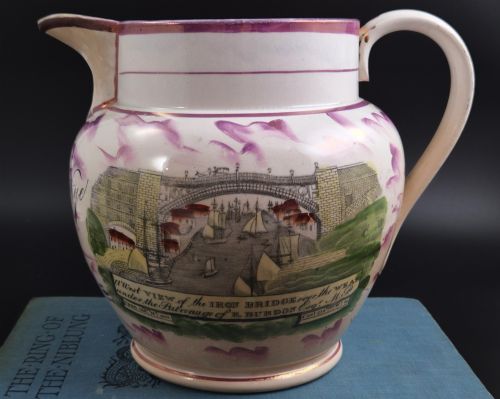
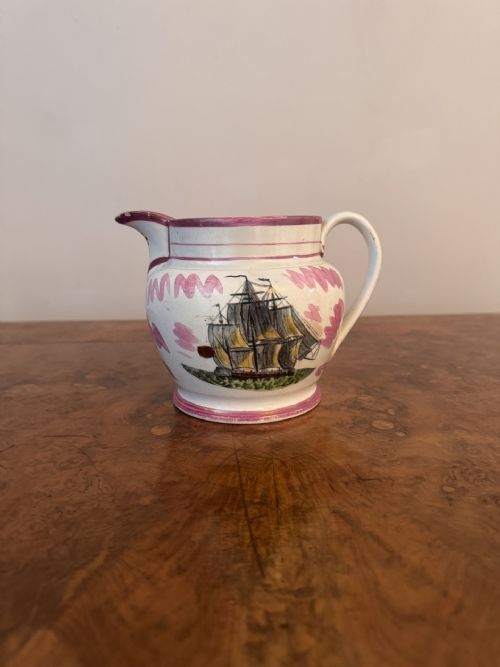
Potters shaped these earthenware and pearlware bodies before applying transfer-printed motifs such as the Iron Bridge over the Wear, tall ships, and poetic panels. Enamel colours were frequently added by hand over the print.
The characteristic pink lustre effect relies on metallic glazes or oxides splashed or brushed onto the ceramic surface before firing. This technique created the marbled or mottled splash patterns seen across the range.
Object forms focus on jugs, pitchers, and large decorative bowls featuring maritime and masonic themes.
What varies in quality
The distinction between ordinary production and finer examples rests on the crispness of the transfer printing and the richness of the pink lustre glaze. Complex triple-print compositions and named, dated inscriptions elevate a vessel above standard decorative jugs.
Scale and ambition separate standard utility forms from large commemorative bowls and tall ship jugs. Well-preserved enamel colouring and carefully applied metallic oxide effects mark out the superior pieces.
The 19th Century Sunderland Pottery Glossary
- Pink Lustre
- A metallic glaze technique producing a shimmering pink or purple finish. It was achieved by applying a thin layer of gold or other metals to the ceramic surface.
- Pearlware
- A refined earthenware developed in the late eighteenth century featuring a subtle bluish glaze. It served as a smooth ground for transfer-printed decoration.
- Transfer Print
- A method of decorating ceramics by applying an engraved paper design to the biscuit or glazed surface. This allowed intricate maritime scenes and poems to be reproduced consistently.
- Metallic Oxide
- Chemical compounds used in the glazes and enamels to produce colour and lustre effects during firing. They react with heat to create the distinctive splash patterns.
19th Century Sunderland Pottery: Frequently Asked Questions
What themes appear on sunderland pottery?
Maritime subjects dominate these vessels, including tall ships, clipper ships, and the Iron Bridge over the Wear. Masonic symbols, poetic verses, and sailors arms also recur across the jugs and bowls.
These themes reflect the seafaring and industrial identity of the North East of England where the potteries operated.
How do I date a sunderland jug?
Dating relies on stylistic shifts between the Georgian and Victorian periods, alongside specific architectural landmarks depicted on the body. Some pieces bear painted or printed dates alongside names.
Pink lustre techniques and pearlware bodies also offer chronological clues when comparing early nineteenth-century examples to later Victorian pieces.
Were these jugs used or displayed?
Many large vessels functioned as presentation pieces or commemorative items for sailors and lodge members. Their size and decorative lustre suggest display rather than heavy daily use.
Domestic settings in the nineteenth century showcased these jugs on mantelpieces or dressers to celebrate maritime connections.
What is splash lustre?
Splash lustre is a specific application method where metallic glaze is flicked or mottled across the ceramic surface. This creates a distinctive marbled pink effect around the prints.
The technique requires precise control during the firing process to achieve the characteristic metallic sheen.