


Pink Splash Lustre Pitcher
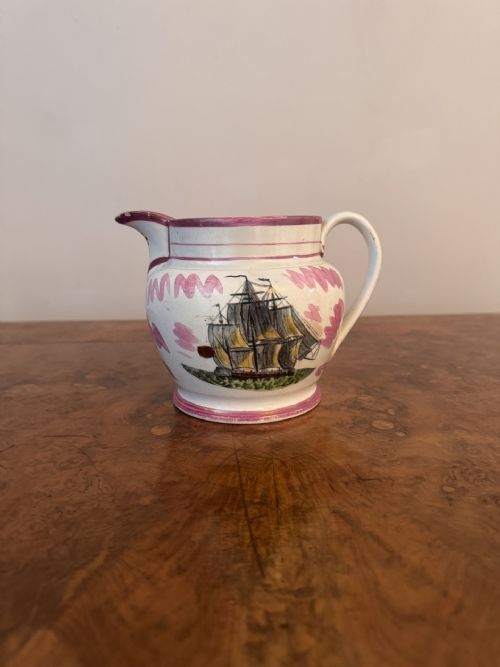
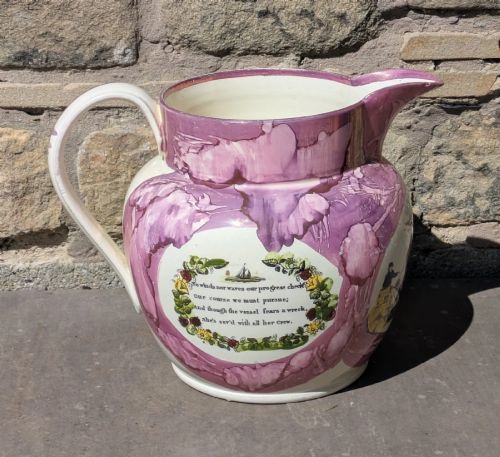
These pink splash lustre pitchers are striking nineteenth-century earthenware jugs carrying rich transfer prints and iridescent metallic glazes that catch the eye instantly.
Pink Splash Lustre Pitcher
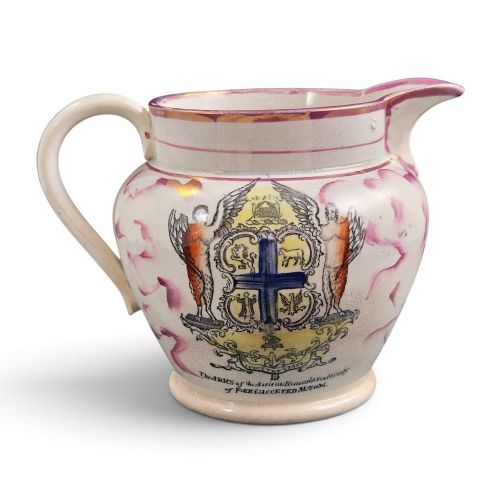
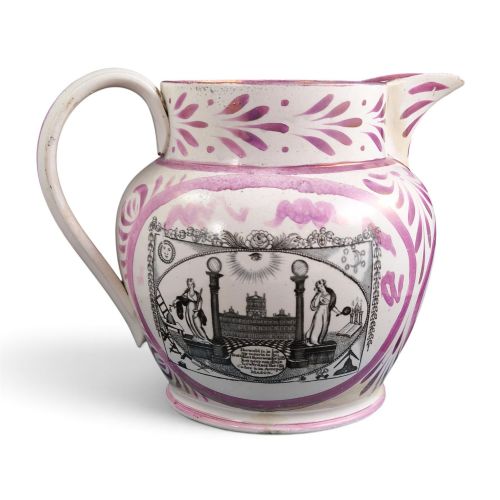
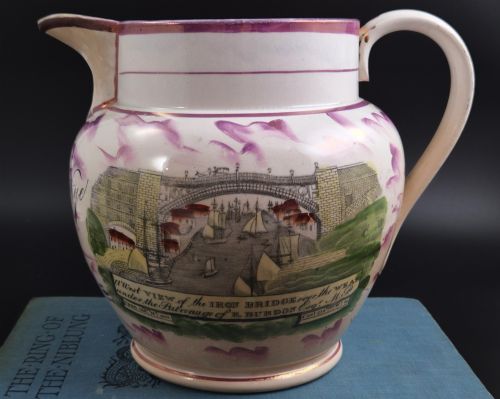
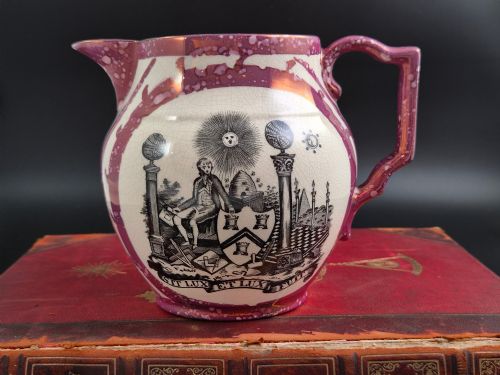
A pink splash lustre pitcher is a ceramic vessel typically hailing from nineteenth-century English potteries, most notably Sunderland. These jugs frequently display detailed transfer prints featuring maritime themes, masonic symbols, poetic verses, or famous local landmarks like the Iron Bridge over the Wear.
Buyers browsing this selection will most commonly encounter earthenware and pearlware jugs spanning the Georgian and Victorian eras. The forms range from modest pouring vessels to large, decorative display pieces intended to be showcased on a dresser or mantelpiece.
How they were made
Potters shaped these vessels from earthenware or pearlware bodies before applying detailed transfer-printed designs and enamel colours by hand. The characteristic splash effect was achieved using metallic oxide solutions that pooled and separated during the firing process to create a mottled, shimmering surface.
A specialised metallic glaze provided the signature lustre finish, reacting in the kiln to yield a distinct pink or purple sheen. Further brushwork in enamel added vibrant highlights to the printed motifs before the final glaze firing.
The decorative subjects recorded include maritime themes, masonic insignia, poetic verses, and historic engineering feats like the Wear bridge.
What varies in quality
The distinction between ordinary and exceptional examples rests primarily on the clarity of the transfer print and the richness of the metallic lustre glaze. Pieces featuring crisp, multi-coloured printing alongside a deep, even splash effect command stronger interest from collectors.
Scale and narrative complexity also divide the range, as larger jugs with uncommon subjects like boxing scenes or named and dated inscriptions demonstrate superior workshop capability. The precision of the hand-painted enamel details further separates standard production wares from masterworks.
Garrison Pottery
The Pink Splash Lustre Pitcher Glossary
- Lustre Glaze
- A metallic glaze applied to ceramics to create an iridescent, reflective surface finish. This technique uses silver, copper, or gold oxides to achieve the characteristic metallic sheen.
- Pearlware
- A refined earthenware body developed in the late eighteenth century featuring a subtle bluish glaze that pooled in crevices. It served as a popular canvas for transfer-printed decoration before standard whiteware took precedence.
- Transfer Print
- A method of decorating ceramics by pulling an engraved copperplate impression on tissue paper and pressing it onto the biscuit or glazed ware. This allowed for intricate pictorial scenes to be applied consistently across multiple vessels.
- Earthenware
- A porous ceramic body fired at lower temperatures than stoneware or porcelain, requiring a vitreous glaze to ensure impermeability. It formed the foundational material for the vast majority of nineteenth-century regional pottery.
- Metallic Oxide
- A chemical compound utilised in ceramic production to impart colour and reactive effects within glazes and enamels. During firing, these oxides interact with heat and oxygen to produce varied tonal shifts.
Pink Splash Lustre Pitcher: Frequently Asked Questions
What is a pink splash lustre pitcher?
A pink splash lustre pitcher is a nineteenth-century English earthenware jug decorated with transfer-printed imagery and a mottled, iridescent metallic glaze.
These pieces were produced primarily in northern potteries and often celebrated local maritime heritage, poetry, or fraternal organizations.
How were these jugs used?
While technically formed as pouring vessels for liquids, many of the larger examples served purely decorative or commemorative functions in the home.
Their striking metallic finishes made them popular display items on cottage dressers and tavern shelves alike.
How do I care for my jug?
Living with these antique ceramics requires gentle handling, as the earthenware bodies and enamel decorations remain sensitive to harsh impacts.
Dust them softly with a dry cloth and keep them away from direct moisture or aggressive cleaning agents to preserve the delicate lustre glaze.
How do I date a lustre jug?
Dating relies on examining the ceramic body, such as identifying early pearlware versus later Victorian earthenware, alongside stylistic clues in the transfer prints.
Inscribed dates, specific historical subjects, and costume details on the printed figures provide reliable chronological markers.