


Sunderland Lustreware Pitcher
These sunderland lustreware pitcher pieces bring bold transfer-printed maritime scenes and rich pink metallic sheens straight from nineteenth-century northern potteries into your home.
Sunderland Lustreware Pitcher
When you search for a sunderland lustreware pitcher, you find robust earthenware vessels made for working people, sailors and local communities in the north-east of England. These jugs display characteristic pink and splash lustre effects alongside copper-derived metallic glazes that catch the light in a distinct way.
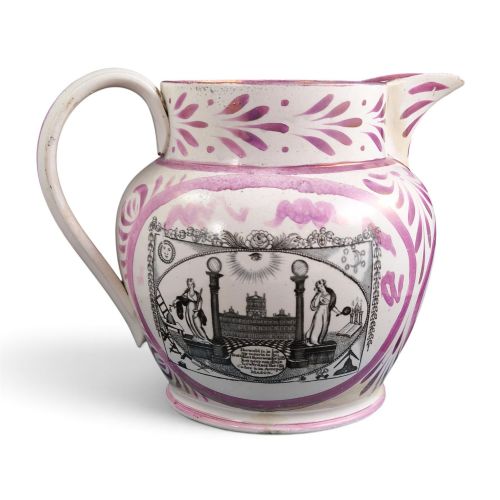
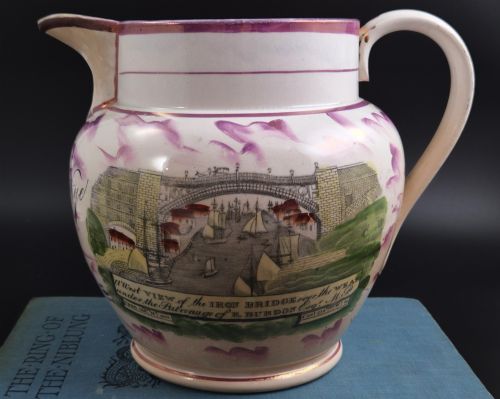
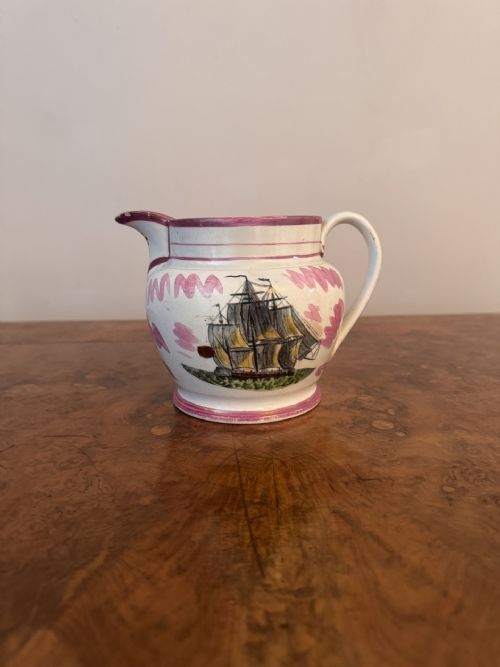
The pieces appearing on this page span the Georgian and Victorian eras, running from the turn of the nineteenth century through to eighteen sixty. You encounter tall ship motifs, poetic panels, masonic emblems and specific named vessels like the iron bridge over the wear.
Formats range from large commemorative pieces down to domestic jugs utilised in daily life. Most examples rely on transfer-printed imagery combined with hand-applied enamel colours over a white earthenware or pearlware body.
How they were made
Potters shaped these jugs from earthenware and pearlware before applying transfer-printed copper-plate designs directly onto the biscuit or glazed surface. This allowed workshops to produce complex maritime and topographical scenes with consistent detail across multiple vessels.
The distinctive pink metallic glaze and splash effects came from metallic oxides applied during firing to create an irregular, mottled surface sheen. Artisans then added hand-painted enamel highlights in yellow, green and red over the print to bring warmth and colour to the finished piece.
What varies in quality
Quality in these jugs rests upon the crispness of the transfer print and the control of the metallic glaze during firing. Pieces with clear, detailed ship engravings and even pink splash coverage command greater visual presence than muddy prints or thin, dull lustre.
The skill of the hand-applied enamel painting also separates standard domestic wares from superior examples. Vibrant, well-placed colour highlights over the transfer print show a higher level of workshop execution and individual attention.
The Sunderland Lustreware Pitcher Glossary
- Pink lustre
- A metallic glaze containing gold or copper that fires to a bright pink or purple sheen, often applied in a speckled or splash pattern.
- Pearlware
- A refined earthenware body developed in the late eighteenth century with a subtle blueish tint in the glaze.
- Transfer printing
- A technique for applying engraved paper designs onto pottery using copper plates and specialised inks.
- Earthenware
- Porous ceramic pottery fired at lower temperatures than stoneware or porcelain, standard for nineteenth-century utilitarian vessels.
Sunderland Lustreware Pitcher: Frequently Asked Questions
What themes appear on these jugs?
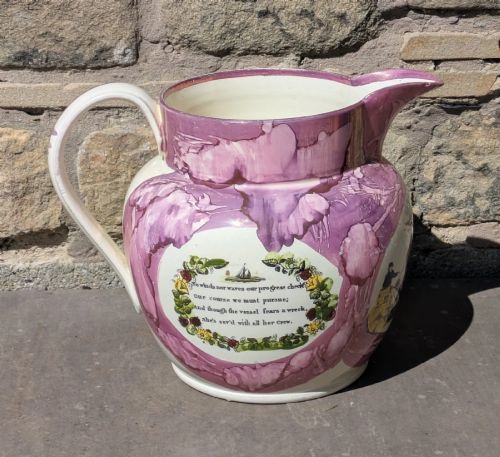
The decoration typically centres on maritime subjects, tall ships, local landmarks such as the iron bridge over the wear, and masonic or patriotic emblems. Many pieces also incorporate moral verses or sentimental poetry intended for sailors and families.
These varied themes reflect the maritime culture and industrial pride of the north-east communities where the pottery was produced.
How do I date a sunderland jug?
Dating relies upon stylistic markers, ceramic bodies like pearlware, and specific historical events or bridge constructions referenced in the transfer print. Pieces often bear inscribed dates or names that anchor them securely in the Georgian or Victorian periods.
Examining the depth of the earthenware body and the specific shade of the pink lustre glaze helps narrow the decade of manufacture.
Were these jugs used daily?
While many survive in decorative condition today, these pitchers originated as practical vessels for ale, water or domestic service in homes and inns. Their robust earthenware construction meant they could withstand everyday handling.
Commemorative and larger presentation jugs, however, often served primarily as display items or tokens of affection for departing sailors.
What is splash lustre?
Splash lustre is a specific decorative effect created by flicking metallic oxide onto the glaze before firing to produce a mottled, speckled appearance. This technique breaks up the solid metallic sheen and creates a distinctive marbled texture across the body.
Potters used it to frame transfer-printed panels and highlight the upper rims and handles of the jugs.