


Transfer Printed Earthenware Jug
These transfer printed earthenware jug examples bring bold maritime scenes and masonic emblems straight to your table from the Georgian and Victorian eras.
Transfer Printed Earthenware Jug
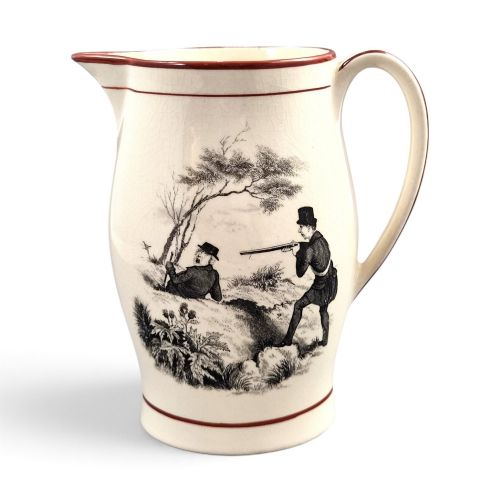
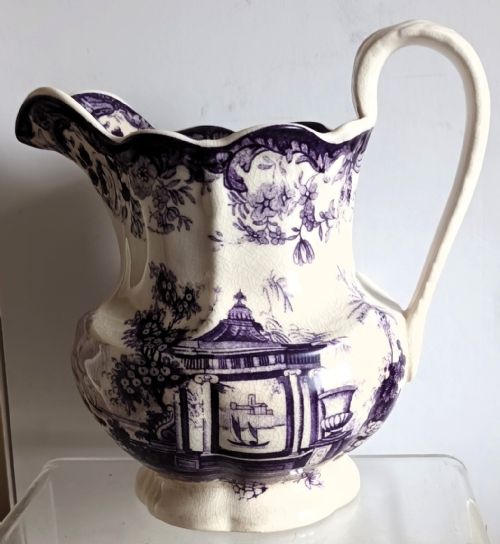
A transfer printed earthenware jug is a utilitarian vessel transformed into a canvas through mechanically applied monochromatic or polychrome imagery. When you search for this phrase, you encounter substantial pitchers created to serve ale, water or cider in homes and public houses.
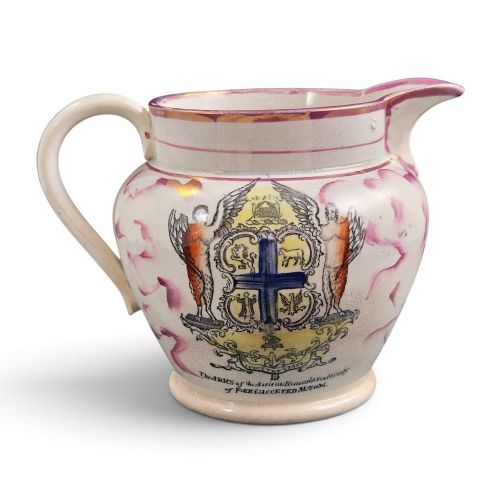
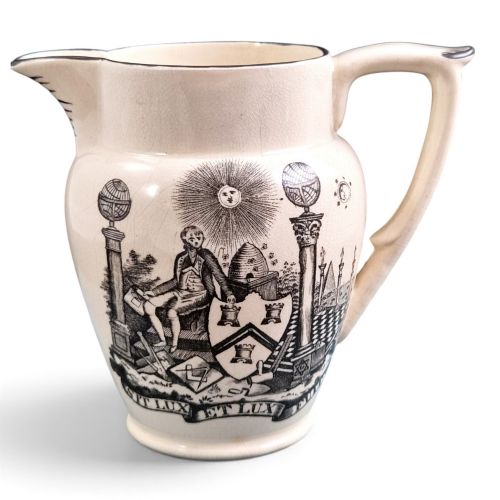
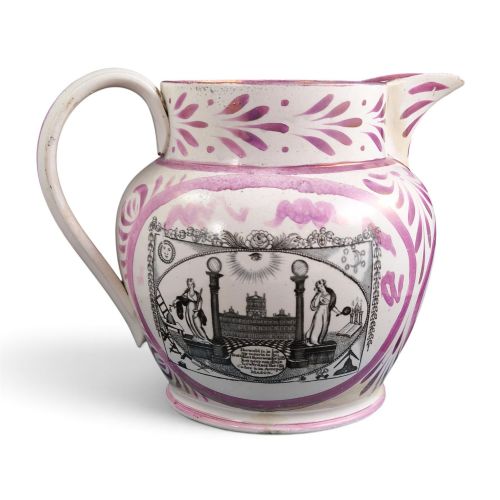
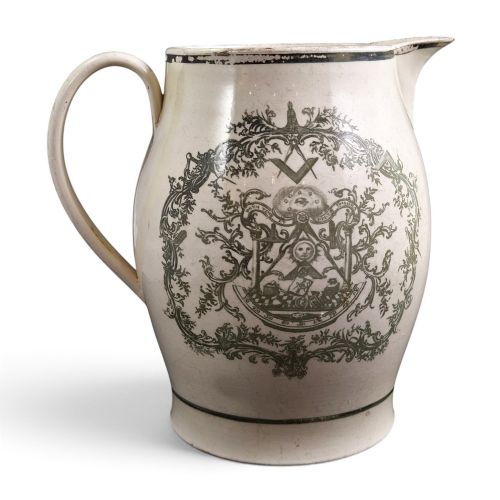
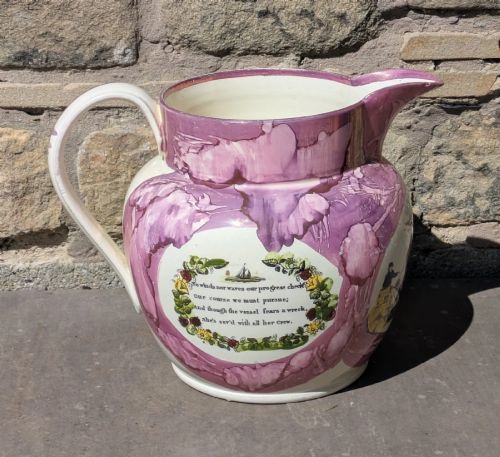
The versions you are most likely to meet on this page span the Georgian, Regency and Victorian periods, often taking the form of large creamware bodies or pink lustre pieces. They frequently carry commemorative themes, featuring maritime subjects, clipper ships and masonic symbols.
The geographical origins cluster heavily around English potteries, notably Staffordshire and Sunderland. These vessels combine robust domestic utility with detailed narrative prints that capture the social interests of the nineteenth century.
How they were made
Potters shaped the basic forms from earthenware and creamware bodies, throwing them on a wheel or pressing them in moulds to achieve generous volumes like the large one-gallon formats. Artisans then applied engraved paper transfers onto the porous clay surfaces before firing.
Makers finished the pieces with transparent lead glazes or added decorative highlights using metallic and cobalt glazes. Sunderland pieces frequently incorporated pink lustre techniques, imparting a distinct iridescent sheen alongside the transfer-printed motifs.
The listings span the Georgian, Regency, and Victorian periods, utilising earthenware, creamware, and various lustre and cobalt glazes.
What varies in quality
The distinction between ordinary production and superior work rests on the crispness of the transfer print and the registration of any hand-applied washes. Finer examples display sharp lines on complex subjects like the Boston State House or masonic emblems without blurring or smudge marks.
Surface treatments also set pieces apart, particularly the depth and richness of pink lustre applications and the clarity of the underlying creamware or earthenware body. Well-balanced proportions on large jugs indicate a higher degree of sculptural control during the potting process.
Sunderland Garrison Pottery·Staffordshire potteries
The Transfer Printed Earthenware Jug Glossary
- Transfer printing
- A decoration technique where an engraved copper plate transfers an inked design onto tissue paper, which is then pressed onto the ceramic body. This method allowed potteries to produce intricate pictorial scenes with speed and consistency.
- Creamware
- A refined earthenware developed in the eighteenth century, distinguished by its pale yellowish-buff tone under a transparent lead glaze. It formed the smooth ground for many early transfer-printed vessels.
- Pink lustre
- A metallic glaze containing gold in solution that fires to a shimmering pink, coppery or purple hue. Potters used it to frame transfer prints or add washes to ceramics.
- Cobalt glaze
- A deep blue colourant applied beneath or within the glaze, prized for its stability at high kiln temperatures. It provided the rich blue tones seen on early nineteenth-century pottery jugs.
- Lead glaze
- A traditional glassy coating applied to earthenware to render it waterproof and glossy. It deepens the warmth of the underlying ceramic body.
Transfer Printed Earthenware Jug: Frequently Asked Questions
What were transfer printed earthenware jugs used for?
These vessels served practical domestic and tavern functions for pouring liquids such as beer, cider and water during meals or gatherings.
Beyond simple utility, many functioned as commemorative pieces to mark fraternal memberships, historical events or maritime voyages.
How do I date a transfer printed jug?
Dating relies on stylistic clues, ceramic bodies such as creamware versus later Victorian earthenware, and specific subject matter.
Inscriptions, historical landmarks like the Boston State House, and distinct glazing styles like pink lustre help narrow the decade of production.
How should I display a large antique jug?
Their generous scale and bold pictorial transfers make them strong focal points on sturdy sideboards, mantels or within open cabinetry.
Ensure they sit safely away from heavy traffic areas to protect their handles and rims from accidental knocks.
What subjects appear on these jugs?
Common motifs include clipper ships, maritime themes, masonic symbols and architectural landmarks from America and Britain.
These subjects reflect the trade, political interests and social societies of the Georgian and Victorian eras.