


Splash Lustre Pitcher
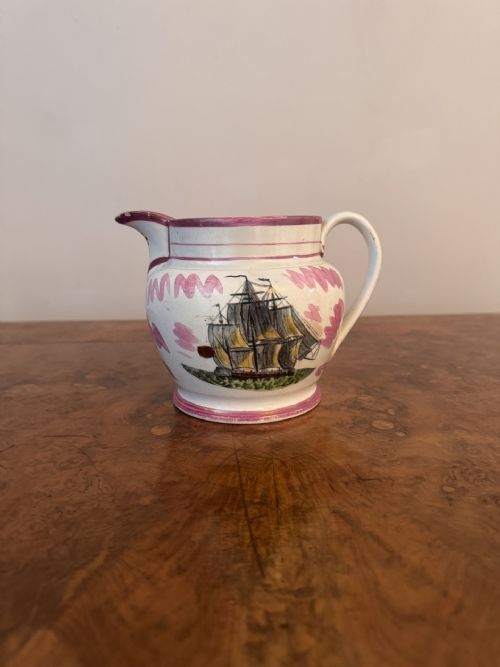
These splash lustre pitcher pieces bring vibrant metallic pink decoration and maritime history straight into your home.
Splash Lustre Pitcher
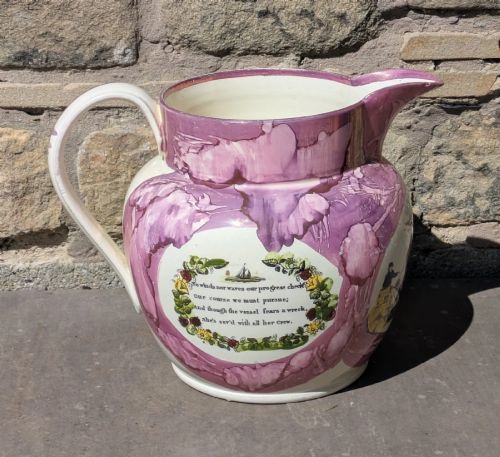
A splash lustre pitcher represents a distinct tradition of English pottery, primarily taking the form of jugs produced during the Georgian and Victorian eras. These ceramic vessels display characteristic metallic finishes that create a mottled or splashed visual effect across the surface.
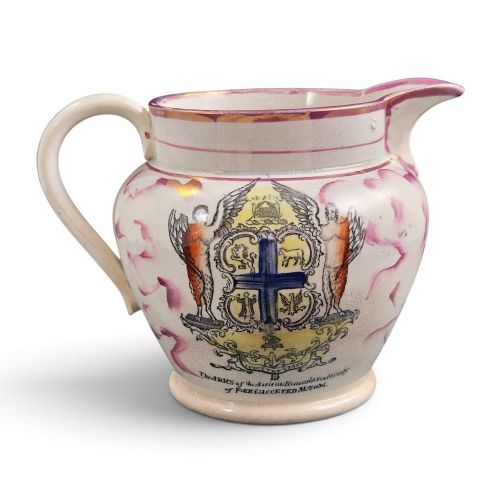
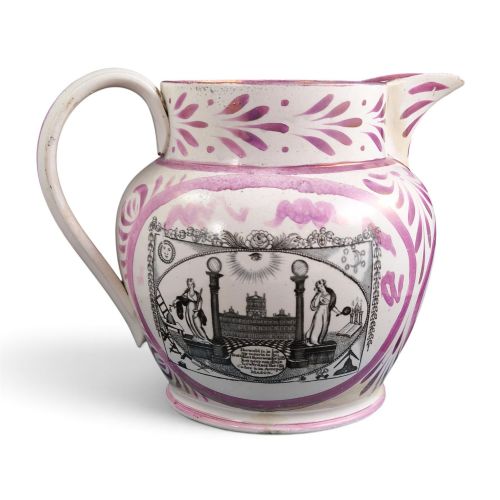
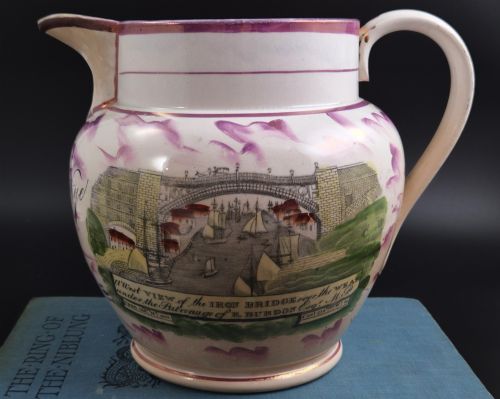
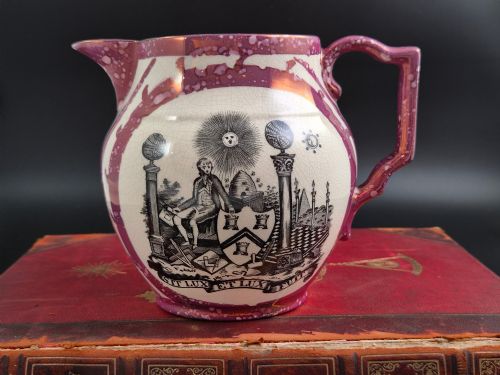
Most examples found in these listings originate from Sunderland potteries and feature transferred or hand-painted maritime themes, masonic symbols, and poetic panels. Buyers frequently encounter nineteenth-century earthenware jugs depicting the Iron Bridge over the Wear, tall ships, and clipper ships.
The objects range from large display jugs to decorative vessels created for commemorative purposes or everyday maritime life. Collectors focus on pieces that combine pink splash lustre effects with historical inscriptions and detailed transfer prints.
How they were made
Potters shaped these vessels using earthenware and pearlware bodies before applying metallic oxides to achieve the distinctive lustre glaze. The mottled pink finish results from metallic droplets interacting with the glaze during firing to create the signature splash pattern.
Decoration often combined transfer printing with hand-applied enamel colours to highlight ships, verses, and masonic emblems. Skilled artisans layered these techniques to produce rich visual depth across the ceramic surface.
What varies in quality
Quality rests upon the crispness of the transfer prints and the vibrancy of the pink lustre glaze across the body. Superior examples display rich, even splashing without muddiness, alongside carefully applied enamel highlights that remain bright and clear.
Historical significance and provenance elevate certain pieces, particularly those bearing specific dates, named recipients, or uncommon subjects like boxing scenes and named maritime vessels. The complexity of the imagery, such as triple-print decorations and detailed architectural renderings, distinguishes finer pottery.
The Splash Lustre Pitcher Glossary
- Splash lustre
- A metallic glaze technique that creates a mottled or splattered appearance across earthenware surfaces. This finish is characteristic of nineteenth-century Sunderland pottery.
- Pearlware
- A refined earthenware developed in the late eighteenth century featuring a subtle bluish tint in the glaze. Potters used this body as a base for early lustre decoration.
- Transfer printing
- A method of applying detailed designs to ceramics using an engraved copper plate and tissue paper. This technique allowed potteries to produce complex maritime and masonic scenes efficiently.
- Masonic jug
- A ceramic vessel decorated with symbols and emblems associated with Freemasonry. These pieces frequently appear within nineteenth-century lustre pottery traditions.
- Earthenware
- A porous pottery fired at lower temperatures, commonly used for domestic and decorative jugs. It provides the standard structural body for these lustre pieces.
Splash Lustre Pitcher: Frequently Asked Questions
What is a splash lustre pitcher?
A splash lustre pitcher is a nineteenth-century English earthenware jug finished with a metallic glaze that creates a mottled pink visual effect. These vessels frequently feature printed maritime scenes, poems, or masonic symbols.
Potters across the Sunderland region produced these jugs during the Georgian and Victorian periods for commemorative and decorative use.
How do I date a lustre jug?
Dating relies on examining the ceramic body, glaze characteristics, and specific transfer-printed subjects. Pearlware bodies and early maritime themes typically point toward the earlier nineteenth century.
Later Victorian examples often show heavier earthenware bodies and distinct stylistic variations in the pink splash glaze and enamel colours.
Where were these jugs made?
The vast majority of these pieces originated in the potteries around Sunderland in the northeast of England. Local workshops utilised access to maritime trade and local industrial landmarks like the Iron Bridge.
Potters catered to sailors, local residents, and fraternal organisations by incorporating ships, bridges, and verses directly onto the ceramic surface.
How should I display my jug?
These decorative jugs require stable placement away from direct sunlight and high-traffic areas to protect the enamel colours and glaze. Their substantial forms make them suitable for open shelving or cabinets where the transfer prints remain visible.
Good lighting helps reveal the metallic shimmer of the pink splash lustre finish against the ceramic body.