


Antique Sunderland Jug
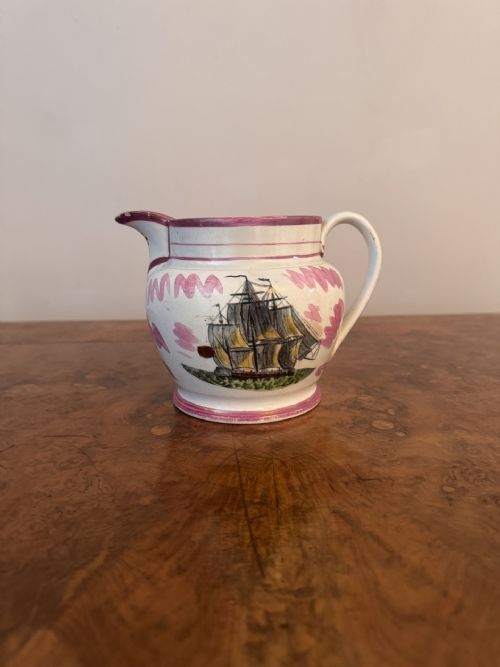
These antique sunderland jugs carry the pink splash lustre and maritime transfers that defined nineteenth-century English earthenware tables.
Antique Sunderland Jug
When you search for an antique sunderland jug, you look at earthenware vessels shaped for the table and decorated with commemorative transfers, poetry, or masonic emblems. These pieces emerge chiefly from the nineteenth century, spanning the Georgian and Victorian eras.
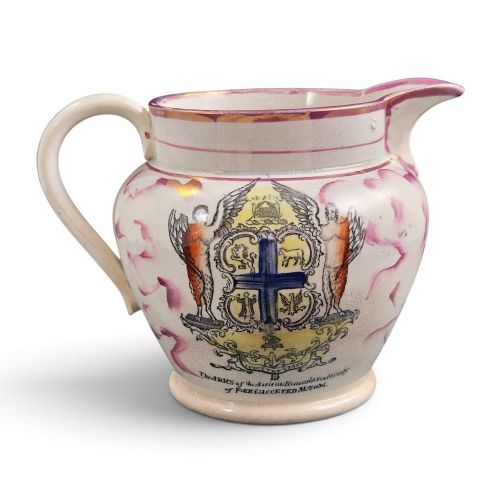
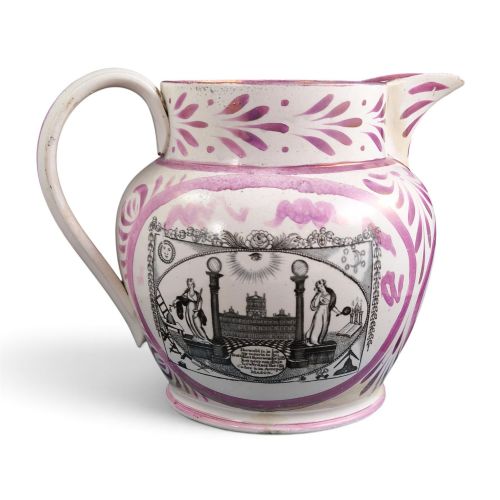
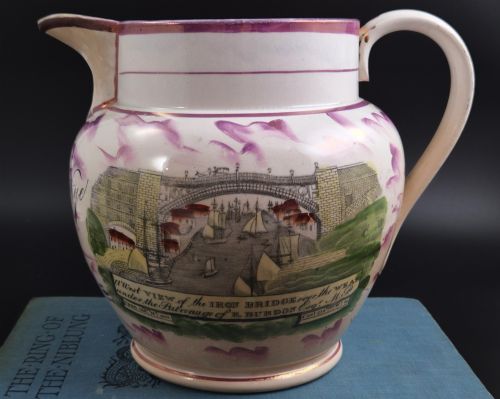
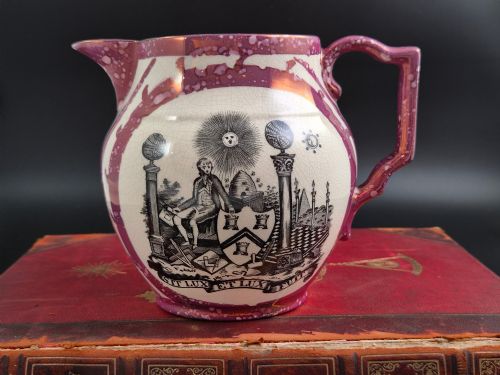
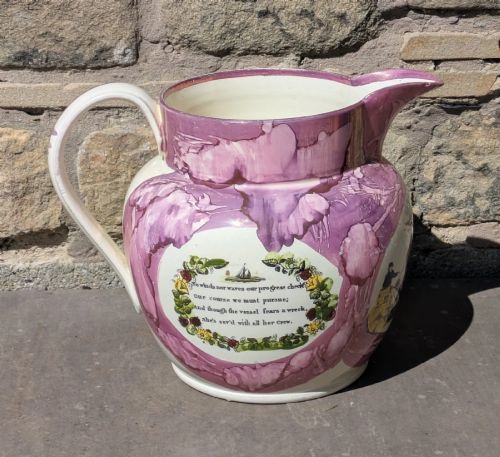
The most common examples on this page bear pink lustre glazes and feature shipping scenes, the Iron Bridge over the Wear, or named portraits. Forms range from large pouring vessels to cream jugs, sometimes accompanied by matching sugar bowls.
Makers recorded in the evidence include the Garrison Pottery, alongside wider production across the Victorian English pottery tradition. The vessels combine folk art character with utilitarian forms designed for everyday use or display.
Materials and construction
Potters built these vessels using ceramic earthenware and pearlware bodies, shaped into jugs and pitchers. The clay forms provided a stable base for subsequent glazing and transfer printing.
Decoration relied upon metallic glazes, specifically pink lustre and splash effects created by metallic oxides. Enamel colours were often hand-applied over transfer-printed outlines depicting ships, masonic symbols, or poetic verses.
One cheerful Victorian vessel records a boxing match alongside its maritime decoration.
What separates examples
The distinction between standard jugs and finer pieces rests upon the clarity of the transfer printing and the richness of the pink lustre. Rich, even coverage of metallic glaze elevates a piece above plain earthenware.
Complexity of subject matter also marks out better examples, such as multi-print masonic jugs or named vessels featuring specific ships and dates. Glass variants, such as blue wrythened cream jugs, introduce material variety into the broader range.
Garrison Pottery
The Antique Sunderland Jug Glossary
- Pink lustre
- A metallic glaze technique containing gold or copper that fires to a shimmering pink finish. It creates the characteristic mottled or splash patterns found on these vessels.
- Pearlware
- A refined earthenware body developed in the late eighteenth century with a bluish tint in the glaze. It serves as an early substrate for printed maritime scenes.
- Transfer printing
- A method of applying detailed engravings to ceramics via paper tissue. It allowed potters to reproduce complex ship scenes and poetry consistently.
- Wrythened
- A twisted or spiral moulding pattern in glassware. This technique appears on specific cream jugs from the Georgian period.
- Garrison Pottery
- A notable production site in Sunderland associated with commemorative earthenware. Pieces from this pottery often feature masonic and clipper ship motifs.
Antique Sunderland Jug: Frequently Asked Questions
What themes appear on these jugs?
Most pieces display maritime themes, including tall ships, clipper ships, and shipping scenes. Other common subjects feature masonic symbols, poetry panels, and the Iron Bridge over the Wear.
Potters also recorded specific names, dates, and boxing scenes on selected vessels. These varied subjects reflected the interests of nineteenth-century maritime communities.
How do I identify the period?
Georgian examples often utilise pearlware bodies and feature early transfer techniques alongside poetic panels. Victorian pieces tend towards standard earthenware with heavy pink splash lustre and masonic emblems.
Dates inscribed on the vessels themselves provide clear chronological markers. Stylistic shifts from neoclassical restraint to Victorian folk art help separate earlier pieces from later ones.
Were they used for serving?
Many jugs served a practical function on the table for water, milk, or beer. Large vessels held liquids for communal dining in homes and inns.
Others served primarily as commemorative display pieces rather than working tableware. Their size and intricate transfer prints suggest they were meant to be admired on mantelpieces.
How should I clean them?
Wash ceramic surfaces gently with warm water and mild soap using a soft cloth. Avoid harsh scrubbing that might damage the enamel colours and metallic lustre.
Keep lustreware away from harsh chemicals and prolonged direct sunlight. Careful handling protects both the earthenware body and the delicate glaze layers.