


Pink Lustreware Pitcher
A pink lustreware pitcher brings a flash of metallic warmth and transfer-printed storytelling to any room, rooted firmly in the Georgian and Victorian eras.
Pink Lustreware Pitcher
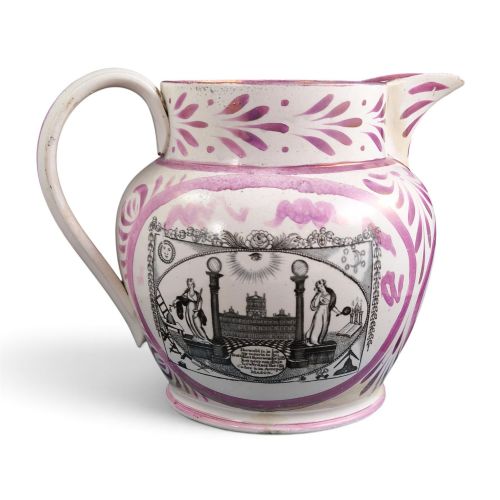
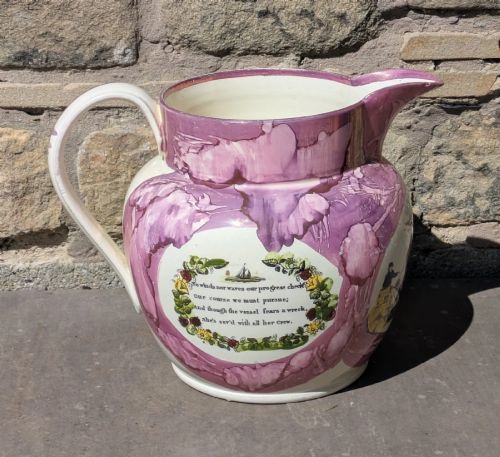
A pink lustreware pitcher is primarily represented here by substantial earthenware and pearlware jugs originating from the Georgian and Victorian periods. These vessels frequently display narrative transfer prints alongside the characteristic pink and purple metallic glaze.
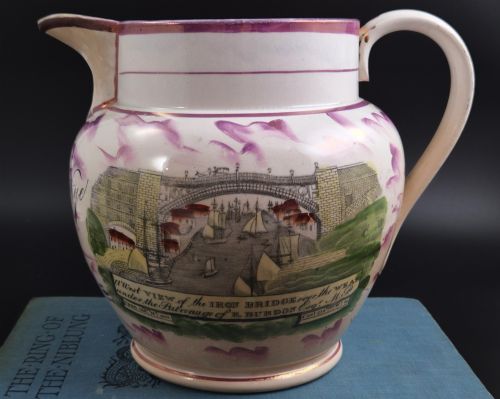
The forms span centuries, featuring items from around 1800 up to the 1860s. Buyers will encounter jugs carrying maritime themes, poetic panels, and specific commemorative subjects like the Iron Bridge over the Wear.
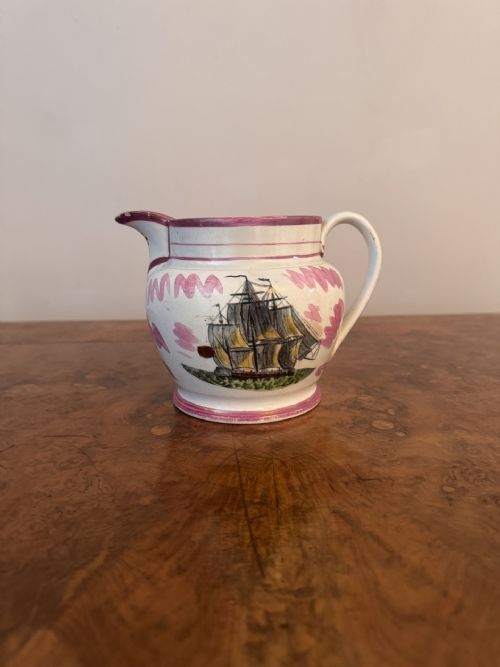
Most examples connect directly to Sunderland production centres or general Staffordshire kilns. The pieces range from large triple-print masonic jugs to smaller decorative examples featuring boxing or tall ship motifs.
How they were made
Potters shaped these pitchers using earthenware or pearlware bodies before applying detailed transfer-printed decoration in purple or black enamel. The iconic pink effect comes from a metallic glaze or metallic oxide technique that creates a mottled or splashed surface during firing.
Makers achieved the distinctive lustre finish by applying a thin metallic film over the fired ceramic body, which reduced in the kiln to leave a shimmering metallic sheen. Additional hand-colouring in various enamels often accompanied the transfer prints to brighten maritime scenes and poetic panels.
Sailors could proudly display their maritime loyalties and a dash of metallic pink right on the mantelpiece.
What varies in quality
Quality rests upon the crispness of the transfer print and the richness of the metallic glaze application. Pieces featuring complex multi-print compositions, such as Masonic emblems combined with verse, demonstrate greater ambition than plain or lightly decorated vessels.
The depth and coverage of the pink splash effect also dictate the visual strength of the pitcher. Exceptional examples combine clear historical or maritime subjects with named inscriptions and precise hand-enamelled details.
The Pink Lustreware Pitcher Glossary
- Lustre Glaze
- A metallic glaze applied to ceramics to create an iridescent or shimmering surface. This technique reflects light and gives pink lustreware its distinctive metallic pink and purple appearance.
- Pearlware
- A refined earthenware developed in the late 18th century featuring a bluish glaze that pooled in crevices. It served as a common body for early lustre jugs.
- Transfer Print
- A method of decorating ceramics by transferring an engraved design from a copper plate via tissue paper onto the clay body. This allowed for detailed maritime scenes and poetic panels to appear repeatedly on jugs.
- Earthenware
- A porous pottery body fired at lower temperatures, commonly used for utilitarian and decorative jugs before being glazed and decorated.
- Metallic Oxide
- The chemical compound applied to ceramics to produce coloured metallic effects during the kiln firing process.
Pink Lustreware Pitcher: Frequently Asked Questions
What themes appear on these jugs?
The listings show a strong concentration of maritime themes, including tall ships and views of the Iron Bridge over the Wear. Other subjects feature Masonic symbols, poetic verses, and boxing scenes.
Such imagery reflects the popular culture and commemorative practices of the 18th and 19th centuries, often tailored for sailors and local communities.
How do I date a lustre pitcher?
Dating relies on stylistic markers, ceramic bodies like pearlware versus later earthenware, and specific inscriptions. Pieces span from around 1800 through the Georgian era into the Victorian period around 1860.
Named and dated examples provide a clear baseline for comparing stylistic shifts in transfer printing and glaze application across different decades.
Were these pitchers used daily?
While manufactured as functional ceramic jugs and pitchers, many carried commemorative or decorative intent due to their elaborate transfer prints and verse panels. Large vessels with Masonic or maritime themes likely served ceremonial roles or sat on display in homes and meeting rooms.
Their survival in varied condition suggests a mix of everyday use and careful preservation by past owners.
What is Sunderland lustre?
Sunderland lustre refers to earthenware and pearlware pottery produced in the Sunderland area, famous for its distinctive pink splash lustre finish. These items frequently incorporated transfer-printed local landmarks like the Wear bridge alongside moral or patriotic poetry.
Collectors prize these regional pieces for their specific combination of metallic glazes and detailed social history.