


Pink Splash Pitcher
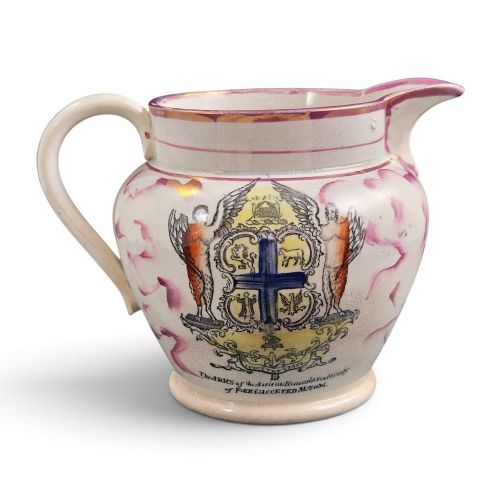
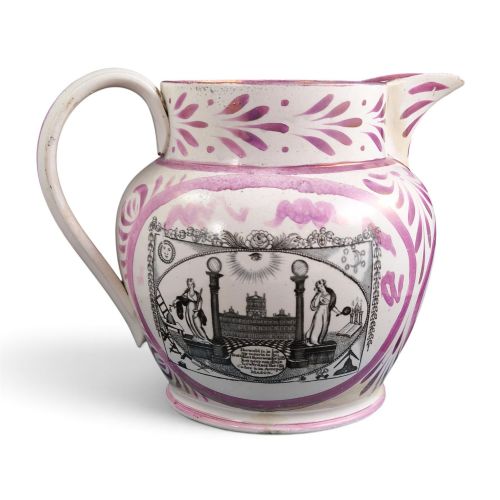
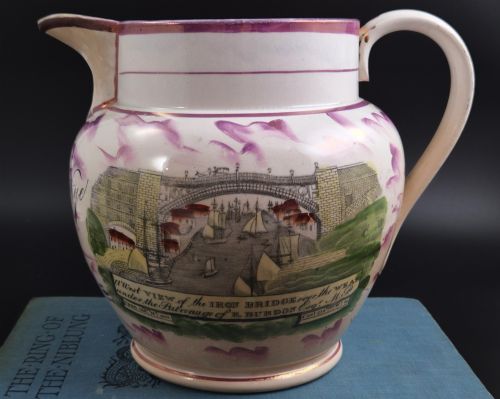
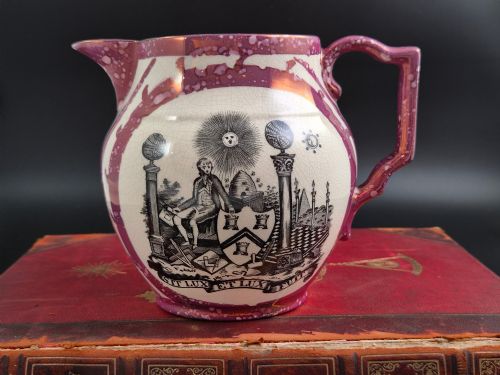
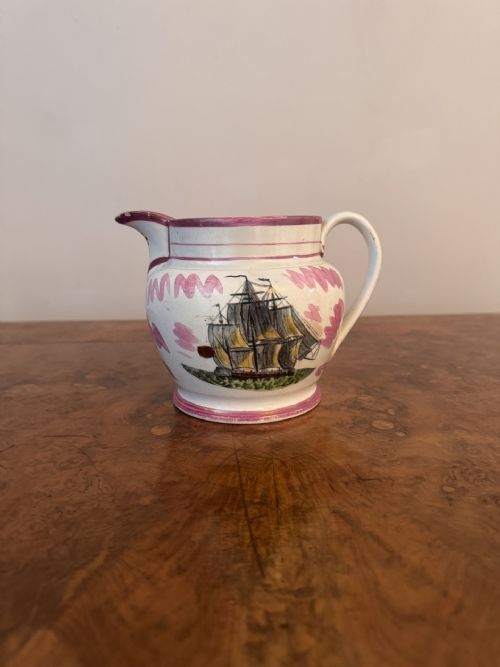
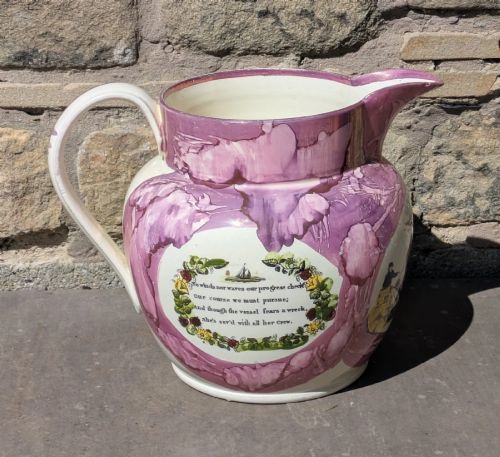
A pink splash pitcher is an earthenware jug carrying mottled metallic glaze and transfer-printed maritime or fraternal scenes.
Pink Splash Pitcher
A pink splash pitcher is an earthenware jug finished with mottled pink lustre and transfer-printed decoration. You are looking at vessels originating primarily from the nineteenth century, spanning the Georgian and Victorian eras.
The versions most likely to meet you on this page display maritime themes, masonic symbols, or historic structures such as the Iron Bridge over the Wear. These pieces combine utilitarian forms with detailed transfer printing and hand-coloured enamel highlights.
The category encompasses diverse forms from standard jugs to large decorative pitchers, often featuring poetic verses or commemorative inscriptions. They capture the folk art traditions of English potteries during the industrial period.
How they were made
Potters shaped these vessels from earthenware and pearlware before applying an initial glaze and firing the clay body. Artisans then added transfer-printed designs using copper plates to transfer monochrome or coloured images onto the ceramic surface.
The characteristic pink splash effect relies on metallic oxide applied to achieve a mottled lustre finish during a secondary kiln firing. Painters frequently highlighted the printed transfers by hand using vibrant enamels.
Listings span the Georgian and Victorian eras, utilising earthenware and pearlware bodies finished with lustre glazes.
What varies in quality
The sophistication of the transfer printing separates standard pieces from finer examples, with crisper lines and more complex multi-coloured scenes indicating superior craftsmanship. The clarity of the hand-painted enamel highlights also dictates the visual impact of the vessel.
Sunderland Garrison Pottery
The Pink Splash Pitcher Glossary
- Lustre glaze
- A metallic glaze that produces an iridescent, reflective surface when fired in a reducing kiln. This technique creates the characteristic pink sheen found on nineteenth-century jugs.
- Pearlware
- A refined earthenware developed in the late eighteenth century featuring a subtle blue-tinted glaze over a white body. It served as a common substrate for early lustre pottery.
- Transfer printing
- A method of applying pre-printed designs from an engraved copper plate to ceramic surfaces using tissue paper. This innovation allowed potteries to produce intricate pictorial scenes rapidly.
- Metallic oxide
- Chemical compounds mixed into glazes to impart colour and optical effects under heat. These oxides create the shimmering pink splash patterns across the pottery.
- Earthenware
- Porous pottery fired at lower temperatures than stoneware or porcelain. It forms the structural body for the vast majority of these decorative jugs.
Pink Splash Pitcher: Frequently Asked Questions
What are pink splash pitchers?
These items are ceramic jugs produced in English potteries during the nineteenth century, characterised by mottled pink metallic glazes.
They frequently feature transfer-printed maritime themes, masonic emblems, and commemorative verses alongside hand-coloured enamel details.
How were these jugs used?
While manufactured as functional vessels for liquids, many served decorative or commemorative roles within homes and fraternal lodges.
Their detailed prints and inscribed poetry often marked specific historical events, maritime voyages, or personal milestones.
How do I date a lustre jug?
Dating relies on stylistic clues, ceramic bodies such as pearlware versus later earthenware, and occasionally direct inscriptions or dates fired onto the piece.
Georgian examples tend to feature pearlware bodies, while Victorian pieces often display heavier earthenware construction and distinct transfer styles.
How should I display them?
These jugs require stable shelving away from direct sunlight to preserve the delicate enamel highlights and metallic lustre glaze.
Their vibrant transfer prints make them suitable for standalone display where the pictorial panels remain visible.