
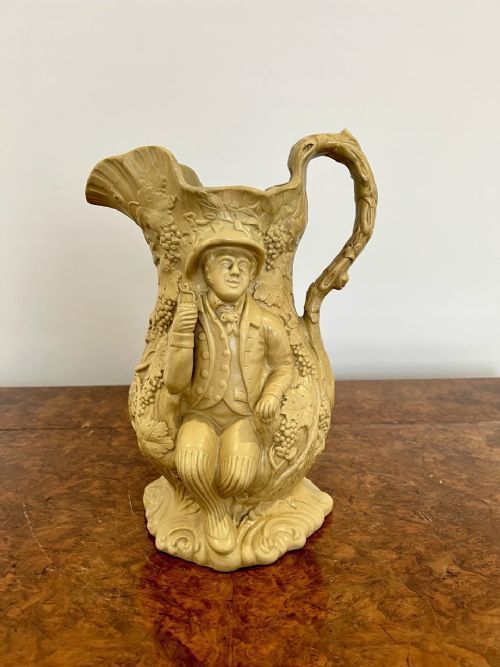


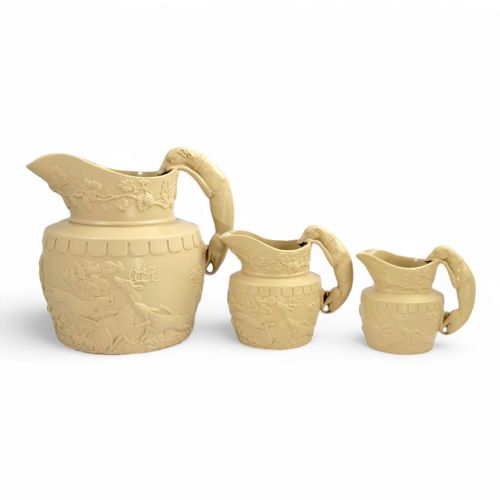


Relief Moulded Ceramic Pitcher
These relief moulded ceramic pitcher examples combine pressed decoration with utilitarian function, offering collectors tangible links to nineteenth-century domestic life.
Relief Moulded Ceramic Pitcher
A relief moulded ceramic pitcher is a utilitarian vessel featuring raised patterns created by pressing clay into metal or plaster moulds. When you search for relief moulded ceramic pitcher on this page, you encounter pieces primarily from the nineteenth century, including Victorian, Georgian, and Regency eras.
The forms span large exhibition jugs, milk jugs, and graduated sets designed for daily service or display. Makers such as Charles Meigh, Ridgway, and Minton produced these vessels in various styles encompassing classical revival, Gothic motifs, and majolica glaze treatments.
Stoneware and earthenware dominate the selections, alongside specific bodies like buff-coloured stoneware, white stoneware, and parian. Collectors find both plain salt-glazed utilitarian items and brightly coloured glazed majolica versions.
How they were made
Potters utilised specialised press-moulding techniques to achieve crisp, three-dimensional surface designs directly onto the clay body. Liquid slip or plastic clay was pressed into prepared moulds, capturing intricate details of figures, foliage, and architectural motifs.
Glazing varied according to the desired aesthetic, ranging from simple salt-glazing on utilitarian stoneware to rich coloured majolica glazes on earthenware bodies. Some vessels incorporated applied sprigged decoration, where separately moulded ornaments were affixed to the surface before firing.
Listings feature nineteenth-century earthenware and stoneware pieces incorporating majolica, salt glaze, and parian finishes.
What varies in quality
The crispness of the moulded relief separates superior examples from softer, worn strikes where mould wear diminishes detail. Sharp definition in figures and foliage indicates careful primary production and meticulous mould maintenance.
Glaze application and material selection further distinguish the range, from standard utilitarian earthenware to refined parian bodies or carefully controlled majolica colouration. Finish quality reflects the original maker's ambition, moving from everyday kitchenware to exhibition-standard decorative pieces.
Charles Meigh·Ridgway and Sons·Jones and Walley·Minton·Phillips and Bagster·George Jones
The Relief Moulded Ceramic Pitcher Glossary
- Relief moulding
- A manufacturing technique where raised decorative patterns are pressed into the clay body using a mould. This method allows for consistent, highly detailed pictorial scenes.
- Majolica
- A colourful lead-glazed earthenware style popular during the Victorian period. It uses vibrant metallic oxide colours over moulded surfaces.
- Parian
- A fine white unglazed porcelain-like ceramic body developed in the nineteenth century. It resembles carved marble and was often utilised for portrait busts and decorative jugs.
- Sprigged
- An ornamentation method where separately moulded clay motifs are applied by hand to the surface of a vessel before firing. It creates a contrasting layered relief effect.
- Salt glaze
- A vitreous coating formed by throwing common salt into the kiln during high-temperature firing. This produces a characteristic textured, pebble-like surface finish on stoneware.
Relief Moulded Ceramic Pitcher: Frequently Asked Questions
What is a relief moulded pitcher?
A relief moulded pitcher is a ceramic vessel featuring raised decorative designs created by pressing clay into a prepared mould.
These pieces typically date from the nineteenth century and served both functional pouring roles and decorative display purposes in homes.
How do I identify Victorian jugs?
Victorian jugs often display specific period characteristics such as classical revival motifs, Gothic details, or colourful majolica glazes.
Examining the base marks, material composition like parian or stoneware, and stylistic cues helps determine the precise nineteenth-century origin.
Were these pitchers used daily?
Many of these vessels were designed for practical domestic tasks such as serving milk, ale, or water at the table.
Graduated sets and larger exhibition pieces indicate that manufacturing catered to both utilitarian kitchen needs and formal hospitality.
What materials are common?
Earthenware and stoneware form the foundation of most pieces, supplemented by specialised bodies like buff stoneware and white stoneware.
Surface finishes range from simple salt glaze and cream sprigging to bright multi-coloured majolica glazes.