




Staffordshire Pottery Milk Pitcher
These staffordshire pottery milk pitcher examples are heavy earthenware and porcelain vessels designed for daily dairy service, carrying the charm of rural folk art into the home.
Staffordshire Pottery Milk Pitcher
A staffordshire pottery milk pitcher encompasses everything from standard creamers and water jugs to elaborate cow creamers and faceted vessels. You will frequently encounter nineteenth-century pieces alongside Georgian and Victorian examples decorated with transfer printing or hand painting.
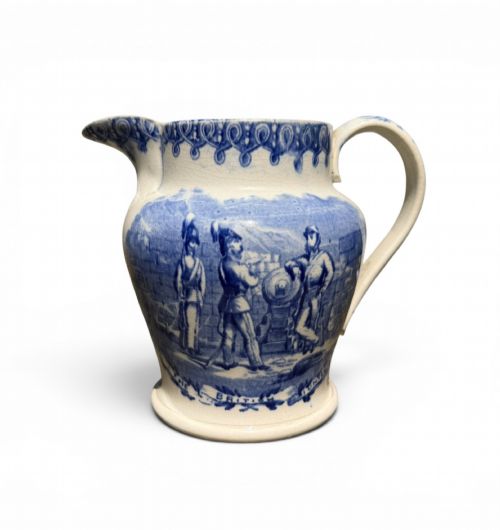
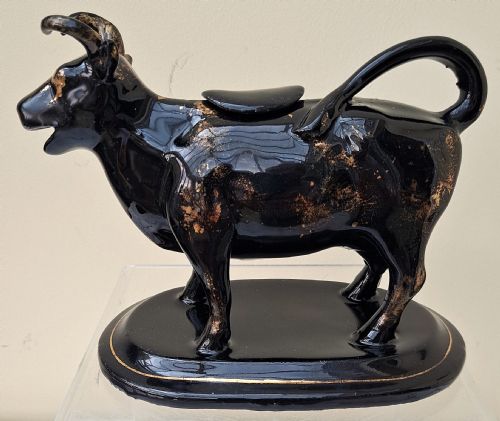
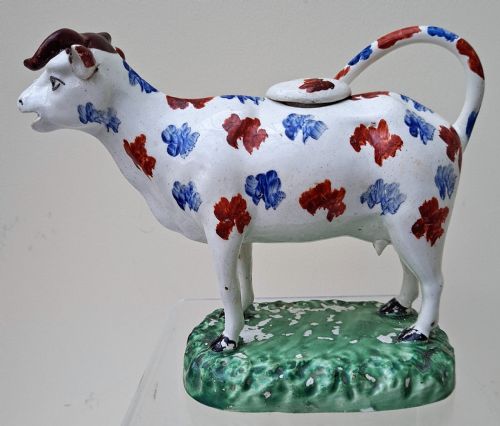
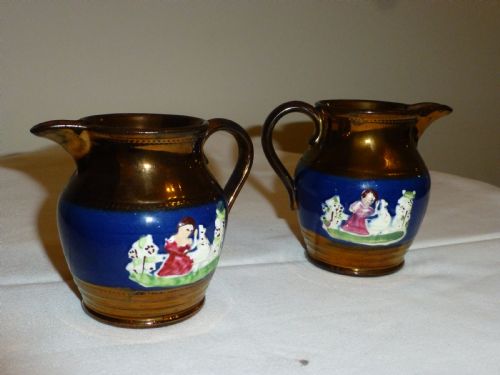
The selection ranges from large milk jugs to graduating sets of four, often featuring folk art motifs, Oriental scenes, or commemorative subjects like The British Volunteers. Many pieces take zoomorphic forms, notably the popular hobbled cow creamer complete with a milkmaid figure.
Origins stretch across Staffordshire, Yorkshire, and Wales, reflecting regional potting traditions from the early eighteen-hundreds through the Victorian era. These vessels served functional roles on the table before graduating to collector cabinets.
Materials and Techniques
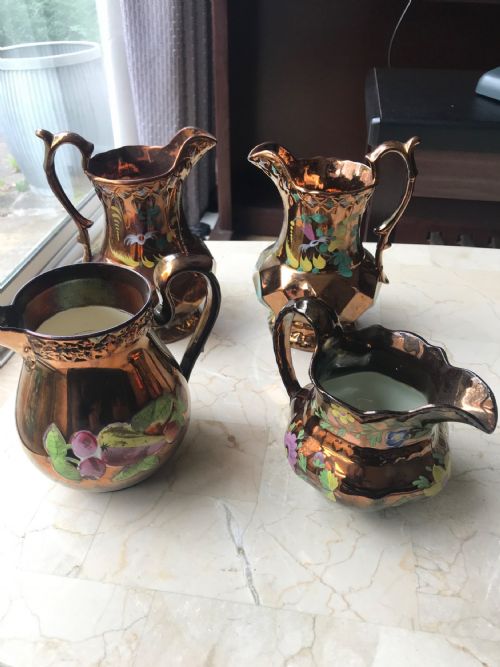
Potters shaped these vessels using earthenware, pearlware, and porcelain, applying copper lustre glazes, enamel colours, and gilt highlights to the finished body. Pearlware provided a smoother, whiter surface that held blue and white transfer decoration particularly well.
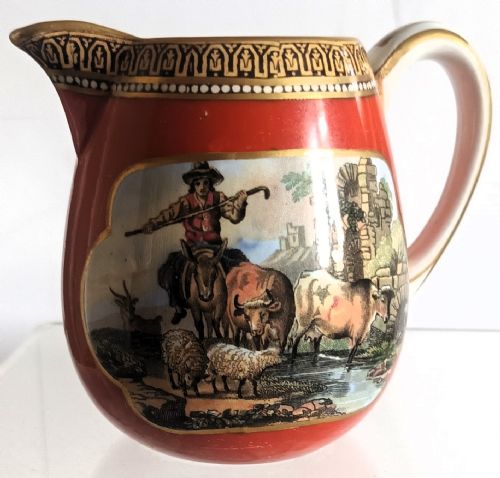
Copper lustre glaze yielded a metallic, reflective sheen that defined many nineteenth-century jugs, while Pratt-ware bodies allowed for moulded relief details enhanced by coloured glazes. Artisans combined hand decoration with transfer printing to achieve complex pictorial scenes on ceramic surfaces.
Listings feature earthenware, pearlware, and porcelain bodies decorated with copper lustre glaze, enamel, and transfer printing.
Factors of Quality
Quality rests upon the crispness of the moulding and the alignment of transfer-printed or hand-painted details. Sharp relief work on cow creamers and clean application of enamel colours distinguish better examples.
The richness of copper lustre glazes and the preservation of gilt accents indicate superior production standards. Graduated sets and matched pairs demonstrate greater factory consistency and survival value.
Keeling And Co·Copeland Spode
The Staffordshire Pottery Milk Pitcher Glossary
- Pearlware
- A refined earthenware developed in the late eighteenth century featuring a subtle bluish glaze that pooled in recesses. It served as a precursor to Victorian white ironstone.
- Copper Lustre Glaze
- A metallic glaze technique imparting a reflective bronze or copper sheen to the ceramic body. It became especially popular during the nineteenth century.
- Cow Creamer
- A ceramic vessel shaped like a cow where milk is poured through an opening on the back and dispensed via the mouth. These often include a milkmaid figure.
- Hydra Jug
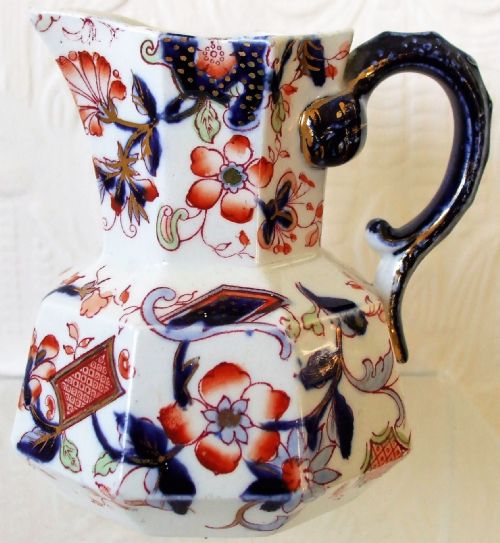
- A classical revival ceramic form featuring a moulded spout and loop handle reminiscent of ancient Greek vessel shapes. These appeared frequently in nineteenth-century production.
Staffordshire Pottery Milk Pitcher: Frequently Asked Questions
What is a staffordshire pottery milk pitcher?
A staffordshire pottery milk pitcher is a ceramic vessel made in the Staffordshire potteries for holding and pouring milk or cream. These pieces range from simple utilitarian jugs to ornamental cow creamers.
Potters produced them in earthenware, pearlware, and porcelain, decorating them with transfer prints, enamels, or metallic lustres.
How do I date an old pitcher?
Dating relies on material composition, glaze types, and decorative styles visible on the body. Pearlware and copper lustre point toward the Georgian and Regency periods, whilst later Victorian pieces often utilise heavier earthenware or porcelain.
Maker marks, where present, help narrow down the decade of production.
Were cow creamers used daily?
Cow creamers served both functional roles on the dining table and decorative purposes in domestic interiors. Their whimsical zoomorphic design made them popular conversation pieces during tea service.
Over time, many transitioned purely into display items for collectors of folk art.
What is copper lustre?
Copper lustre is a metallic glaze finish applied to pottery to create a shiny, reflective surface resembling polished metal. Potters achieved this effect by firing metallic oxides in a reducing atmosphere.
It appears frequently on nineteenth-century jugs, sometimes paired with hand-painted fruit or floral bands.