


Victorian Earthenware Milk Jug
These robust victorian earthenware milk jug examples bring tactile warmth to the table through patterned pottery and lustrous glazes.
Victorian Earthenware Milk Jug
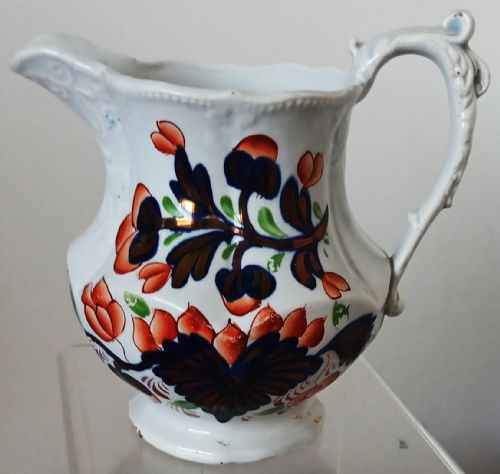
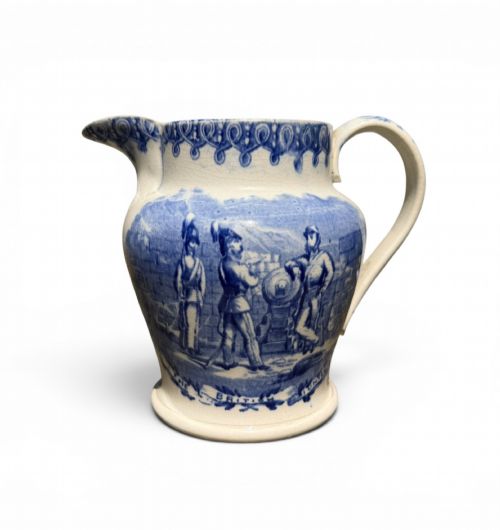
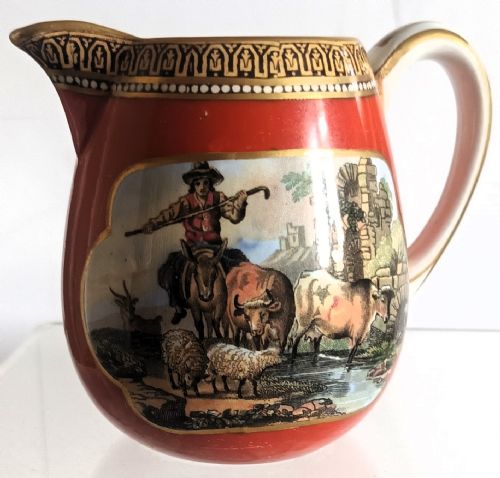
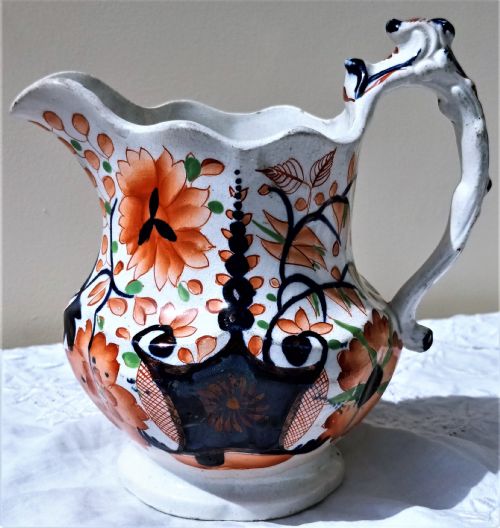
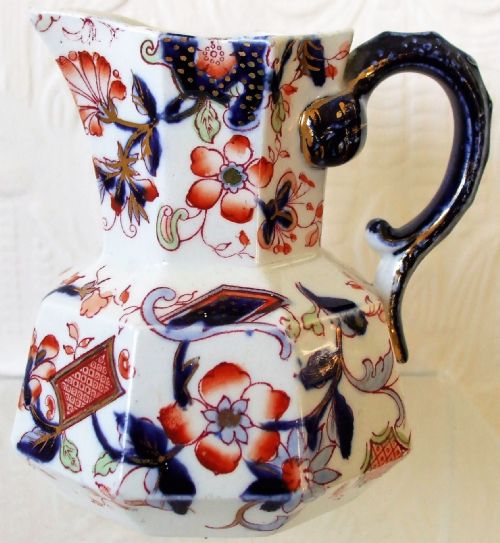
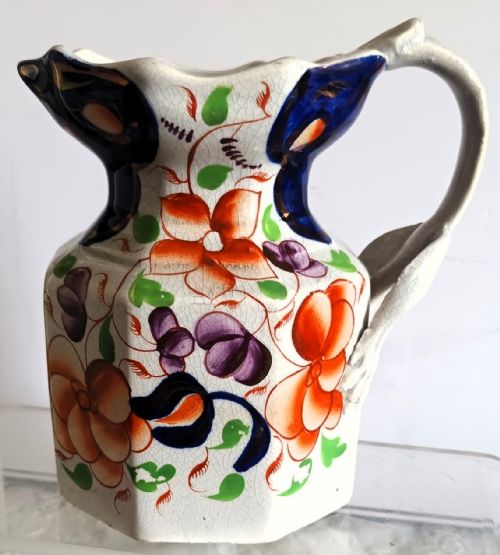
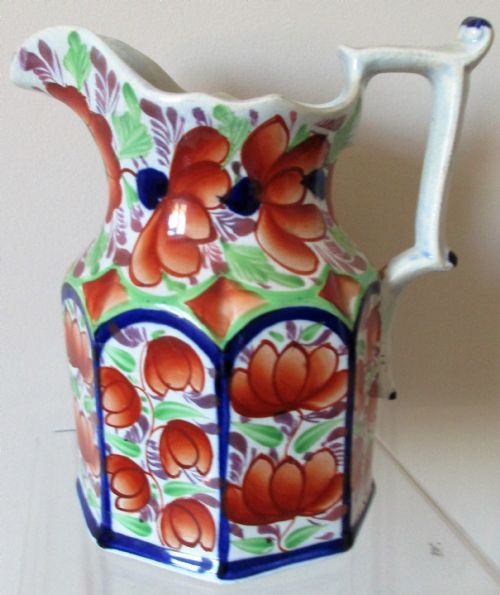
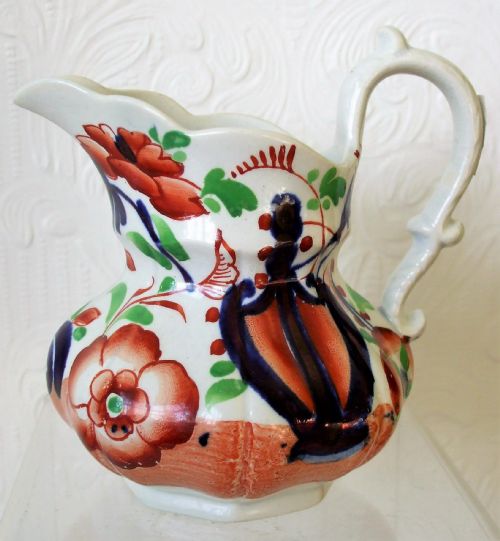
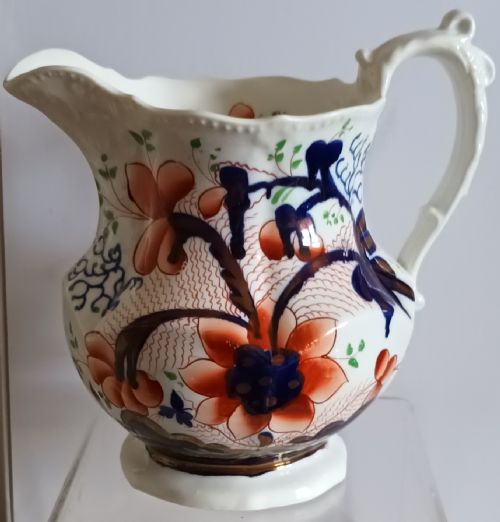
A victorian earthenware milk jug represents a practical domestic vessel produced during the nineteenth century, often found in regional patterns like Gaudy Welsh and Staffordshire formations. These pitchers range from small creamers to larger pouring jugs intended for daily dairy service on the table. The versions met most frequently on this page include Gaudy Welsh pottery jugs decorated with named patterns such as Pagoda and Gwent, alongside Staffordshire earthenware pieces.
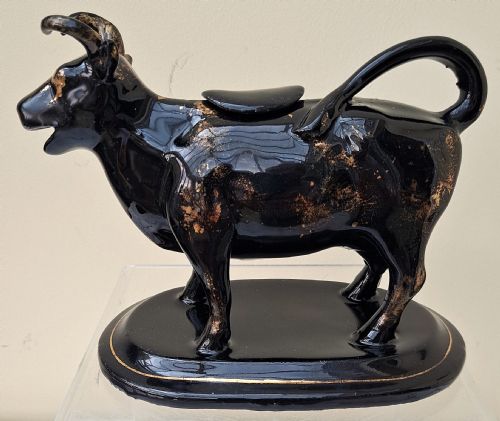
Beyond standard pouring vessels, the selection encompasses specialised forms such as cow creamers and black basalt milk jugs. These items display the functional design of the period while incorporating ornamental motifs suited for both service and display. The nineteenth-century manufacturing output spans straightforward ceramic jugs to rich polychrome enamel and gilt wares.
Materials and construction
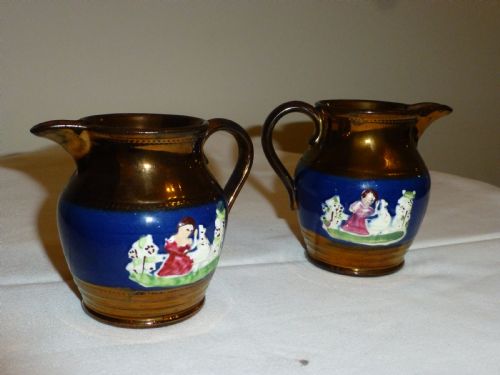
Potters of the period utilised earthenware, ceramic, and porcelain bodies, shaping them into milk jugs and pitchers before applying protective glazes. Many pieces receive additional surface enrichment through enamel painting, gilding, or copper lustre treatments that impart a metallic sheen to the ceramic surface. Specialised techniques produce dense black basalt bodies and lustrous black Jackfield finishes.
Decoration often involves hand-painted motifs in vibrant enamel palettes, seen clearly in the Gaudy Welsh pattern series featuring designs like Grape and Harlech. Staffordshire makers employed moulded construction methods, particularly visible in figural cow creamers and multi-tiered graduated jugs, sealing the porous earthenware body beneath a smooth vitreous coating.
Listings feature nineteenth-century earthenware and porcelain milk jugs decorated with copper lustre, enamel painting, and gilding across various regional styles.
Distinctions in execution
Quality separates simple utilitarian vessels from finely finished display pieces through the crispness of the moulded form and the precision of the enamel painting. Pieces featuring hand-applied gilt highlights and well-defined transfer-printed or painted patterns demonstrate greater artisan involvement during production. The depth and evenness of copper lustre finishes also indicate the skill applied during secondary firing stages.
The complexity of the ceramic form influences the character of each piece, from straightforward pitchers to intricate figural cow creamers and pouch jugs. Better examples maintain balanced proportions and clear definition in relief-moulded details, whereas simpler utilitarian items prioritise robust utility over decorative refinement.
Keeling and Co·Masons
The Victorian Earthenware Milk Jug Glossary
- Earthenware
- Porous pottery fired at lower temperatures, requiring a vitreous glaze to hold liquids securely. It forms the primary body for the majority of nineteenth-century domestic jugs.
- Copper lustre
- A metallic glaze technique producing a reflective, copper-hued surface on ceramic bodies. It gained widespread popularity across Staffordshire production.
- Gaudy Welsh
- A distinctive style of brightly coloured pottery featuring cobalt blue, iron-red, and copper lustre accents, often named after specific architectural or floral patterns.
- Jackfield
- A glossy black-glazed pottery type developed in Shropshire and later imitated widely during the Victorian era. It is frequently encountered on figural milk jugs and cow creamers.
- Cow creamer
- A hollow figural pitcher modelled in the shape of a cow, designed to be filled through an opening on the back and poured from the mouth.
Victorian Earthenware Milk Jug: Frequently Asked Questions
Were these jugs used for daily dining?
Victorian households utilised these earthenware pitchers primarily for serving milk or cream at the dining table during breakfast and tea services.
Sturdier iterations handled daily domestic demands, while more heavily gilded examples saw service primarily during formal household gatherings.
What is a Gaudy Welsh pattern?
Gaudy Welsh refers to a colourful nineteenth-century ceramic style characterised by cobalt blue, copper lustre, and vibrant enamel highlights applied to pottery jugs.
These patterns carry specific local names such as Pagoda, Gwent, and Harlech, reflecting the distinct decorative preferences of the period.
How can I tell a cow creamer apart?
Cow creamers are figural pitchers shaped like cattle, featuring a filling hole on the back and a pouring aperture at the animal's mouth.
Staffordshire potteries produced these hollow vessels in earthenware and Jackfield finishes as novel yet functional table accessories.