


Victorian Lustre Ceramic
Victorian lustre ceramic pieces bring metallic sheens and vibrant transfers to everyday vessels, catching the eye with reflective surfaces developed in nineteenth-century kilns.
Victorian Lustre Ceramic
Victorian lustre ceramic objects comprise utilitarian vessels and decorative figures finished with metallic light-reflecting glazes. Jugs and pitchers dominate the selection, often carrying nautical transfers or bright painted patterns associated with regional potteries.
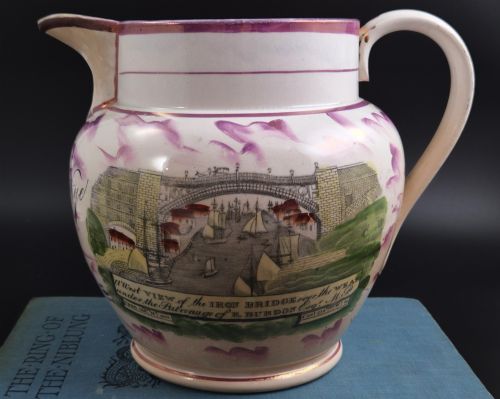
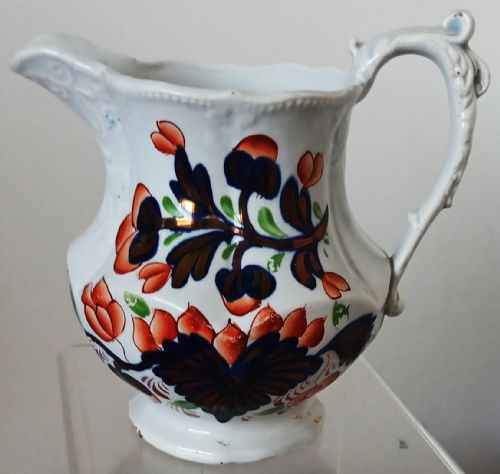
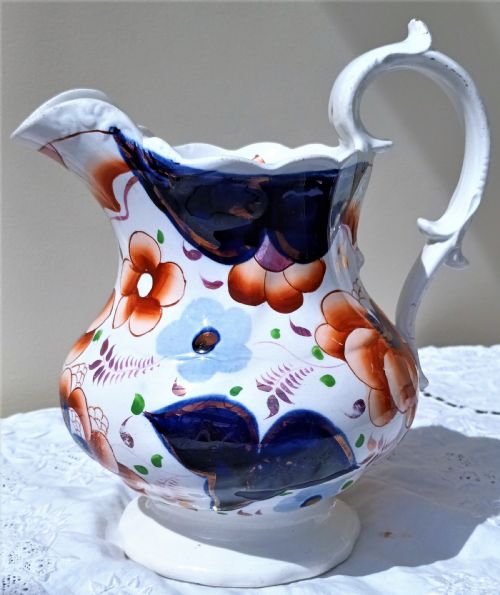
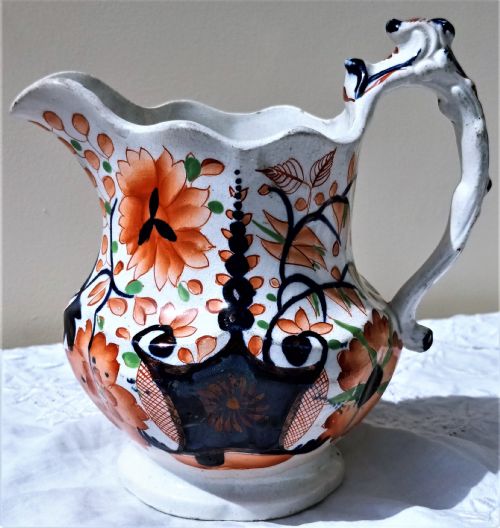
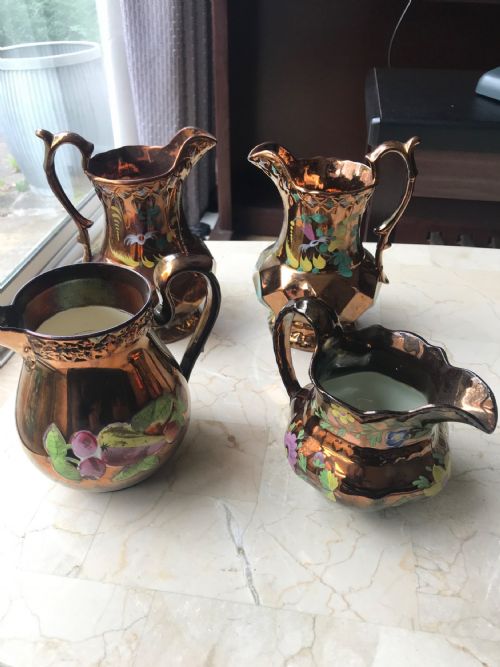
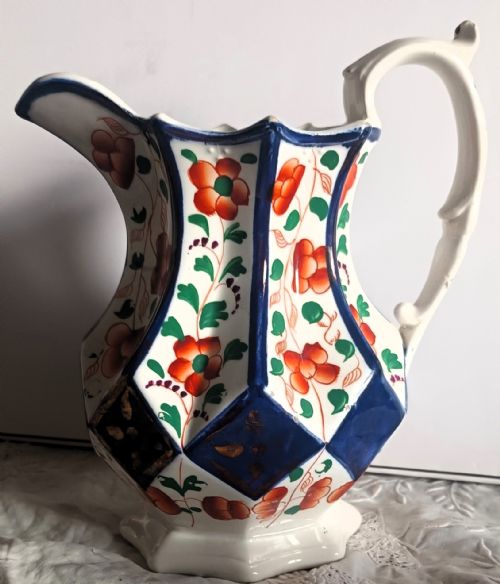
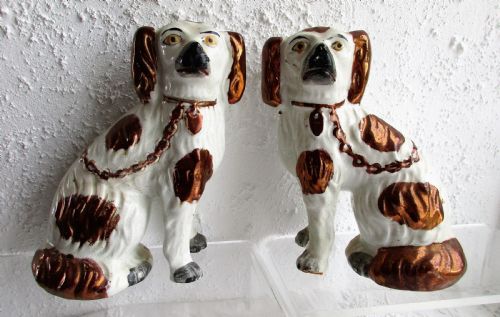
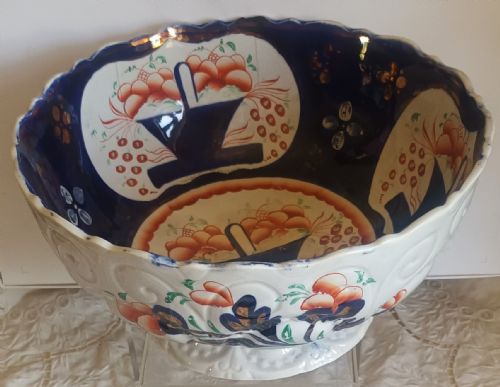
Buyers encounter distinct regional styles across these listings, from Sunderland pink splash vessels depicting the Iron Bridge to Staffordshire copper lustre cream jugs and figural spaniels. Gaudy Welsh wares also appear frequently, identified by vibrant cobalt blue, copper, and iron-red motifs on earthenware bodies.
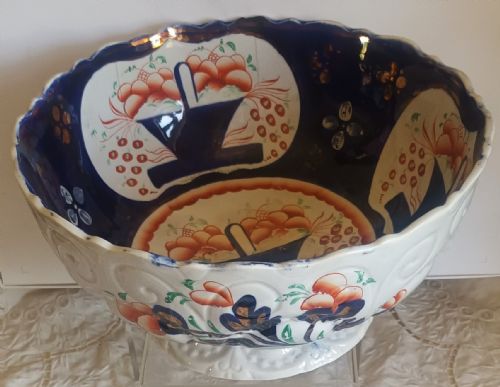
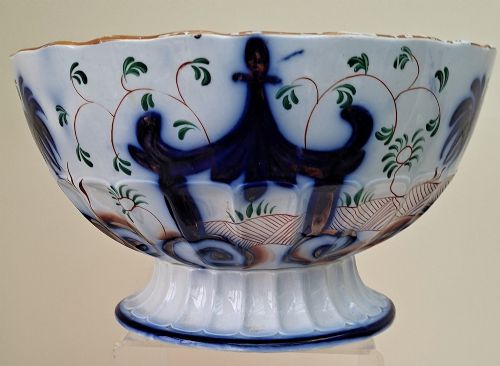
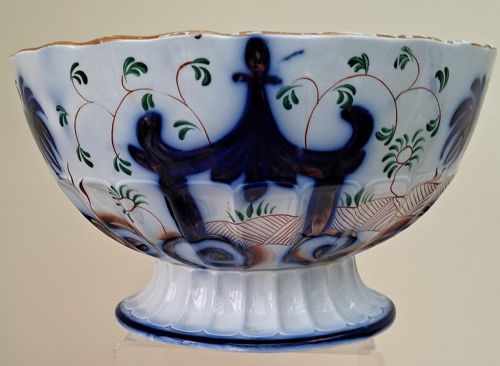
Domestic basins, footed bowls, and figural sculptures round out the selection, providing functional household items that doubled as parlour ornamentation. These pieces span the nineteenth century, reflecting shifting tastes from Georgian-influenced shapes to late Victorian earthenware.
How they were made
Potters built these items using earthenware and ironstone bodies, shaping them into jugs, bowls, and figures before applying preliminary glazes. Metallic salts mixed into the glaze created the characteristic copper, pink, and purple lustre sheen upon firing in reduction kilns.
Listings feature earthenware and ironstone bodies decorated with copper lustre, pink lustre, and enamel glazes across the nineteenth century.
What varies in quality
The intensity and evenness of the metallic sheen determine much of the visual success in lustre ceramics. A deep, highly reflective copper or pink surface demonstrates precise control during the kiln firing process, whereas thin or dull glazes appear flat.
Painting precision and transfer clarity separate standard production from finer examples. Crisp transfer prints featuring detailed maritime scenes or architectural landmarks remain distinct under close inspection, supported by clean, steady brushwork on hand-decorated Gaudy Welsh and Staffordshire patterns.
Livesley Powell And Co·Clement Massier
The Victorian Lustre Ceramic Glossary
- Lustre glaze
- A metallic surface treatment containing gold, silver, copper, or platinum that produces an iridescent sheen when fired in a kiln. This technique creates the reflective finish seen on nineteenth-century jugs and decorative bowls.
- Transfer printing
- A method of decorating ceramics by engraving a design on a copper plate, pulling it on tissue paper, and pressing it onto the earthenware body. This process allowed makers to replicate detailed maritime scenes and botanical patterns consistently.
- Gaudy Welsh
- A style of Staffordshire pottery characterised by brightly coloured hand-painted patterns using cobalt blue, iron red, and copper lustre accents. These wares were widely produced for domestic use during the nineteenth century.
- Pearlware
- A refined earthenware developed by Josiah Wedgwood that featured a thin glaze with a slight bluish tinge, designed to mimic Chinese porcelain. It served as a common body for early nineteenth-century lustre jugs and tea wares.
- Earthenware
- Porous pottery fired at lower temperatures than stoneware or porcelain, requiring a glaze to achieve watertightness. It forms the structural base for the vast majority of Victorian lustre vessels and figures.
Victorian Lustre Ceramic: Frequently Asked Questions
How do I identify Sunderland pink lustre jugs?
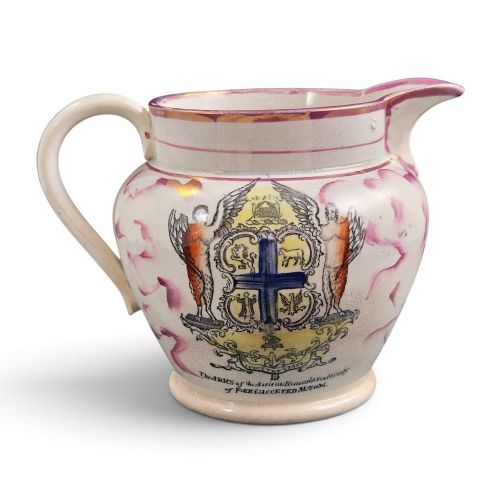
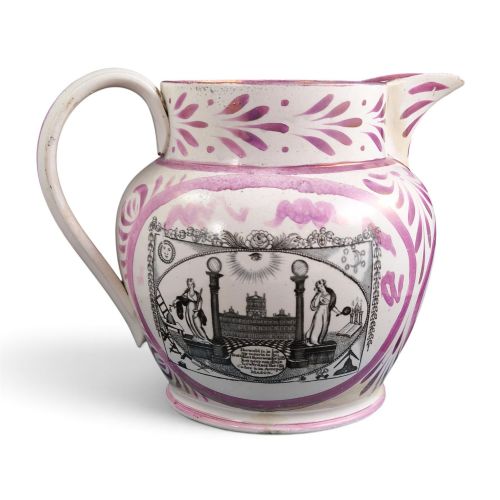
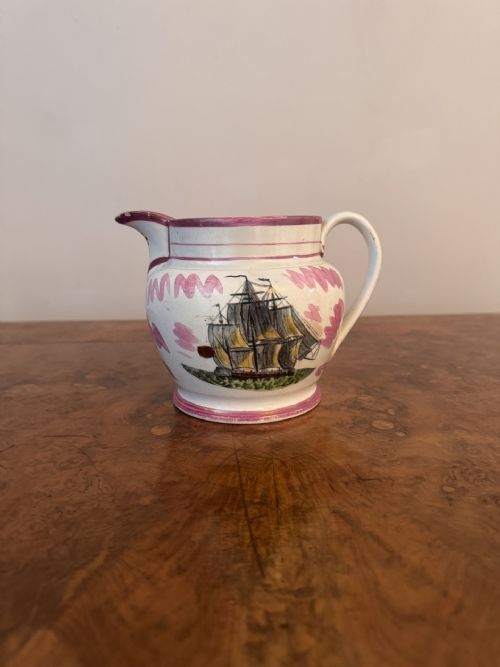
Sunderland pink lustre jugs feature a characteristic marbled or splash effect created by applying metallic solution over a white or cream earthenware ground. They frequently incorporate transfer-printed maritime subjects such as ships, the Iron Bridge over the River Wear, or Masonic symbols.
These pieces often display rhyming verses or sailor-themed inscriptions on the reverse side. The pink coloration ranges from a soft lilac to a deep rose tone depending on the gold content in the metallic glaze.
What is Gaudy Welsh pottery?
Gaudy Welsh pottery refers to earthenware vessels decorated with vibrant enamel colours combined with copper lustre highlights. Common motifs include floral arrangements, architectural pagodas, and basket designs.
Despite the name, these items were manufactured primarily in Staffordshire and exported or sold extensively in Wales. The palette relies on strong contrasts between cobalt blue, green, iron red, and metallic copper.
How should I clean antique lustre ceramics?
Antique lustre ceramics require gentle cleaning with warm water and mild soap using a soft cloth or sponge. Harsh abrasives and chemical cleaners must be avoided because they damage the delicate metallic surface film.
Soaking these earthenware vessels for extended periods is discouraged due to the porous nature of nineteenth-century clay bodies. Thorough drying with a soft towel preserves the integrity of both the glaze and any transfer-printed details.