


Antique Transferware Pitcher
These antique transferware pitcher examples bring 19th-century domestic narrative and industrial ceramic innovation directly to a modern table.
Antique Transferware Pitcher
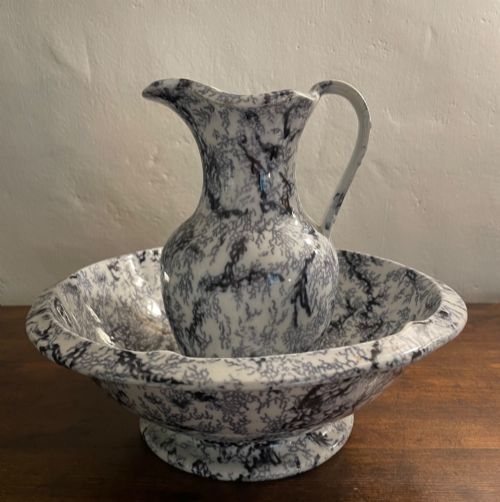
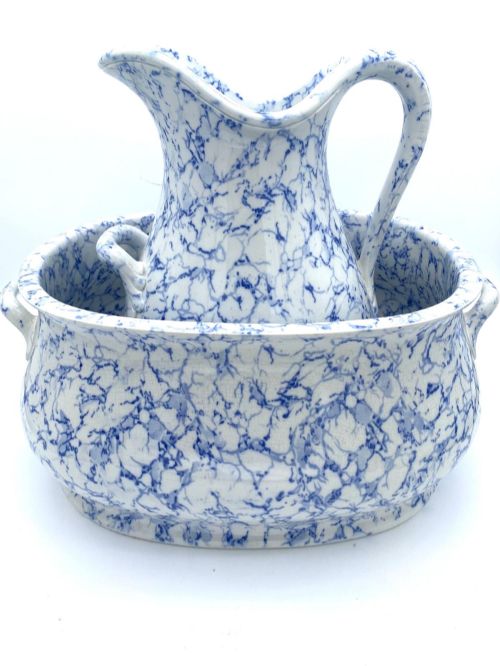
An antique transferware pitcher is a functional ceramic vessel decorated using a copperplate printing method that transferred ink onto the clay body before glazing and firing. Buyers seeking these pieces generally encounter earthenware, creamware, and pearlware bodies produced during the Georgian and Victorian eras. Forms range from large one-gallon vessels and wash set ewers down to smaller cream jugs and commemorative pieces.
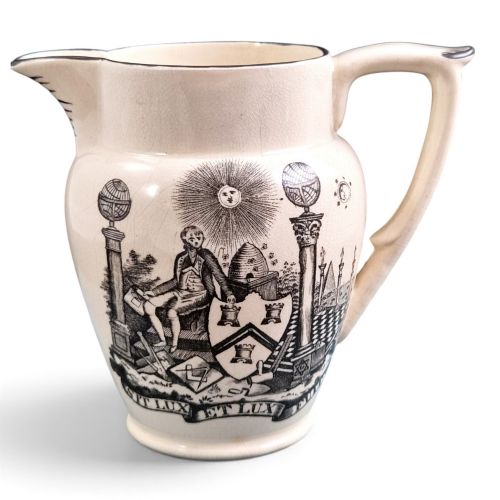
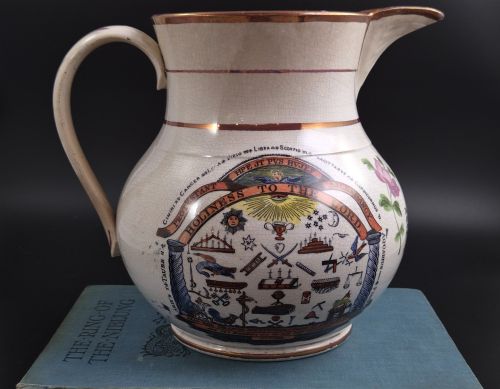
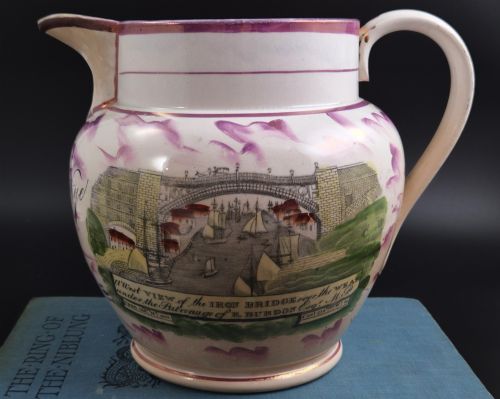
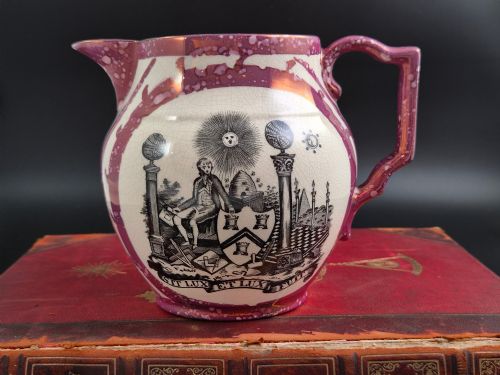
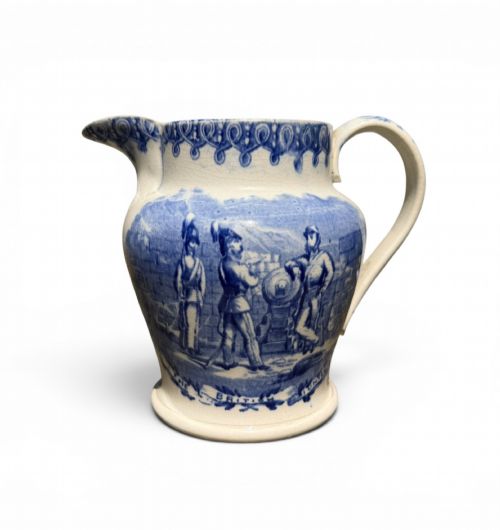
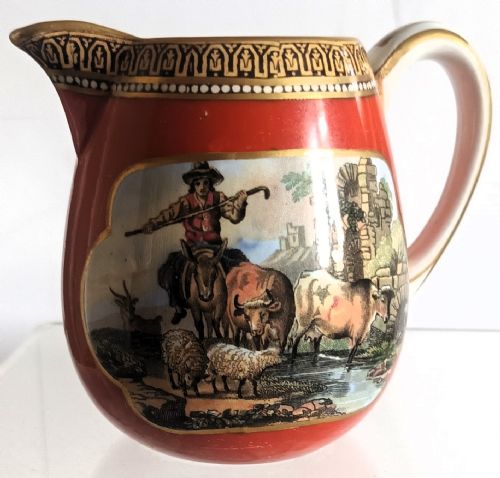
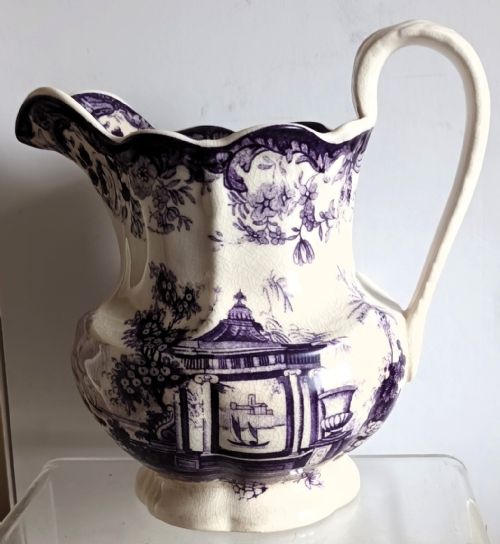
The imagery transferred onto these pitchers records the social, political, and aesthetic interests of the 18th and 19th centuries. Common motifs include topographical views such as the Iron Bridge over the Wear, maritime scenes featuring tall ships, Masonic emblems, and romantic blue and white patterns like the Italian Marble design. Many examples also incorporate hand-applied enamel highlights, metallic lustre glazes, or gilt accents over the original transfer print.
How they were made
Potters formed these pitchers using earthenware, creamware, or pearlware bodies, shaping them either on the potter's wheel or in moulds. The signature decoration relied on engraving an image onto a copper plate, applying oil-based pigment, and pressing tissue paper onto the plate to lift the design. Artisans then transferred this paper carefully onto the bisquewear ceramic surface, rubbing the ink into the porous clay before peeling the paper away and submerging the vessel in a transparent glaze.
Following the initial transfer print, pieces underwent a high-temperature kiln firing to set the underglaze pigment permanently beneath the glossy surface. Potters frequently enhanced select wares after this main glaze firing by painting polychrome enamels, purple or pink splash lustre, or gold leaf directly onto the surface before a final, cooler muffle kiln fix. This multi-step production allowed factories to combine mass-produced transfer outlines with individual hand-finished details.
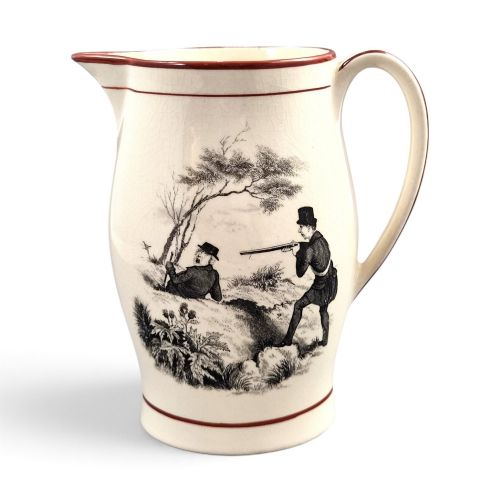
Early 19th-century potters immortalised local pub brawls, prize fights, and bull-baiting spectacles directly onto utilitarian jugs, ensuring domestic disputes lasted well beyond breakfast.
What varies in quality
The sharpness and clarity of the copperplate transfer print establish the baseline quality of a pitcher. Superior examples display crisp, unbroken lines where the tissue paper applied smoothly without smudging or overlapping the ink, whereas lesser items suffer from blurred impressions, dry patches, or patchy ink coverage.
Secondary enrichment elevates finer pieces above standard commercial wares. The application of hand-painted polychrome enamels, deliberate pink splash lustre effects, or gilt highlights demonstrates greater labour input by skilled decorators. The presence of a named maker, a specific commemorative date, or a complex multi-coloured transfer design distinguishes exhibition-grade vessels from everyday utilitarian jugs.
Minton·Caughley Coalport·Doulton Burslem
The Antique Transferware Pitcher Glossary
- Transferware
- Ceramic decoration created by pulling an ink impression from an engraved copper plate onto tissue paper and pressing it onto earthenware. This technique allowed factories to replicate intricate pictorial scenes consistently across multiple vessels.
- Creamware
- A refined, pale yellow earthenware developed in Staffordshire during the 18th century. Its warm tone provided a popular background for early black and coloured transfer prints.
- Pearlware
- An improved earthenware body invented by Josiah Wedgwood around 1779, featuring a thin glaze with a small amount of cobalt to create a bluish-white tint. It bridges the visual gap between creamware and later Victorian white ironstone.
- Lustre
- A metallic glaze technique that deposits a thin film of copper, silver, or gold onto the ceramic surface to produce a reflective sheen. Pink splash lustre was particularly popular on early 19th-century nautical and commemorative jugs.
- Earthenware
- A porous, opaque pottery fired at lower temperatures than stoneware or porcelain. Most transfer-printed jugs utilise this body, requiring a protective glass glaze to hold liquids.
- Flow blue
- A Staffordshire technique where volatile vapours of cobalt oxide were introduced into the kiln atmosphere during firing, causing the transfer print to blur softly into the surrounding white glaze. This created a distinctive, hazy, and rich aesthetic.
Antique Transferware Pitcher: Frequently Asked Questions
What is an antique transferware pitcher?
An antique transferware pitcher is an earthenware vessel decorated with a printed design transferred from an engraved copper plate onto the clay before glazing. These pieces were produced primarily in British potteries during the Georgian and Victorian periods.
Potters used them for serving liquids at the table, carrying water for wash sets, or commemorating significant historical events and naval achievements.
How do I date an old transferware jug?
Dating these jugs involves examining the ceramic body type, the colour palette, and any printed or impressed marks on the base. Creamware and pearlware bodies typically point to the late 18th or early 19th century, while heavier ironstone and flow blue styles often indicate the Victorian era.
Specific commemorative inscriptions or named events, such as the Iron Bridge over the Wear, also provide precise historical anchor points for manufacture.
Were these pitchers used for daily dining?
Many transferware pitchers served as functional items for pouring water, milk, or beer during daily household meals. Larger one-gallon examples and wash set ewers were specifically designated for personal hygiene and bedroom washing routines.
Some highly decorative pieces featuring Masonic emblems or political slogans functioned primarily as commemorative display objects rather than everyday kitchenware.
How should I clean my transferware pitcher?
Cleaning antique transferware requires gentle hand washing in lukewarm water with a mild, non-abrasive liquid soap and a soft cloth. Harsh scrubbing agents, modern dishwashers, and soaking can damage the aged glaze or erode delicate hand-painted enamel and lustre details.
Careful drying with a lint-free towel preserves the historic ceramic surface and prevents moisture from entering any microscopic crazing lines in the glaze.