


Antique Splash Lustre Jug
An antique splash lustre jug brings tactile earthenware and shimmering metallic glaze into your room, catching the light with the rich pink tones of nineteenth-century English potteries.
Antique Splash Lustre Jug
An antique splash lustre jug is a ceramic vessel decorated with metallic oxide glaze that creates a speckled, mottled effect across the surface. These pieces emerge predominantly from nineteenth-century English potteries, spanning the Georgian and Victorian eras.
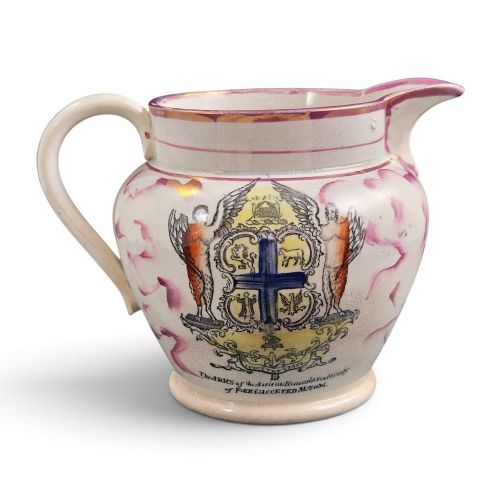
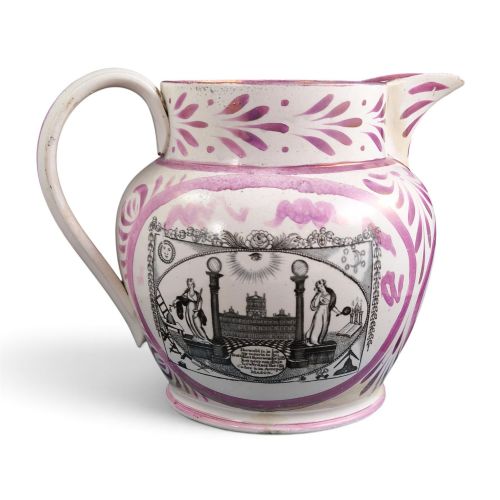
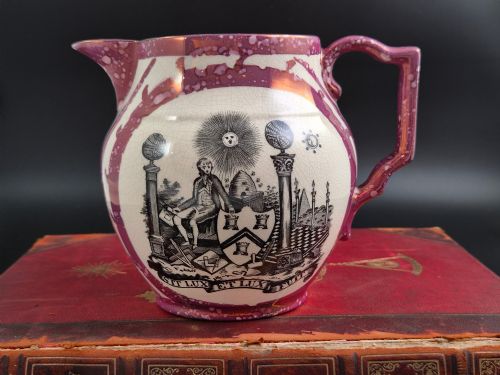
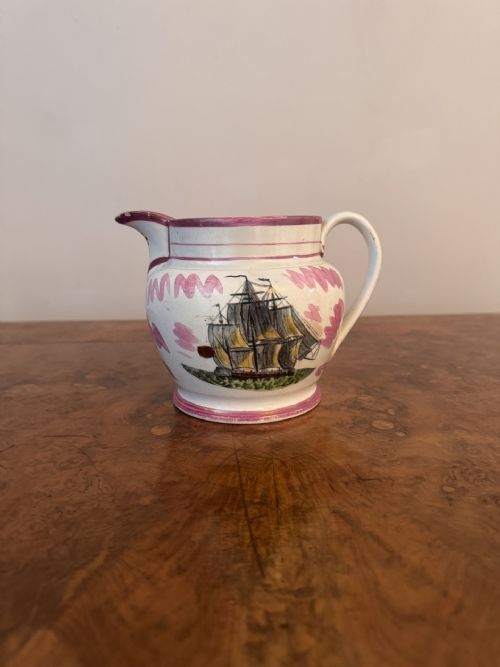
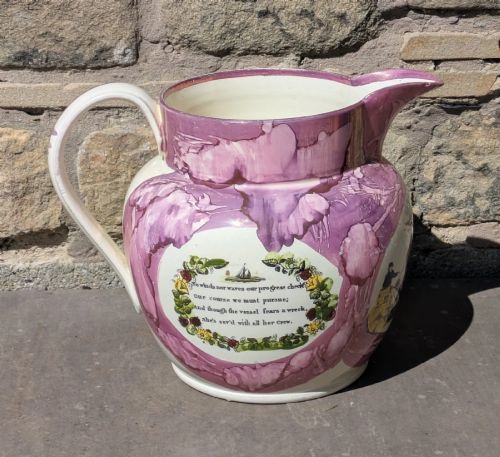
Most examples you encounter here take the form of utilitarian jugs and pitchers adorned with transfer-printed maritime themes, Masonic symbols, or poetic panels. They reflect the folk art traditions of regional potteries, particularly around Sunderland.
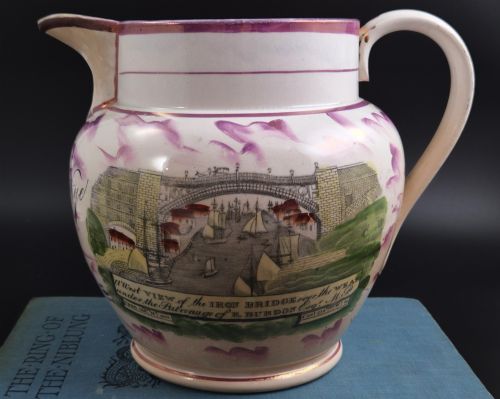
The forms range from large decorative jugs to taller vessels bearing detailed depictions of tall ships, the Iron Bridge over the Wear, and commemorative verses. Each piece serves as both a practical container and a vibrant display of historic ceramic technique.
How they were made
Potters shaped these vessels from earthenware and pearlware before applying intricate transfer prints depicting ships, poetry, or Masonic emblems. The monochrome or coloured prints provided a detailed base narrative across the body of the jug.
Workers then brushed or splashed metallic oxide onto the surface, creating the characteristic pink splash lustre effect during the firing process. Enamel colours were often added by hand to highlight specific details within the printed scenes.
Listings feature nineteenth-century English earthenware and pearlware jugs decorated with metallic glaze, enamel, and transfer-printed maritime or Masonic themes.
What varies in quality
Quality rests upon the crispness of the transfer print and the richness of the metallic glaze distribution. Superior examples display bold, clear maritime or Masonic imagery with vibrant enamel highlights that remain sharp against the earthenware body.
The depth and coverage of the pink splash lustre also define the visual appeal, where skilled application yields an even, shimmering spread across the surface rather than a dull or patchy finish.
Sunderland Garrison Pottery
The Antique Splash Lustre Jug Glossary
- Splash lustre
- A decorative ceramic finish created by flicking metallic oxide onto the glaze before firing, producing a mottled, speckled appearance. This technique defines the characteristic pink surface pattern found on Sunderland wares.
- Pearlware
- A refined earthenware developed in the late eighteenth century featuring a subtle bluish glaze that pooled in crevices. It served as a smooth canvas for transfer-printed and lustre-decorated jugs.
- Transfer printing
- A method of applying pre-printed designs from an engraved copper plate onto ceramic surfaces via tissue paper. It allowed potteries to mass-produce detailed maritime scenes and poetic panels efficiently.
- Earthenware
- Porous pottery fired at lower temperatures, forming the sturdy structural body for these jugs. It requires a protective glaze to hold liquids effectively.
- Metallic glaze
- A surface treatment incorporating metallic oxides that imparts a reflective, shimmering quality resembling precious metals. It forms the lustrous pink decoration characteristic of these nineteenth-century pieces.
Antique Splash Lustre Jug: Frequently Asked Questions
How do I date a lustre jug?
Dating relies on stylistic clues, ceramic bodies such as pearlware versus later earthenware, and occasionally inscribed dates or named subjects. Georgian examples often feature pearlware glazes, whereas Victorian pieces tend toward heavier earthenware.
Changes in transfer print technology and subject matter also help narrow the period of manufacture. Comparing the specific maritime themes or bridge motifs provides further chronological context.
Were these jugs used daily?
Many of these vessels started as functional pitchers for everyday use in homes or taverns. Their robust earthenware construction made them practical for holding liquids.
Over time, their commemorative prints and decorative lustre finishes shifted their role toward display pieces. Many survived on mantelpieces because owners valued their artistic and sentimental themes.
What do the printed scenes mean?
The prints often celebrate maritime life, featuring tall ships, clipper ships, and local landmarks like the Iron Bridge over the Wear. These subjects appealed directly to sailors, merchants, and local communities.
Masonic symbols and moral verses also appear frequently, reflecting the social values and fraternal organisations of the nineteenth century. These narratives turned simple jugs into personal mementos.
How should I display my jug?
Place your jug in a stable position away from direct, harsh sunlight to protect any hand-applied enamel colours. Ensure the shelf or cabinet offers adequate support given the solid weight of nineteenth-century earthenware.
Positioning the piece where ambient light can catch the metallic lustre glaze enhances the speckled pink finish. Keeping them secure from accidental knocks preserves their historic surface.