

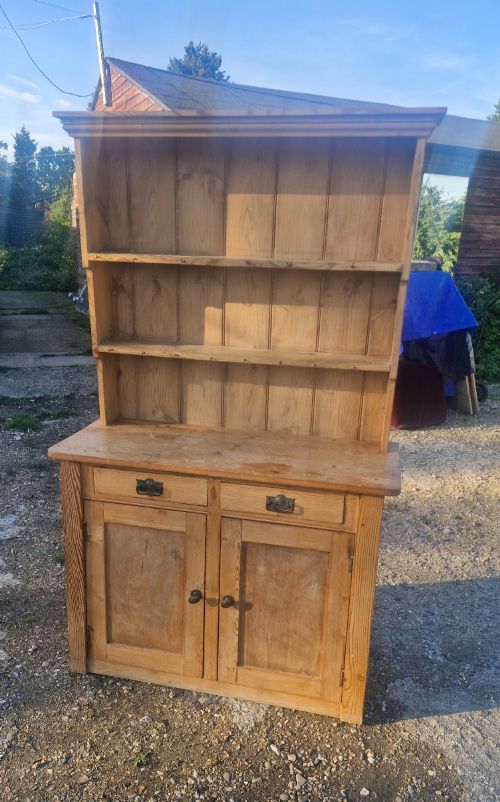
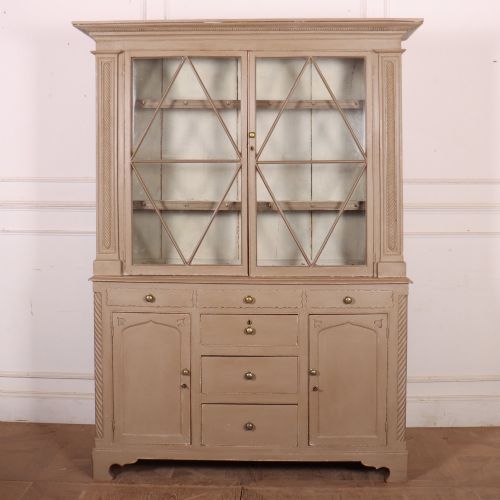

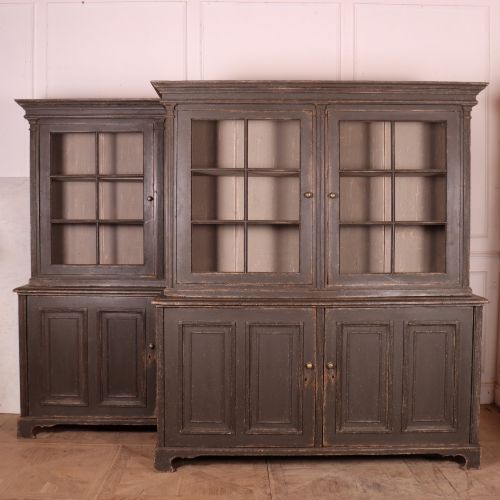
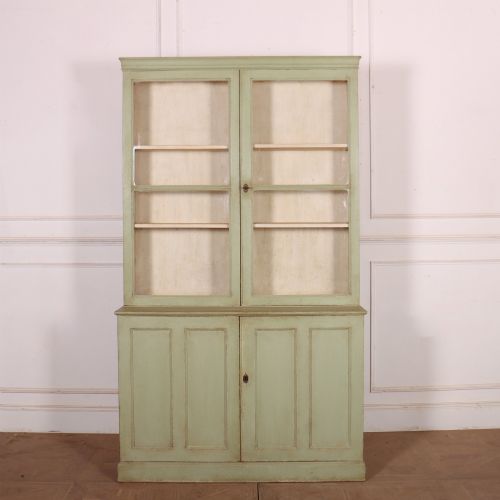
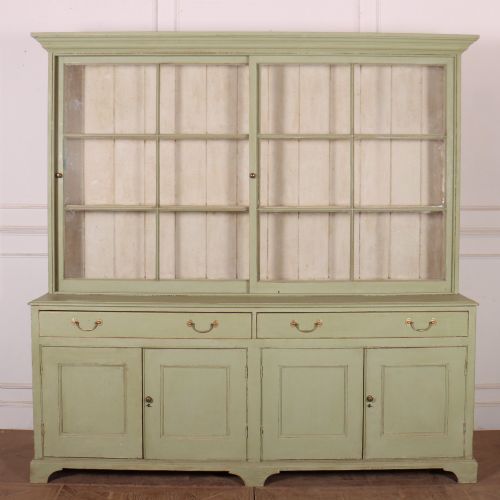
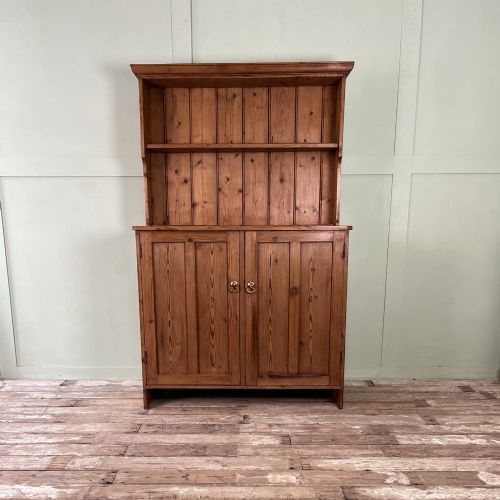
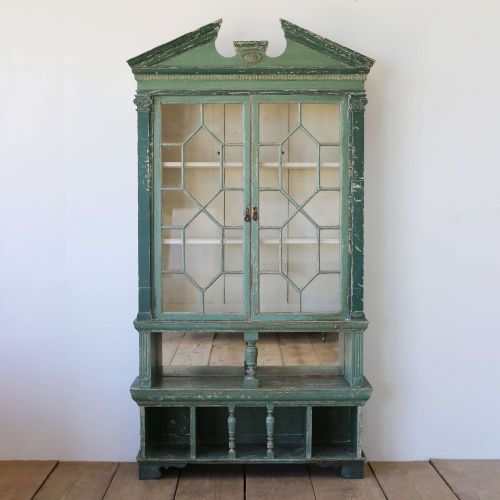
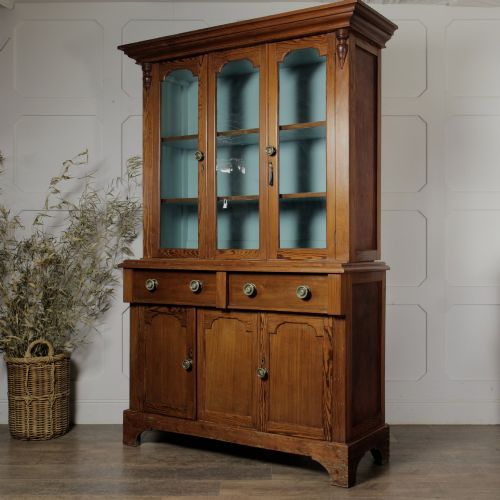
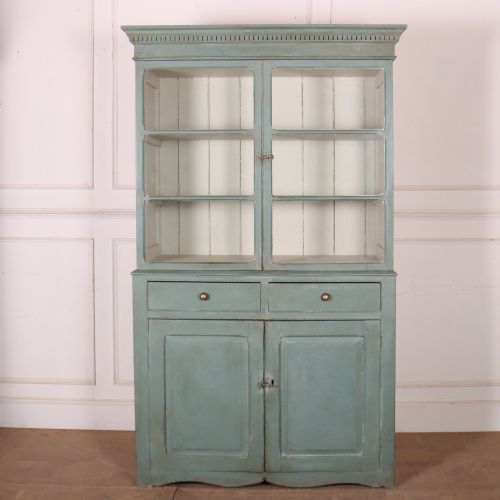
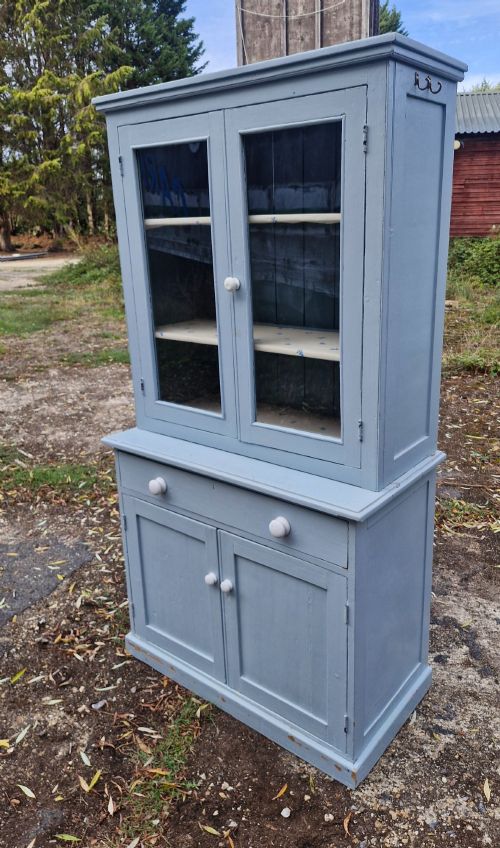
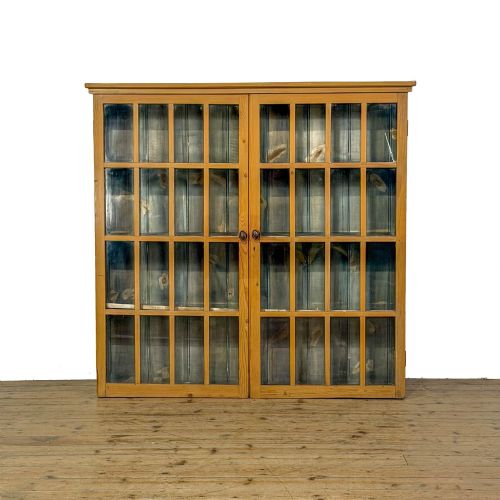
Pine Display Cupboard
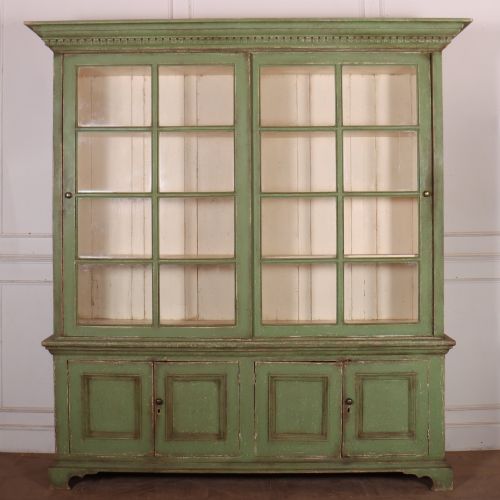
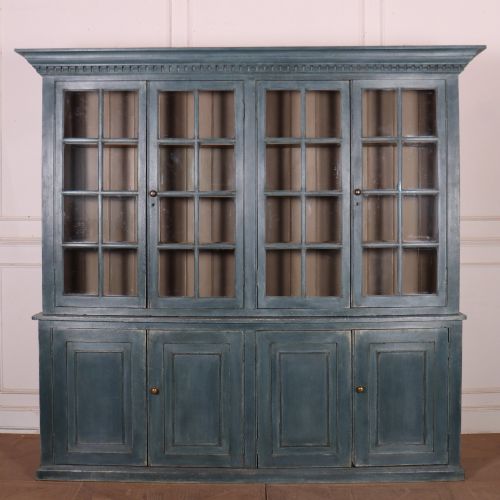
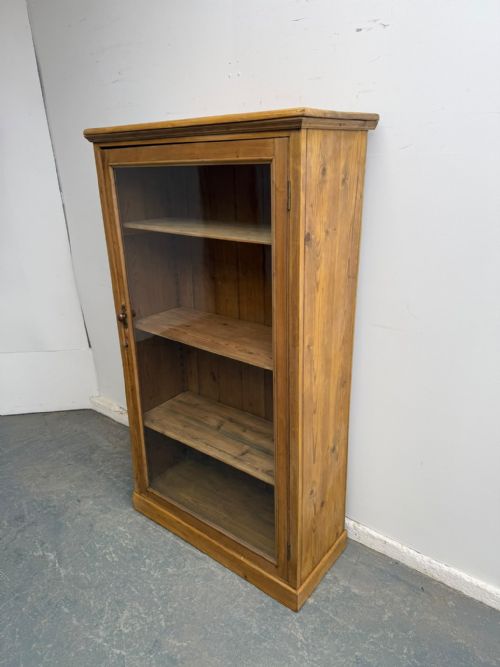
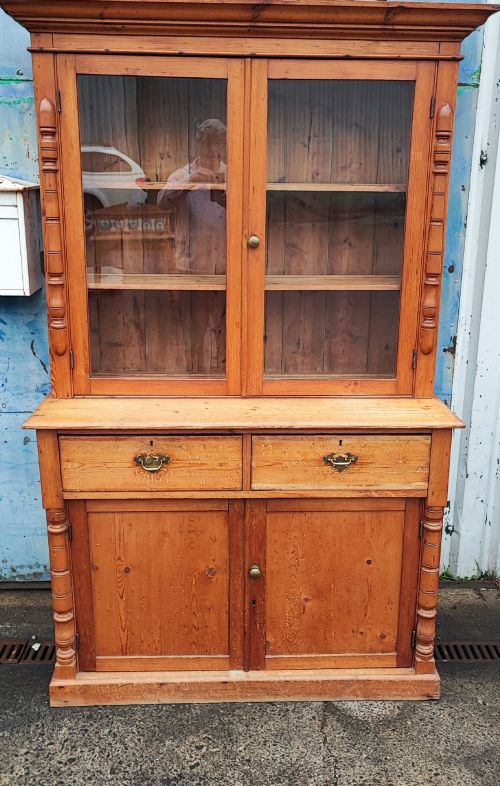
A pine display cupboard holds china and books behind glass doors, bringing warmth and utility to a room.
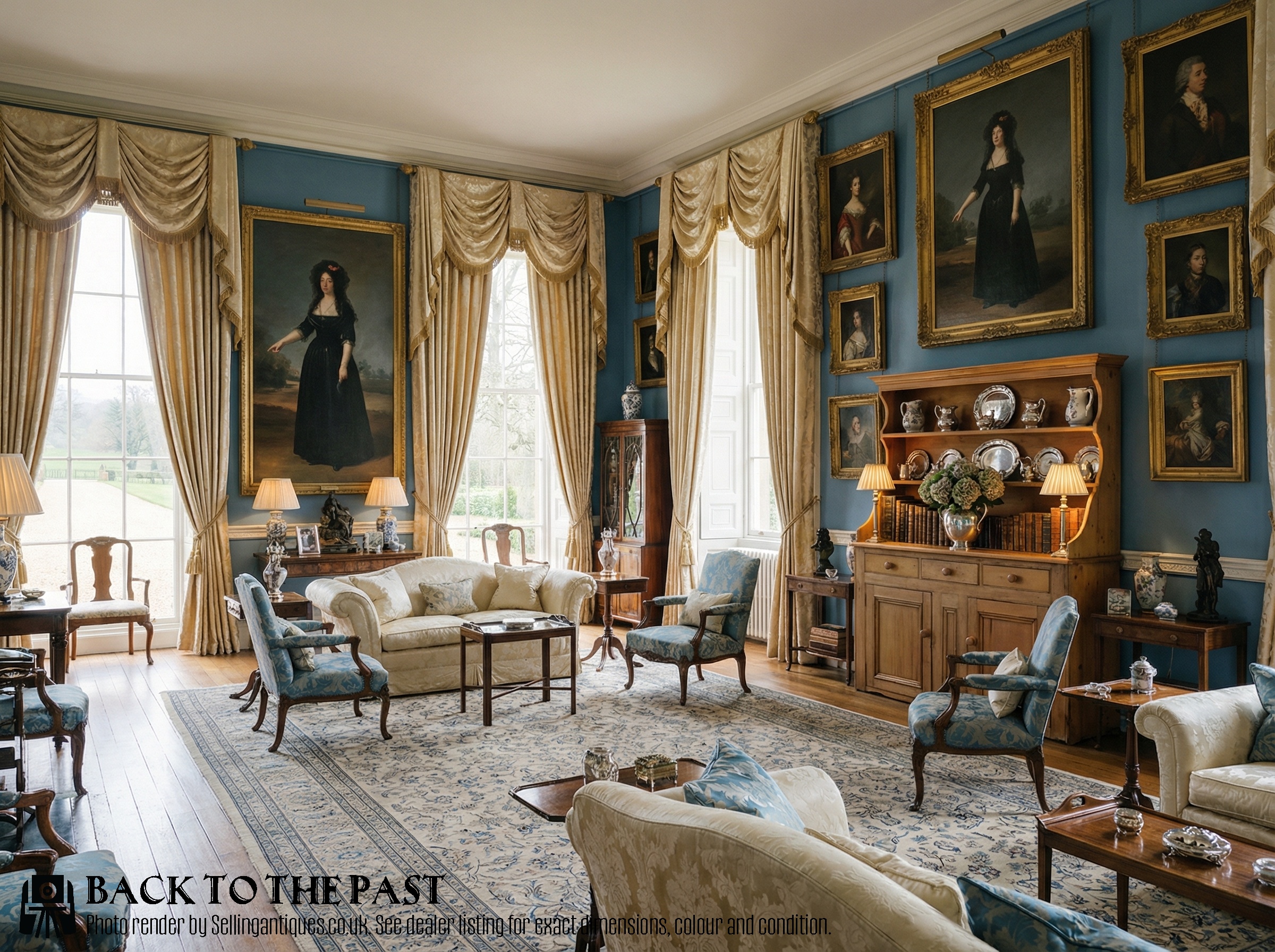
Pine Display Cupboard
A pine display cupboard provides functional storage with glazed doors for showing contents. These pieces range from corner cabinets and bookcases to two-part kitchen dressers and shop fittings.
The selections span the eighteenth and nineteenth centuries into the early twentieth century. Victorian and Georgian examples appear alongside regional British, French, Swedish and Hungarian variants.
Buyers most frequently encounter nineteenth-century glazed cupboards and dressers in stripped, waxed or painted finishes. These utilitarian forms served domestic kitchens and commercial interiors alike.
How they were made
Makers utilised solid pine and pitch pine for carcases and shelving, often incorporating glass panes within wooden framing for upper display sections. Iron and brass hardware such as hinges, handles and latches secure doors and drawers.
Surfaces receive various treatments including clear wax, historical paint layers or stripped finishes that expose the natural softwood grain. Certain pieces feature painted interiors to contrast with exterior finishes.
Pine Display Cupboard Retail Price Guide 2026
Typical asking prices for pine display cupboard among the pieces listed under this phrase on Sellingantiques today, from the lower quarter to the upper quarter. They describe what is for sale here now, not the wider market.
A shop fitting with fifty drawers provides an abundance of tiny handles for the exceptionally organised collector.
What varies in quality
Construction methods and timber selection set examples apart, from dense pitch pine and fine joinery to simpler softwood assemblies. Original glazing bars, backboards and hardware indicate higher integrity.
Surface treatments dictate character, distinguishing pieces retaining original paint or graining effects from those stripped down during later restorations. Proportions and regional architectural details further define the better specimens.
The Pine Display Cupboard Glossary
- Pitch pine
- A dense, resinous variety of pine timber valued for durability and prominent grain patterns. It withstands heavy wear better than standard softwoods.
- Bonnet top
- An arched or curved upper bonnet shape surmounting a cabinet or bookcase. This stylistic flourish appears on regional European cupboards.
- Shop fitting
- Fixtures and cabinetry built specifically for commercial retail environments rather than domestic rooms. Examples include multi-drawer haberdashery units.
- Two-part form
- Furniture constructed in separate upper and lower sections stacked together. This method facilitated transport and installation of large dressers and bookcases.
Pine Display Cupboard: Frequently Asked Questions
How do I date a pine cupboard?
Dating relies on construction methods, timber types and hardware style. Earlier pieces often employ hand-cut joinery and period paint finishes.
Later Victorian and twentieth-century examples display machine-sawn elements and standard brass or iron fittings.
Where should I place a display cupboard?
These cabinets suit kitchens, dining rooms and living spaces for storing tableware or books. Their glass doors keep dust away while displaying collections.
Ensure placement avoids direct sunlight to protect the pine timber and any original painted surfaces.
Are these cupboards made of solid pine?
The listings consist primarily of solid pine and pitch pine construction throughout the carcases and shelving. Some regional variants incorporate secondary softwoods in concealed areas.
Original backboards and interior partitions typically match the primary wood used by the maker.
What is the difference between waxed and painted finishes?
Waxed finishes highlight the natural grain and golden tones of stripped pine timber. Painted surfaces preserve historical layers, ranging from simple white coats to decorative regional colours.
Both finishes reflect different periods of domestic taste and subsequent restoration choices.