

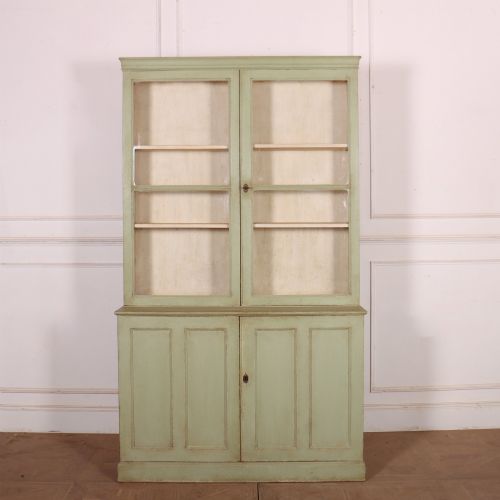
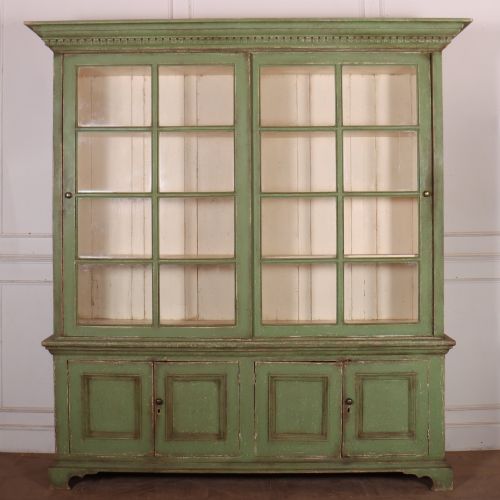

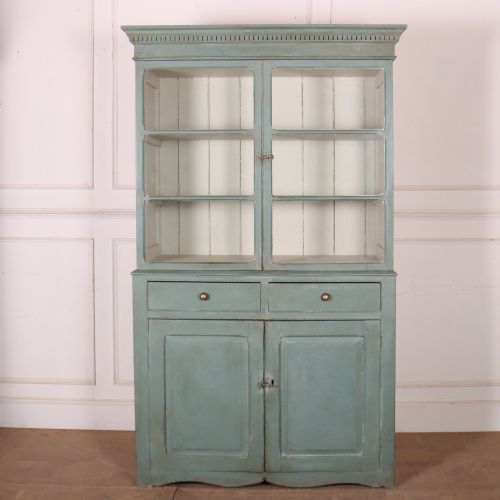
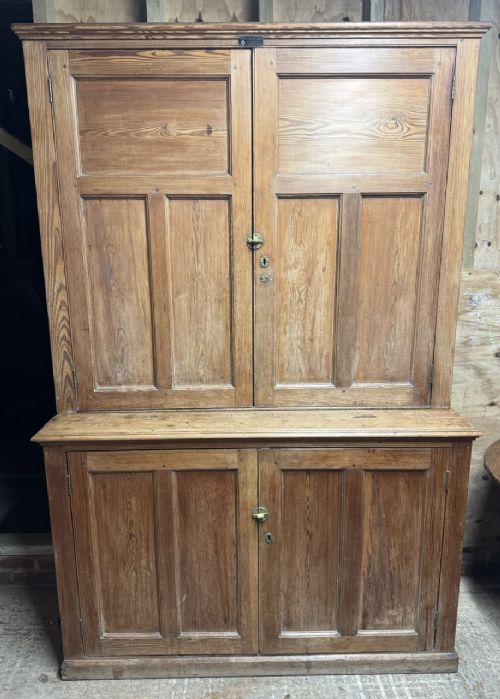

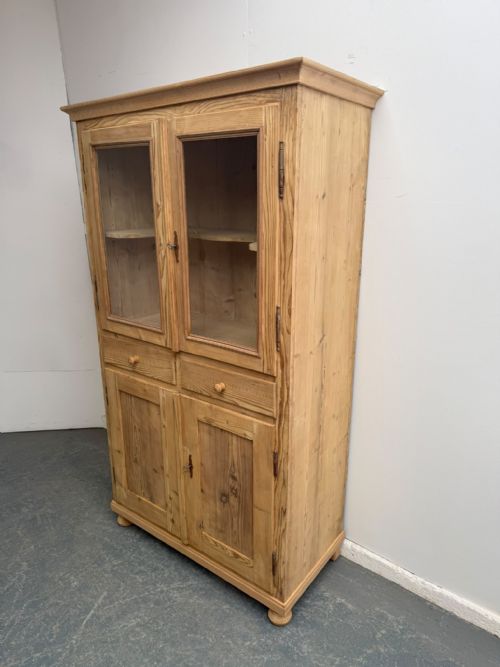
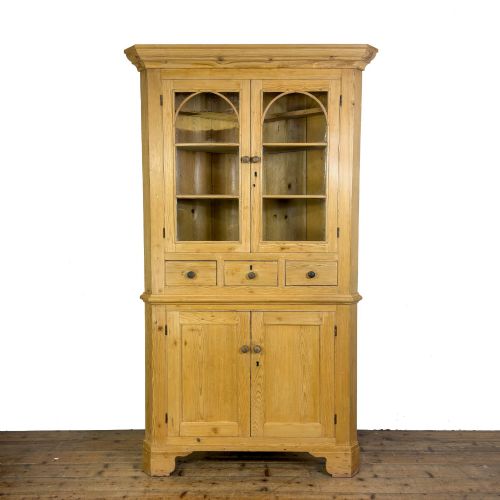


Two Tier Pine Dresser
A two tier pine dresser brings practical storage and regional character to a room, offering open shelving above enclosed cupboards.
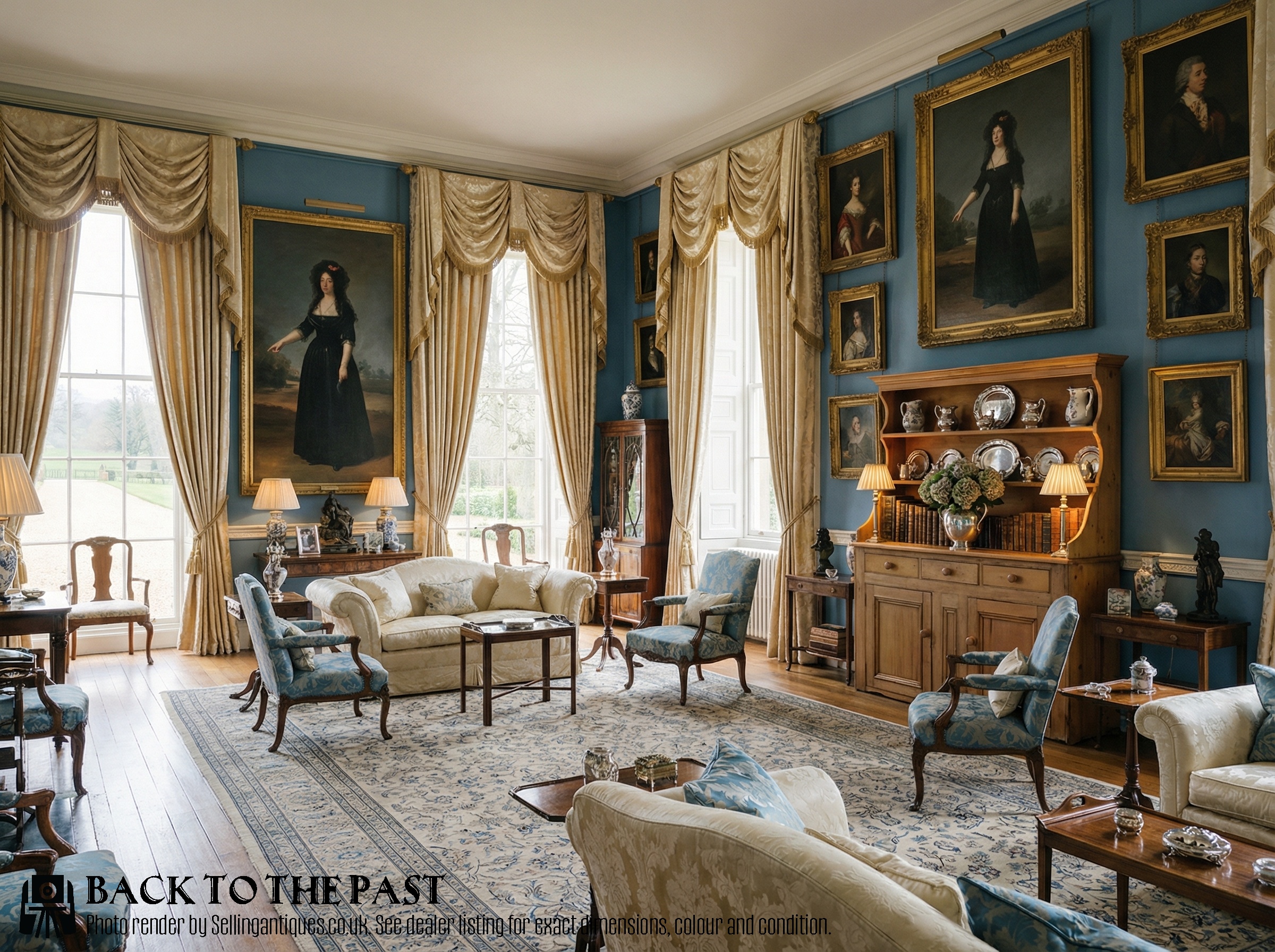
Two Tier Pine Dresser
Buyers seeking a two tier pine dresser examine pieces spanning the 18th century, Victorian era, and 1920, originating from English, Scottish, Swedish, and Baltic workshops. The forms range from kitchen dressers and display cabinets to housekeeper cupboards, food cupboards, and open bookcases.
The version most commonly met on this page combines a pine timber frame with varying door and shelving configurations. Regional variations appear clearly, from West Country examples to Gustavian Swedish cabinets and Scottish pine furniture.
How they were made
Makers utilised pine as the primary timber, often finishing surfaces with paint, painted wood, or a wax finish. Iron and brass hardware such as hinges and pulls secured doors and drawers.
Glazed sections incorporated glass panels into cabinets and bookcases, while structural joints relied on traditional carpentry appropriate for provincial and country workshops.
Two Tier Pine Dresser Retail Price Guide 2026
Typical asking prices for two tier pine dresser among the pieces listed under this phrase on Sellingantiques today, from the lower quarter to the upper quarter. They describe what is for sale here now, not the wider market.
Regional forms span English provincial, Scottish, West Country, and Gustavian Swedish country traditions.
What varies in quality
The standard of a piece depends on the depth of regional character and the integrity of the original surfaces, such as early paintwork versus stripped timber. Proportions and the handling of mouldings distinguish provincial work from more refined country pieces.
The preservation of original iron and brass fittings, glass panes, and backboards contributes to the overall integrity of the construction.
The Two Tier Pine Dresser Glossary
- Pine
- A softwood commonly utilised for country furniture across Britain and Scandinavia. It takes paint and wax finishes readily.
- Glazed
- Fitted with glass panels in the doors or upper section to display contents. This treatment appears frequently on bookcases and display cabinets.
- Housekeeper Cupboard
- A large storage piece with multiple doors and internal shelving designed for household provisions and linen. These pieces often date to the Victorian period.
- Gustavian
- A Swedish neoclassical style characterised by pale painted surfaces and restrained classical detailing. Pieces from this tradition often feature soft grey or white tones.
- West Country
- A regional English style originating from the south-west. Dressers from this area display distinctive local craftsmanship and proportions.
Two Tier Pine Dresser: Frequently Asked Questions
How do I date a pine dresser?
Dating relies on construction methods, timber characteristics, and surface treatments like early paint or wax. Examining the hardware, hinges, and drawer construction helps determine the period.
Evidence on this page spans from the late 18th century through the Victorian era to 1920, showing how styles shifted across those decades.
What is the difference between painted and stripped pine?
Painted surfaces often preserve original historical finishes applied in regions like the West Country or Sweden. Stripped pine reveals the natural grain and colour of the softwood timber beneath.
Both finishes appear across different periods, reflecting changing domestic tastes and dealer restoration choices.
Where were these dressers made?
Makers constructed these pieces in provincial workshops across England, Scotland, Sweden, and the Baltic region. Each area developed distinct regional proportions and decorative traits.
English pieces often show West Country or general provincial origins, while Scandinavian examples display Gustavian influences.
How do I care for a pine dresser?
Maintain waxed pine surfaces with appropriate soft wax to preserve the finish and nourish the timber. Painted pieces require gentle dusting and protection from direct sunlight to prevent cracking.
Keeping the environment stable helps protect the structural joints of older softwood furniture.