


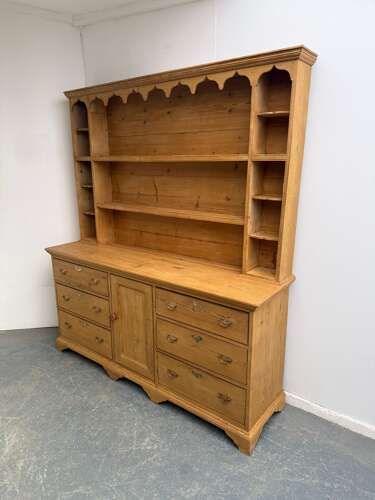


Pine Welsh Dresser
A pine welsh dresser brings heavy utility and regional character into a kitchen, offering open plate racks or deep base cupboards built from softwoods.
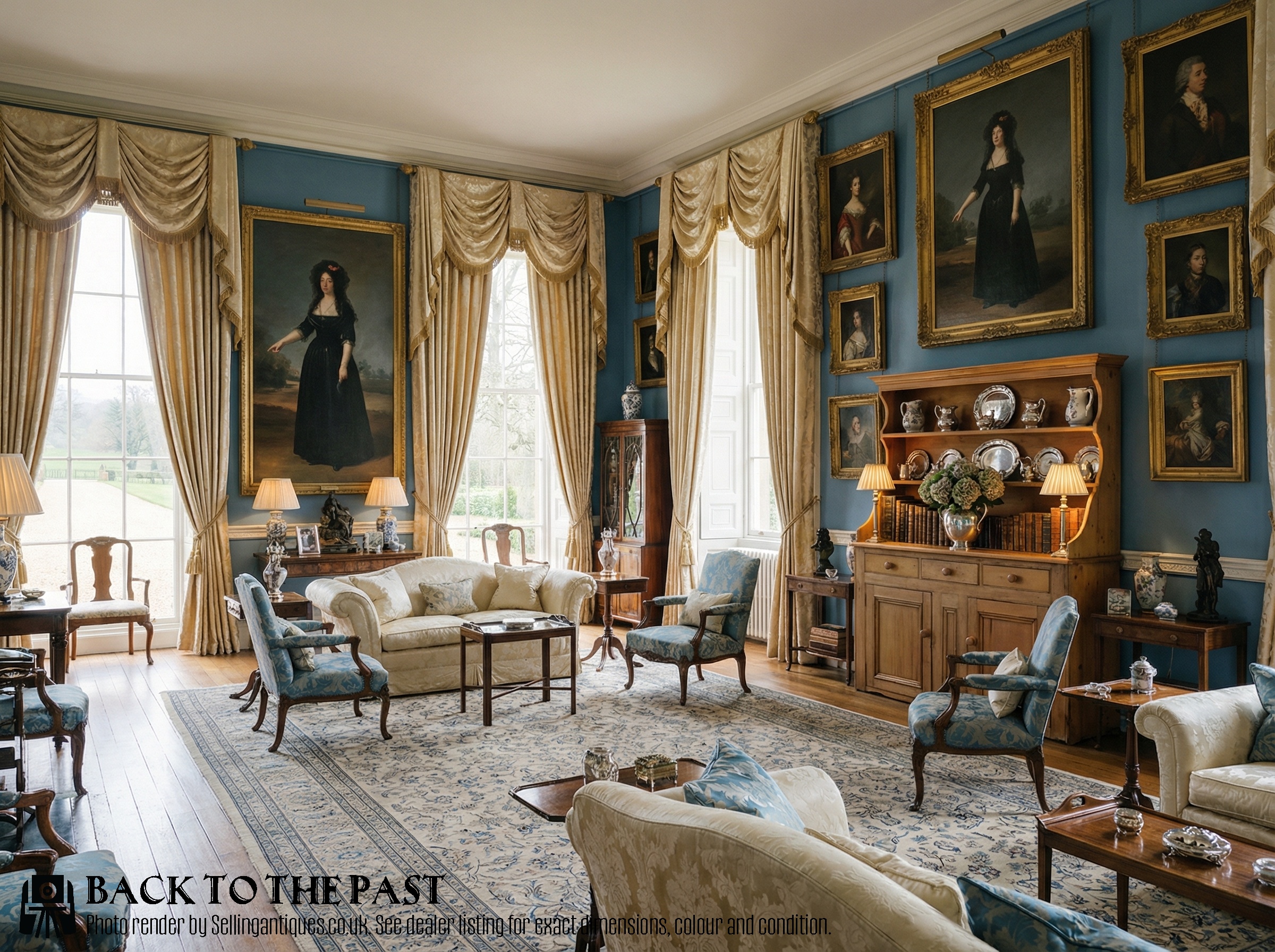
Pine Welsh Dresser
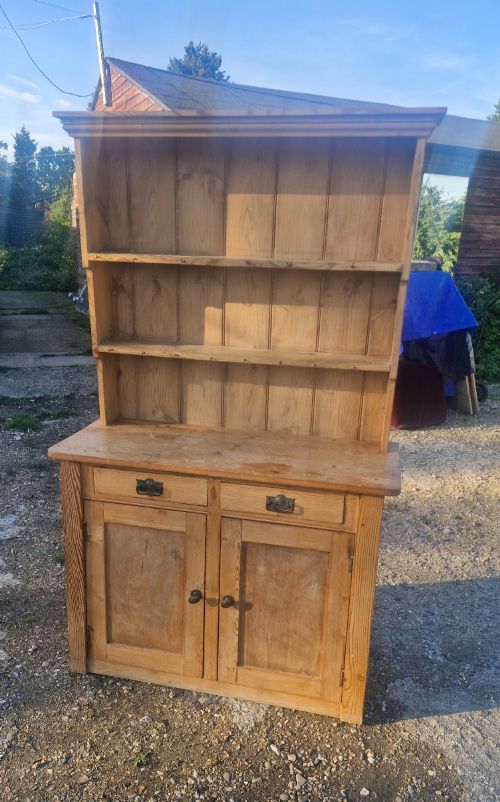
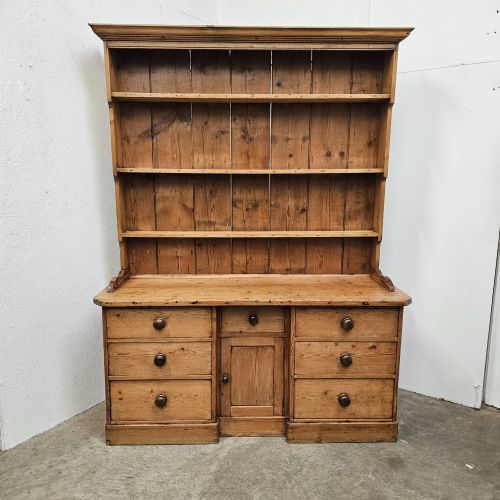
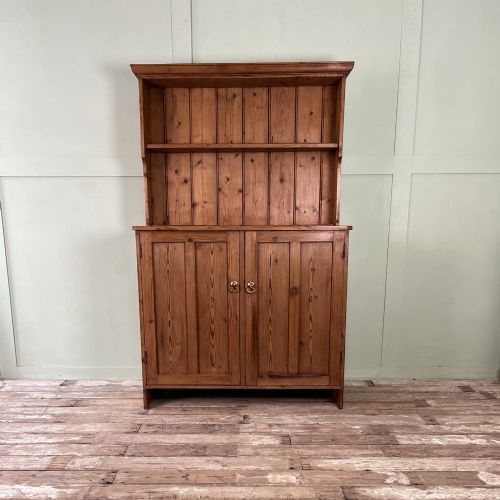
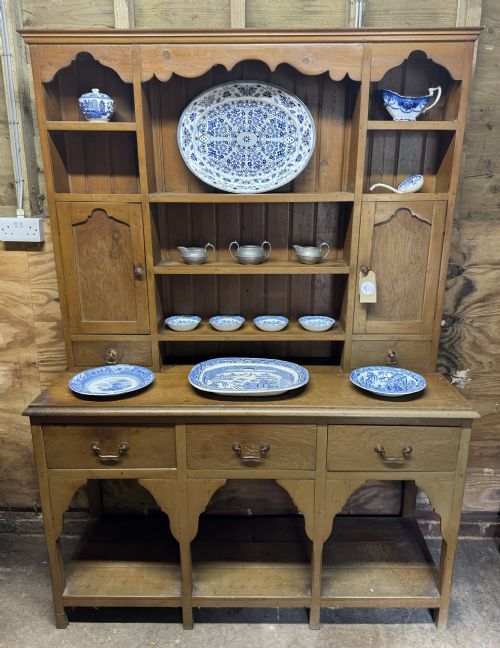
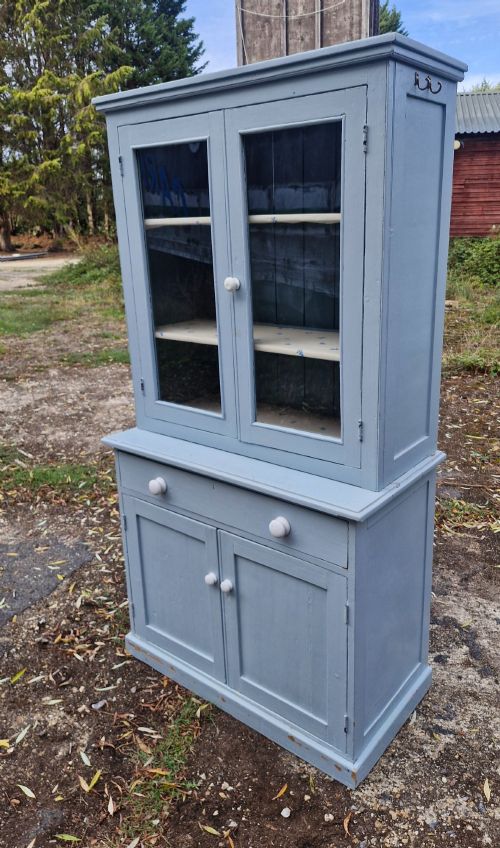
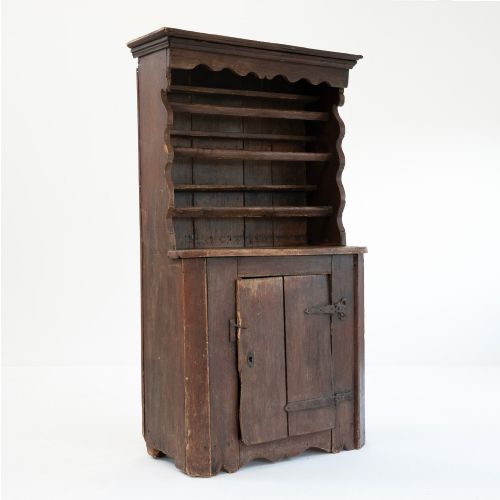
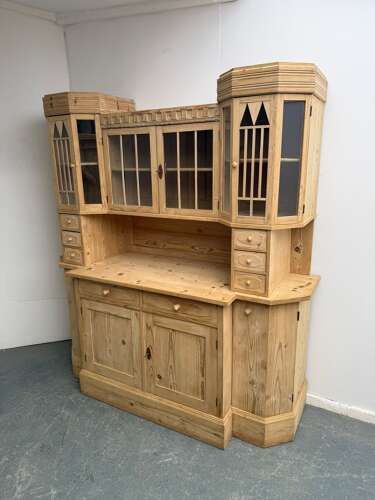
A pine welsh dresser combines a lower storage cabinet with an upper display rack, serving as the traditional workhorse of the rural kitchen for storing crockery and dry goods.
Most examples found in these records date from the 18th and 19th centuries, reflecting vernacular traditions from Welsh counties, the West Country, and wider British and Irish rural workshops.
Variants range from two-part architectural units with enclosed cupboards to open potboard bases, dog kennel designs, and smaller cottage proportions.
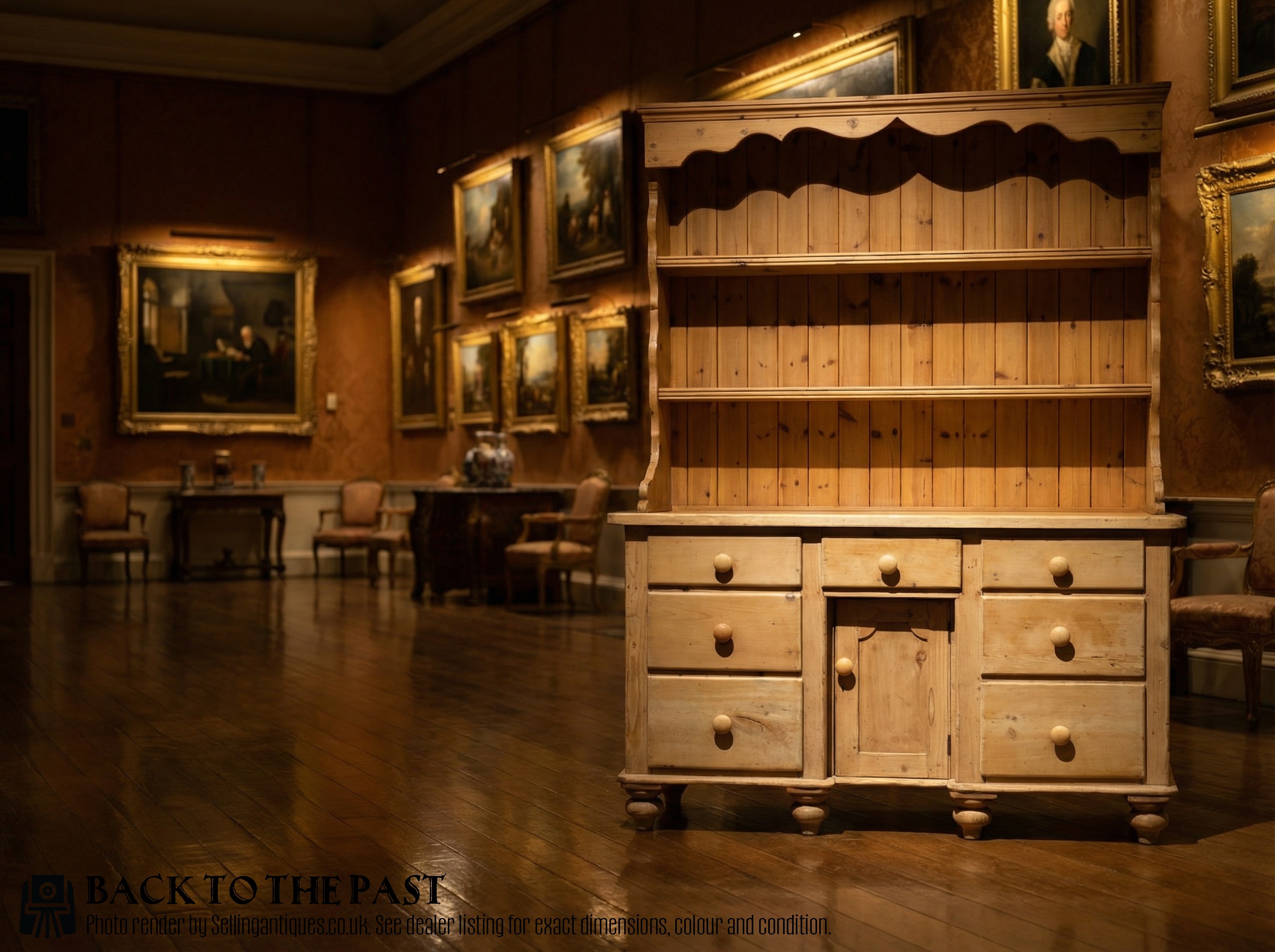
Materials and Construction
Makers utilised native pine alongside occasional structural elements of oak, iron, and brass hardware, building carcass frames to hold heavy kitchen loads.
Surfaces frequently show historical layers of paint or retained wax patination, reflecting generations of domestic use in country houses and farmhouses.
Pine Welsh Dresser Retail Price Guide 2026
Typical asking prices for pine welsh dresser among the pieces listed under this phrase on Sellingantiques today, from the lower quarter to the upper quarter. They describe what is for sale here now, not the wider market.
Some nineteenth-century farmhouse dressers double as dog kennels, featuring a built-in central niche specifically designed to give the household hound a warm spot near the hearth.
Evaluating the Build
Proportion and regional carpentry distinguish standard utilitarian furniture from finer vernacular pieces, particularly where cornice mouldings, drawer configurations, and potboards show considered joinery.
The survival of original painted surfaces or untouched waxed patination alters the character of a piece significantly compared to later stripped wood.
The Pine Welsh Dresser Glossary
- Potboard
- An open lower shelf beneath a dresser base designed for storing heavy pots and pans. This platform sits just above the floor on short feet or stile extensions.
- Dog Kennel
- A central recessed open space situated between lower cupboards in a dresser base. This feature appears frequently in vernacular Welsh pieces.
- Talwrn Dresser
- A specific regional Welsh cabinetry style originating from Carmarthenshire. These pieces often exhibit distinct local mouldings and proportions.
- Patina
- The surface texture and sheen developed through age, handling, and repeated waxing. It records the functional history of the timber.
Pine Welsh Dresser: Frequently Asked Questions
What is the difference between a dresser base and a full dresser?
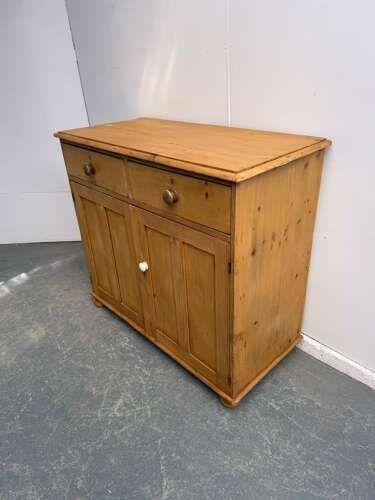
A full dresser includes both the lower storage cabinet and the upper plate rack for displaying ceramics. A dresser base consists solely of the lower sideboard section with drawers and cupboards.
Many bases survive independently because upper racks were separated or discarded during kitchen alterations over the centuries.
How do I date an antique pine dresser?
Dating relies on construction methods, timber characteristics, and hardware types visible across the carcass and drawers. Hand-cut dovetails, backboards, and original paint layers help establish whether a piece belongs to the 18th or 19th century.
Regional vernacular traits also provide clues, as local cabinetmakers followed distinct local traditions rather than metropolitan fashions.
Did all these dressers originate in Wales?
While the form is strongly associated with Wales, the listings include examples from the West Country, Ireland, Denmark, and wider English rural workshops. Regional variations appear in the cornice details, foot styles, and arrangement of drawers.
Specific Welsh examples often feature local vernacular identifiers such as dog kennel spaces or distinct regional proportions.
Should I keep the painted finish or strip the pine?
Original painted surfaces and early wax patination are highly valued by collectors because they preserve the authentic history of the timber. Stripping removes these historical layers, altering the visual character built up over centuries of domestic use.