

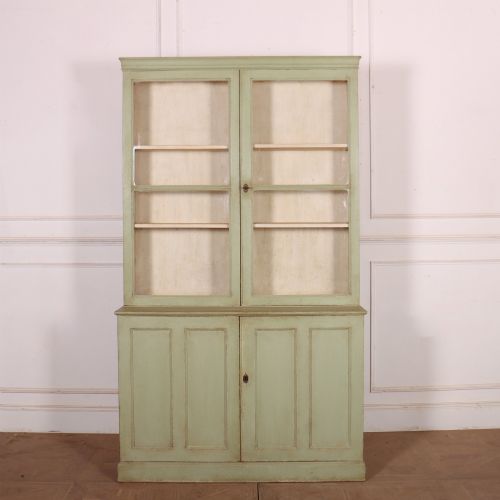
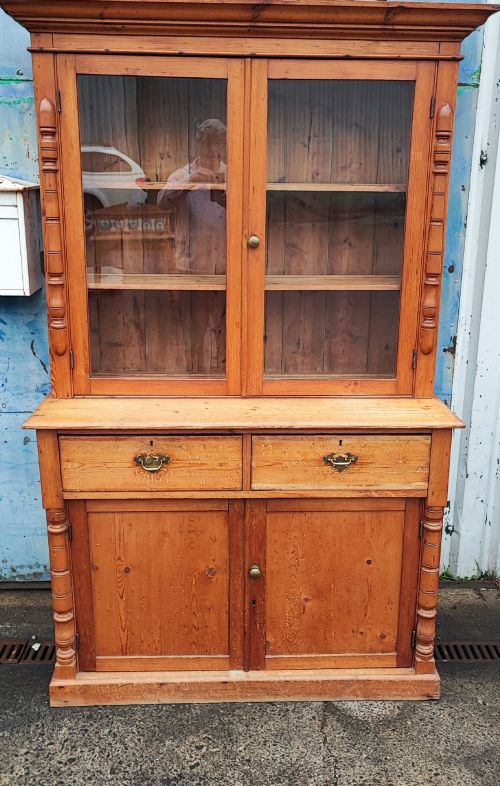
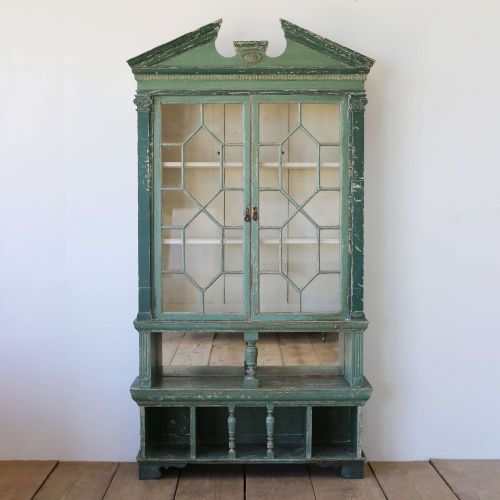
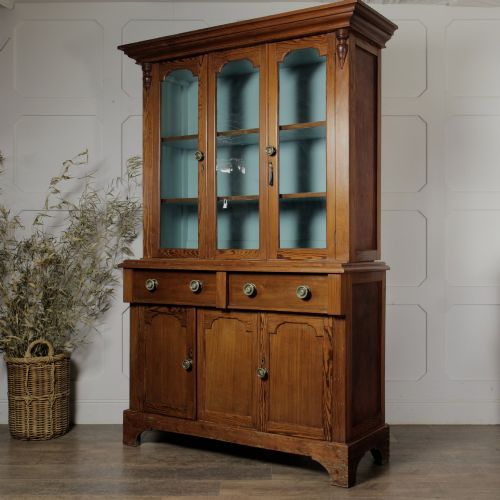
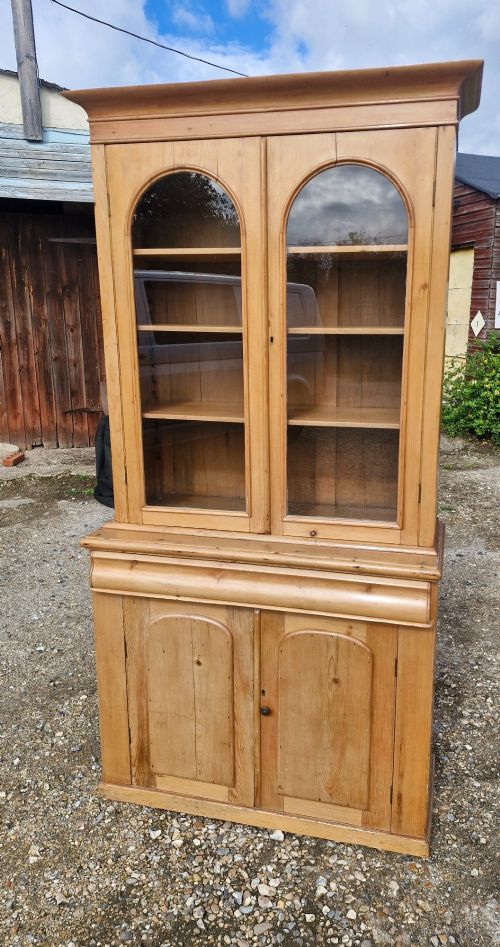
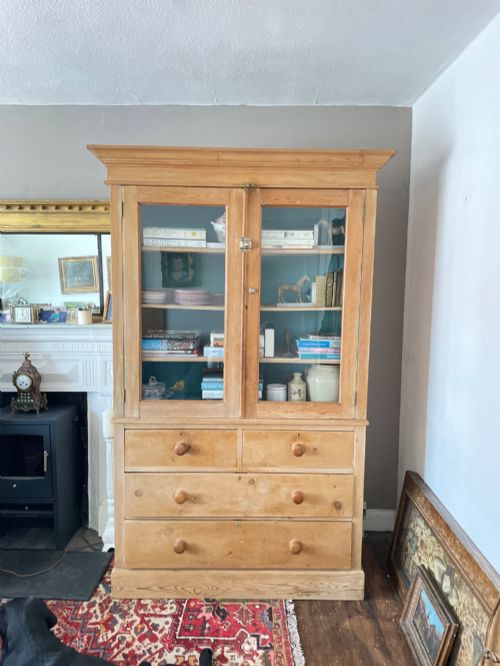
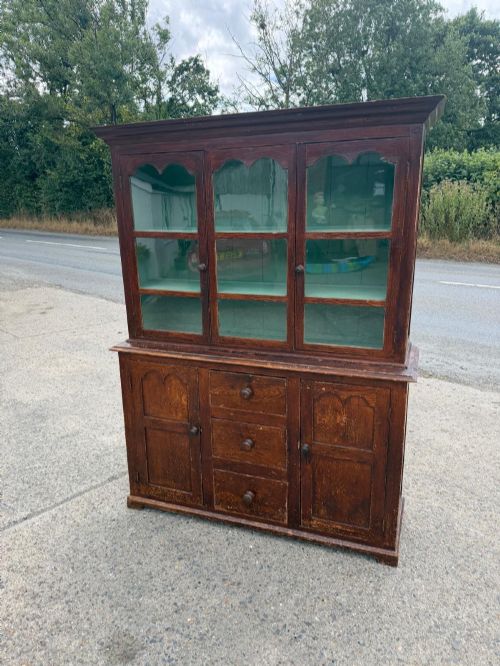
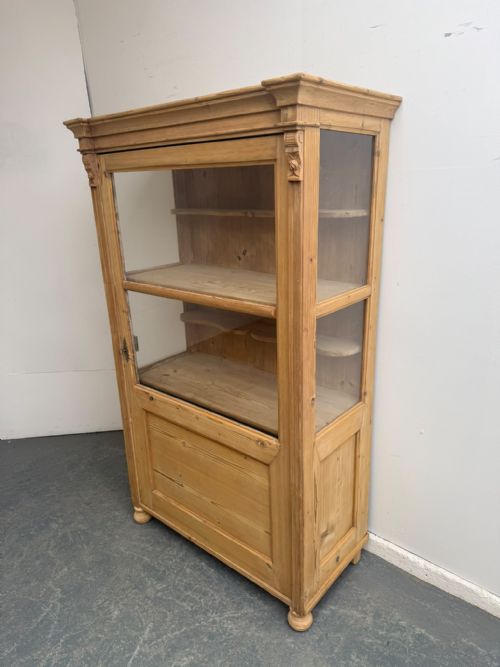
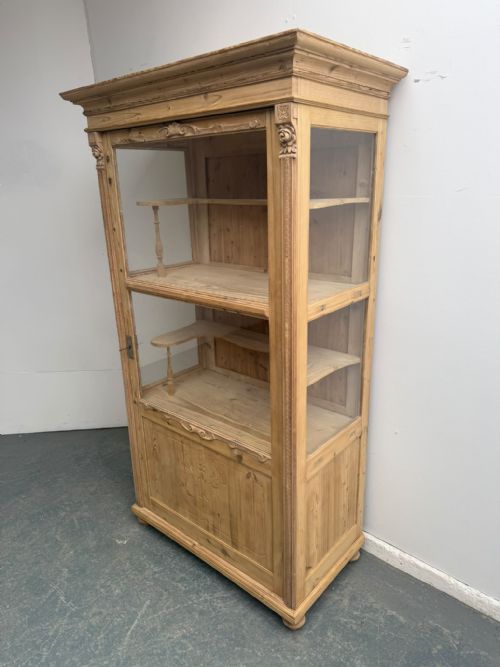
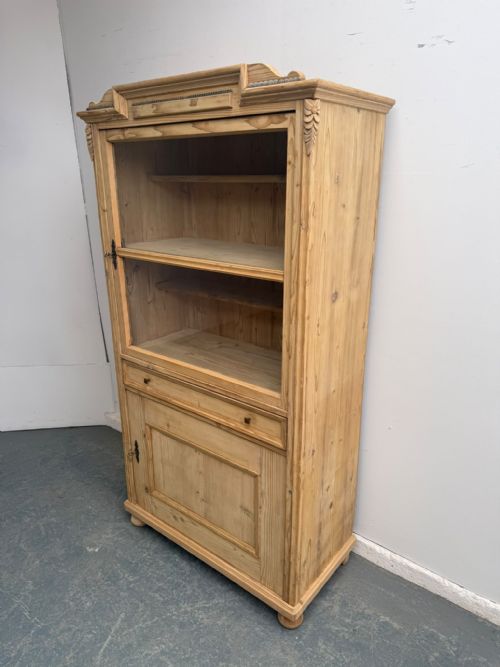


Pine China Cabinet
Pine china cabinets bring honest storage and clear display to a room, grounding your collection behind useful glass doors.
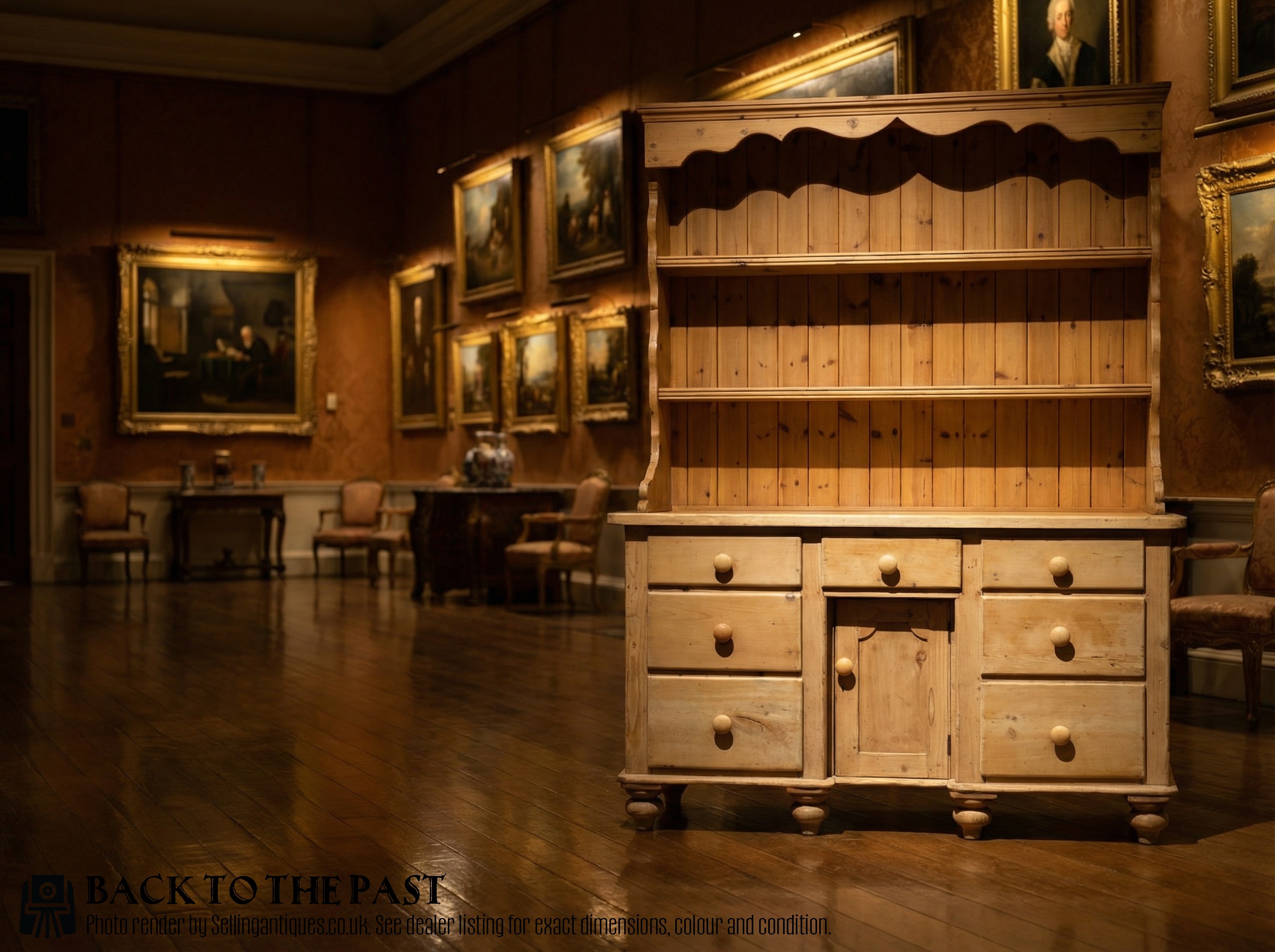
Pine China Cabinet
When you search for a pine china cabinet, you are looking at substantial storage furniture designed to show and protect household ceramics. The pieces on this page span the Victorian and nineteenth century periods, taking forms such as glazed cupboards, kitchen dressers, bookcase cabinets, and two-door display cabinets.
These items emerge from Victorian and Victorian country styles, reflecting the practical domestic needs of their original settings. They combine enclosed lower storage with glazed upper sections, offering a traditional profile that suits modern and historic interiors alike.
Materials and construction
The primary material across these pieces is solid pine, with specific examples utilising pitch pine for added durability and grain distinction. Hardware includes brass and iron fittings, while glass panels form the doors for viewing contents within.
Surfaces receive various treatments as recorded in the listings, including stripped finishes, wax polish, painted interiors, or preparation suitable for waxing and painting. Construction relies on traditional joinery methods appropriate for large nineteenth century storage furniture.
Pine China Cabinet Retail Price Guide 2026
Typical asking prices for pine china cabinet among the pieces listed under this phrase on Sellingantiques today, from the lower quarter to the upper quarter. They describe what is for sale here now, not the wider market.
Several cabinets arrive ready for your own paint colour, giving Victorian pine a second career as a modern canvas.
Judging quality
Quality in these cabinets rests upon the choice of timber and the proportion of the carcass. Dense pitch pine and well-figured standard pine command attention over plain or heavily repaired alternatives.
The treatment of surfaces and the retention of original hardware further distinguish finer examples. Cabinets that preserve thoughtful interior paint or retain clean lines without excessive alteration represent the better end of the range.
The Pine China Cabinet Glossary
- Pitch pine
- A dense, resinous variety of pine timber known for pronounced grain patterns and durability. It was frequently utilised in nineteenth century furniture requiring extra strength.
- Glazed cupboard
- An upright storage piece featuring glass panelling in the doors to display contents while keeping dust at bay. These form a primary category of nineteenth century display furniture.
- Waxed finish
- A traditional protective coating applied to timber to nourish the wood and produce a soft sheen. This finish highlights the natural grain and colour of nineteenth century pine.
- Kitchen dresser
- A large multipurpose storage item combining base cupboards or drawers with upper open shelves or glazed cabinets. They served as central storage units in historic domestic kitchens.
Pine China Cabinet: Frequently Asked Questions
What is a pine china cabinet?
A pine china cabinet is a nineteenth century storage unit built from pine timber featuring glass doors for displaying ceramics and tableware.
These pieces combine functional lower cupboards with upper glazed display sections, reflecting Victorian domestic design.
How do I date a pine cabinet?
Dating relies on construction methods, timber selection, and hardware styles associated with the Victorian era.
Nineteenth century pieces often show hand-cut joints, thick glass panes, and specific patination on the pine surfaces.
How should I care for waxed pine?
Waxed pine benefits from occasional applications of beeswax to maintain the moisture and lustre of the timber.
Keep these cabinets away from direct heat sources and strong sunlight to prevent the wood from drying out or splitting.
Can I paint a waxed cabinet?
Many nineteenth century pine cabinets are sold ready to wax or paint, allowing custom finishes to match your interior.
Proper preparation involves cleaning existing wax residue and applying a suitable primer before painting the pine surfaces.