
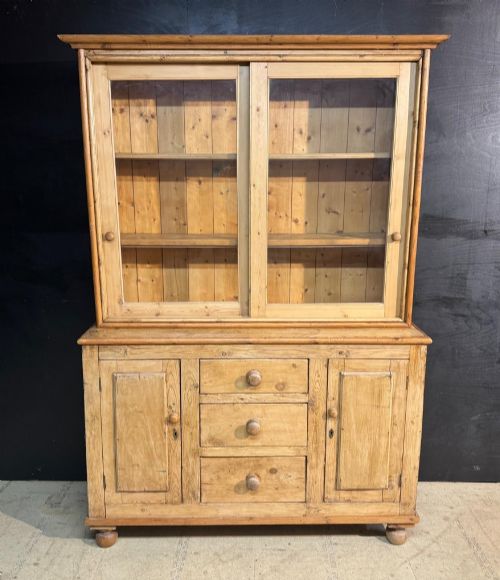
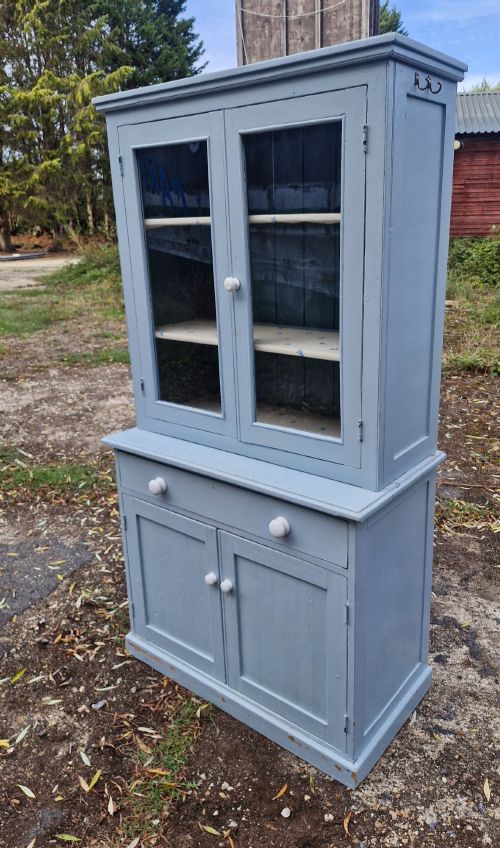
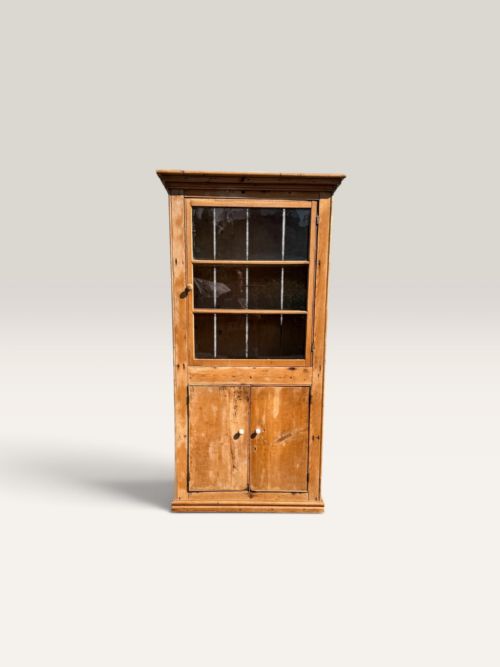
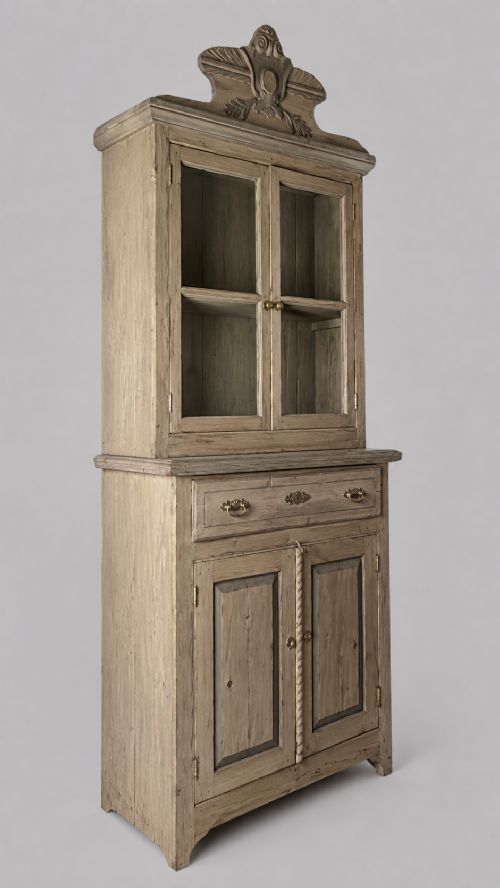
Pine Glazed Cabinet
These pine glazed cabinet designs offer honest utility and soft character, housing books or collections behind timber-framed glass doors.
What They Are
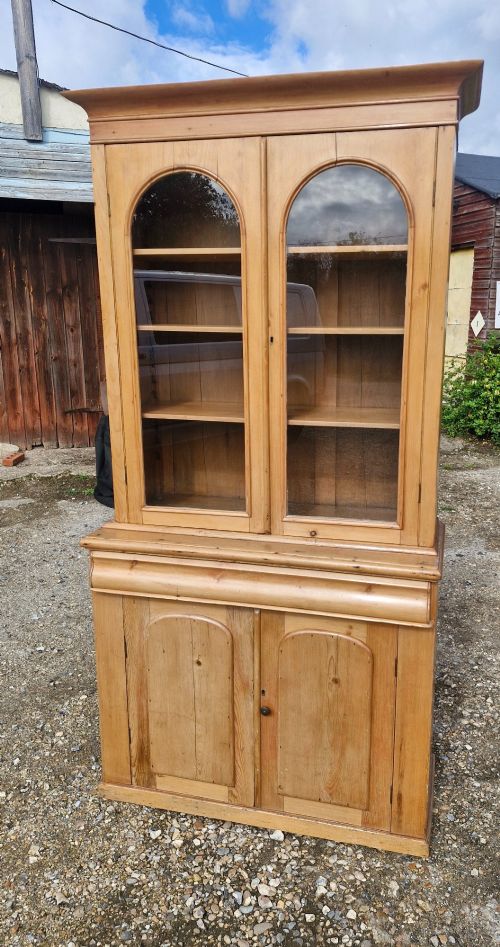
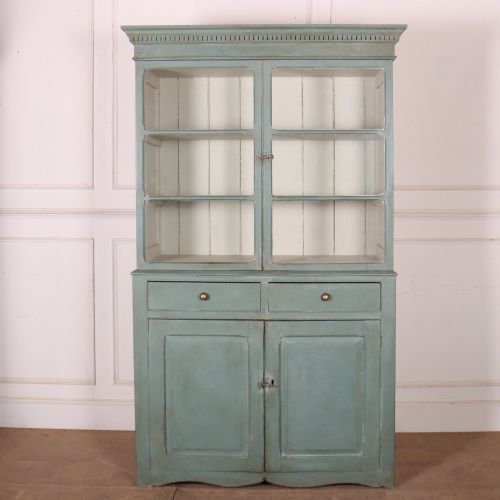
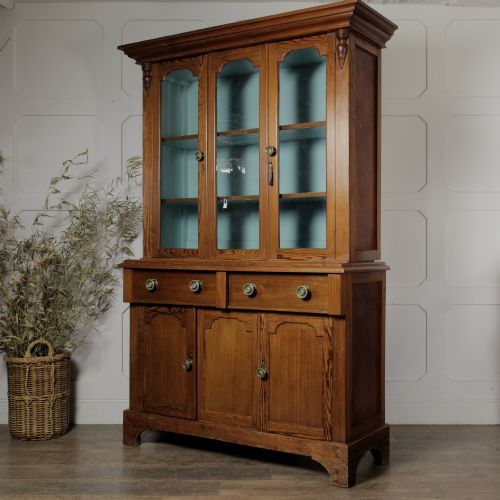
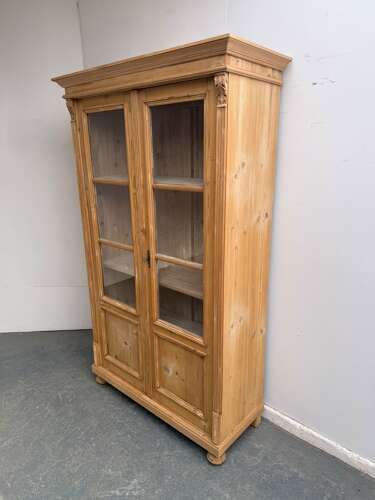
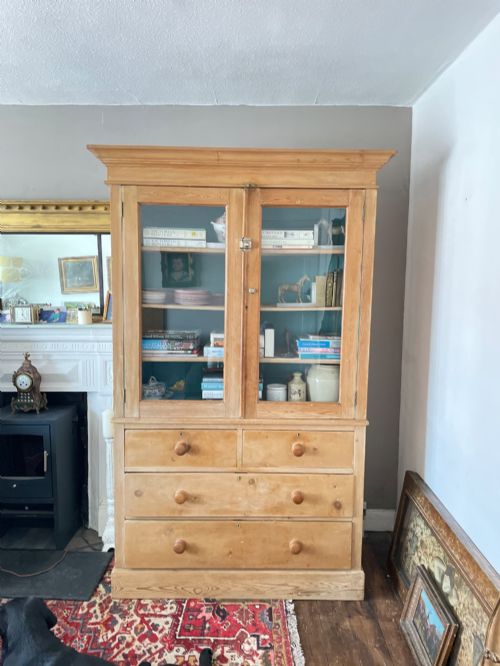
A pine glazed cabinet provides visible storage through glass panels fitted into timber frames, appearing in various formats from tall floor-standing display units to compact wall-hanging cupboards. When searching for a pine glazed cabinet, buyers encounter domestic furniture intended for kitchens, parlours, and bedrooms.
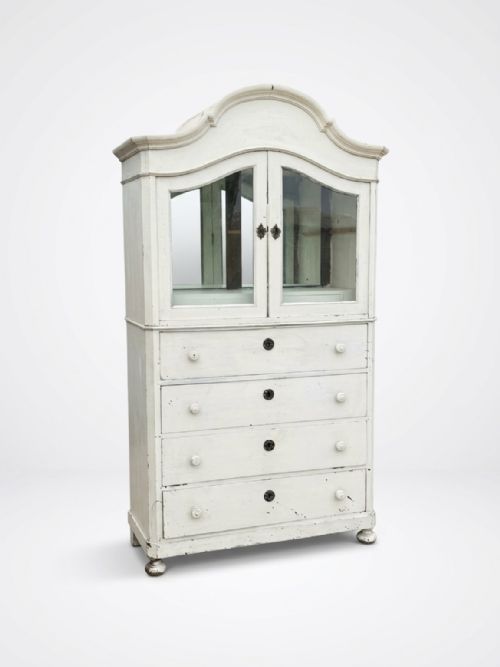
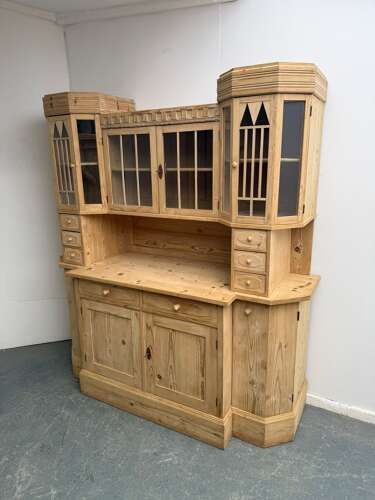
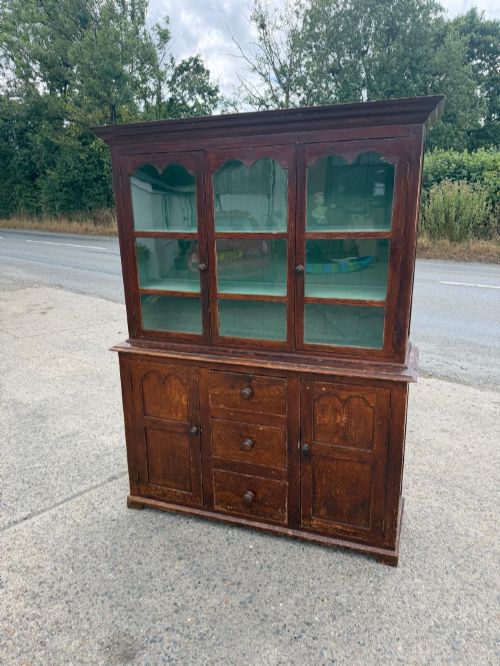
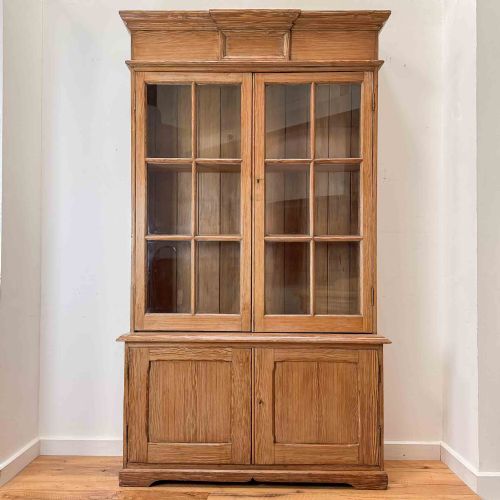
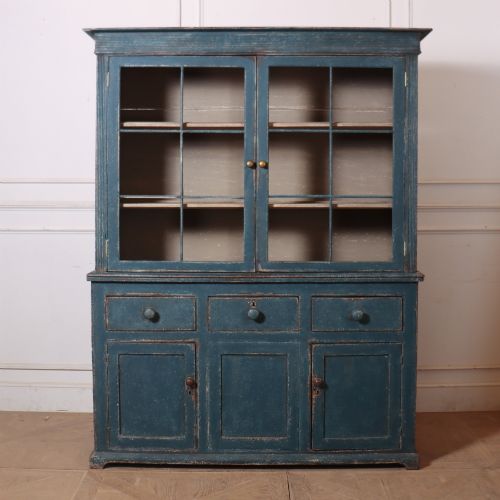
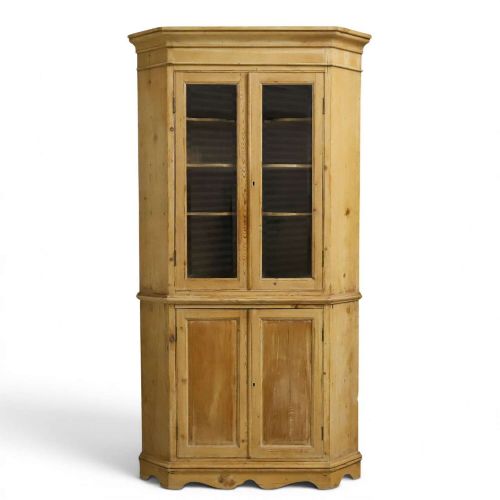
Victorian examples dominate the record, alongside pieces from the Edwardian era, the nineteen-twenties, and nineteen-thirties. Forms range from narrow bookcases and corner cupboards to two-stage dressers and bedside units with glazed top sections.
Regional and continental pieces appear with distinct finishes, including original paint surfaces alongside plain timber prepared for wax. Many survive as working pieces of furniture with internal shelves and occasional drawers to the base.
How They Were Made
Carpenters constructed these pieces primarily from solid pine and pitch pine, utilising iron hardware for hinges, latches, and internal pegs. Glazing bars divide the glass panels into panes, supporting the transparent front while maintaining structural rigidity.
Surfaces received various treatments over time, ranging from plain wax polishes to original coloured paint finishes or preparation for later painting. Back panels typically consist of tongue-and-groove timber boarding nailed to the primary frame.
Several wall-hanging cabinets arrive with rows of small wooden pegs fitted underneath, ready to hold morning aprons or heavy iron keys.
What Varies in Quality
Proportion and scale dictate the visual success of a cabinet, separating well-balanced architectural units from clumsy or heavy-handed examples. The refinement of the glazing bars and the delicacy of the framing timber indicate the care taken by the original maker.
The integrity of the timber, the presence of original glass panes, and the survival of early or original paint finishes distinguish superior survivals from pieces that have undergone heavy alteration or aggressive stripping.
The Pine Glazed Cabinet Glossary
- Glazing bar
- A narrow strip of wood that holds individual panes of glass within a sash. These mouldings define the period style through their thickness and profile.
- Pitch pine
- A dense, resinous variety of pine known for strong grain patterns and durability. It often appears in heavier Victorian utility furniture.
- Two-stage
- A piece of furniture built in two distinct sections, typically a lower cupboard or chest with a separate upper cabinet resting upon it.
- Wall-hanging
- A cabinet designed to be secured directly to a wall rather than resting on the floor. These pieces often feature shallow depths to save domestic space.
Frequently Asked Questions
Where were these cabinets used?
These cabinets served in kitchens, parlours, and bedrooms for storing tableware, books, and household collections.
Wall-hung versions kept items accessible above work surfaces, while tall floor models stood against dining room walls.
How do I clean the pine?
Maintenance depends on whether the surface carries wax, original paint, or bare timber.
Soft dry cloths remove dust from mouldings and glazing bars, avoiding harsh liquid cleaners that damage historic finishes.
Can shelves be adjusted?
Some surviving examples feature movable internal timber supports or peg systems for altering shelf heights.
Many traditional pieces rely on fixed wooden ledges built directly into the cabinet interior during construction.
Are original glass panes common?
Old glass frequently survives, identifiable by minor surface ripples, small bubbles, and slight thickness variations.
Replacement glass appears flatter and clearer, having been installed during later repairs or restoration work.