

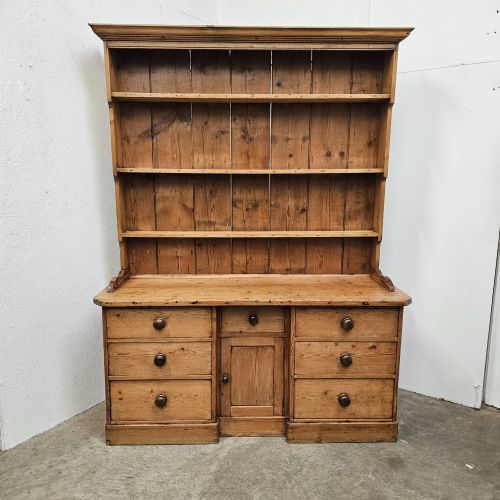

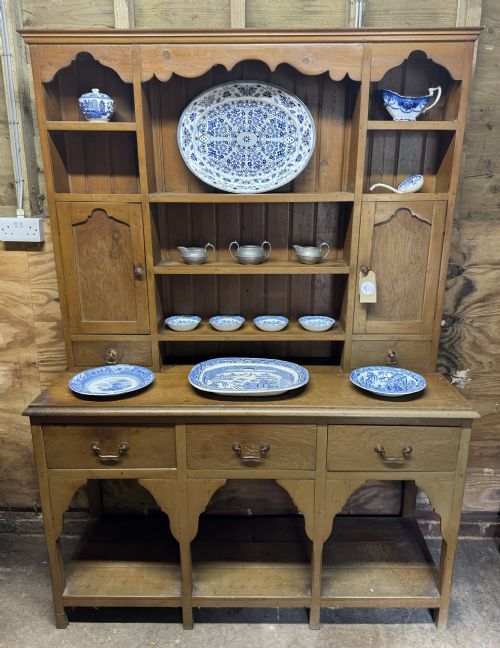


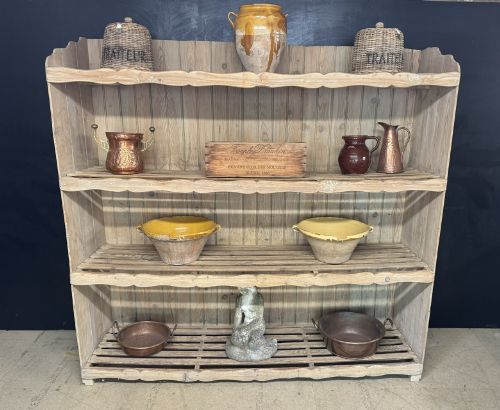


Open Rack Pine Dresser
An open rack pine dresser is a utilitarian storage staple that brings warmth and honest craftsmanship to a kitchen or dining space.
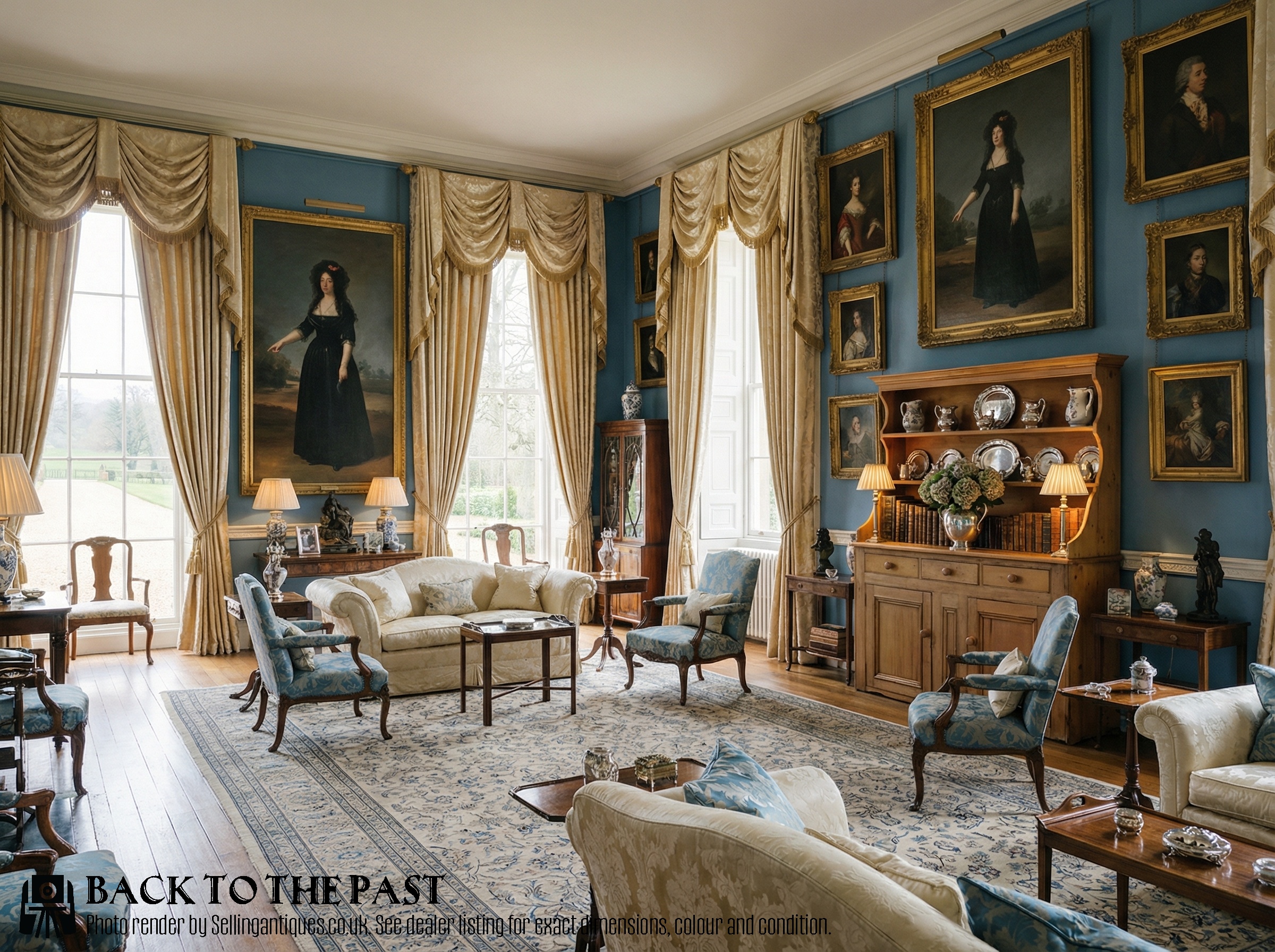
Open Rack Pine Dresser
An open rack pine dresser combines a lower base of cupboards and drawers with an upper tier of open shelves for displaying crockery. You are most likely to encounter nineteenth-century English and regional variants on this page, alongside eighteenth-century examples.
The regional diversity spans English country, Welsh vernacular, Irish country, and West Country styles, reflecting local traditions in domestic furniture making. These pieces served as the working heart of the farmhouse kitchen, holding everyday utility ware within easy reach.
Makers utilised native softwoods and hardwoods, constructing pieces designed for hard daily use rather than formal parlour display. The open rack format distinguishes these items from closed hutch cupboards, placing the emphasis squarely on display.
How they were made
Carpenters constructed the primary carcass using pine, often supplemented with oak, mahogany, or painted finishes depending on regional workshop traditions. Wrought iron and brass hardware appeared as functional hinges, handles, and pulls.
Surfaces received either a painted finish, a stripped pine treatment, or retained an original accumulated patina from decades of kitchen use. Construction relied on traditional joinery methods suited to domestic utility furniture.
Open Rack Pine Dresser Retail Price Guide 2026
Typical asking prices for open rack pine dresser among the pieces listed under this phrase on Sellingantiques today, from the lower quarter to the upper quarter. They describe what is for sale here now, not the wider market.
Bath basement dressers likely spent their early mornings dodging damp laundry and impatient scullery maids before finding peace.
What varies in quality
Proportion and timber selection separate regional vernacular pieces, with tighter grain and thoughtful detailing marking out superior examples. The integrity of the original pot board or lower base structure also influences the standing of the piece.
Surface history plays a significant role, as undisturbed original painted finishes or honest historic patination carry more conviction than later interventions. The balance between the upper open rack and the lower base defines the visual harmony of the furniture.
The Open Rack Pine Dresser Glossary
- Pot board
- A low slatted or solid shelf situated near the floor between the lower legs of a dresser. It was designed to hold heavy pots and pans.
- Vernacular
- Furniture made by local tradespeople using regional styles and available native materials rather than following metropolitan fashion. These pieces tell the story of their specific geographic origin.
- Breakfront
- A piece of furniture whose central section projects forward from the flanking outer sections. This architectural arrangement adds depth and visual interest to the drawer configuration.
- Patina
- The surface sheen and colour acquired by timber and paint over decades of handling, cleaning, and exposure to light. It serves as a visual record of age and use.
Open Rack Pine Dresser: Frequently Asked Questions
What is an open rack pine dresser?
An open rack pine dresser is a traditional kitchen storage unit featuring open upper shelves mounted on a lower base of drawers and cupboards. It was designed for everyday domestic use and crockery display.
Examples on this page span the eighteenth and nineteenth centuries, taking various regional forms including Welsh, Irish, and West Country vernacular styles.
How were these dressers used historically?
These dressers served as the central storage and display hub in farmhouse and cottage kitchens. The open shelves held plates and bowls for daily dining.
The lower cupboards and drawers stored heavier cookware, dry goods, and kitchen utensils, keeping essentials accessible for household tasks.
How do I care for a pine dresser?
Care for a vintage pine dresser involves maintaining stable humidity in your room to prevent timber movement. Dust the open rack regularly with a dry cloth.
Avoid harsh chemical cleaners, particularly on pieces with historic painted finishes or original patination, using only gentle wax where appropriate.
How can I tell the period of a dresser?
Dating a dresser involves examining the construction methods, timber choice, and hardware present on the carcass and drawers. Eighteenth-century examples often display distinct regional joinery traits.
Nineteenth-century pieces frequently utilise softer pine timbers and machine-sawn elements alongside hand-cut joints.