






Japanese Porcelain Dishes
These japanese porcelain dishes bring centuries of skilled firing and hand-painting into the home, prized by collectors for their striking palette and rich surface detail.
Japanese Porcelain Dishes
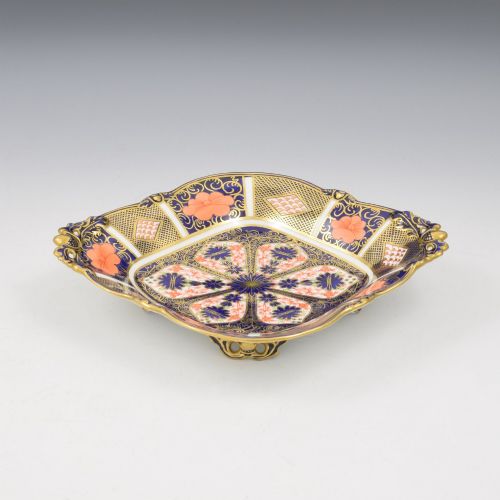
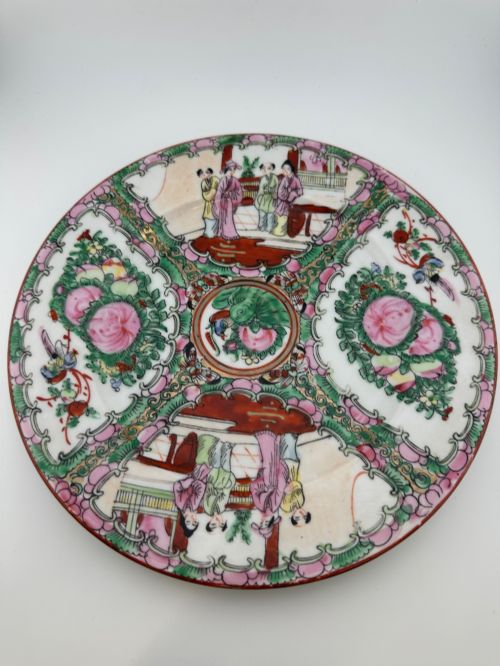
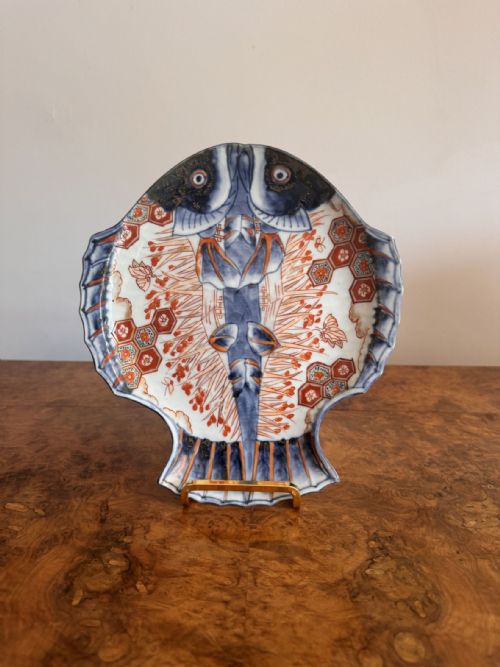
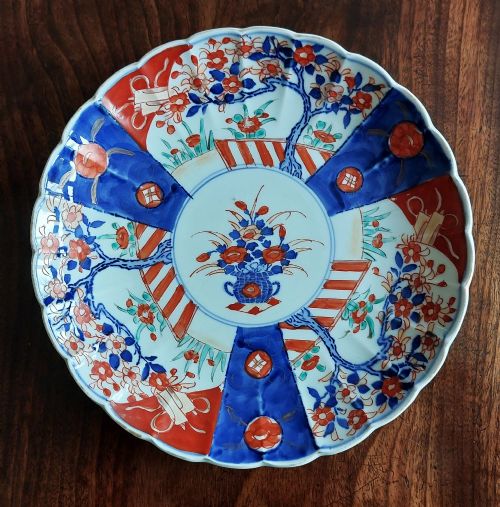
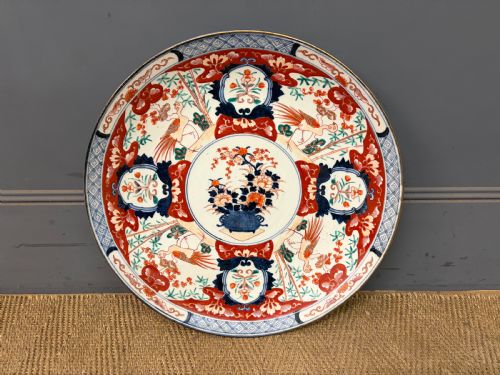
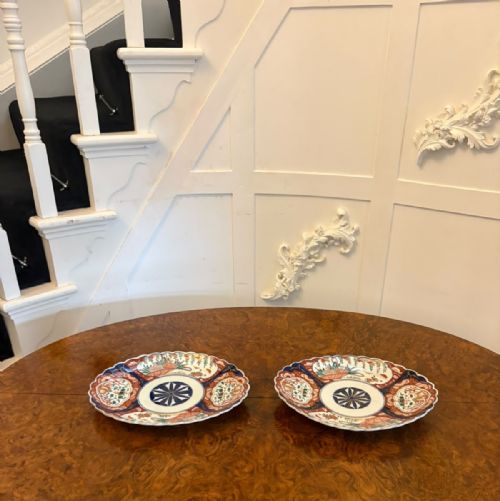
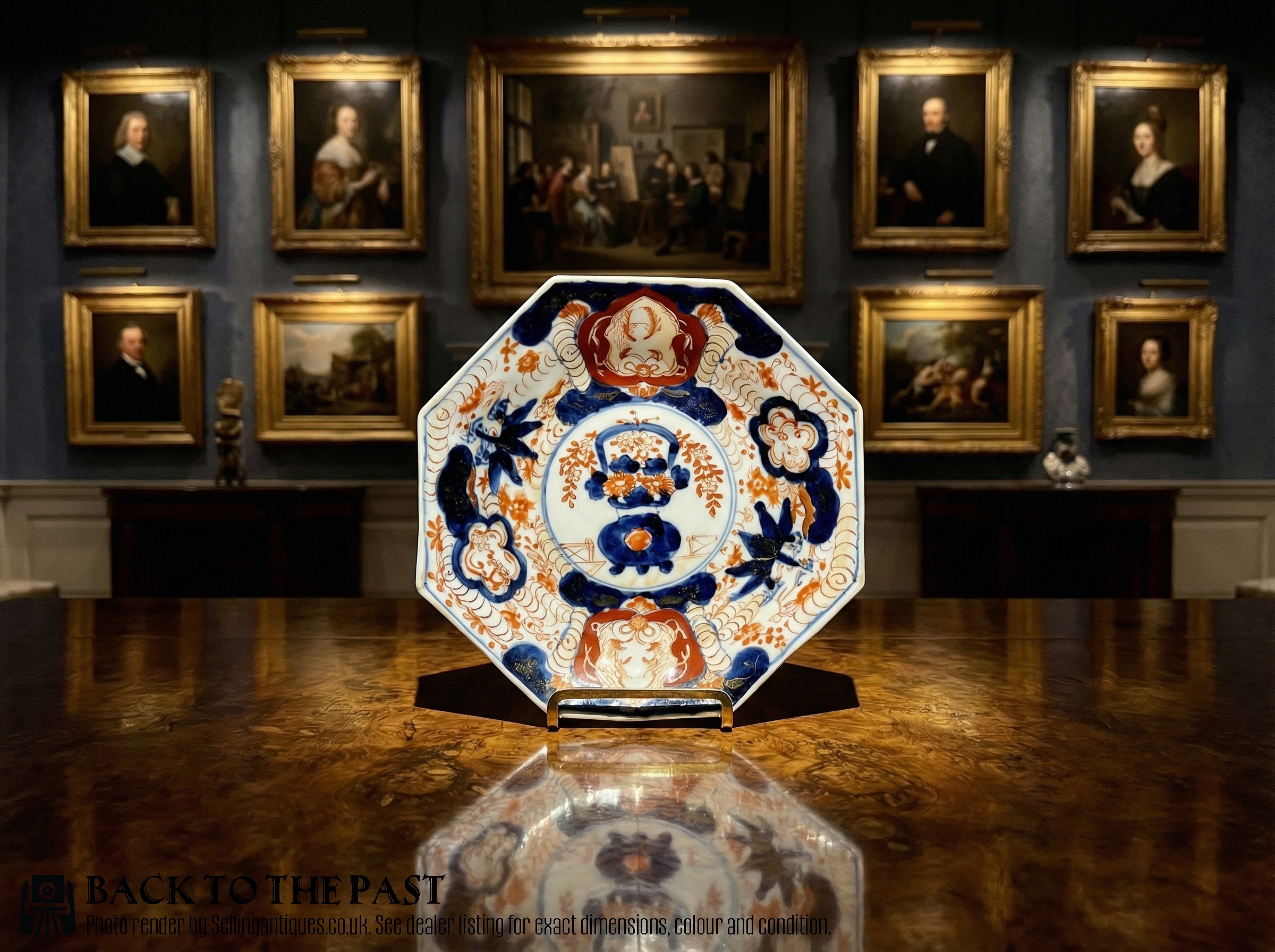
When you search for japanese porcelain dishes, you meet a range of forms spanning centuries of output, from small bowls and cabinet plates to large chargers designed for display. The pieces on this page lean heavily toward the Meiji period and the nineteenth century, with Imari wares dominating the selection in scalloped, round, and shaped outlines.
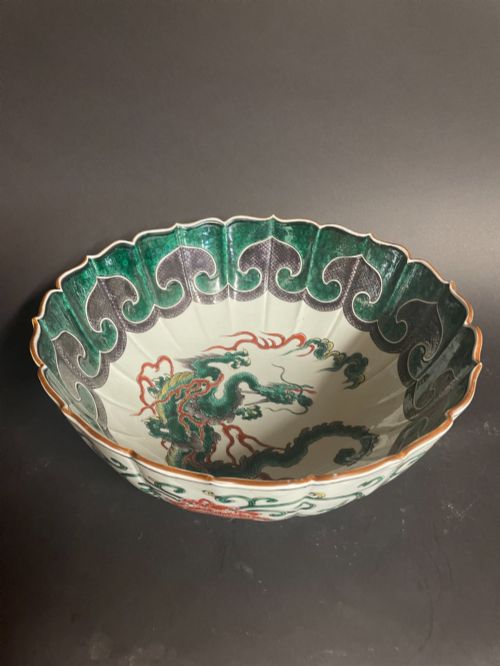
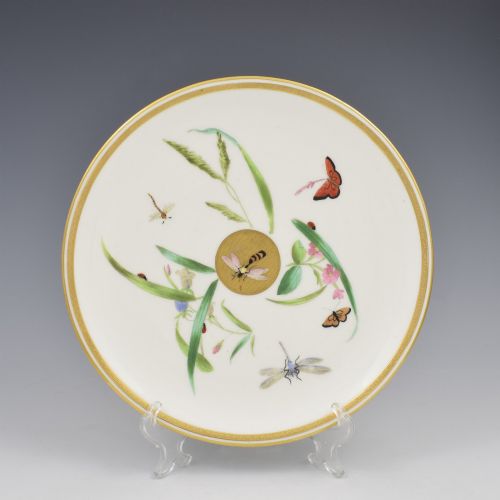
Beyond the standard circular plates, the inventory includes hexagonal, square, oval, and shell-shaped vessels alongside deep bowls and chargers. Earlier examples reach back through the eighteenth and seventeenth centuries, while related Aesthetic Movement pieces demonstrate how European makers absorbed these eastern designs during the Victorian era.
Materials and Technique
Potters built these pieces from refined ceramic bodies finished with durable glazes and fired at high temperatures. Decoration relied on cobalt blue underglazes paired with iron-red enamel and gold leaf highlights to create the characteristic rich surface pattern.
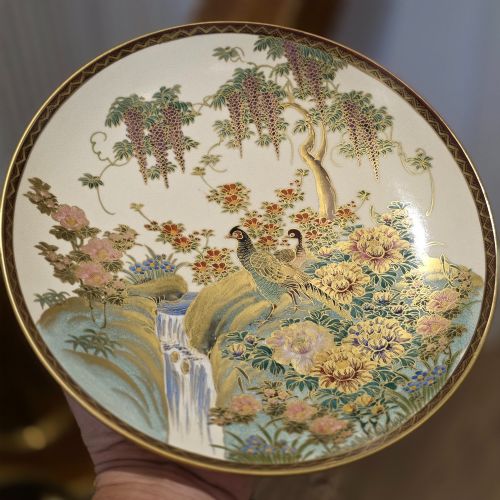
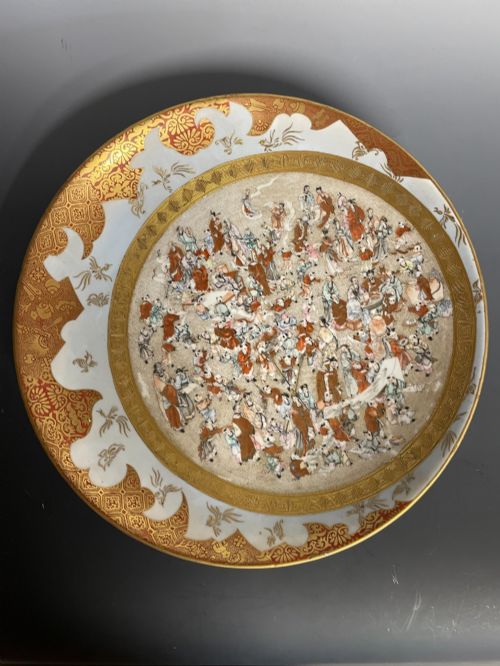
Many items incorporate gilt details and intricate moriage relief work applied over the glaze. Satsuma wares utilise an earthenware body with a fine crackle glaze, while Kutani and Imari pieces rely on hard porcelain surfaces.
The listings span multiple centuries, uniting seventeenth-century saucers with nineteenth-century Imari chargers and Victorian Aesthetic Movement plates.
Judging Quality
Quality rests upon the precision of the brushwork and the crispness of the moulded or thrown form. Finer pieces display confident, detailed painting in the enamel and gold leaf, whereas lesser examples show hurried lines and muted pigment.
The weight of the porcelain body and the evenness of the glaze also separate ordinary items from superior works. Signed pieces or those retaining clear kiln marks generally indicate a higher standard of studio output.
Koshida·Kozan·Minton
The Japanese Porcelain Dishes Glossary
- Imari
- A style of Japanese porcelain featuring a distinctive palette of underglaze blue, iron-red, and gilt. It originated in the town of Arita and became widely exported to Europe.
- Charger
- A large decorative plate intended primarily for display on a wall or sideboard rather than for serving food at table.
- Moriage
- A decorative technique using raised slip or clay applied to pottery before firing, creating a textured surface for enamel and gilt details.
- Meiji Period
- The era in Japanese history spanning from 1868 to 1912, marked by increased international trade and a surge in export ceramics.
- Kutani
- A style of Japanese porcelain known for bold pictorial designs, often incorporating rich greens, purples, yellows, and heavy gold leaf.
Japanese Porcelain Dishes: Frequently Asked Questions
How do I hang a heavy charger?
Large chargers require robust wire or spring-tension wall hangers designed to distribute the weight evenly across the rim. Ensure the fixture secures firmly into a wall stud rather than plaster alone.
Display them away from high-traffic hallways where accidental knocks might dislodge the piece from the wall.
Were these dishes used for dining?
While many smaller bowls and plates served functional roles in households, larger chargers and highly decorated cabinet pieces were made for display. Their elaborate gold leaf and enamel decoration meant they functioned chiefly as ornamental objects.
Gentle hand washing is necessary for any pieces brought to the table, avoiding dishwashers entirely to protect the historic glaze.
How do I identify Meiji period pieces?
Meiji period ceramics often display dense, intricate patterns of birds, flowers, and geometric borders combined with extensive gilding. The paste and glaze finishes reflect the industrial and artistic shifts occurring between eighteen sixty-eight and nineteen twelve.
Many bear studio signatures or marks on the underside that help pinpoint their origin within specific regional potteries.
What is the difference between Imari and Satsuma?
Imari pieces consist of hard white porcelain decorated primarily in cobalt blue and iron-red with gold accents. Satsuma wares utilise a cream-coloured earthenware body covered in a fine crackle glaze and painted with elaborate scenes.
Satsuma pieces frequently feature raised moriage decoration, giving them a tactile, three-dimensional surface texture.