




Japanese Imari Porcelain Dishes
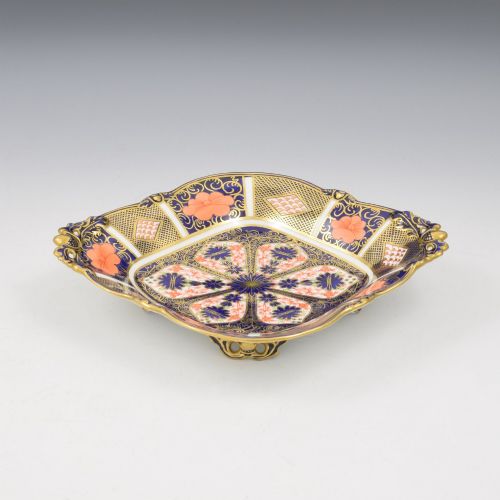
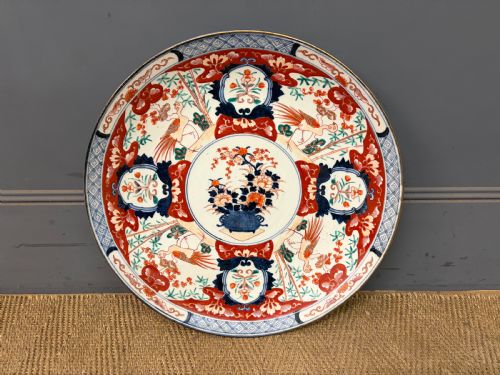
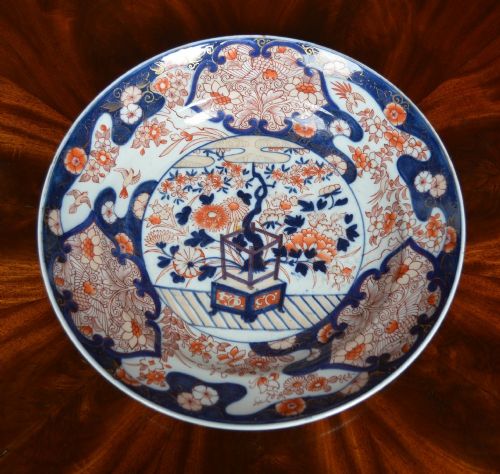
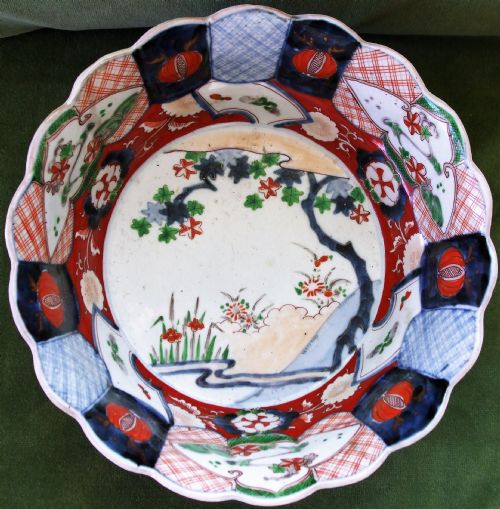
These japanese imari porcelain dishes bring together cobalt underglaze blue, iron red enamel and gold leaf on hard paste ceramic.

Japanese Imari Porcelain Dishes
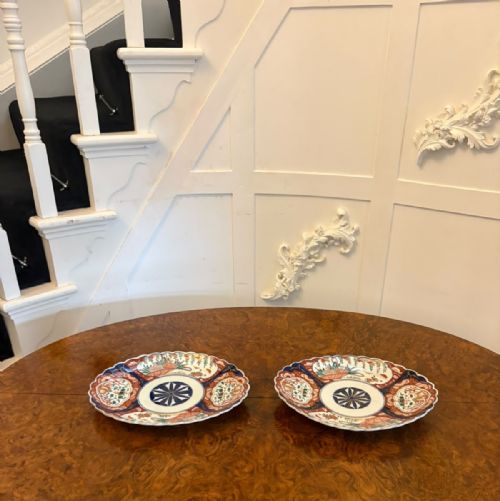
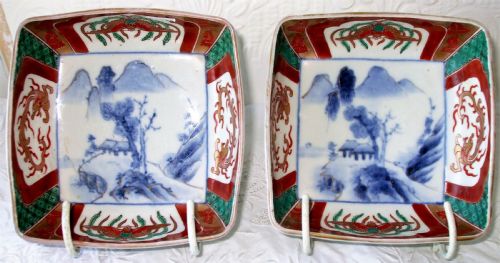
When someone searches for japanese imari porcelain dishes, they encounter decorative chargers, bowls and plates produced in Japan during the Meiji period, the Edo period and the nineteenth century. The selection on this page consists predominantly of nineteenth century and Meiji period examples, ranging from standard round plates to specialised shapes.
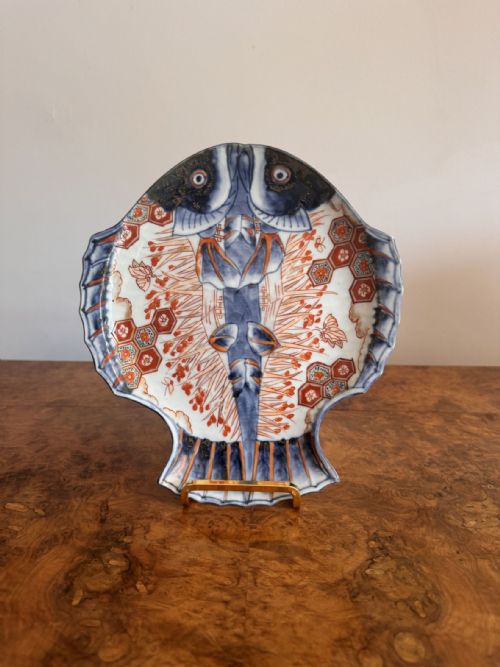
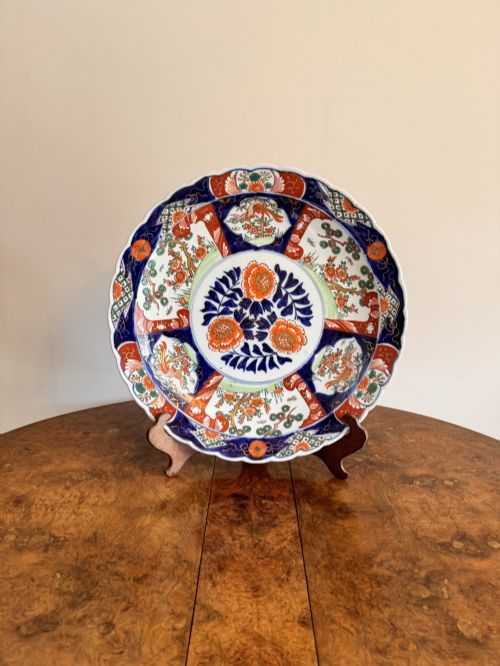
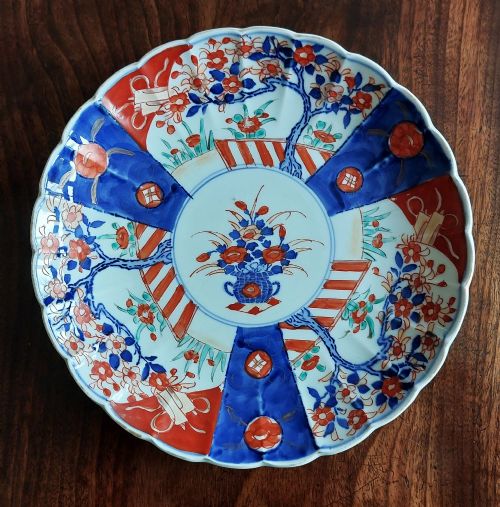
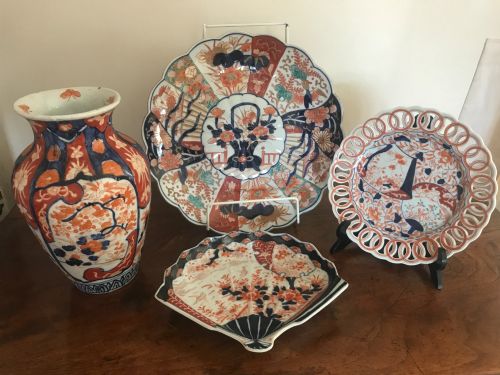
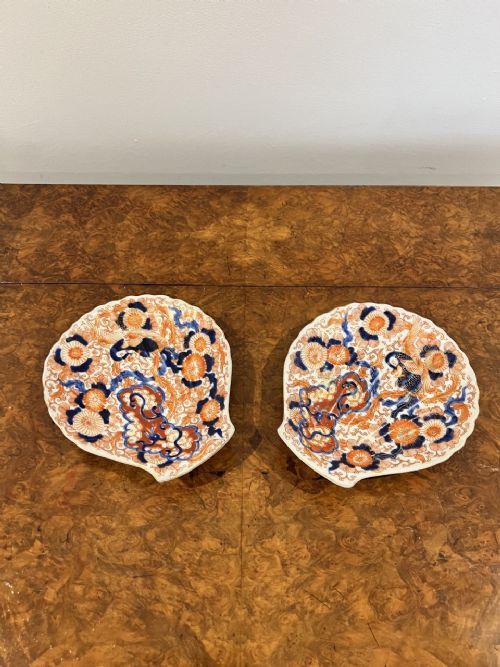
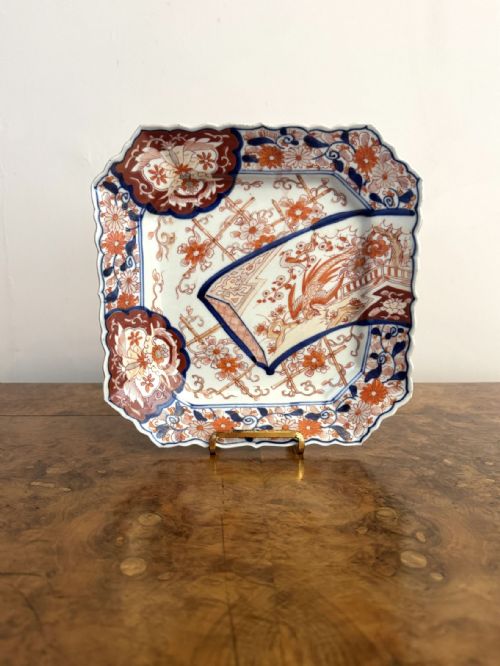
The forms extend beyond basic circles to include scallop edge dishes, chargers, oval dishes, hexagonal plates, square shaped plates and items moulded in the form of a fish or a shell. These ceramic pieces were designed primarily for decorative display rather than daily dining service.
Origins trace back to Japanese kilns, notably those in Arita, where makers combined underglaze cobalt pigment with overglaze enamels. Buyers find pairs, sets and individual items spanning bowls and large chargers.
How they were made
The physical objects rely on porcelain bodies decorated with cobalt underglaze applied before the initial firing, establishing the deep blue foundation of the design. Enamel colours and gold leaf or gilding are added in subsequent stages over the glaze and fixed with a lower temperature second firing.
Makers shaped the porcelain by hand or in moulds to achieve specific forms such as scallop edges, hexagonal profiles and moulded fish or shell bodies. Hand painted floral and bird motifs completed the surface decoration across plates and bowls.
Makers occasionally abandoned standard circles entirely, shaping porcelain into convincing fish and shell forms.
What varies in quality
The standard of these ceramics depends upon the precision of the hand painting and the complexity of the form. Plates moulded into fish or shell shapes or finished with crisp scallop edges demonstrate higher technical ambition than standard round vessels.
The application of gold leaf and the vibrancy of the enamel work distinguish the finer examples from simpler production pieces. Consistency in the cobalt underglaze and the balance of the floral and bird designs mark out superior chargers and bowls.
The Japanese Imari Porcelain Dishes Glossary
- Imari
- A style of Japanese porcelain originating from Arita and exported through the port of Imari, traditionally characterised by a palette of cobalt blue, iron red and gold.
- Charger
- A large decorative plate intended for display on a wall or sideboard rather than for serving food at table.
- Cobalt Underglaze
- A blue pigment applied directly to the raw porcelain body beneath the clear glaze, capable of withstanding high kiln temperatures.
- Meiji Period
- The era of Japanese history spanning from 1868 to 1912, which accounts for a substantial proportion of the antique plates and bowls available.
- Scallop Edge
- A decorative rim shaped into a series of continuous curves resembling the edge of a scallop shell.
Japanese Imari Porcelain Dishes: Frequently Asked Questions
How are japanese imari porcelain dishes displayed?
Large chargers and plates are frequently hung on walls or stood on sideboards using plate stands to showcase their painted surfaces.
Smaller bowls and dishes sit on tables or cabinets where their interior designs remain visible.
What is the difference between imari and blue and white porcelain?
Imari porcelain incorporates a tripartite palette utilising cobalt underglaze blue alongside iron red enamel and gold leaf.
Standard blue and white porcelain relies exclusively on cobalt pigment beneath a clear glaze without the overglaze enamels.
Can japanese imari porcelain dishes be used for food?
Most antique examples function primarily as decorative ceramics for display rather than practical tableware.
Historic glazes and gold leaf decoration can suffer from wear when subjected to regular washing and dining use.
How do I identify a meiji period piece?
Meiji period items date from between 1868 and 1912, aligning with the late nineteenth and early twentieth centuries recorded in the listings.
They often feature intricate hand painted floral and bird motifs combined with rich gilding.