





Japanese Porcelain Serving Dishes
These japanese porcelain serving dishes span the Edo, Meiji, and Victorian periods, offering hand-painted floral and bird designs for practical service and display.

Japanese Porcelain Serving Dishes
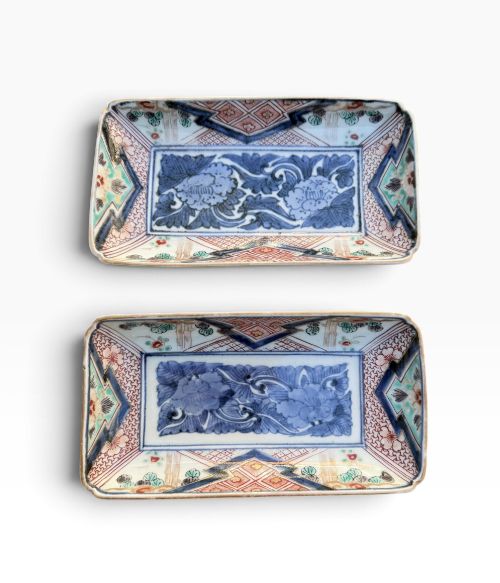
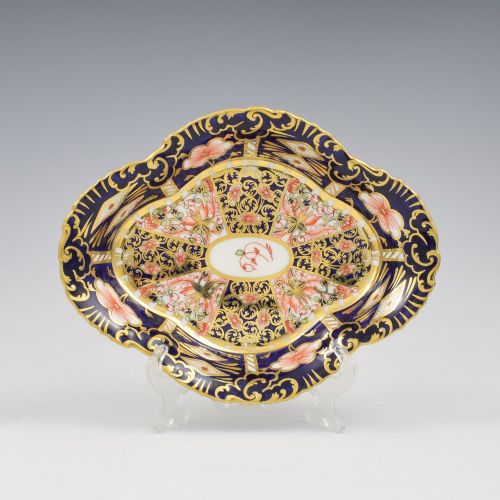
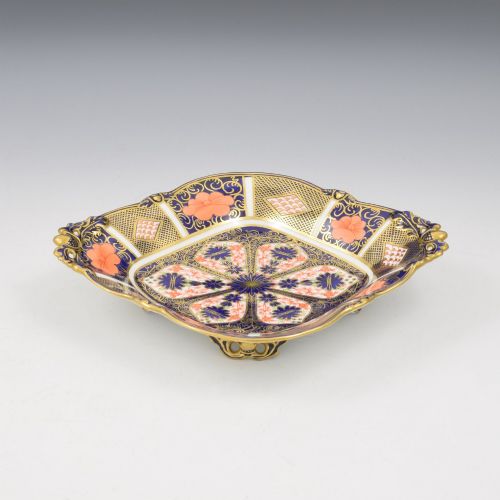
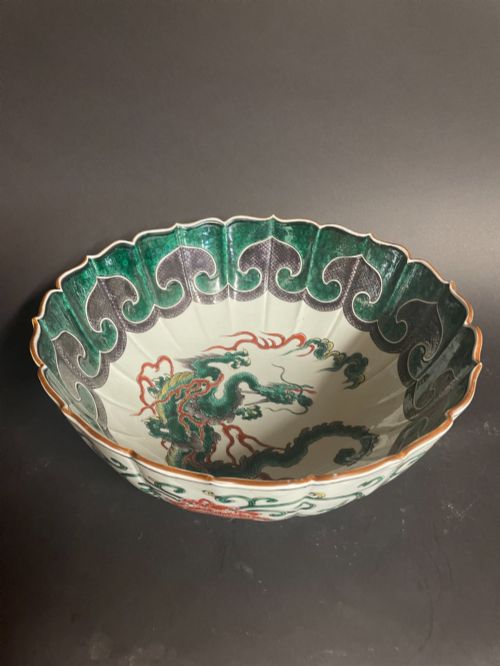
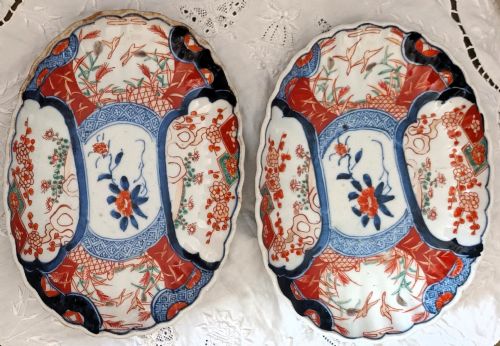
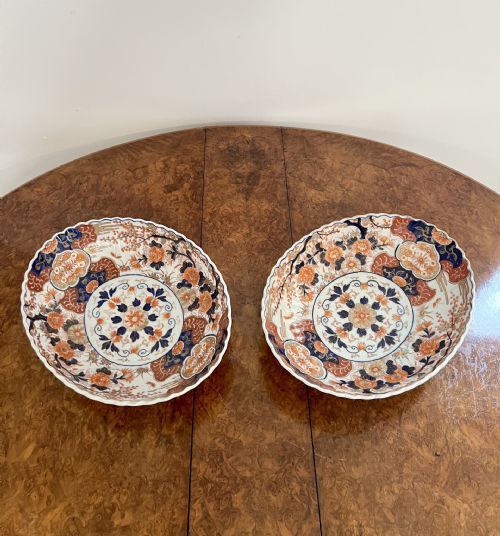
When you search for japanese porcelain serving dishes, you encounter a selection spanning the eighteenth, nineteenth, and early twentieth centuries. These vessels appear in forms such as chargers, bowls, platters, square plates, oval dishes, and boat-shaped trays.
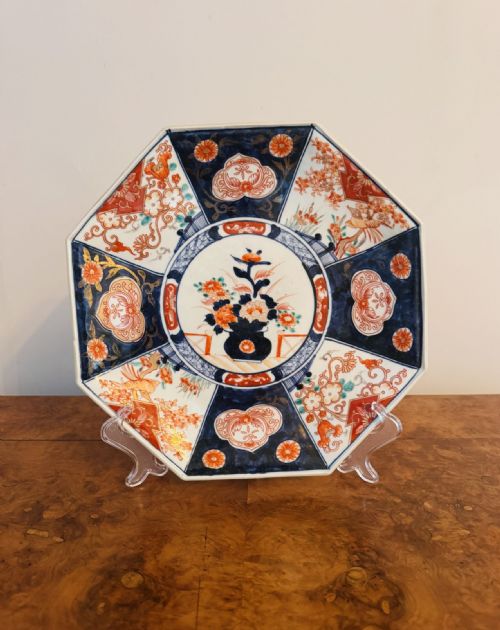
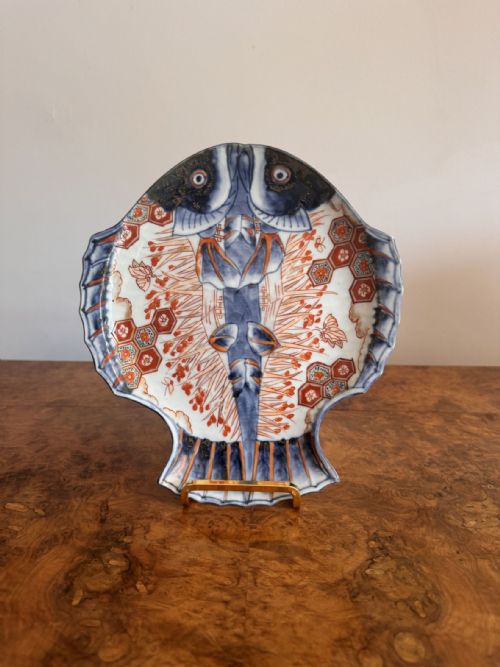
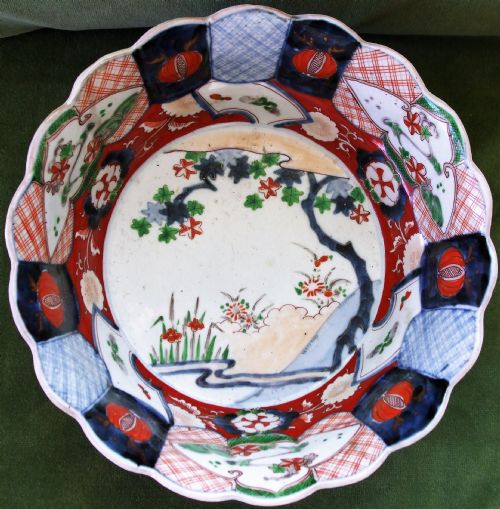
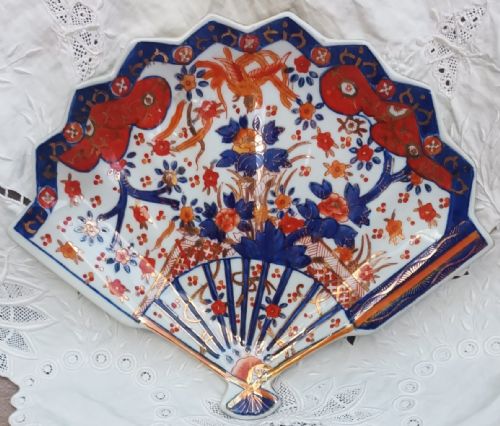
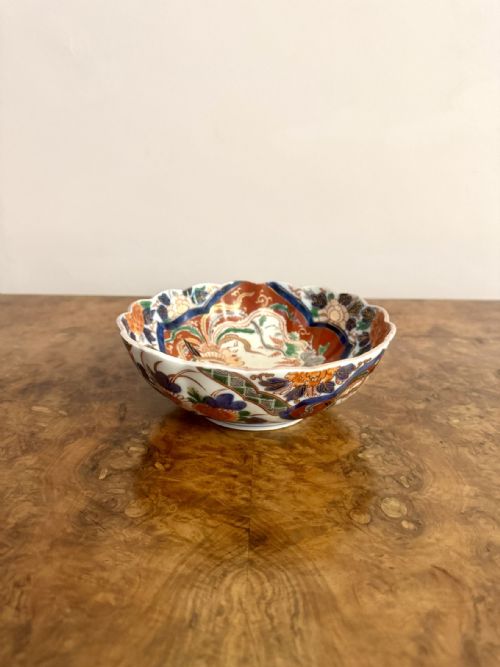
The version you are most likely to meet on this page is the Japanese Imari piece from the Meiji period or around nineteen hundred. These items frequently display scallop edges, fan shapes, or fish forms alongside cobalt underglaze and enamel decoration.
How they were made
The material foundation is porcelain or bone china, shaped into bowls, plates, and chargers then finished with glaze. Cobalt underglaze provides the deep blue tones characteristic of Imari and Arita wares.
Enamel and gilding or gold leaf are applied over the glaze to build up complex floral, bird, and peony motifs. Hand painting dictates the surface detail across square plates, chargers, and platters.
Fish take solid form as serving dishes, offering a literal swim across the dining table.
What varies in quality
The distinction between standard utility wares and superior pieces rests on the precision and complexity of the hand-painted brushwork. Finer items exhibit crisp lines within floral and bird motifs and deliberate control of cobalt underglaze.
Unusual forms, such as fish-shaped plates, fan-shaped dishes, and boat-shaped servers, demand greater skill from the potter and painter than standard round bowls and plates.
Royal Crown Derby
The Japanese Porcelain Serving Dishes Glossary
- Imari
- A style of Japanese porcelain featuring a palette of cobalt blue, iron red, and gold, named after the port from which the wares were shipped. This aesthetic influenced makers in both Japan and Europe.
- Arita
- The Japanese town and surrounding region where porcelain production began in the early modern era. Arita wares include early blue and white pieces as well as later polychrome designs.
- Meiji
- The period in Japanese history spanning from eighteen sixty-eight to nineteen twelve, noted for the flourishing export of decorative porcelain. Meiji period items frequently combine cobalt underglaze with vibrant enamel and gilding.
- Charger
- A large decorative plate intended for formal service or display on a wall or sideboard. These substantial pieces highlight the full scope of painted floral and bird patterns.
- Cobalt Underglaze
- A blue pigment applied to the raw porcelain body before glazing and firing, producing deep and durable colour. This technique underpins the traditional blue and white designs found on many bowls and dishes.
Japanese Porcelain Serving Dishes: Frequently Asked Questions
What periods do these dishes come from?
The pieces span from the eighteenth century through the Meiji period and into the early twentieth century. Victorian and Edwardian examples also appear alongside earlier Japanese items.
Dates cluster heavily around nineteen hundred and the nineteenth century, reflecting the peak of export trade and domestic production.
How do I identify Imari porcelain?
Imari wares are recognised by their distinct combination of cobalt underglaze blue and iron red enamel, frequently augmented by gold leaf or gilding. Motifs commonly include floral arrangements, birds, and complex geometric borders.
Dishes in this style appear in various shapes, including scalloped edges, squares, fans, and boat forms.
Were these dishes meant for food?
While many items functioned as tableware sets or sushi plates for dining, larger chargers and platters were often created for decorative display. The presence of gold leaf and delicate enamel on certain bowls suggests occasional use or presentation.
Form dictates function, with shallow square plates and oval dishes serving different culinary purposes than deep bowls.
What is the difference between Arita and Imari?
Arita refers to the production centre where the porcelain body and initial blue and white decoration were created. Imari denotes the port of shipment and the specific decorative style that developed using blue, red, and gold.
Many Arita pieces are decorated in the Imari palette.