


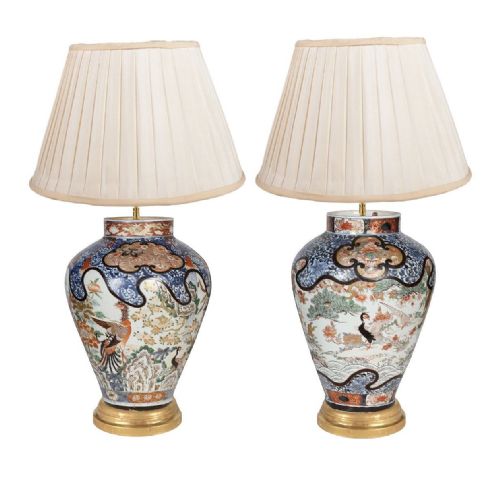

18th Century Japanese Porcelain
These 18th century japanese porcelain pieces bring rich Edo period palettes and intricate Arita forms directly into modern rooms.
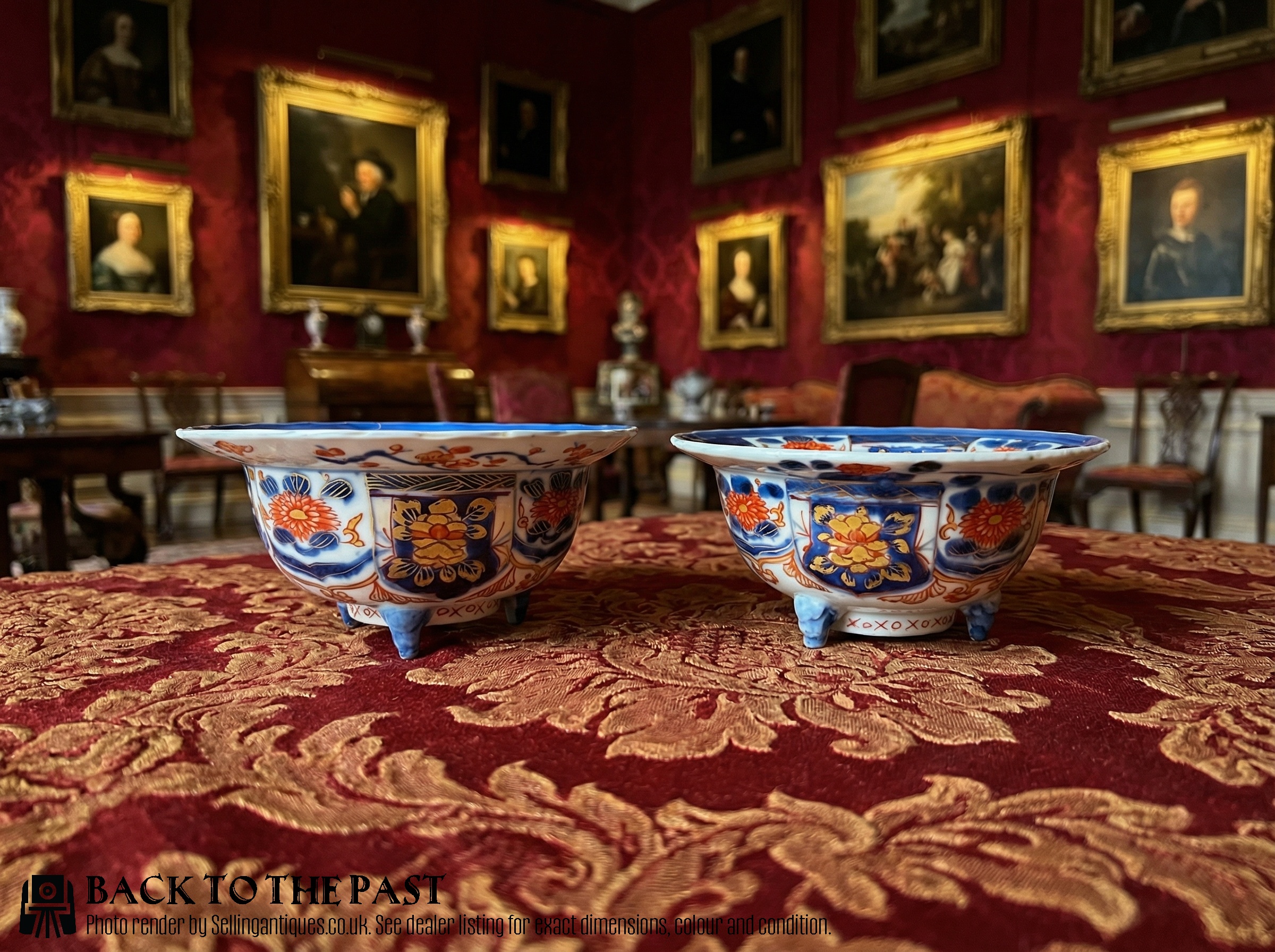
18th Century Japanese Porcelain
When you search for 18th century japanese porcelain, you encounter wares originating primarily from the kilns at Arita during the Edo period. These items encompass large garden jars, chargers, dishes, and bowls shaped for display and utility.
The most common versions on this page are Imari palette vases and plates decorated with iron red, blue, and gold leaf. You also find blue and white chargers alongside tripod bowls and sake ewers.
Vases and jars frequently appear converted into table lamps using brass fittings while retaining their original ceramic bodies. Dishes and plates demonstrate moulding in shallow relief, often depicting cranes and scrolling foliate borders.

Materials and technique
Potters shaped these objects from fine porcelain clay before applying underglaze blue and overglaze enamel colours. Artisans added rich highlights in gold leaf over the fired glaze to create the characteristic Imari contrast.
Production centred on the kilns of Arita, where craftsmen utilised wood and fabric elements for mounting or display alongside supplementary brass components. Selected vessels also received moulded relief work before painting.
18th Century Japanese Porcelain Retail Price Guide 2026
Typical asking prices for 18th century japanese porcelain among the pieces listed under this phrase on Sellingantiques today, from the lower quarter to the upper quarter. They describe what is for sale here now, not the wider market.
Listings feature Arita porcelain, Imari palettes, and blue and white designs across dishes, chargers, vases, and lamp conversions dated to the eighteenth century.
Quality variations
The hierarchy of these ceramics depends upon the crispness of the underglaze blue painting and the precision of the overglaze enamel work. Superior examples display vibrant iron red and well-preserved gold leaf without rubbing.
Form and moulding dictate distinction, as shallow relief crane shapes and balanced foliate borders require advanced potting skill. Pieces retaining their original lids and uncompromised bodies stand higher in the range than modified lamp conversions.
The 18th Century Japanese Porcelain Glossary
- Imari
- A style of Japanese porcelain decorated in underglaze blue and overglaze iron red, black and gold. This palette became immensely popular across Europe during the Edo period.
- Arita
- The Japanese town and surrounding region where porcelain production began in the early seventeenth century. Kilns here produced the vast majority of exported wares.
- Edo Period
- The historical epoch in Japan running from sixteen hundred and three to eighteen hundred and sixty-seven. Most pieces on this page originate from this time.
- Kakiemon
- An asymmetric style of Japanese enamel decoration featuring clean white porcelain and delicate floral or bird motifs. European factories frequently copied these patterns.
- Charger
- A large decorative plate intended for display on a sideboard or wall rather than for dining. These vessels provide expansive surfaces for intricate scrolling foliate borders.
18th Century Japanese Porcelain: Frequently Asked Questions
How do I identify Arita Imari porcelain?
Look for the distinct combination of underglaze cobalt blue, vibrant iron red enamel, and gold leaf highlights. These colours appear on porcelain bodies created in the Arita kilns during the Edo period.
Examine the foot ring and base for the smooth white ceramic texture characteristic of eighteenth-century Japanese production.
Were these pieces made for export?
Yes, the vast majority of these wares were produced in Japan specifically for shipment to European markets through trading companies. European collectors prized the robust porcelain and striking colour combinations.
This export trade influenced interior decoration schemes across Georgian Britain and continental Europe.
How should I clean porcelain lamps?
Dust the ceramic body gently with a dry, soft cloth to prevent accumulation in moulded relief details. Avoid liquid cleaners or harsh chemicals that might damage the fragile gold leaf and overglaze enamels.
Check the brass electrical fittings periodically to ensure the vintage or converted lamp remains safe for daily use.
Can I use antique bowls for food?
These decorative bowls and dishes serve best as display items rather than functional tableware. Eighteenth-century overglaze enamels and gold leaf can wear down with repeated washing and cutlery contact.
Displaying them on tables or in cabinets protects the historic glaze from modern kitchen wear.