






Vintage Japanese Porcelain Plates
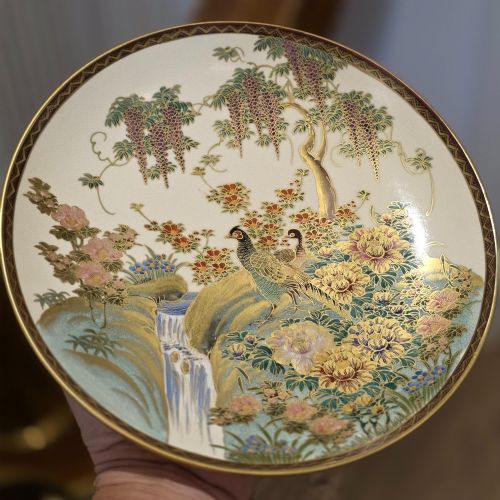
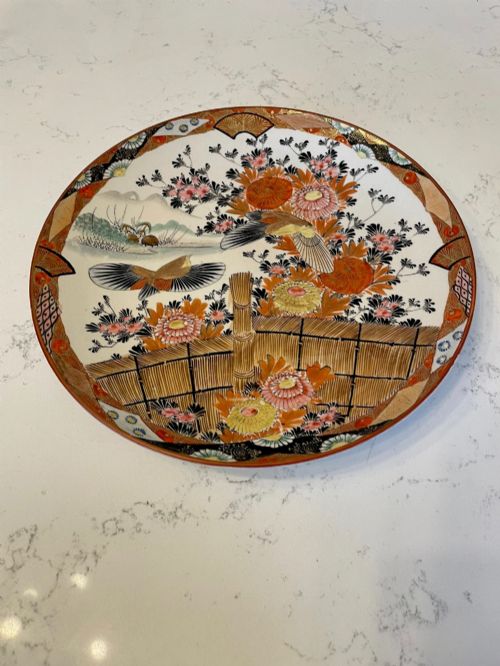
These vintage japanese porcelain plates bring traditional Meiji and Edo craftsmanship to a table, offering hand-painted decoration that draws the eye.

Vintage Japanese Porcelain Plates
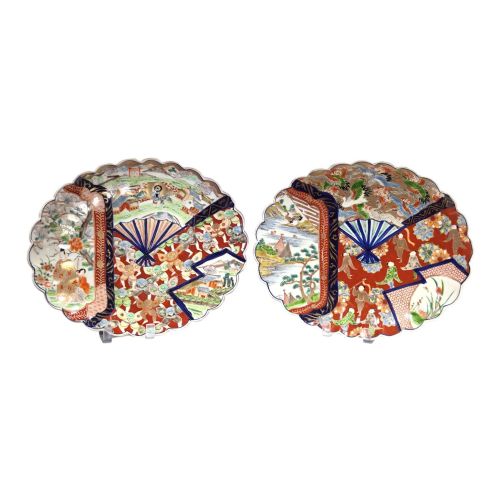
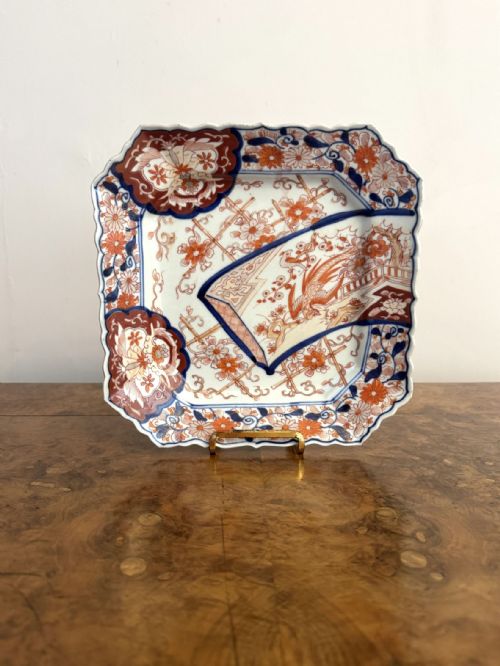
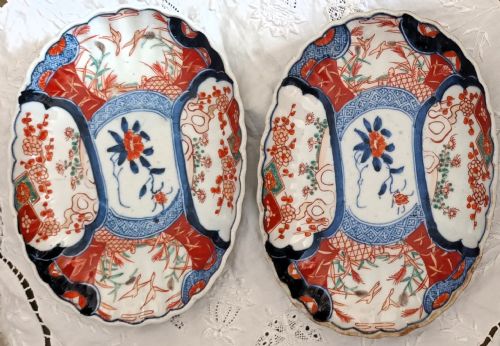
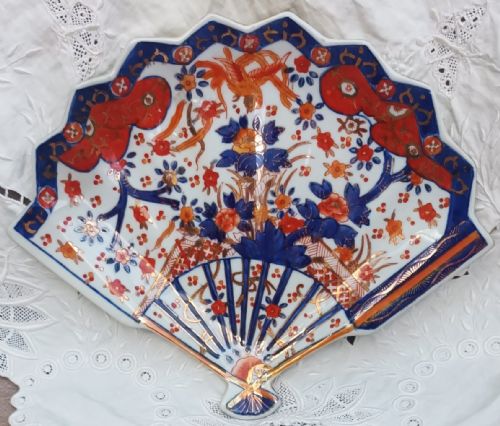
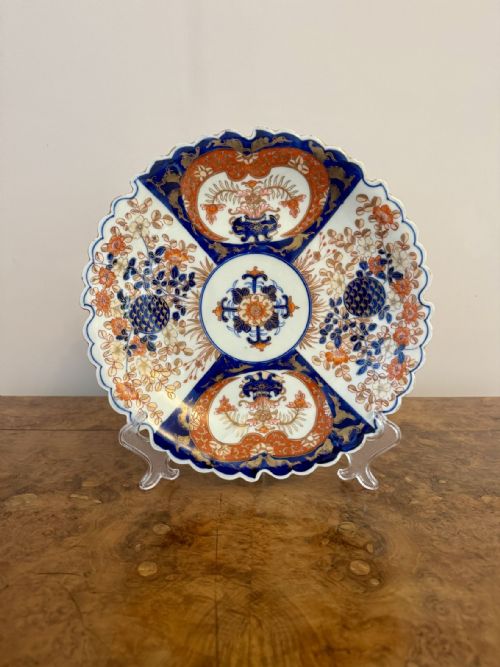
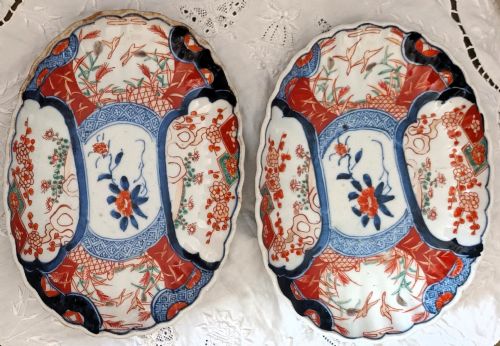
When you search for vintage japanese porcelain plates, you encounter items originating from the eighteenth century through the early twentieth century. The selection spans the Edo and Meiji periods, containing pieces shaped as chargers, square plates, and scalloped dishes.
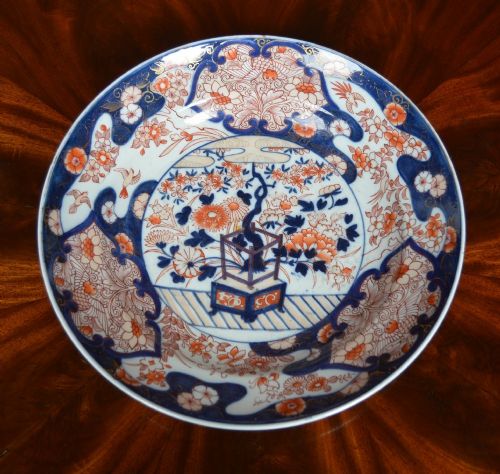
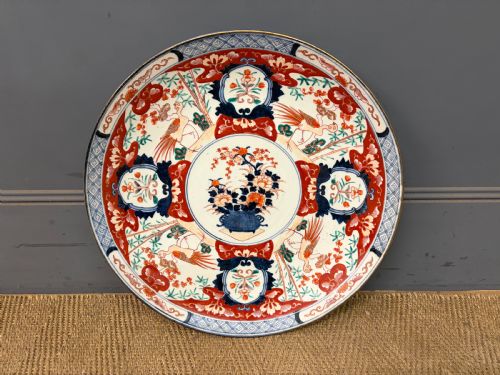
Imari and Arita styles dominate the selection, often featuring traditional motifs like cranes and the Seven Lucky Gods. The forms vary from standard circular plates to clam shell dishes and large display chargers.
How they were made
The makers utilised porcelain, ceramic, and glaze as the foundation for each piece, applying hand-painted designs directly onto the surface. Cobalt underglaze provided deep blue tones, while enamel colours added vibrancy to the scenes.
Gold leaf, gilt, and gilding were frequently introduced to highlight specific details within the painted compositions. Artisans shaped these items into square, ribbon, and scalloped edges before firing.
Vintage Japanese Porcelain Plates Retail Price Guide 2026
Typical asking prices for vintage japanese porcelain plates among the pieces listed under this phrase on Sellingantiques today, from the lower quarter to the upper quarter. They describe what is for sale here now, not the wider market.
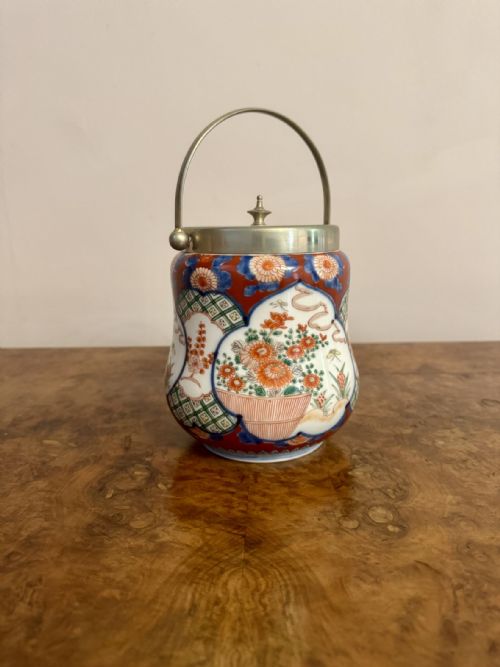
Among the ceramics, a biscuit barrel stands out as an unexpected form for Imari porcelain.
What varies in quality
Quality rests in the precision of the hand-painted brushwork and the clarity of the cobalt underglaze. Superior examples display careful detailing in complex motifs such as figures and traditional iconography.
The sophistication of the form also dictates the standard, with square shapes, scalloped edges, and large chargers demanding greater skill from the potter than standard circular vessels.
Koshida
The Vintage Japanese Porcelain Plates Glossary
- Imari
- A style of Japanese porcelain decorated in underglaze blue, iron red, and gold, originating from the town of Arita. These pieces gained popularity in Europe during the Edo and Meiji periods.
- Charger
- A large decorative plate intended for display rather than for serving food. Chargers often feature elaborate hand-painted scenes across a broad surface.
- Meiji Period
- An era in Japanese history spanning from 1868 to 1912, characterised by opening trade with the West and prolific ceramic production. Pieces from this time frequently combine traditional motifs with refined enamel work.
- Edo Period
- The period spanning from 1603 to 1867, marked by domestic peace and the flourishing of regional kilns. Porcelain from this era includes early Arita wares and clam shell dishes.
- Cobalt Underglaze
- A blue pigment applied to ceramic pieces before the application of glaze and subsequent firing. This technique creates durable designs that resist fading over centuries.
Vintage Japanese Porcelain Plates: Frequently Asked Questions
How do I display vintage Japanese plates?
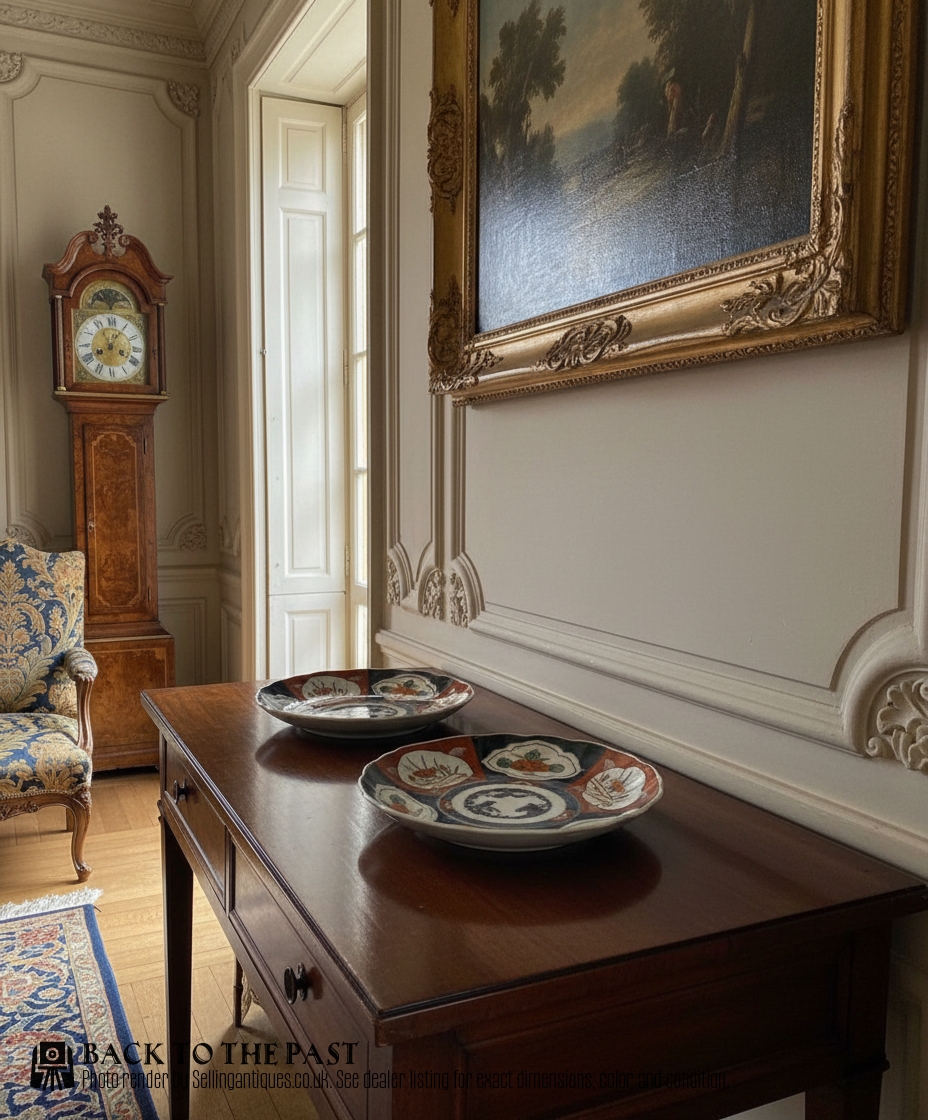
Large chargers and decorative dishes work well mounted on walls or supported by sturdy plate stands in a dining room.
Smaller plates can be arranged in sets on sideboards or kept within cabinets alongside their storage boxes.
Can I use these plates for dining?
While these items are constructed from porcelain and ceramic, many possess delicate gilding and enamel work that benefits from gentle treatment.
Dishes meant for display or holding sushi are typically preserved for decorative use or light handling to protect the hand-painted surfaces.
How do I date a Japanese plate?
Dating relies on stylistic markers associated with the Edo and Meiji periods, alongside specific regional techniques like those from Arita.
Listings often reference the nineteenth or early twentieth century based on the complexity of the cobalt underglaze and enamel decoration.
What is the difference between Imari and Arita?
Arita refers to the Japanese town and production centre where the porcelain clay was mined and fired.
Imari describes the specific decorative style and colour palette applied to wares exported through the port of Imari.