






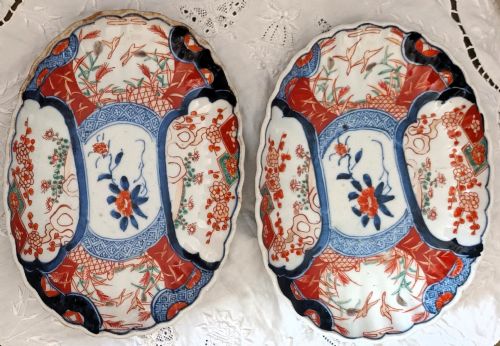
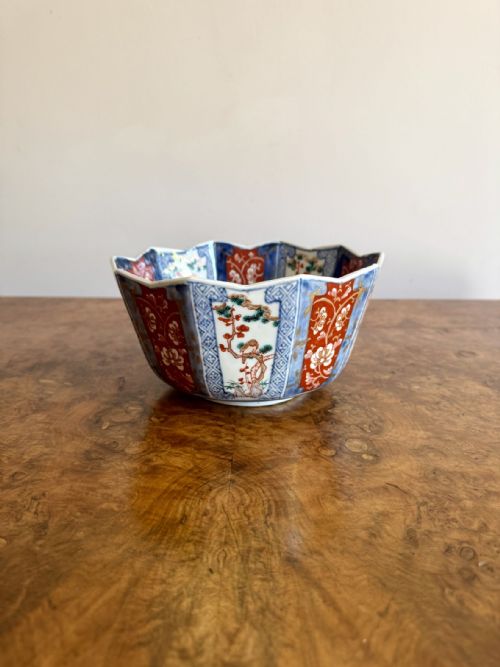
Arita Porcelain Dishes
These arita porcelain dishes span centuries of Japanese kiln production, bringing hand-painted cobalt underglaze, enamel, and gold leaf directly into domestic display.
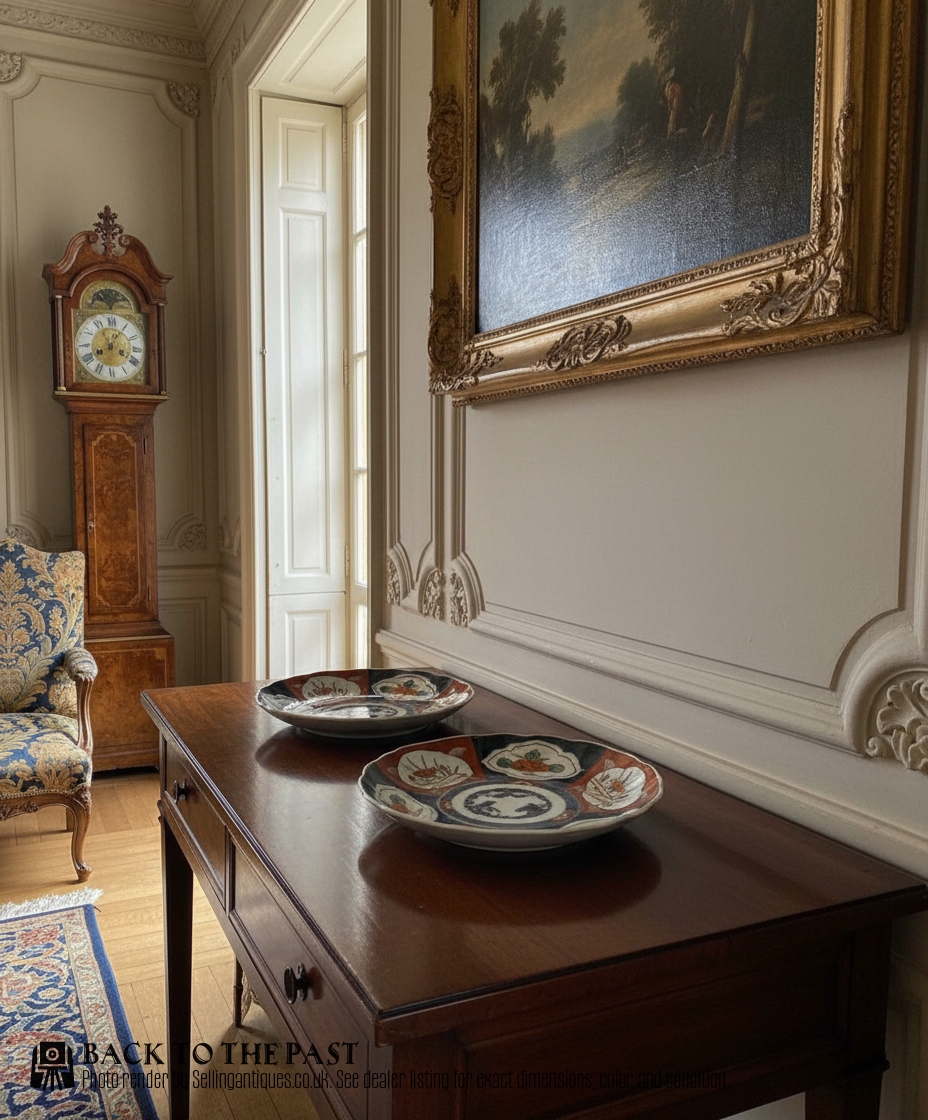
Arita Porcelain Dishes
When someone searches for arita porcelain dishes, they encounter a wide selection of decorative plates, bowls, chargers, and platters spanning several centuries. The material history extends from the 17th century through the 18th century, Victorian era, Meiji period, and into 1900.
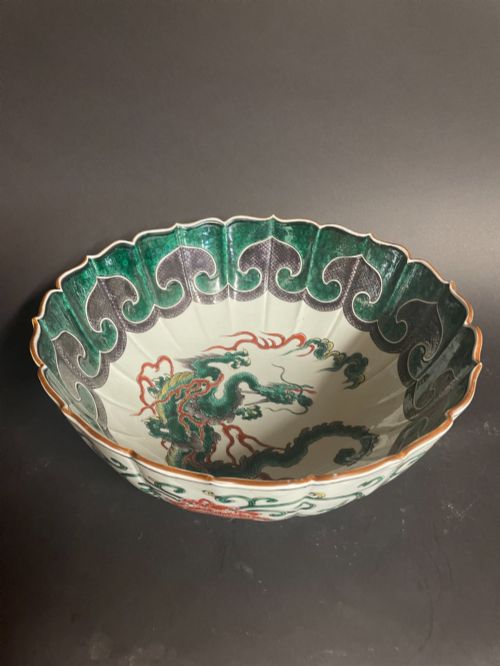
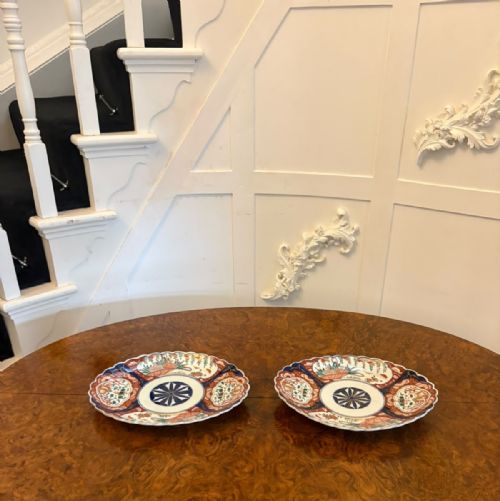
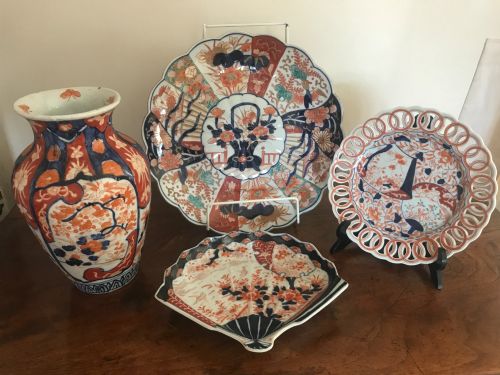
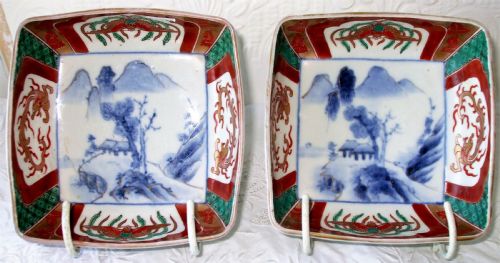
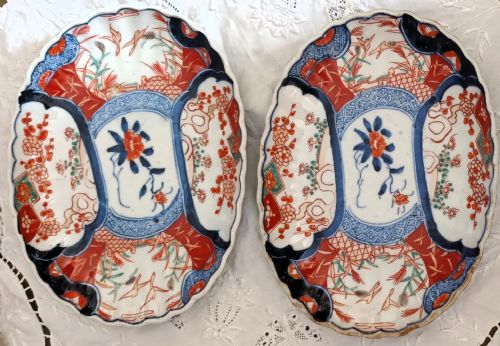
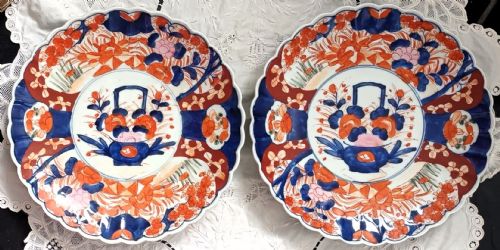
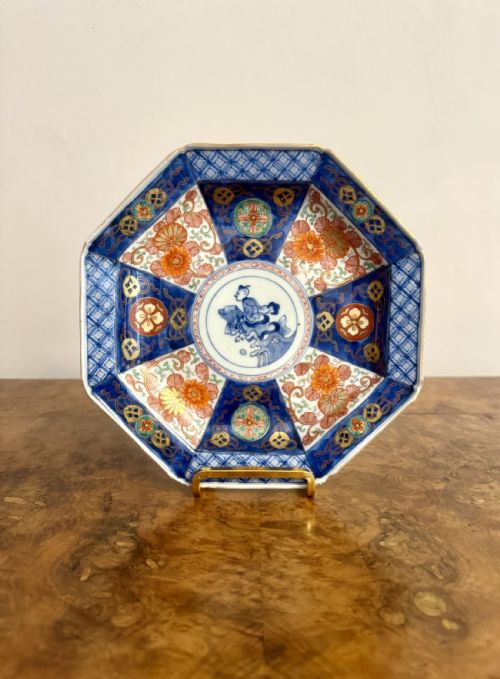
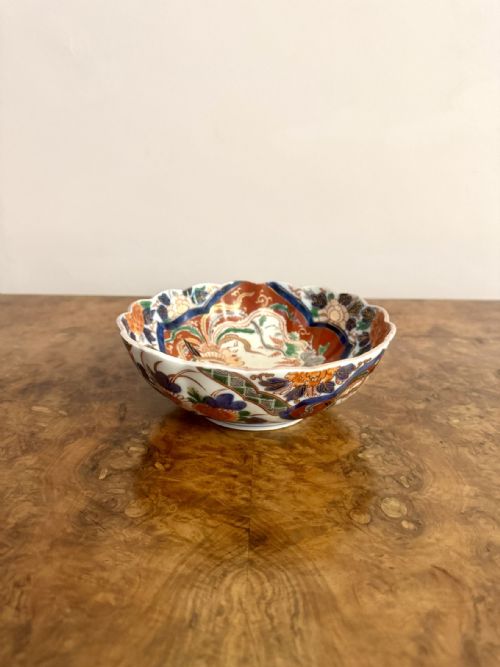
The most common examples on this page belong to the Japanese Imari and Meiji period styles. These take forms such as scallop-edge bowls, hexagonal plates, clam shell dishes, and large wall chargers featuring floral and bird motifs.
Earlier periods are represented by Edo period pieces alongside 17th century and 18th century productions. The assortment bridges utilitarian ceramics and high-status decorative plates designed for export and domestic interiors.
Grading Quality in Arita Ware
The distinction between standard items and superior pieces rests upon the precision and complexity of the hand painting. Finer examples display meticulous control in floral, bird, and geometric compositions.
Form and silhouette dictate higher tiers of craftsmanship, seen in unusual shapes such as hexagonal plates, ribbon borders, and moulded clam shell dishes. The integration of gold leaf and enamel work further separates exceptional plates from ordinary wares.
Listings feature porcelain, enamel, glaze, gold leaf, and cobalt underglaze across the 17th century, 18th century, Victorian, and Meiji periods.
The Arita Porcelain Dishes Glossary
- Arita porcelain
- Ceramic ware produced in the town of Arita in Hizen province, Japan. It represents the birthplace of Japanese porcelain production.
- Imari
- A style of Japanese export porcelain characterised by a palette of cobalt blue, iron red, and gold. This aesthetic gained immense popularity in Europe during the Edo period.
- Cobalt underglaze
- A blue pigment applied to the raw ceramic body before glazing and firing. It withstands high kiln temperatures without losing definition.
- Charger
- A large decorative plate intended for display on a wall, sideboard, or table centrepiece rather than for serving food.
- Meiji period
- The era of Japanese history lasting from 1868 to 1912. Production during this time combined traditional motifs with intense export manufacturing.
Arita Porcelain Dishes: Frequently Asked Questions
How do I display a large charger?
Large chargers and wall plates suit sturdy wall mountings or specialist display stands on sideboards. Their generous scale allows them to function as focal points in a room.
Ensure the mounting hardware securely supports the weight of the ceramic without putting stress on the rim.
What is Japanese Imari?
Japanese Imari refers to porcelain decorated in cobalt blue, red, and gold, shipped from the port of Imari. This aesthetic developed during the Edo period and continued into the Meiji period.
The style is easily recognised by its rich, layered palette and intricate floral or bird designs.
How do I date these pieces?
Dating relies upon stylistic markers, potting techniques, and the characteristics of the glaze. 17th century and 18th century pieces often exhibit heavier bodies and subtle variations in the cobalt blue.
Meiji period and late 19th century items tend to show brighter enamel colours and sharper, more uniform body shapes.
Can I use these dishes for food?
These antique items function primarily as decorative ceramics rather than tableware. Historic glazes and delicate overglaze enamels, such as gold leaf, are vulnerable to acidic foods and cutlery wear.
Gentle dry dusting or careful washing suffices for maintenance.