


Vintage Japanese China
Vintage japanese china brings together porcelain, enamel, and gold gilt in decorative plates, bowls, and coffee sets that collectors seek for traditional palettes.
Vintage Japanese China
Vintage japanese china spans porcelain plates, bowls, dishes, and vases originating from periods like the nineteenth century, nineteen hundred, and nineteen thirty. These pieces include Japanese Imari styles, blue and white wares, and Arita pieces featuring the Fuku mark.
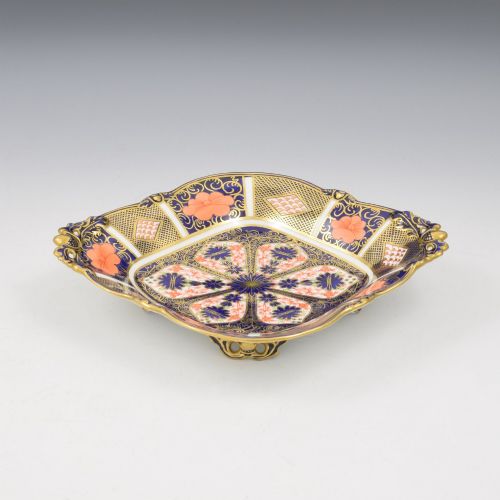
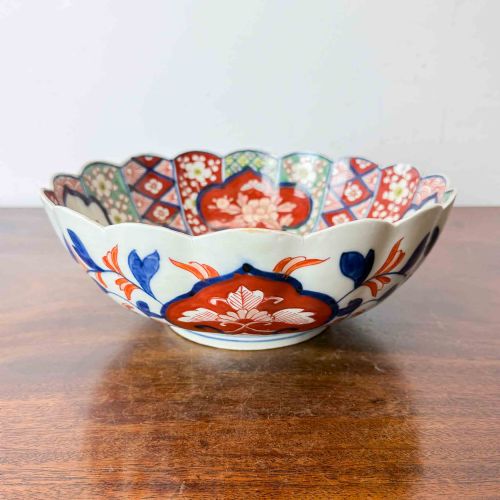
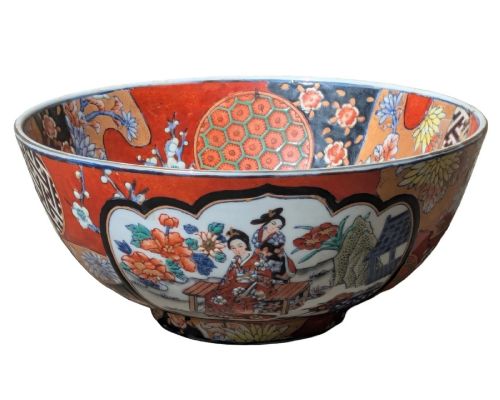
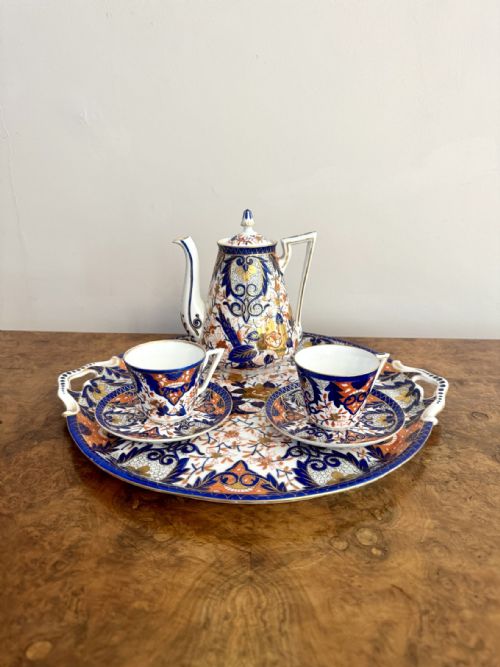
The most common forms on this page are decorative plates, chargers, and bowls finished in traditional Imari palettes of iron red, underglaze blue, and gold gilt. Buyers will also encounter matching bowl sets, ribbon plates, and coffee sets from various nineteenth and early twentieth century dates.
Materials and technique
Potters shaped these objects from porcelain and ceramic, applying detailed hand-painted enamels and underglaze blue pigments directly onto the clay body. Many items received rich gold leaf or gilt highlights to define the intricate floral and geometric motifs.
Kiln firing set the cobalt blue under the glaze before secondary enamel colours and gold leaf were added and fired again at lower temperatures. This multi-stage process secured the distinct patterns seen on Imari chargers, bowls, and vases.
Listings here feature porcelain, enamel, gold leaf, and glaze applied to decorative plates, bowls, and vases across the nineteenth and early twentieth centuries.
Assessing quality
The division between standard output and finer work lies in the precision of the brushwork and the crispness of the underglaze blue. Superior examples display dense, well-balanced compositions where the enamel and gold gilt align cleanly with the moulded contours of the porcelain.
Scale and form also distinguish the range, as large chargers and matched pairs demand greater technical skill from the potter and kiln operator. The richness of the palette and the complexity of the traditional motifs ultimately elevate certain plates and vases above simpler tableware.
The Vintage Japanese China Glossary
- Imari
- A traditional style of Japanese porcelain decorated in underglaze blue, iron red, and gold gilt. It originated in Arita and became widely exported during the Edo and Meiji periods.
- Arita
- The Japanese town central to the production of porcelain since the early seventeenth century. Artisans here produced many of the blue and white and Imari pieces found in this category.
- Charger
- A large decorative plate intended primarily for display rather than everyday dining. These items often showcase the most elaborate painted compositions in a collection.
- Gilt
- A thin layer of gold applied to the surface of the porcelain as a decorative accent. It frequently outlines panels of floral or landscape ornamentation.
- Fuku mark
- A character mark found on the base of certain Arita wares indicating good fortune. Collectors use such marks to help date and authenticate regional pieces.
Vintage Japanese China: Frequently Asked Questions
What is vintage japanese china?
Vintage japanese china refers to porcelain and ceramic decorative items such as plates, bowls, chargers, and vases created in Japan during the nineteenth and early twentieth centuries.
These pieces typically feature traditional motifs rendered in distinct palettes like Imari red and blue or cobalt blue and white.
How were these plates used?
Many of the larger chargers and decorated plates were produced primarily for display on walls or sideboards rather than for daily meals.
Smaller dishes, bowls, and coffee sets saw practical use in households for serving food and beverages.
How do I care for antique porcelain?
Wash these items gently by hand using warm water and mild soap to protect the delicate enamel painted details and gold gilt.
Avoid using dishwashers or abrasive sponges, which can permanently wear away the historic surface decoration.
How do I identify Imari pieces?
Imari porcelain is easily recognised by its characteristic combination of underglaze cobalt blue, iron red enamel, and gold gilt.
The designs often feature intricate panels filled with floral patterns, landscapes, and mythical motifs.