



Asian Ceramic Dish Pair
An asian ceramic dish pair brings rich kiln traditions straight to the table, offering paired symmetry and centuries of decorative artistry.
Asian Ceramic Dish Pair
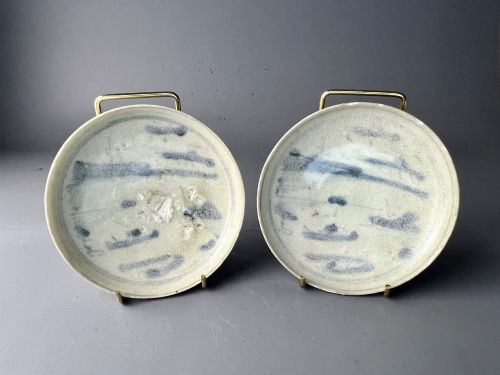
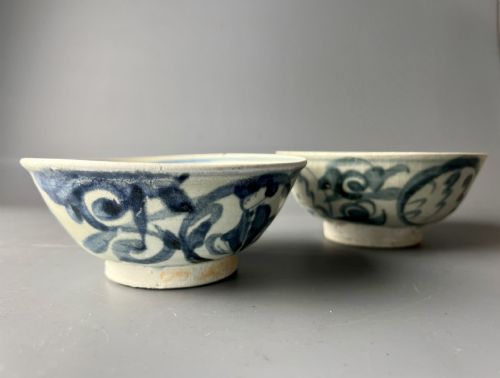
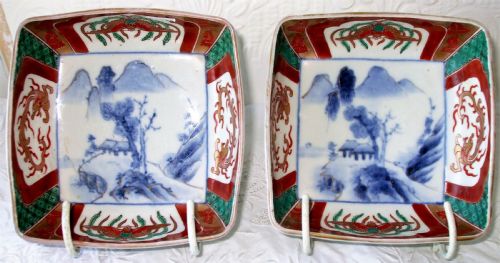
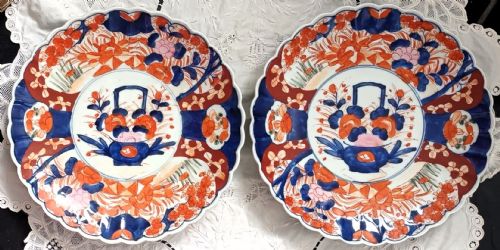
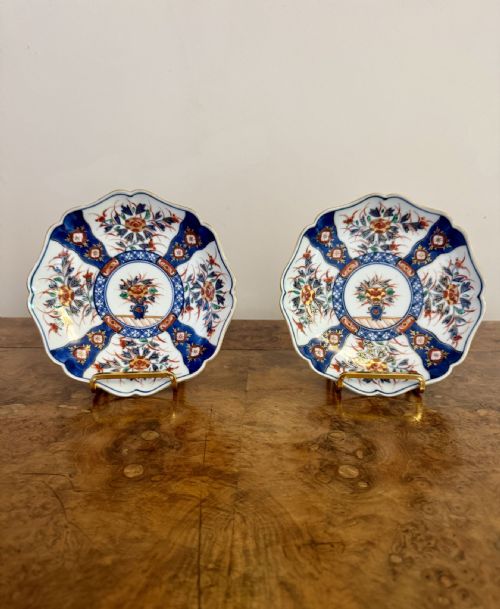
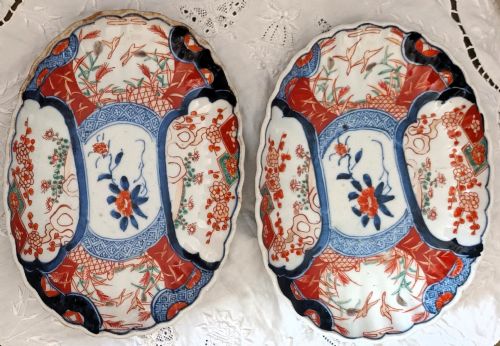
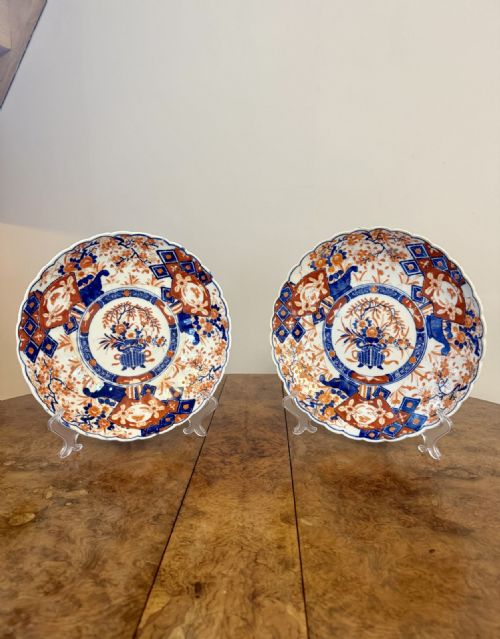
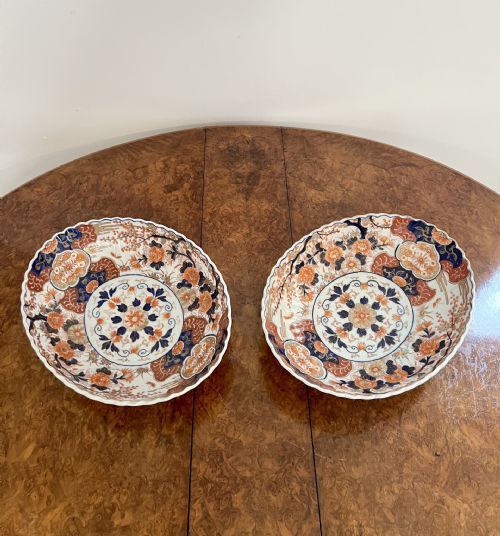
An asian ceramic dish pair covers matching plates, bowls, and chargers originating from Chinese and Japanese kilns across several centuries. The pieces on this page lean heavily towards Japanese Imari and Arita productions spanning the Edo and Meiji periods.
Buyers encounter distinct forms ranging from traditional circular plates to shaped vessels such as fan, shell, and clam designs. These dual sets showcase coordinated painting, often featuring birds, deities, or aquatic motifs executed in contrasting palettes.
Materials and construction methods
Potters shaped fine porcelain clay into plates and bowls, frequently employing moulding techniques to create shallow relief or specialised contours like hexagonal and scalloped edges. Artisans then applied cobalt blue underglaze decoration prior to high-temperature firing.
Many examples received secondary surface enrichment through overglaze enamels in iron red, black, and supplementary colours. Workshops frequently finished these ceramics with gold leaf and detailed gilding to accent the painted motifs.
Several plates take the exact shape of clams and fans, proving that historic potters occasionally liked dinner service to feel like a beach trip.
Distinctions in quality
Quality differentiates through the precision of the hand painting, where crisp brushwork on subjects like exotic birds and deities separates standard items from superior works. The complexity of the vessel form, such as moulded shell and fan contours, also elevates a piece.
The application of pigments and gilding dictates visual depth, with well-preserved enamel layers and rich gold leaf adding considerable refinement. The clarity of the porcelain body and the stability of the glaze further define the tier of the production.
The Asian Ceramic Dish Pair Glossary
- Imari
- A Japanese export porcelain style originating from the town of Arita, traditionally characterised by a palette of underglaze blue, iron red, and gold. This aesthetic gained immense popularity in Europe during the Edo period.
- Arita
- The Japanese town and surrounding region central to porcelain production, noted for early kilns that supplied domestic and export markets. Pieces from this area frequently display high technical proficiency in blue and white painting.
- Meiji Period
- The era in Japanese history spanning from 1868 to 1912, marked by industrialisation and a surge in decorative arts created for international export. Items from this time often exhibit elaborate enamel and gilt decoration.
- Edo Period
- The period in Japanese history lasting from 1603 to 1867, governed by the Tokugawa shogunate and noted for peace and economic growth. Ceramics from these years include early Imari and specialised moulded forms.
- Cobalt Blue Underglaze
- A mineral pigment applied to raw ceramic bodies before glazing and firing, producing a deep blue tone embedded beneath the glassy surface. This technique ensures the decoration remains durable over centuries.
Asian Ceramic Dish Pair: Frequently Asked Questions
How are these matched pairs used in a home today?
These pieces function effectively as wall displays using appropriate plate hangers, or they sit on sideboards as decorative focal points.
Because they arrive in matched pairs, they offer symmetry for mantelpieces or dining room side tables without overwhelming the space.
How do I distinguish Edo period pieces from Meiji period items?
Edo period ceramics often display earlier potting traits with heavier bodies and restrained palettes, reflecting traditional kiln practices.
Meiji period items frequently incorporate denser overglaze enamels and richer gilding intended for the Victorian export market.
What is the significance of Imari style on these dishes?
Imari style refers to the distinct colour scheme of blue, red, and gold that defines a major portion of Japanese export porcelain.
This aesthetic tradition developed in Arita kilns and became prized by European collectors for its vibrant visual contrast.
How should antique porcelain dishes be cleaned?
Maintenance requires gentle washing in warm water with mild soap, avoiding abrasive sponges that can damage overglaze enamels and gilding.
Securing pieces properly prevents accidental movement, as antique porcelain remains vulnerable to chipping along the rims.