
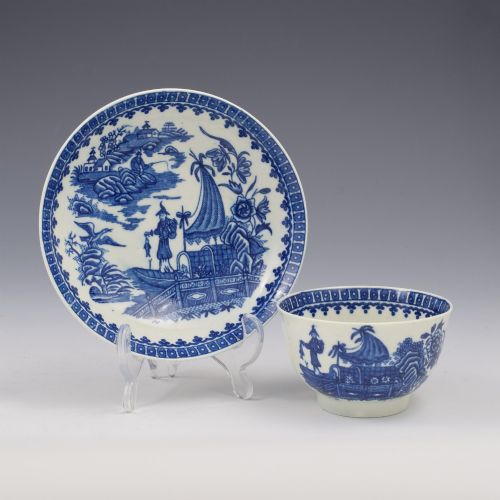


Blue and White Saucer
A blue and white saucer brings cobalt decoration and porcelain craftsmanship straight to the table from the eighteenth and nineteenth centuries.
Blue and White Saucer
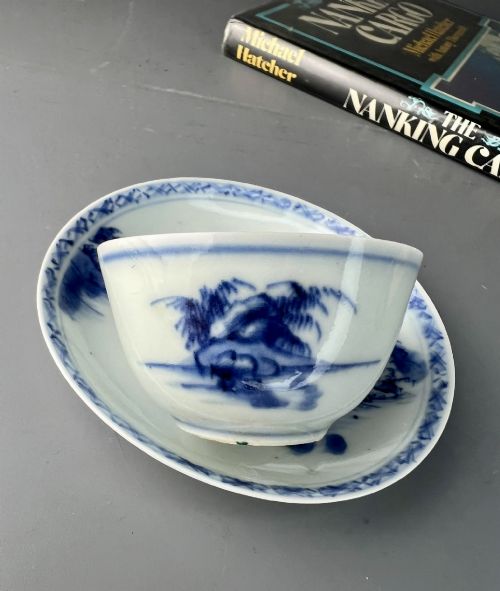
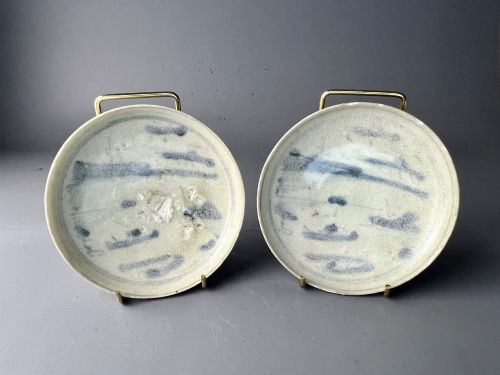
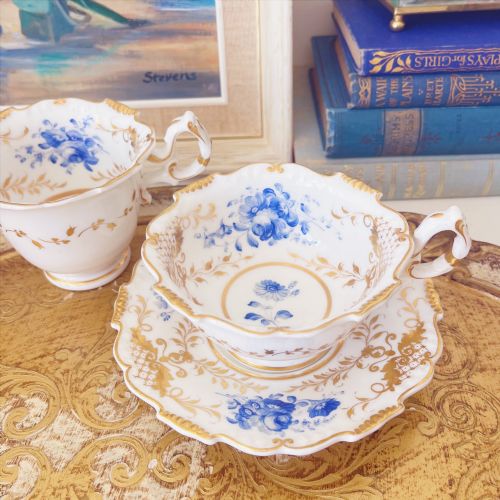
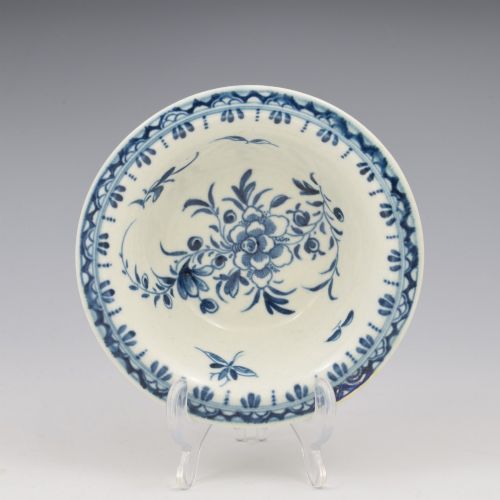
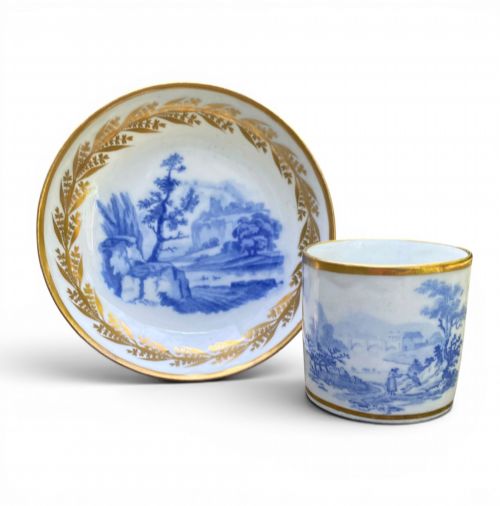
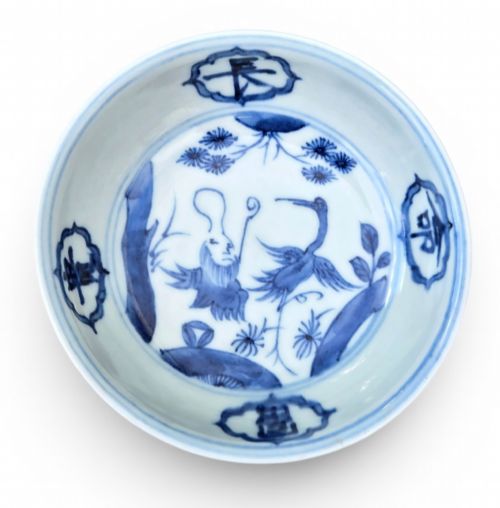
A blue and white saucer appears in various forms on this page, originating from English and Asian kilns across the seventeenth, eighteenth, and nineteenth centuries. These small ceramic dishes served alongside teacups, tea bowls, and coffee cans during formal tea drinking.
English factories such as Worcester, New Hall, Derby, and Minton feature prominently among the listings alongside Chinese export porcelain and Japanese Arita wares. The forms range from simple tea saucers to deep saucer-dishes and small tart pans.
Georgian and nineteenth-century examples dominate the selection, showing hand-painted cobalt glaze designs inspired by Chinese motifs, Chinoiserie styles, and native botanical patterns.
Materials and production methods
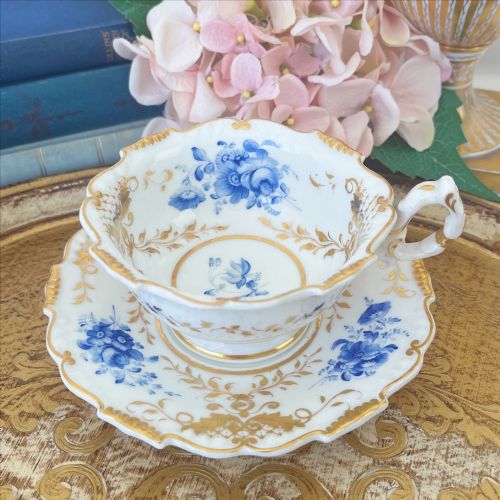
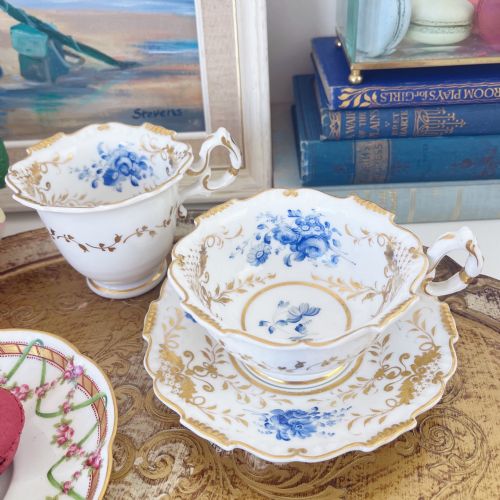
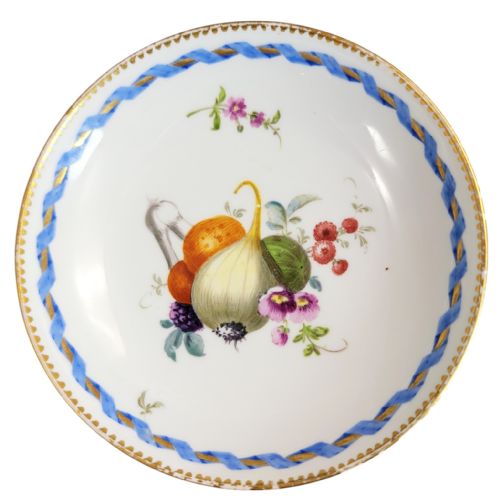
Potters shaped these pieces using porcelain, soft-paste porcelain, and bone china, applying cobalt glaze directly beneath a clear protective surface before firing. Certain examples incorporate supplementary enamel colours and gilding over the glaze for added detail.
Techniques varied between European factories adapting Chinese aesthetics and Asian kilns utilising traditional underglaze painting methods. The resulting bodies range from translucent soft-paste formulas to robust hard-paste porcelain.
Listings feature porcelain, soft-paste porcelain, and bone china decorated with cobalt glaze, enamel, and gilding across the eighteenth and nineteenth centuries.
Assessing quality in ceramic saucers
Quality rests upon the crispness of the cobalt painting and the control of the kiln temperature during the firing process. Pieces with sharp, well-defined brushwork and a clear, unclouded glaze stand apart from softer, blurred transfers.
The sophistication of the ceramic body itself defines the tier of the piece, distinguishing refined translucent porcelain from heavier utility wares. Early factory standards, particularly those from eighteenth-century Worcester or period Chinese kilns, dictate higher execution levels.
H and R Daniel Shrewsbury·New Hall·Meissen·Coalport·Derby·Hirado·Arita·Yates·Minton·Lowestoft
The Blue and White Saucer Glossary
- Cobalt glaze
- A metallic oxide pigment that produces deep blue decoration under the ceramic glaze when fired at high temperatures. This mineral withstands intense heat without losing its colour intensity.
- Soft-paste porcelain
- A ceramic composition containing glass frit and white clay, fired at lower temperatures than hard-paste porcelain. English factories utilised this material extensively during the eighteenth century.
- Chinoiserie
- European artistic style reflecting Chinese motifs and decorative themes, popular on eighteenth-century tea wares. Artists rendered imaginary landscapes and figures to satisfy Western tastes.
- Tea bowl
- A handleless vessel used for drinking tea before the widespread adoption of teacups with handles. These bowls accompanied matching saucers in early tea services.
Blue and White Saucer: Frequently Asked Questions
How do I date an antique saucer?
Dating relies on identifying factory marks, ceramic bodies, and painting styles recorded in the listing details. Eighteenth-century pieces often use soft-paste porcelain with hand-painted underglaze blue, while later nineteenth-century items introduce bone china and different potting standards.
Factory marks, such as crescent symbols or painter numbers, help narrow the production window. Comparing the decorative motifs to documented kiln output confirms the era.
Can I use these saucers daily?
Antique saucers require careful handling due to their age and delicate ceramic composition. Hand washing prevents damage to fragile glazes, gilding, and soft-paste bodies.
Displaying them on stands or keeping them in cabinet collections preserves their condition. Sudden temperature changes should be avoided to protect the historic material.
Why are some saucers deep?
Deep saucer-dishes served specific culinary or dining functions beyond simple tea service companion pieces. Certain Asian forms, such as Japanese mukozuke, were intended for serving small portions during meals.
Other deep shapes functioned as tart pans or small dishes for sweetmeats. The depth allowed the vessel to hold liquids or sauces alongside solid food.