

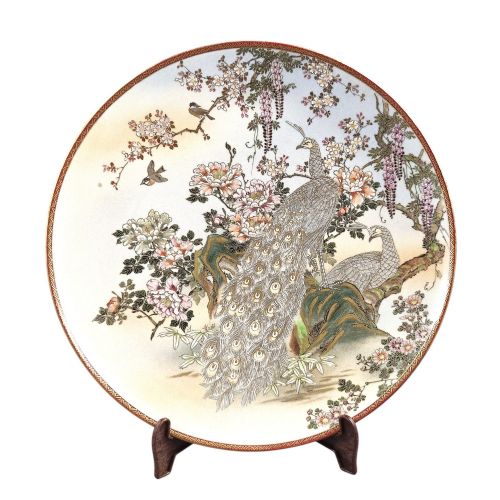


Japanese Enamel Charger
A japanese enamel charger brings intricate Meiji and late Edo metalwork into a room, offering striking focal points for a wall or table.
Understanding the japanese enamel charger
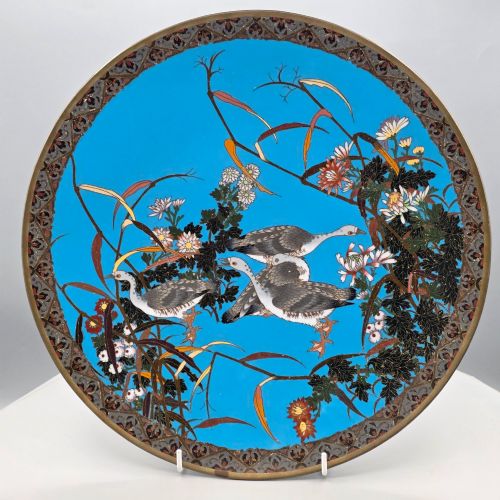
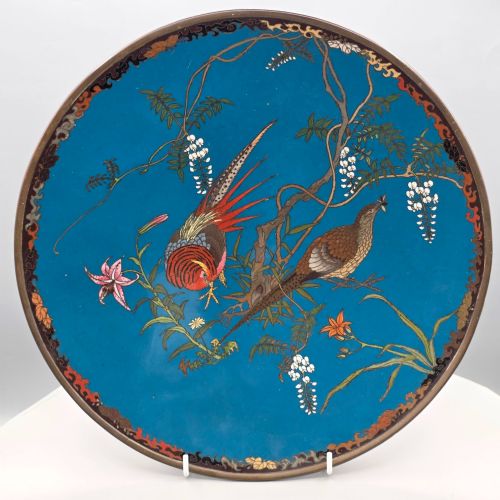
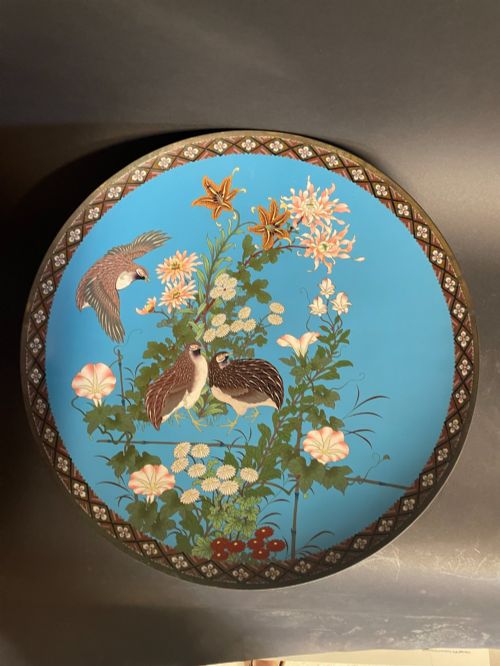
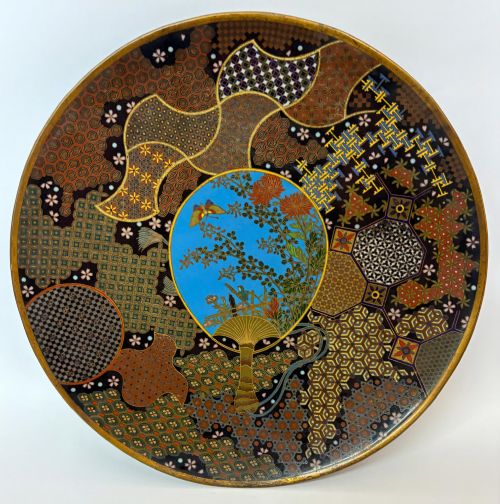
A japanese enamel charger is a wide decorative plate or tray designed for display rather than dining. The pieces seen here span from the late Edo period through the Meiji period, capturing a golden age of decorative metalwork.
Most examples take a circular form, though square and octagonal plates also appear. Sizes range from small cabinet plates up to monumental chargers measuring over sixty centimetres across.
The decorative subjects draw heavily from traditional iconography, featuring dragons, phoenixes, samurai, demons, tigers, and birds sitting on branches. These detailed pictorial surfaces turn heavy metal bases into canvases of coloured glass.
Buyers encounter works from the 1860s through to 1900, reflecting the technical evolution of workshops operating during these decades. Each form demonstrates the ambition of makers working in copper and bronze.
Materials and construction
The foundation of these pieces relies on a shaped metal base, predominantly copper, supported occasionally by brass or bronze fittings and mounted on wood where appropriate. Artisans hammered or spun these base metals into the sweeping curves of large chargers and rigid geometric trays.
Surface decoration is achieved primarily through cloisonne enamel, a technique where thin metal wires are soldered to the metal body to create compartmentalised cells. Coloured enamel pastes are packed into these tiny spaces before the piece is fired in a kiln and polished smooth.
Retail Price Guide 2026
Typical UK retail prices for japanese enamel charger, calculated from the Sellingantiques database of over a million retail prices indexed since 2003. This retail price guide relies exclusively on Sellingantiques data; no external sources or auction records are used, so the figures do not describe the wider market.
Fierce dragons and mythical ho-o birds watch over rooms from these metal plates, bringing menagerie energy to the wall.
Assessing quality and execution
Quality separates ordinary production from masterworks through the precision and fineness of the wirework cloisons. Finer wires allow for incredibly detailed rendering of feathers, scales, and facial expressions in complex motifs like dragons and ho-o birds.
The depth, richness, and consistency of the coloured enamel pastes also dictate the standing of a piece. Superior examples display harmonious colour palettes and flawless kiln firings without pitting or cloudiness across large expanses.
The Japanese Enamel Charger Glossary
- Cloisonne Enamel
- A metalwork technique where fine wires form raised barriers on a metal body to hold coloured glass pastes. These wires remain visible on the finished surface as part of the overall design.
- Charger
- A large decorative plate or tray intended for display on a sideboard or wall rather than for serving food. These pieces provide a broad canvas for pictorial narratives.
- Meiji Period
- The era in Japanese history spanning from 1868 to 1912, associated with rapid artistic development and international trade. Works from this period show exceptional technical refinement.
- Late Edo Period
- The final decades of the Tokugawa shogunate leading up to 1868, marking the transition into more ambitious decorative arts. Pieces from this era often bridge traditional and modern styles.
- Ho-o Bird
- The mythical phoenix of East Asian mythology, frequently depicted with elaborate tail feathers on chargers. This auspicious creature symbolises peace and imperial grace.
Frequently Asked Questions
How do I display a large charger safely?
Large chargers require sturdy wall mountings designed to take the weight of heavy copper and enamel bodies. Alternatively, secure cabinet stands support the base firmly without putting stress on the rim.
Keep pieces away from direct sunlight and sudden temperature changes to protect the metal and glass surfaces over time.
What is the difference between Edo and Meiji pieces?
Late Edo period pieces date from the mid-nineteenth century, showing early mastery of large-scale vessel production. Meiji period works follow from 1868 onward, often exhibiting finer wirework and more ambitious pictorial detail.
Both periods share traditional motifs like dragons and phoenixes, but Meiji objects frequently reflect the demands of the export market.
How should I clean my enamel charger?
Dust the surface gently with a soft, dry microfibre cloth to remove everyday particles. Avoid using water, abrasives, or chemical polishes, as these can damage the delicate wire outlines and enamel.
Professional restoration should be consulted if the metal body or enamel layer sustains accidental impact.
Why are some chargers square instead of round?
Square and octagonal trays demonstrate the versatility of the workshop techniques used by metalworkers. Forming corners in cloisonne requires exceptional skill to keep the wires straight and the enamel even during firing.
These geometric variants offer collectors an alternative shape to the standard circular charger.