


Blue Cloisonne Charger
A blue cloisonne charger is a striking metal plate carrying intricate enamelled motifs, prized for bold bird and dragon imagery.
What a blue cloisonne charger is
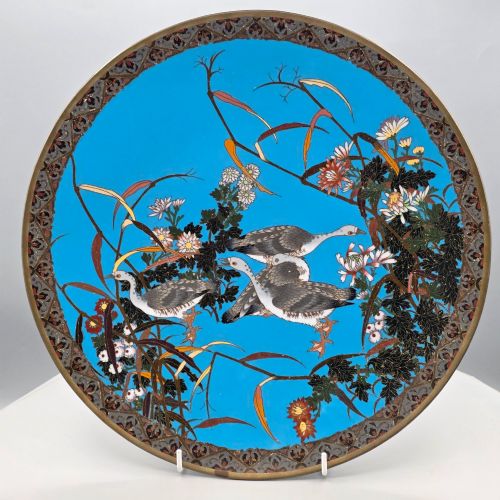
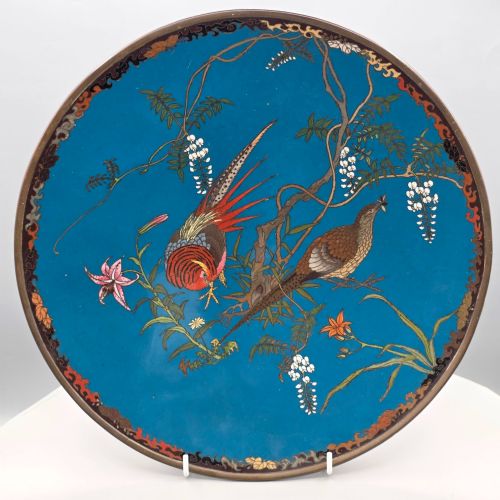
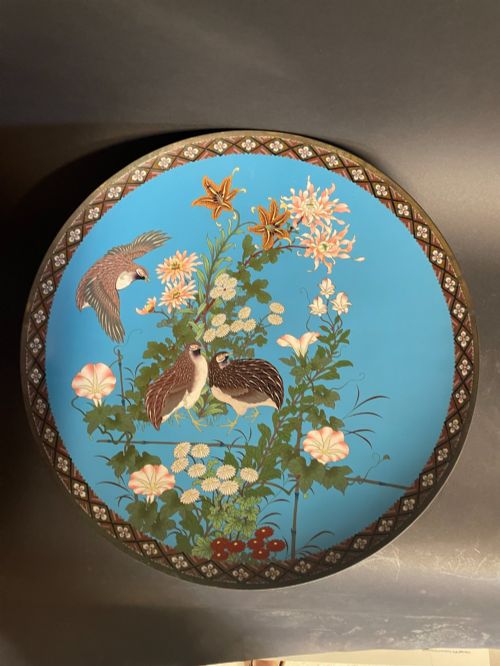
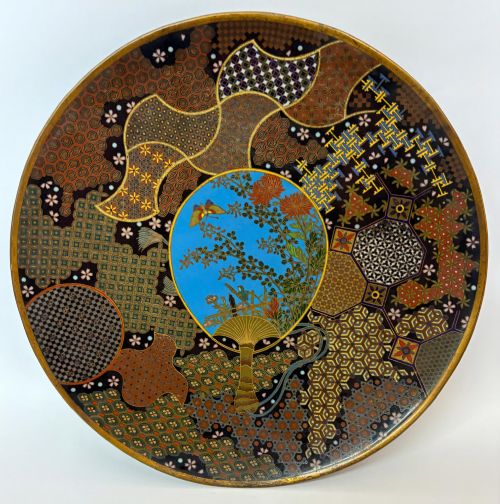
When searching for a blue cloisonne charger, collectors encounter large decorative plates originating from Japan during the Edo and Meiji periods. These circular display vessels frequently feature expansive blue enamel backgrounds populated by naturalistic subjects such as ibises, leaping koi, dragons, and phoenixes.
The objects listed on this page span from the late Edo period through the Meiji era, capturing a span of craftsmanship focused on substantial decorative impact. Diameters reach up to fifty centimetres, turning these chargers into prominent wall or cabinet centerpieces.
Buyers will most commonly meet pieces dated between eighteen-sixty and nineteen-hundred, reflecting the high point of Japanese export enamel production. These chargers combine heavy metal foundations with meticulously arranged wire cells filled with coloured vitreous paste.
Materials and construction
These chargers are constructed from metal bases of copper, brass, or bronze shaped into broad plates and dishes. Artisans then soldered thin ribbons of brass wire onto the surface to outline detailed motifs like birds, fish, and mythical beasts.
The resulting compartments, known as cloisons, were filled with enamel pastes before undergoing multiple firings in a kiln. Once cooled, the surfaces were ground and polished down to create a smooth plane where metal wire frames every transition of colour.
Retail Price Guide 2026
Typical UK retail prices for blue cloisonne charger, calculated from the Sellingantiques database of over a million retail prices indexed since 2003. This retail price guide relies exclusively on Sellingantiques data; no external sources or auction records are used, so the figures do not describe the wider market.
Metal wires patiently trace every feather on an ibis and every scale on a leaping koi.
Variations in quality
The finest examples display immense scale combined with ambitious pictorial subjects such as leaping koi or complex dragons executed with extreme precision. The crispness of the brass wirework and the depth of the blue enamel ground separate standard production from masterworks.
Subtleties in polish, the absence of firing flaws across broad spans of enamel, and the lifelike rendering of subjects dictate the upper tier of these chargers.
The Blue Cloisonne Charger Glossary
- Cloisonne Enamel
- Enamel work in which coloured pastes are separated by thin metal wires soldered to a metal base. This technique allows for intricate pictorial designs.
- Charger
- A large ornamental plate intended for display rather than dining use. These pieces often serve as focal points on walls or stands.
- Meiji Period
- The era in Japanese history spanning from eighteen-sixty-eight to nineteen-twelve, noted for a surge in sophisticated metalwork and export crafts. Objects from this time show advanced technical mastery.
- Edo Period
- The period of Japanese history running from sixteen-oh-three to eighteen-inety-sixteen-sixty-eight, represented here by early large-scale enamel works. Pieces from this era establish foundational forms.
Frequently Asked Questions
How were blue cloisonne chargers displayed?
These large plates were primarily created for decorative display in domestic interiors, often mounted on walls or supported by sturdy stands.
Because of their substantial weight and intricate surface detail, they functioned as prominent focal points rather than utilitarian tableware.
What subjects appear on these chargers?
The surface designs frequently incorporate natural and mythical creatures set against deep blue enamel fields. Common motifs include leaping koi, dragons, phoenixes, and birds perched on flowering branches.
Each subject is painstakingly outlined with fine brass wire to create distinct areas of coloured enamel.
How do I care for a cloisonne charger?
Maintenance involves gentle dusting with a soft, dry cloth to protect the polished enamel and exposed metal wire. Harsh chemical cleaners or abrasive materials must be avoided to prevent scratching the glass-like surface.
Keeping the piece away from direct sunlight and extreme temperature shifts preserves the stability of the metal and enamel bond.
How do I identify a Meiji period piece?
Meiji period chargers often exhibit highly refined wirework and ambitious pictorial compositions created during an era of expanding export production. The materials typically involve copper or brass bases paired with vibrant enamel backgrounds.
Dating relies on stylistic indicators and the specific complexity of the rendered subjects.