Dragoncharger Antiques has dated this Japanese Cloisonne Charger Plate to the 1890s.
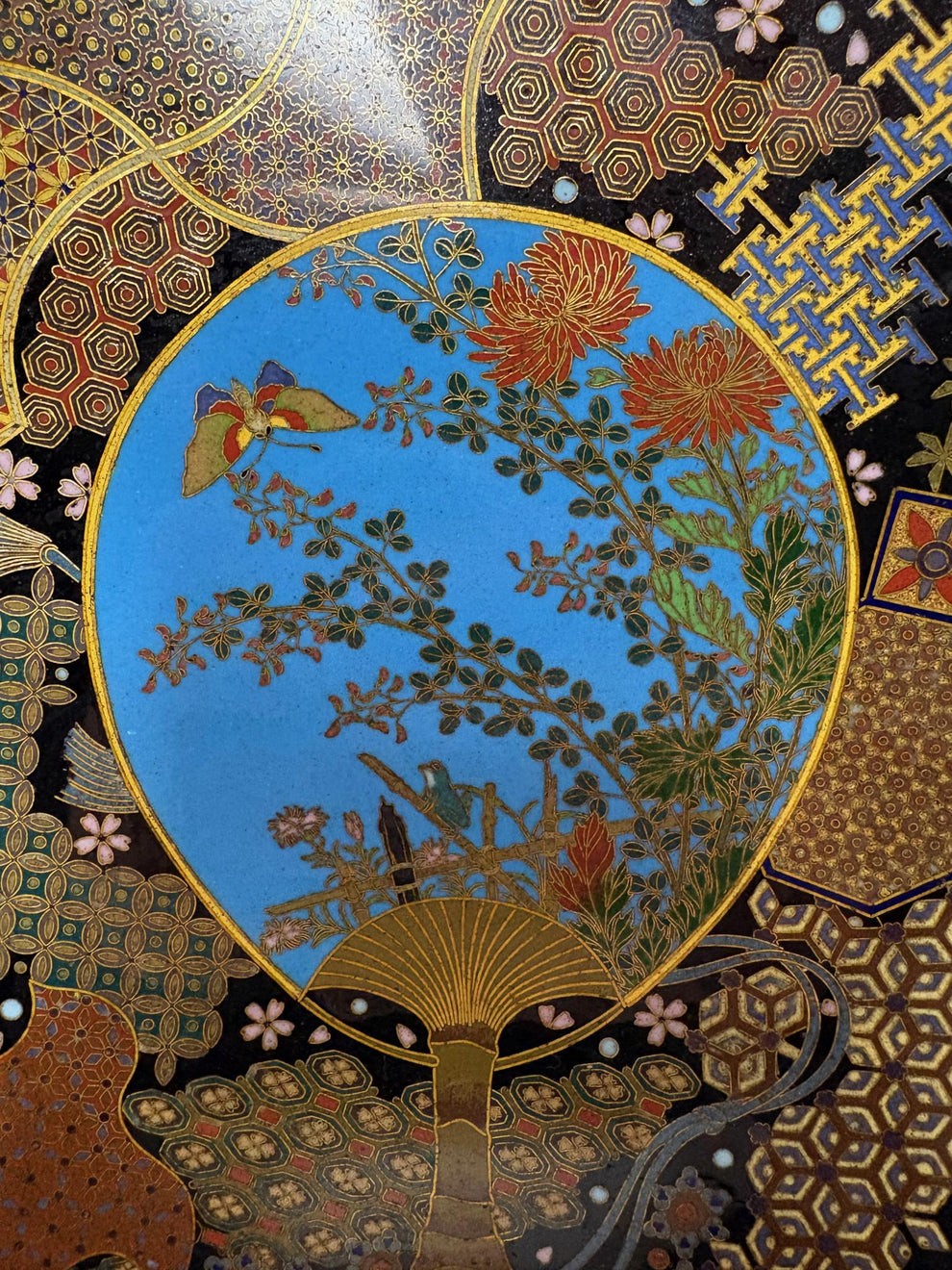
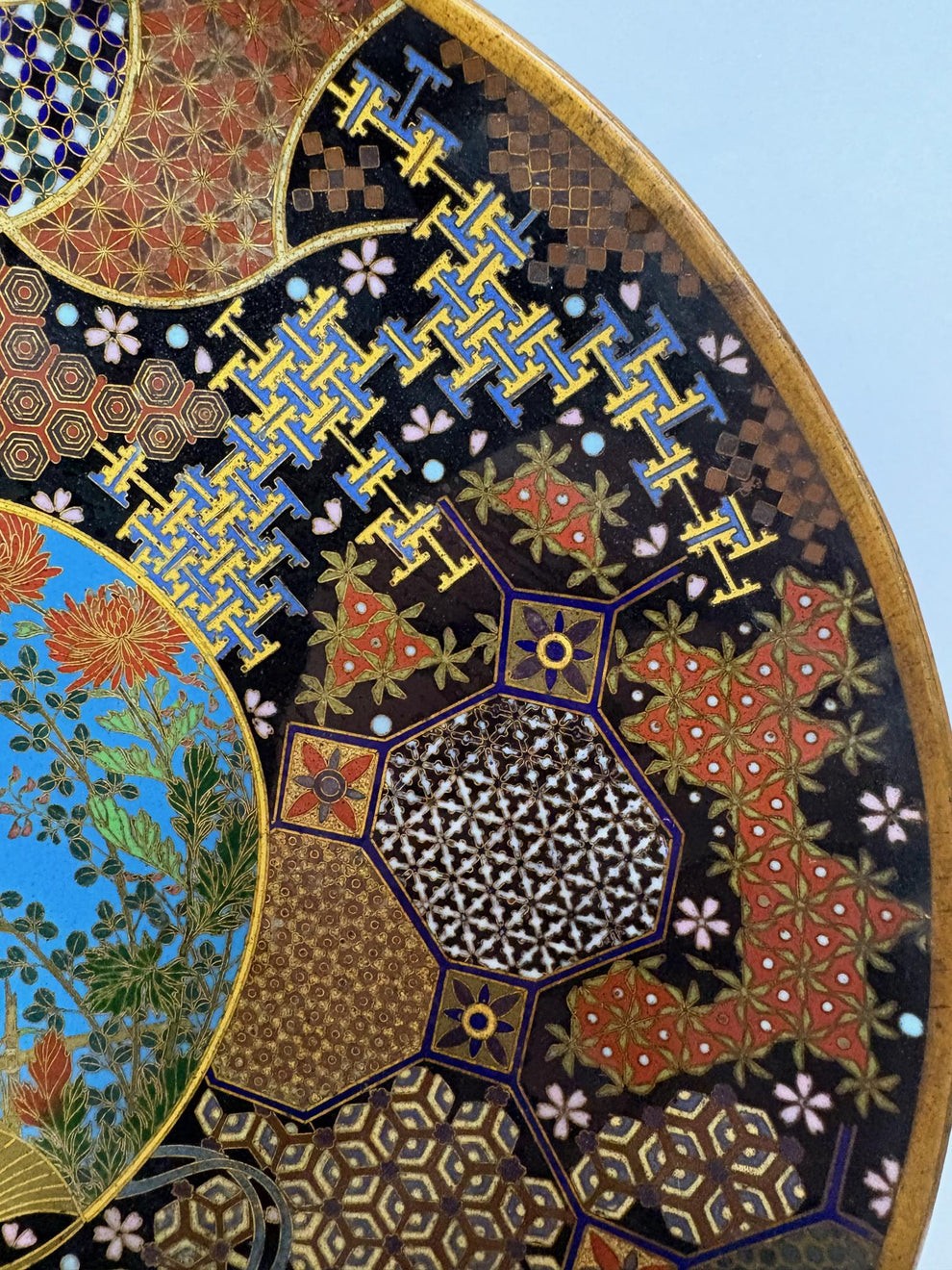
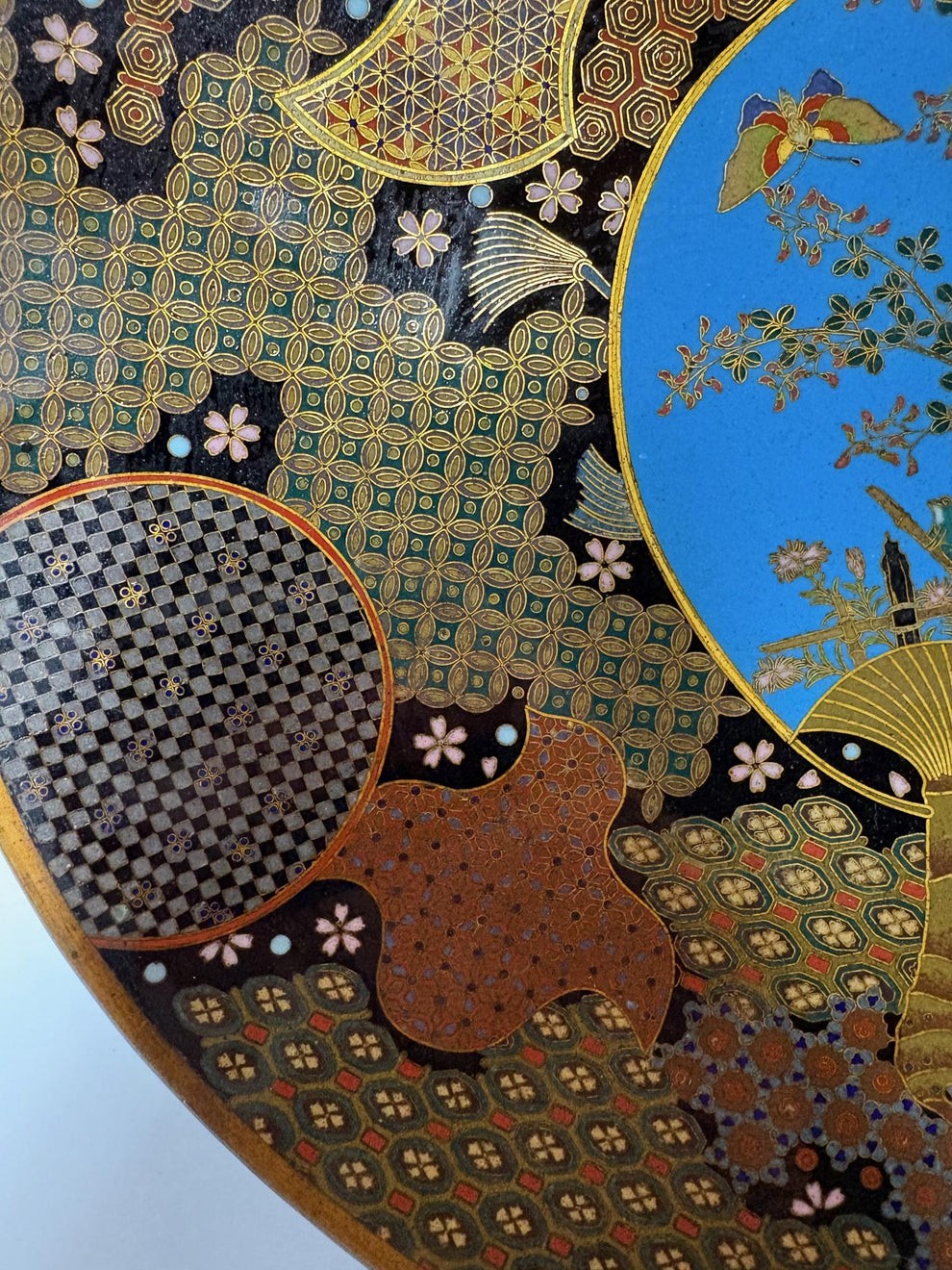
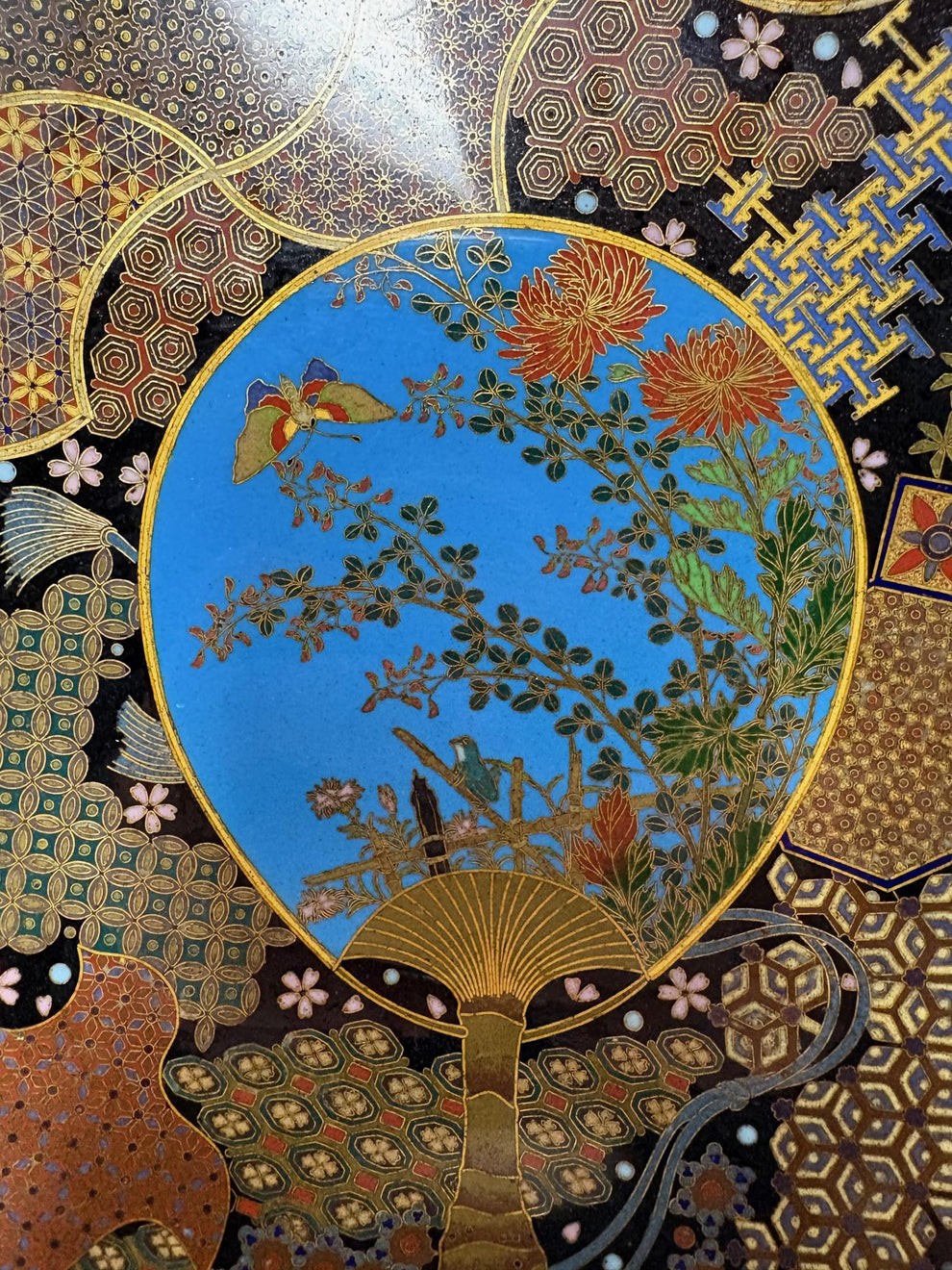
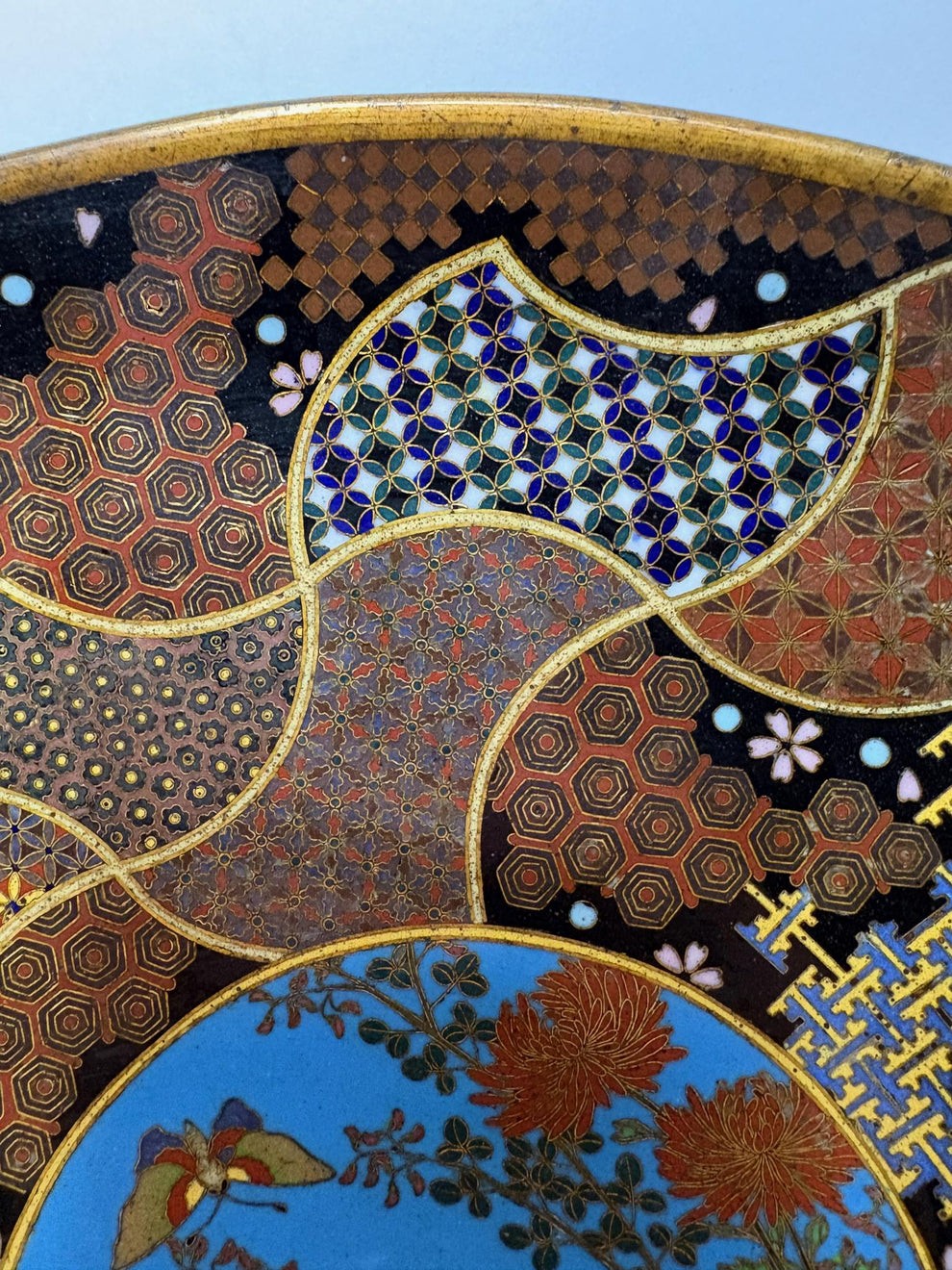
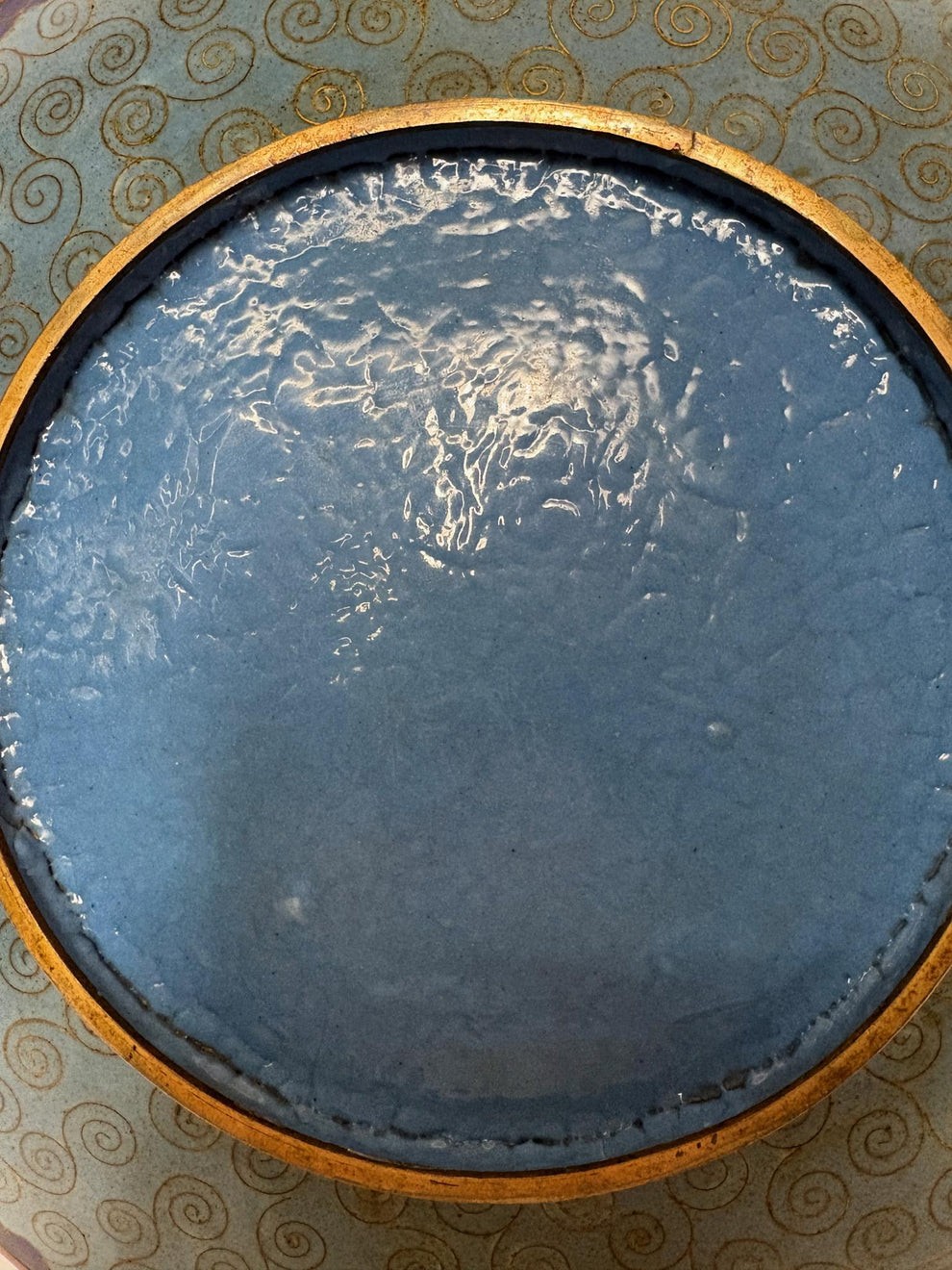
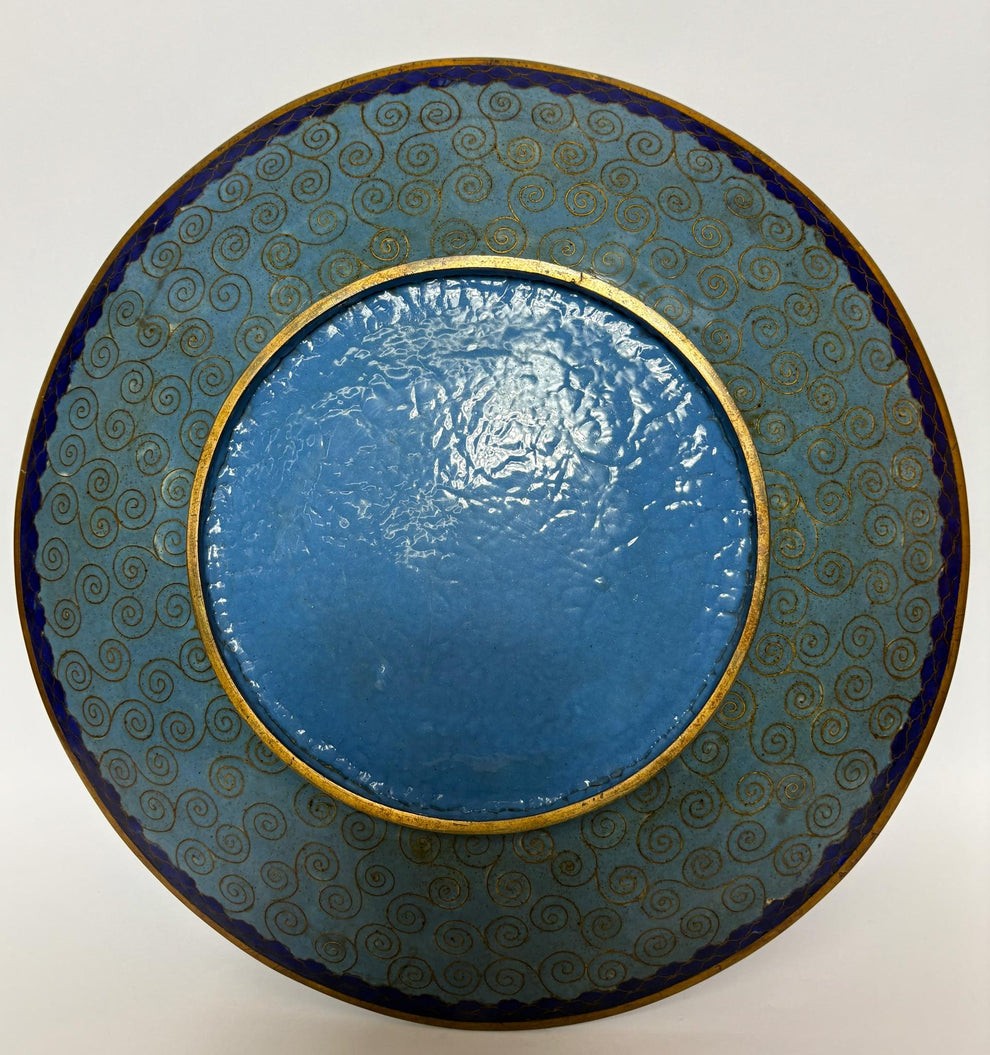
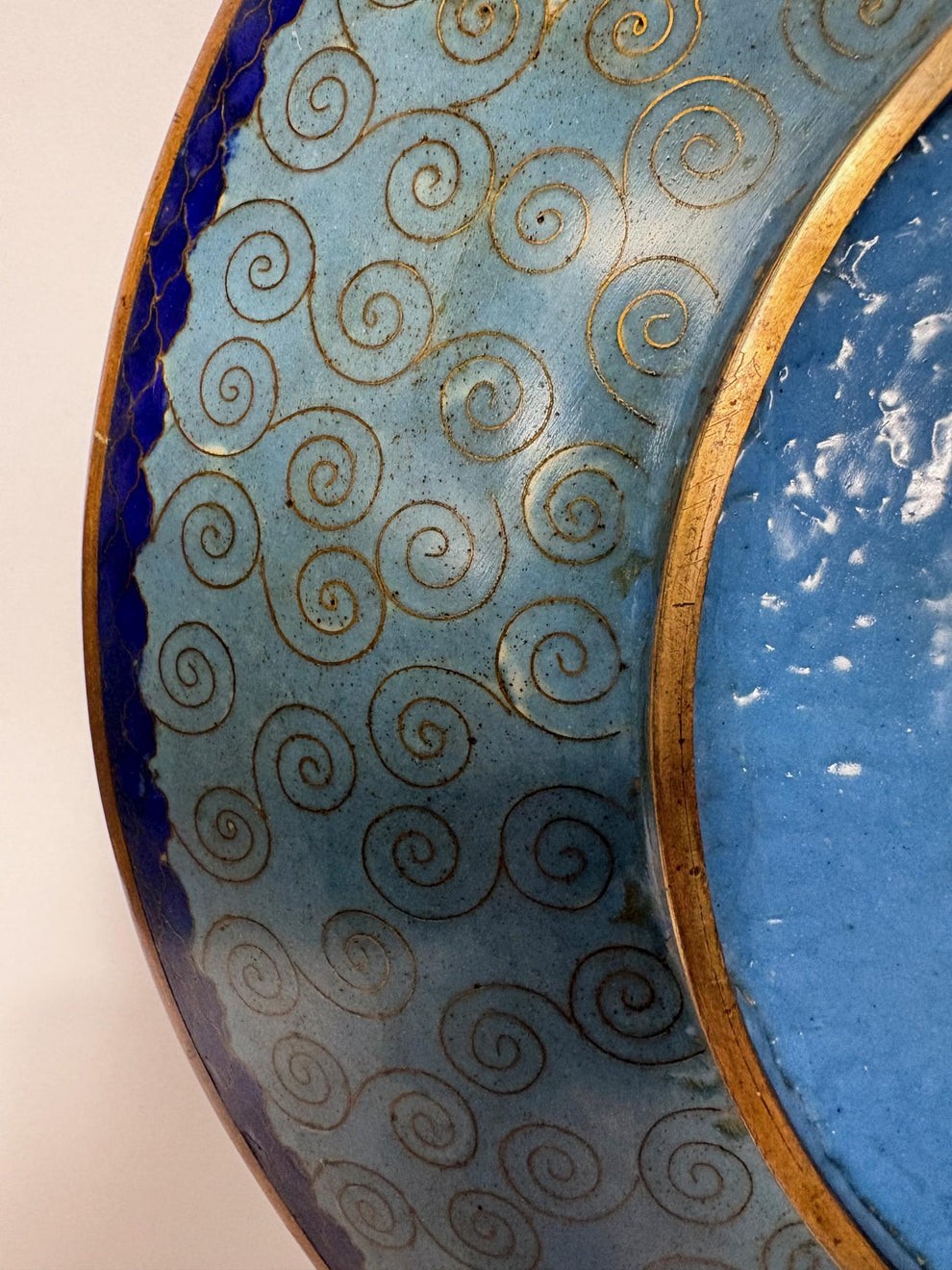
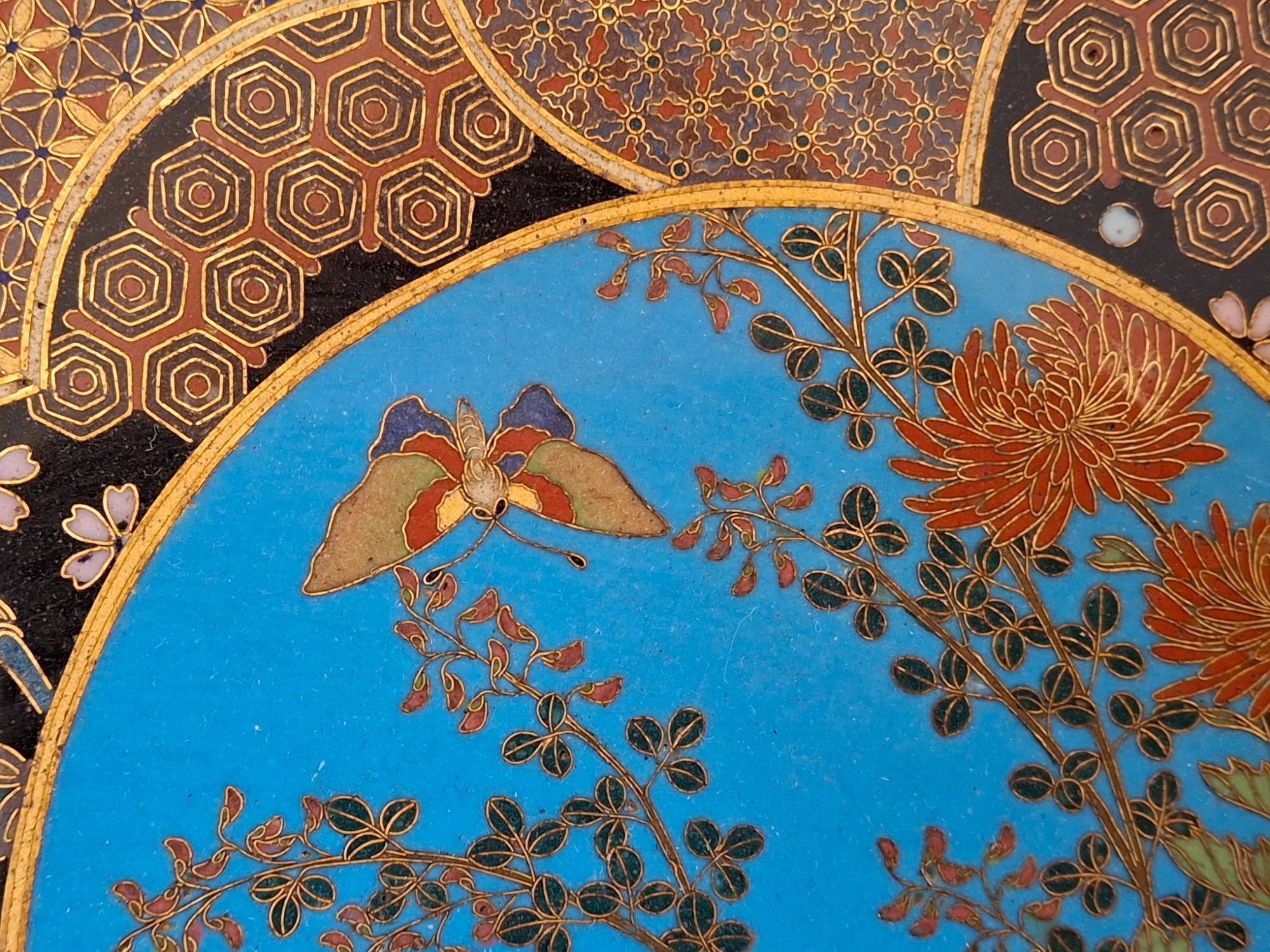
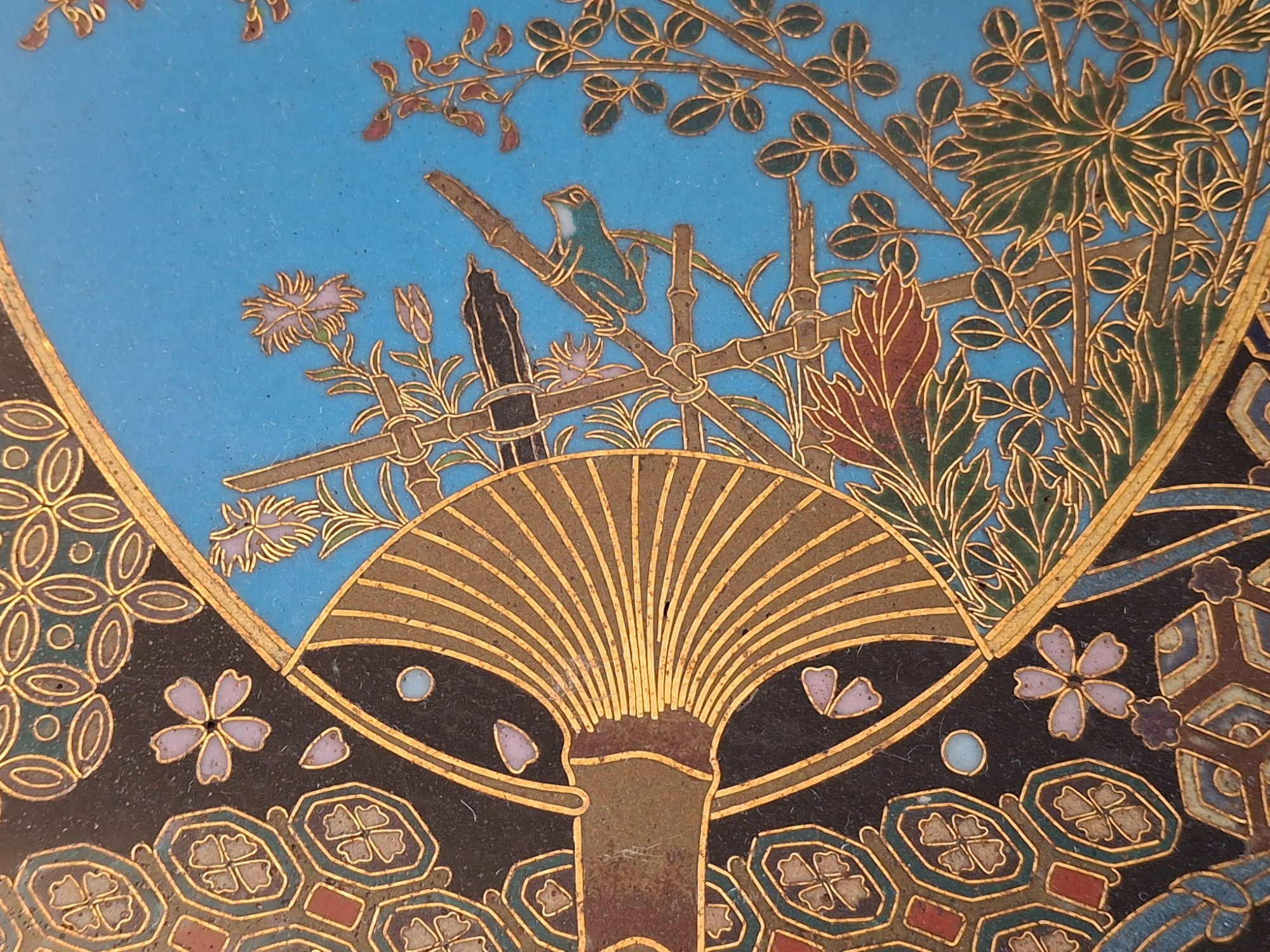
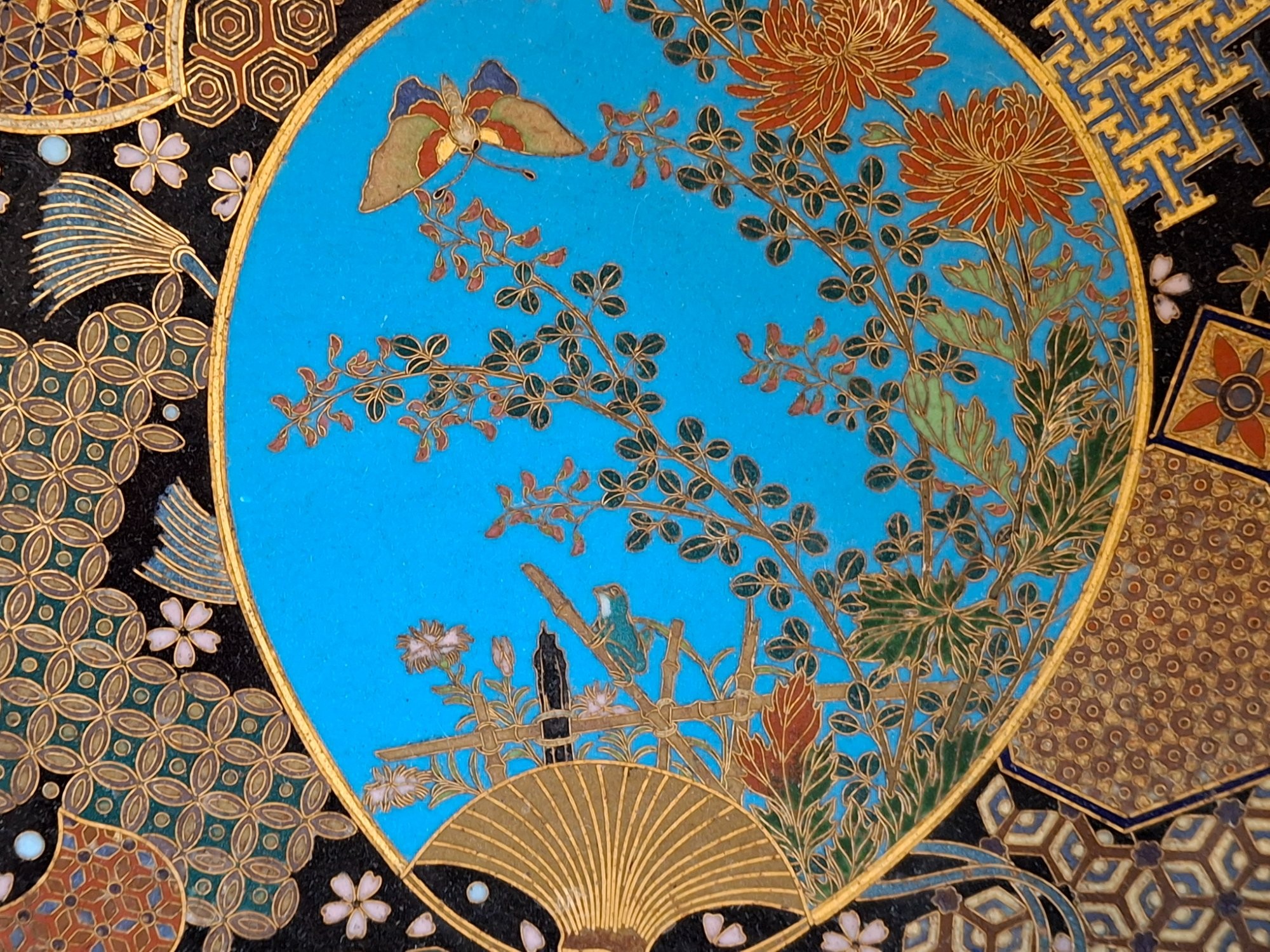
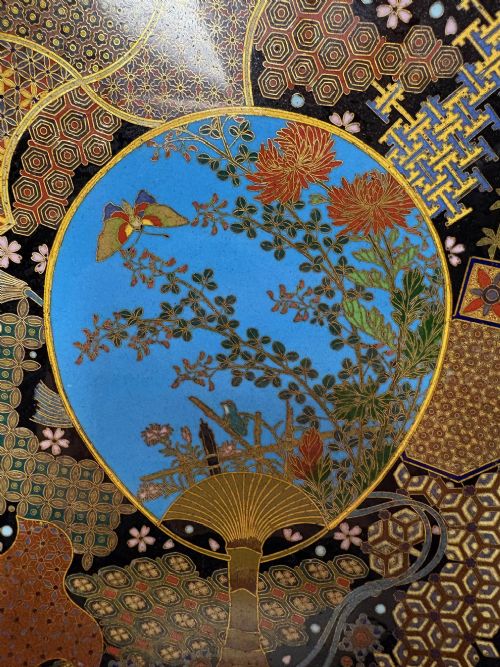
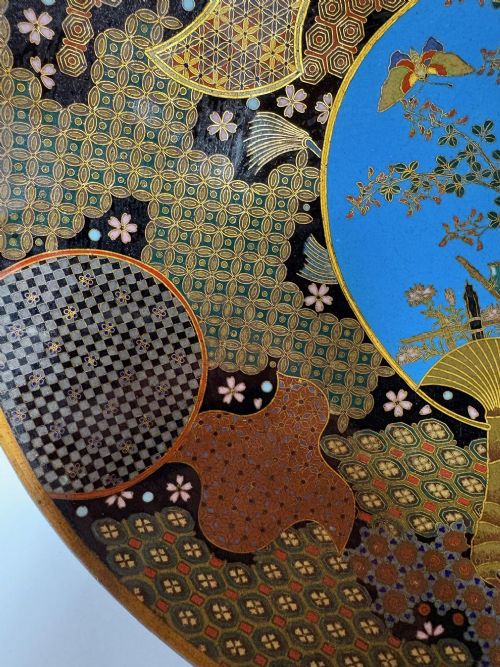
A superb late 19th century Japanese cloisonné enamel charger. The copper body is worked in exceptionally fine gilt wires with a fan‑shaped cartouche of chrysanthemums, butterfly and inconspicuous frog, on a sky‑blue ground, framed by a luxurious brocade of geometric and floral patterns. Reverse with pale blue counter‑enamel decorated with cloud‑scroll spirals; original gilt rim. A striking, exhibition‑quality example of Meiji shippo-yaki.
The density of the pattern and the quality of the specialised wirework suggest a highly competent workshop Master, possibly that of Ota Toshiro or Gotō Seizaburō, both technically accomplished cloisonne artists of late nineteenth century Japan. The dish exemplifies mature style, characterized by meticulous wirework, complex ground treatments, and a refined balance between pictorial imagery and decorative pattern of tight, textile-inspired geometric designs.*
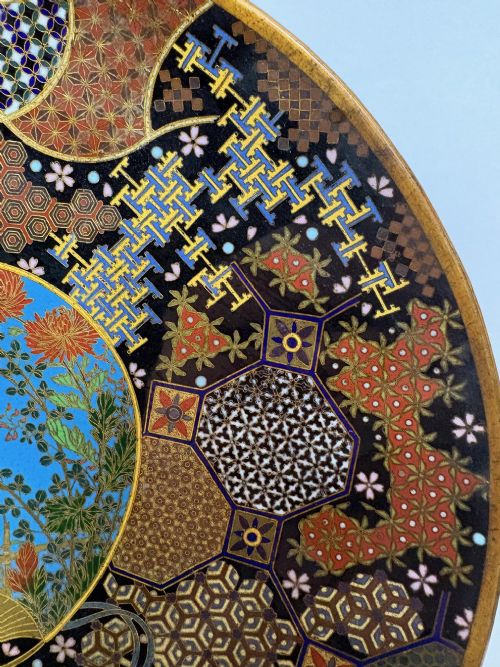
Condition: Excellent condition, with no cracks, chips, restorations, or enamel losses. The enamels retain their original luster and depth, and the wirework remains crisp throughout. Some enamel firing pin-pricks as per normal and gentle rubbing to gilt rim. Reverse with a few age related patination spots. Overall superb / museum quality.
Diameter = 30.5cm
The ultra-fine “brocade” (nishiki) ground, uchiwa fan cartouche and pale blue spiral counter‑enamel are characteristic of the Kyoto school that developed after the international expositions of the 1870s–90s, strongly influenced by masters such as Namikawa Yasuyuki and Seizaburo Goto of Honcho-dori, Yokohama.
Context: Cloisonné (shippo-yaki) became one of Japan’s most admired export arts in the Meiji era.
Dragoncharger Antiques has dated this Japanese Cloisonne Charger Plate to the 1890s.
Specialising in early japanese cloisonne, edo enamel artisan period.
You can view the stock and full dealer information on the Dragoncharger Antiques Profile Page
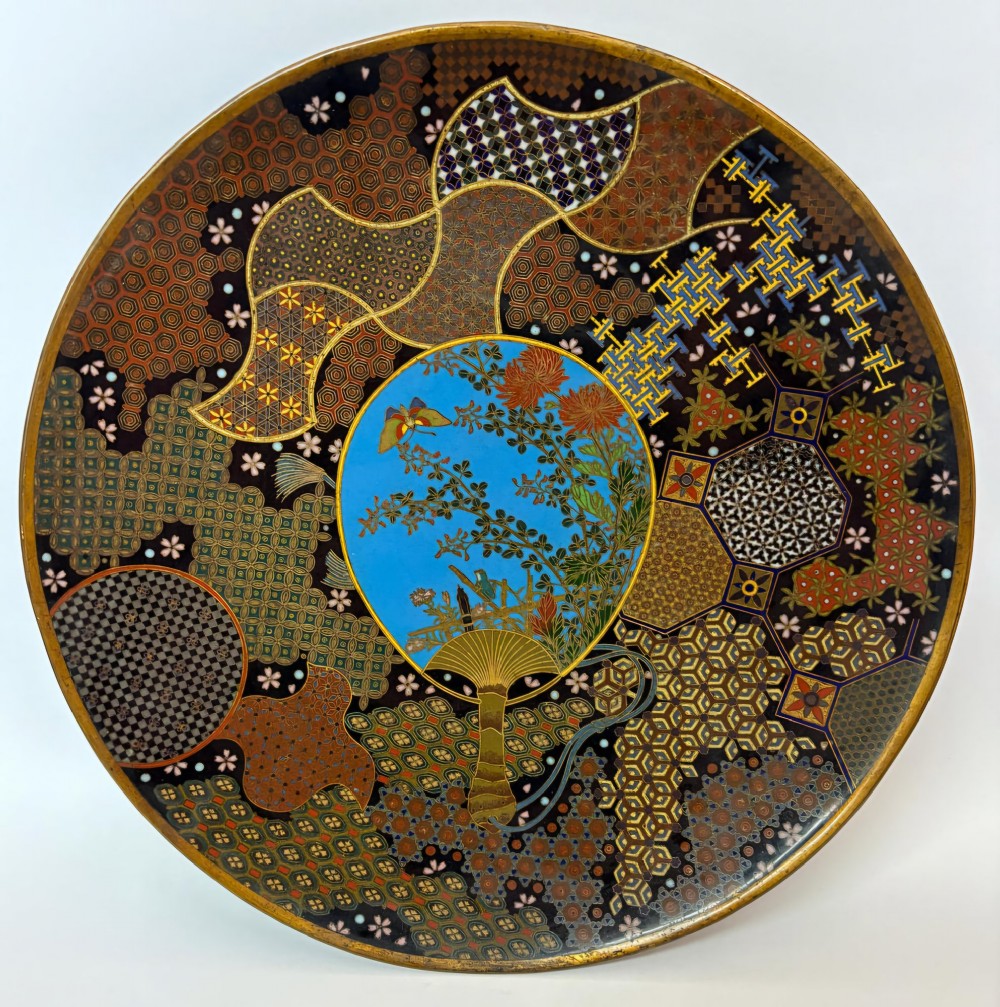
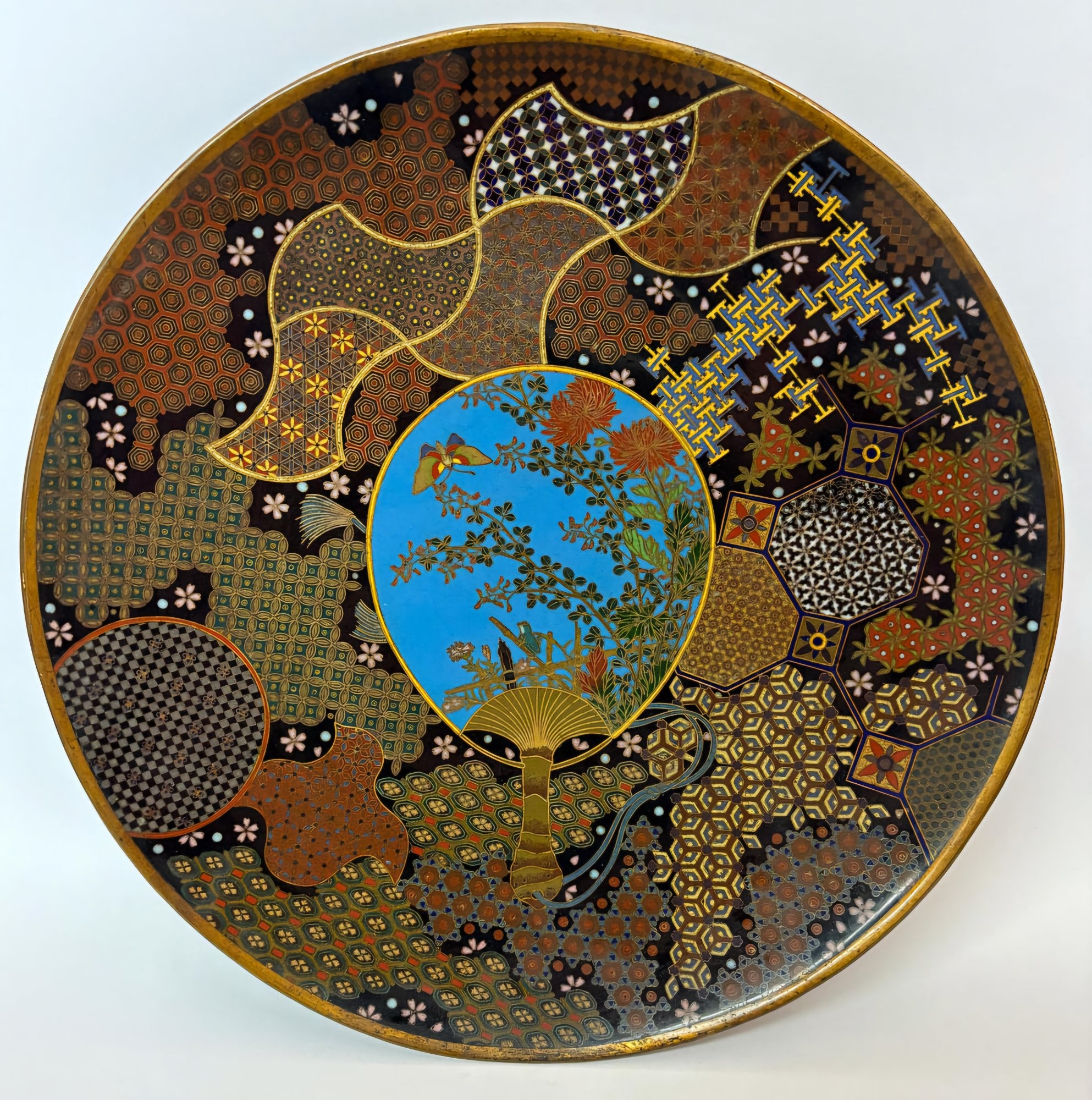
Masterpiece Japanese Cloisonne Charger. Chrysanthemums, Butterfly and Frog. Circa 1890.