


Japanese Bronze Charger
A japanese bronze charger brings heavy metalwork, fine silver inlay and elaborate Meiji period scenes directly to a wall or table.
Japanese Bronze Charger
When you search for a japanese bronze charger, you encounter heavy metal decorative plates and dishes produced primarily during the Meiji period and the nineteenth century. These wide pieces span from decorative dishes to huge display chargers measuring up to forty centimetres across.
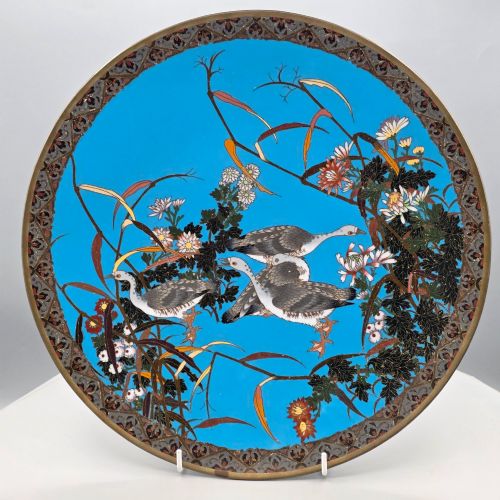
The most common examples on this page feature elaborate pictorial scenes or powerful creatures such as dragons, koi and geese rendered in mixed metals and bronze. Makers applied intricate onlaid and inlaid details in copper, brass and silver wire to create striking visual depth against the dark bronze base.
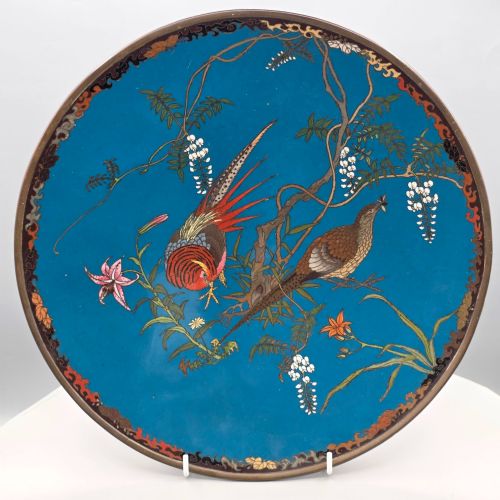
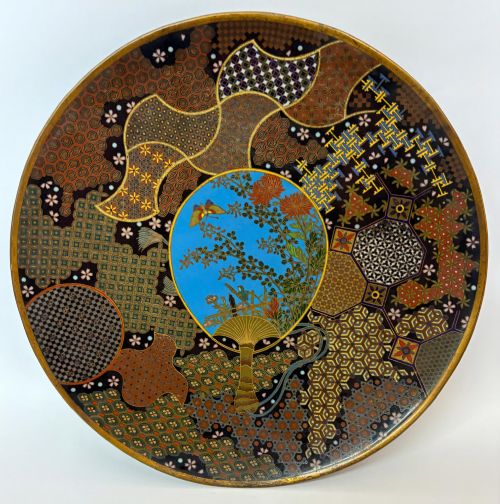
Pieces frequently originate from the later nineteenth century, capturing the height of Japanese metalwork artistry exported during the Victorian era. You also find related cloisonne enamel works on copper, brass and porcelain bases that share the same decorative vocabulary.
How they were made
These works rely on cast bronze foundations shaped into wide plates and chargers, often augmented with mixed-metal elements in copper, brass and silver. Artisans hammered, chased and patinated the metal surfaces to achieve deep tonal contrasts.
Decoration typically involves intricate onlaid and inlaid metalwork, where separate metallic motifs are fixed onto the bronze ground or set into carved channels. In many related pieces, fine brass or silver wire creates delicate cell structures for cloisonne enamel infill.
Listings feature items dated from the Edo period through the Victorian Meiji era, utilising bronze, brass, copper and silver wire.
What varies in quality
Quality reveals itself in the precision of the metal inlay and the sculptural relief of the onlaid figures, where master workshops achieved remarkable anatomical detail in dragons, deities and natural scenes. The complexity of the mixed-metal palette, combining different patinas of copper, brass and silver, elevates certain examples above simpler production pieces.
The ambition of the composition also dictates distinction, moving from standard floral arrangements to dramatic narratives featuring Mount Fuji, fierce dragons or leaping koi across a vast surface. Signed pieces by notable makers and workshops reflect a higher tier of artistry and execution.
Nogawa·Jomi Eisuke·Kinkozan·Komai
The Japanese Bronze Charger Glossary
- Meiji Period
- The era in Japanese history spanning from 1868 to 1912, characterised by extensive artistic production and international export. Most metalwork chargers date from this dynamic timeframe.
- Onlaid
- A technique where distinct metallic elements are applied in relief directly onto the surface of the bronze base. This method creates strong tactile dimension in figures and motifs.
- Inlaid
- A method where decorative metals like silver wire or copper are hammered into recessed channels carved into the bronze. It allows for precise, flush linear designs across the plate.
- Mixed Metal
- The combination of different metallic alloys such as bronze, brass, copper and silver within a single composition. This practice produces varied naturalistic colours and textures.
- Totai Shippo
- A specialised technique involving enamel applied over a porcelain body rather than traditional metal. Examples sometimes mimic the appearance of textured surfaces like tree bark.
Japanese Bronze Charger: Frequently Asked Questions
How were these chargers displayed?
Large chargers were traditionally displayed on specially constructed stands or hung securely on walls to showcase their intricate metalwork and pictorial narratives.
Their substantial weight and wide diameters made them prominent decorative focal points within nineteenth-century interiors.
What subjects appear on the metalwork?
Common subjects include mythical dragons, leaping koi, geese among flowers, and figures such as Hotei or Benzaiten.
Artists also depicted specific landscapes like winter lake scenes and Mount Fuji using mixed-metal onlays.
How do I identify a Meiji piece?
Meiji pieces are identified by their characteristic nineteenth-century manufacturing techniques, distinct patination, and the integration of mixed metals.
Signatures or stamps from established workshops further help anchor pieces to this prolific era of Japanese export art.
What is the difference between inlay and onlay?
Inlay involves sinking wires or thin sheets of silver and copper flush into carved channels within the bronze base.
Onlay places distinct metallic motifs directly onto the surface in high relief, creating a more tactile and sculptural effect.