
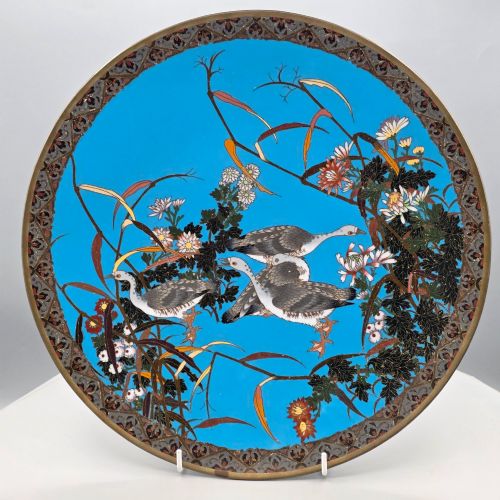
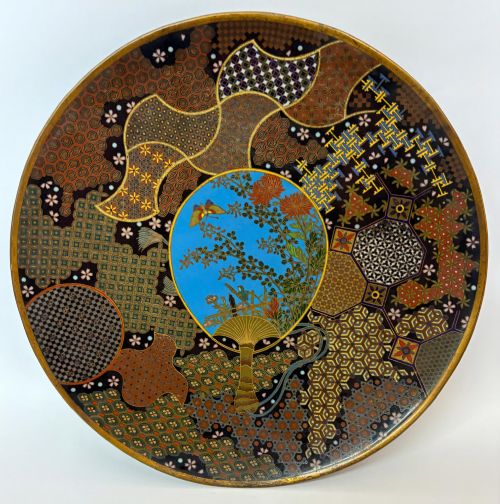


Antique Cloisonne Platter
An antique cloisonne platter brings dense metalwork and brilliant glass enamels together in a decorative vessel made for display.
Antique Cloisonne Platter
An antique cloisonne platter typically takes the form of a broad decorative charger, deep tray, or flat plate originating from Japanese workshops during the late Edo and Meiji periods. These vessels function primarily as visual centerpieces, presenting intricate imagery formed on metal bases.
The objects span decades from the mid-nineteenth century through to nineteen hundred, showing distinct shifts in scale and pictorial subject matter from traditional symbolic creatures to expansive landscapes. Collectors encounter substantial circular chargers alongside occasional octagonal or square variants designed for surface placement.
How they were made
Artisans built these platters by soldering thin brass or copper wire onto metal or porcelain bodies to create raised partitions known as cloisons. These individual cells were then filled with coloured enamel pastes before undergoing multiple firings and polishings to achieve a smooth finish.
Certain variations utilise a base of porcelain or wood beneath the metal and wire structure, while specialised techniques incorporate textured tree bark effects or cinnabar lacquer into the design.
Several platters feature startled frogs caught mid-hop amongst autumn chrysanthemums.
What varies in quality
The refinement of the wirework and the density of the enamel fill largely separate standard output from masterwork pieces. Finer platters display microscopic wire precision forming complex plumage, scales, or facial expressions without visible pitting in the vitreous paste.
Scale and ambition also dictate the tier of an item, as fifty-centimetre chargers requiring extensive multi-stage firing demand a higher level of technical control than smaller cabinet plates.
Kinkozan
The Antique Cloisonne Platter Glossary
- Cloisonne enamel
- A decorative metalwork technique where fine wire is soldered to a body to form compartments that hold glass paste. This method creates detailed pictorial surfaces after firing.
- Charger
- A large ornamental plate or platter intended for display on a wall or stand rather than for serving food. These pieces form the majority of large format metalwork.
- Totai Shippo
- Japanese wire-enamel work applied over a porcelain body rather than a traditional metal base. This technique combines ceramic forms with metallic cell partitions.
- Meiji Period
- The era of Japanese history lasting from eighteen sixty-eight to nineteen twelve, noted for exceptional decorative arts production. Works from this time often exhibit advanced technical mastery.
- Ho-o bird
- A mythical Chinese and Japanese phoenix symbol frequently depicted in traditional metalwork and textiles. It represents auspicious themes and imperial grace.
Antique Cloisonne Platter: Frequently Asked Questions
How do I display an antique cloisonne platter?
These decorative chargers suit heavy-duty wall hangers or specialised sturdy display stands due to their substantial weight. Placing them away from direct sunlight preserves the vibrancy of the enamel colours.
Ensure the support grips the rim securely without placing undue pressure on the wire cells. Their broad diameters make them effective focal points on large sideboards or tables.
What subjects appear on these platters?
Common motifs include dragons, Ho-o birds, koi fish, cranes, and seasonal flora such as chrysanthemums and irises. Human figures such as samurai and deities also appear on select examples.
Many designs incorporate traditional auspicious symbols intended to convey longevity, good fortune, or natural harmony. The imagery reflects the prevailing artistic concerns of nineteenth-century Japanese craft.
How do I distinguish Edo period pieces from Meiji items?
Late Edo pieces often date from the mid-nineteenth century and tend to feature robust forms with bold, traditional iconography. Meiji period items frequently show increased technical finesse and finer wirework as production scaled up.
Examining the weight, base metal, and signature style helps narrow down the decade of manufacture. Specific workshops developed distinct colour palettes across these transitional decades.
Are these platters fragile?
The enamel surface consists of fused glass, meaning sharp impacts can cause chipping or cracking to the delicate compartments. Handling requires clean, dry hands to protect both the metal wire and the polished finish.
Normal dusting with a soft cloth keeps the surface clean without risking moisture damage to the exposed metal edges or backings.