
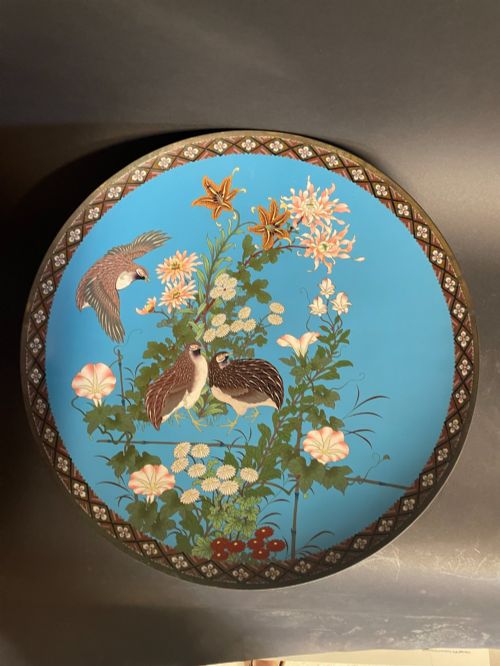
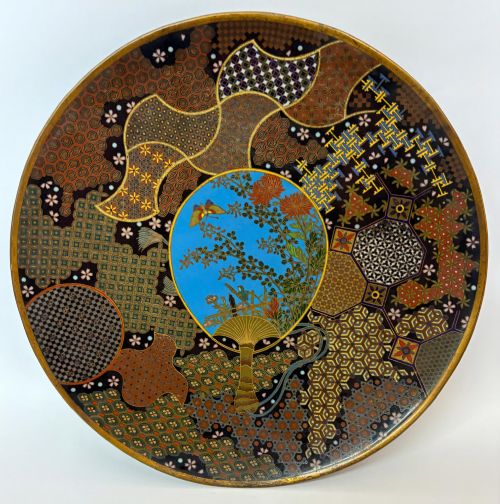


Floral Cloisonne Plate
A floral cloisonne plate brings intricate metalwork and vibrant enamel into any room, offering traditional craftsmanship from the Meiji period.
Floral Cloisonne Plate
A floral cloisonne plate represents detailed metal and enamel craftsmanship originating primarily from the Meiji period. When searching for a floral cloisonne plate, buyers encounter various forms including large chargers, medium plates, octagonal trays, and decorative dishes.
The pieces available span several decades, featuring examples from eighteen seventy through nineteen hundred as well as general nineteenth century items. These decorative objects display natural motifs such as chrysanthemums alongside birds, butterflies, frogs, landscapes, and auspicious symbols.
Japanese workshops produced these items in various sizes, ranging from medium plates to large chargers and decorative dishes. Collectors will find that most examples showcase traditional techniques applied to copper, brass, or bronze foundations.
Materials and construction methods
Artisans constructed each floral cloisonne plate using metal bases of copper, brass, or bronze. Craftsmen soldered thin metal wires, known as cloisons, onto the metal body to form intricate cellular compartments.
Workers filled these tiny wire compartments with coloured enamel paste before firing the piece in a kiln. After firing, craftsmen ground and polished the surface to achieve a smooth finish where the metal wires define every petal and leaf.
Distinguishing finer examples
Quality in a floral cloisonne plate depends heavily on the precision of the wirework and the complexity of the enamel infill. Finer pieces demonstrate thinner, more exact wire outlines that create intricate pictorial details without visible flaws in the coloured glass paste.
The sophistication of the subject matter also separates standard production from superior work. Exceptional items incorporate multiple motifs, such as birds or landscapes, alongside balanced compositions and clean polishing across the entire surface.
Kinkozan
The Floral Cloisonne Plate Glossary
- Cloisonne
- Enamelwork in which coloured pastes are contained within compartments formed by thin metal strips soldered to a metal foundation. This technique allows for intricate multi-colored designs across decorative plates and chargers.
- Charger
- A large ornamental plate or dish intended primarily for display rather than dining use. These substantial pieces frequently measure eighteen inches across.
- Meiji Period
- The era of Japanese history spanning from eighteen sixty-eight to nineteen twelve, noted for exceptional output in metalwork and enamel arts. Pieces from this time demonstrate remarkable technical refinement.
- Enamel
- A glassy substance fused to metal through high-temperature firing to provide colour and protection. Artisans ground this material into pastes before applying it to wire cells.
Floral Cloisonne Plate: Frequently Asked Questions
What is a floral cloisonne plate?
A floral cloisonne plate is a decorative metal dish featuring coloured enamel designs separated by thin wire partitions. These pieces originate from Japanese Meiji period workshops and showcase natural motifs.
Craftsmen built these items using copper or brass foundations, filling the wire cells with glass paste before firing and polishing the surface to a smooth finish.
How were these plates used?
These items served primarily as decorative chargers, trays, and dishes for display rather than functional tableware. Their intricate designs made them suitable for prominent placement in period interiors.
Collectors often placed larger chargers on stands or mounted them on walls to showcase the detailed enamelwork and pictorial subjects.
How do I date a cloisonne plate?
Dating relies on stylistic indicators, manufacturing techniques, and documentation associated with pieces from the Meiji period and the nineteenth century. Examples range from eighteen seventy to nineteen hundred.
Specific motifs, metal types like copper or brass, and signatures from known workshops help narrow down the production era of individual pieces.
What motifs appear on these plates?
Common decorative elements include chrysanthemums, birds, butterflies, frogs, landscapes, and various auspicious symbols. These subjects reflect traditional Japanese artistry from the late nineteenth century.
Artists arranged these natural and symbolic elements within intricate wire boundaries to create detailed pictorial compositions across the surface.