


Japanese Cloisonne Platter
These japanese cloisonne platter selections bring intricate metalwork and vibrant enamels into interiors, offering collectors striking historical centerpieces.
Japanese Cloisonne Platter
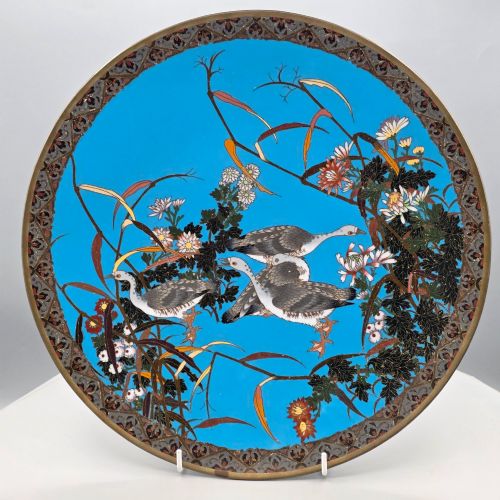
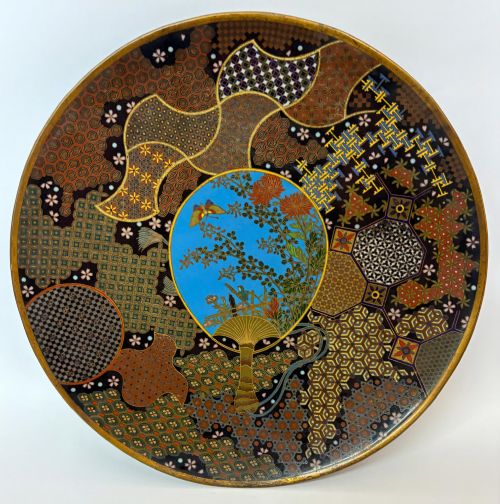
A japanese cloisonne platter is a decorative metal vessel adorned with detailed wirework and vitreous enamel, often taking the form of chargers, plates, and trays. These items display rich pictorial motifs including dragons, birds, flora, and landscapes originating from the Edo and Meiji periods.
The objects available span from the mid-nineteenth century through to nineteen hundred, demonstrating various scales from small dishes to massive chargers reaching fifty centimetres in diameter. Octagonal, square, and circular formats appear across the selection, providing diverse geometric profiles for display.
Meiji period examples dominate the current availability, alongside late Edo period items that exhibit traditional iconography such as Ho-o birds and leaping koi. Makers utilise copper and porcelain foundations, incorporating specialised techniques like Totai Shippo to achieve distinct surface textures.
Materials and Construction Techniques
Craftsmen built these pieces by soldering thin brass or copper wire onto metal or porcelain bases to outline complex decorative cells known as cloisons. These compartments were subsequently filled with coloured enamel pastes and fired multiple times in a kiln before the surface was ground flat and polished.
Specialised variations involved applying enamel directly onto porcelain or wood bodies, creating unusual textural effects like the simulated tree bark found in Totai Shippo pieces. Artisans secured compositions with bronze fittings and incorporated wood elements to complete the decorative structure.
Listings feature items dated from eighteen fifty through to nineteen hundred, encompassing both the Edo and Meiji periods.
Determinants of Quality and Execution
Quality rests upon the precision of the wirework and the complexity of the pictorial subject, where dense, finely executed compositions indicate superior craftsmanship. The density and subtlety of the colour palette also distinguish standard production from exceptional works.
The presence of signatures from recognised workshops adds distinct merit to individual pieces, marking them out among unsigned domestic wares. Surface preservation and the depth of the polishing further separate ordinary examples from masterworks.
Kinkozan
The Japanese Cloisonne Platter Glossary
- Cloisonne Enamel
- A technique where thin metal wires form raised cells on a metal base to hold coloured glass paste before firing. This method allows artisans to create intricate multicoloured patterns across flat plates and chargers.
- Totai Shippo
- A specific Japanese technique involving enamel applied directly onto a porcelain body rather than traditional metal. This method produces distinctive textured surfaces that often mimic organic materials like tree bark.
- Ho-o Bird
- A mythical phoenix symbolising virtue and grace frequently depicted in traditional Japanese metalwork. These creatures appear with elaborate plumage amid floral motifs on nineteenth-century chargers.
- Charger
- A large decorative plate designed primarily for display on walls or furniture rather than for serving food. These substantial vessels provide a wide canvas for elaborate narrative and naturalistic enamel scenes.
- Meiji Period
- The historical era spanning from eighteen sixty-eight to nineteen twelve characterised by a surge in refined decorative arts exported globally. Works from this time display exceptional technical mastery in metalworking and enamel.
Japanese Cloisonne Platter: Frequently Asked Questions
How were these platters used originally?
These large vessels served primarily as decorative chargers for display within elite interiors, showcasing the wealth and refined taste of their owners during the nineteenth century. They were mounted on stands or displayed on walls rather than utilised for dining.
Over time, they became prominent export commodities, prized by international collectors who valued the intricate metallurgical and enamel techniques developed in Japanese workshops.
What is Totai Shippo?
Totai Shippo refers to a specialised method where enamel is applied over a porcelain core instead of the usual copper foundation. This technique allows the piece to retain a ceramic substrate while displaying standard wirework compartments.
Articles created this way often feature textured grounds, such as simulated tree bark, combined with traditional bird or floral motifs typical of the Meiji period.
How do I date a Japanese cloisonne platter?
Dating relies on stylistic shifts, material composition, and the complexity of the wirework patterns. Pieces from the late Edo period often display bold forms and naturalistic motifs, while Meiji examples frequently exhibit extreme precision and varied palettes.
Signatures or specific construction traits, such as the use of particular base metals, also help anchor pieces within decades spanning from eighteen fifty to nineteen hundred.
How should I care for antique enamel?
Preserving these items involves keeping them away from direct sunlight to prevent colour degradation in the enamel. Gentle dusting with a soft, dry cloth is sufficient for routine maintenance.
Avoid using liquid cleaners or abrasive cloths on the metal wires and polished surfaces to protect the delicate boundaries between the enamel cells.