
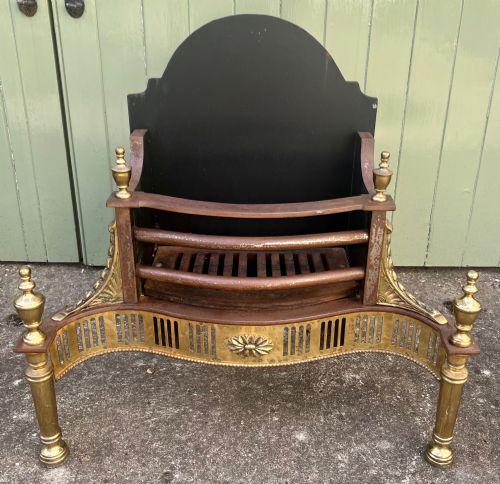
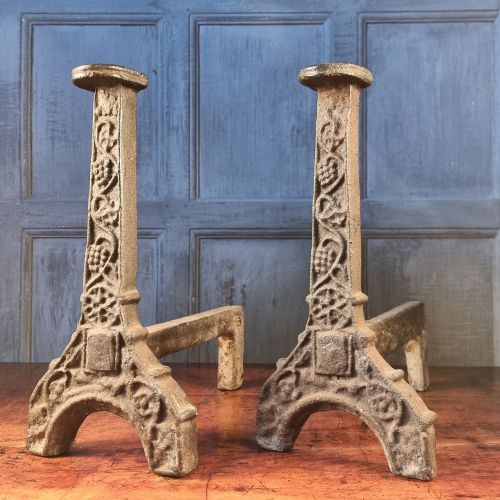
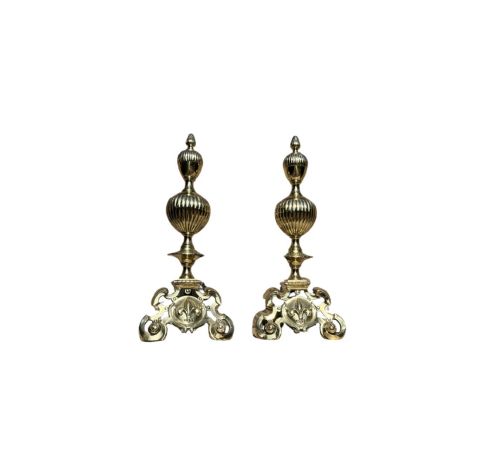
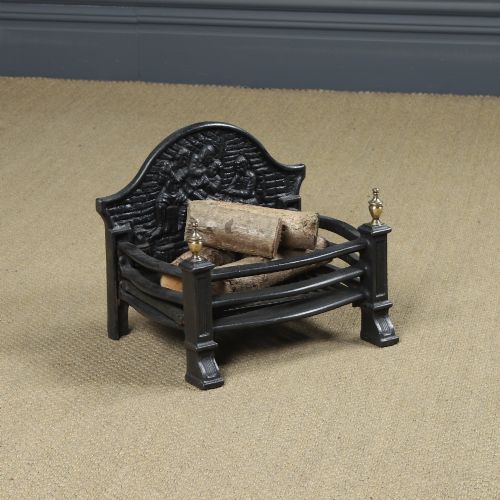
Hearth Fire Dogs
These hearth fire dogs anchor the open grate, holding logs in place while adding weight and presence to the chimney opening.
Hearth Fire Dogs
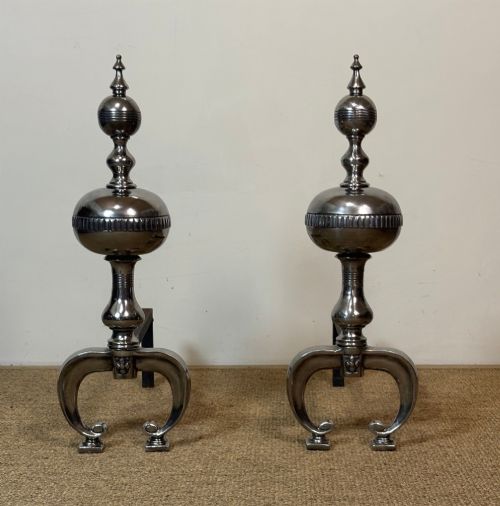
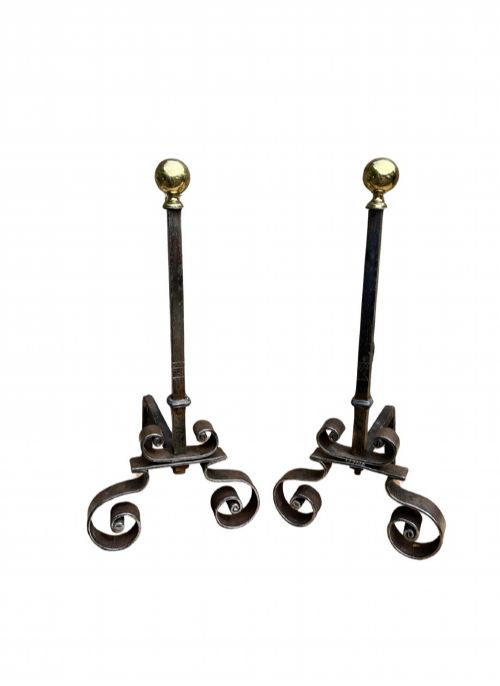
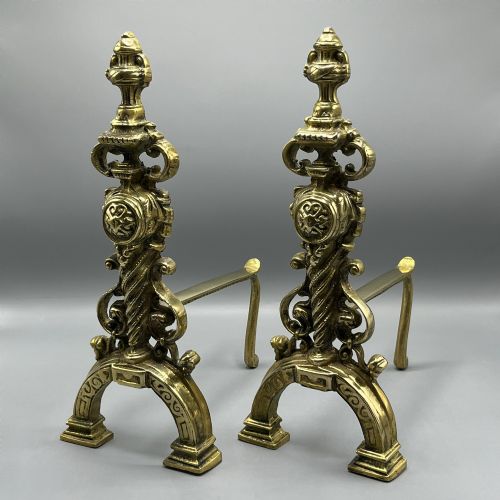
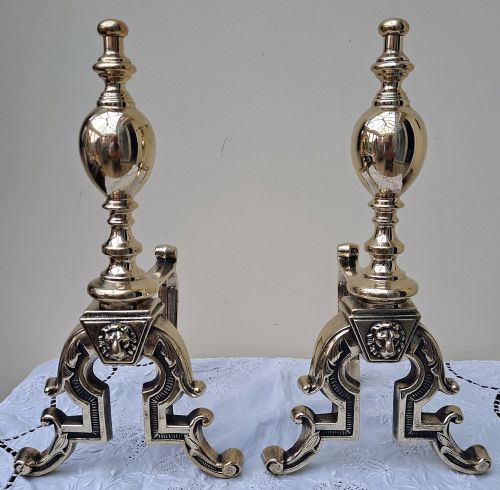
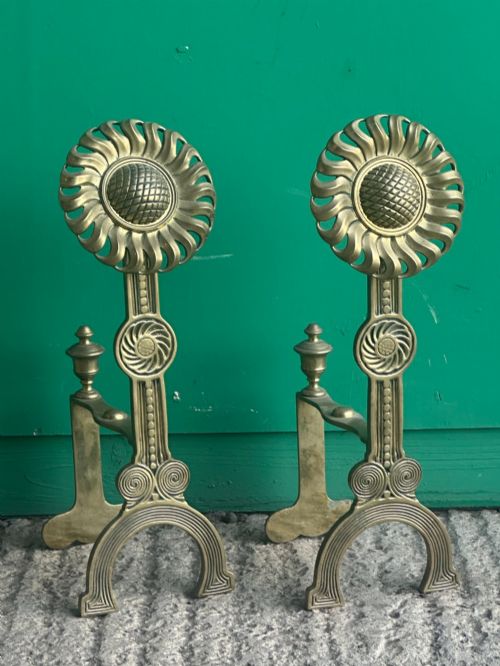
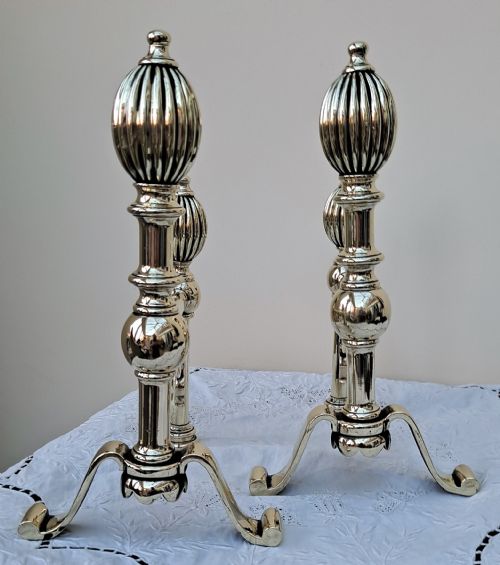
When you search for hearth fire dogs, you encounter heavy metal supports designed to flank the hearth and cradle split logs above the ash floor. The pieces gathered here span the nineteenth century alongside reproductions referencing earlier Gothic, Renaissance and neoclassical models.
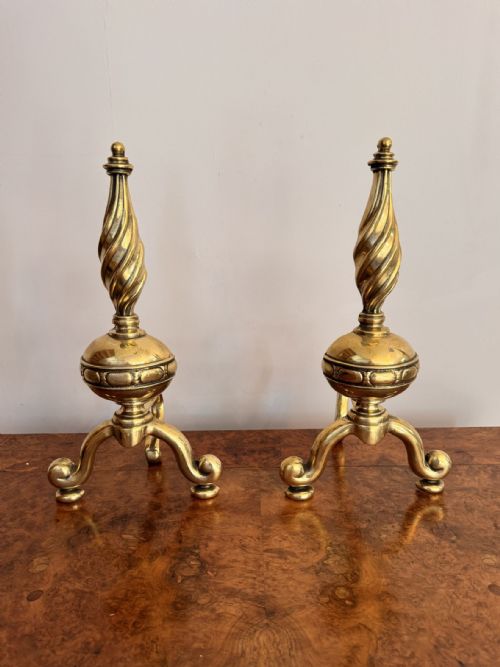
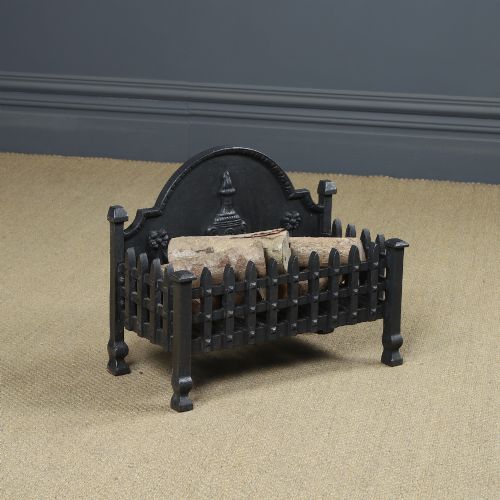
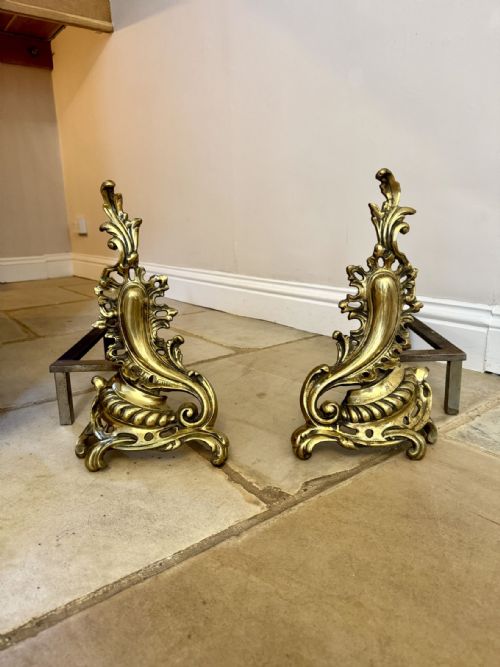
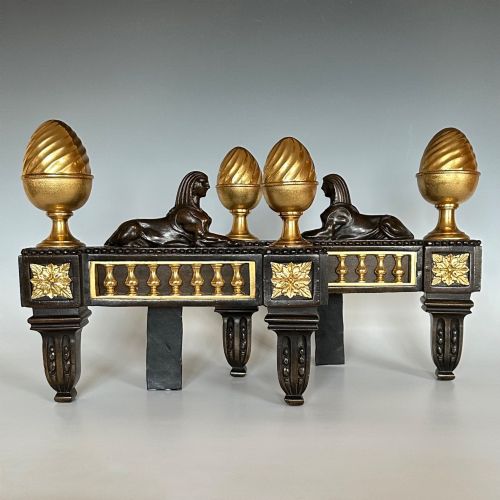
Most examples appear as matched pairs fashioned from brass, cast iron or wrought iron, often incorporating matching fire grates, fenders or tool rests. French chenets and English andirons share this functional lineage, serving simultaneously as structural firedogs and decorative focal points for the fireplace opening.
Materials and construction methods
Foundry work dominates the construction, utilising molten brass, iron and bronze poured into sand moulds to achieve crisp surface relief and solid structural mass. Cast components frequently undergo hand-chasing or polishing to accentuate details on rococo scrolls and figural mounts.
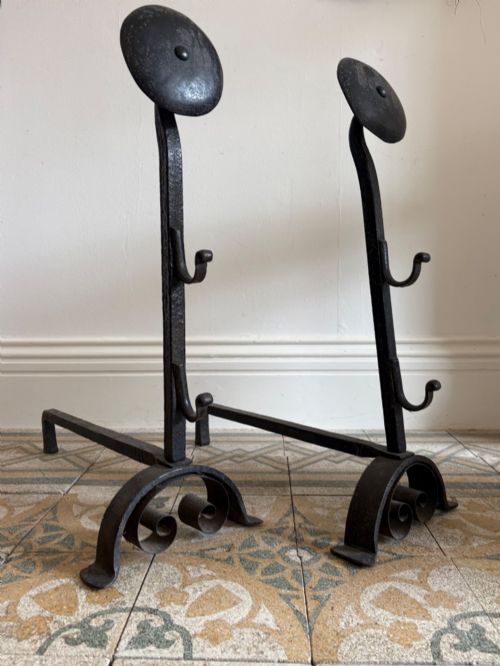
Wrought iron variants rely on traditional blacksmithing techniques, where bars are heated, hammered and riveted to form sturdy uprights and billet bars. Ormolu and gilt finishes apply fine layers of gold or brass alloys over bronze bases to produce enduring metallic lustre.
Periods represented stretch from the sixteenth century through the Victorian era up to early twentieth-century revivals.
Assessing quality and craftsmanship
Integration of secondary metals and fire-gilding indicates higher workshop standards, whereas flat, uniform machine casting points to later mass production. The crispness of assembly joints and stability of the upright billet bar reveal the maker's underlying structural competence.
The Hearth Fire Dogs Glossary
- Andiron
- A horizontal metal support with an upright pillar, used in pairs to hold logs in an open fireplace. They are synonymous with firedogs.
- Chenet
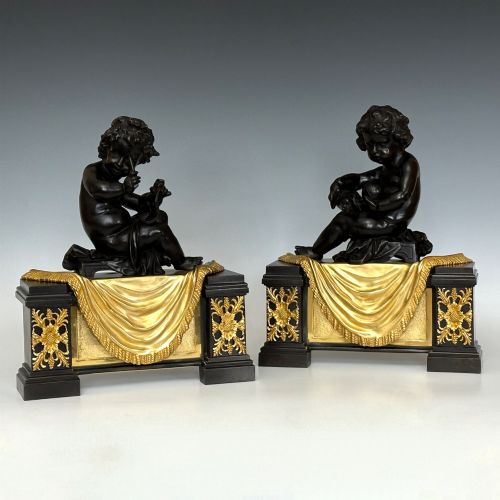
- The French term for an ornamental fire dog, frequently cast in bronze or ormolu during the eighteenth and nineteenth centuries. These pieces often feature elaborate figurative or rococo scroll designs.
- Billet bar
- The horizontal iron or brass bar extending backward from the upright front of a fire dog to support the burning logs. Its length determines the depth of the fuel bed.
- Ormolu
- Finely ground high-carat gold mercury-gilded onto a bronze base, producing a warm, enduring metallic sheen. It appears on French decorative fire dogs from the nineteenth century.
Hearth Fire Dogs: Frequently Asked Questions
What is the difference between fire dogs and andirons?
The terms are used interchangeably to describe the same supporting irons placed on either side of a hearth. Regional vocabulary and individual maker preferences historically dictated which name appeared on the workshop ledger.
Both serve the exact same mechanical purpose of lifting logs off the floor to allow air circulation beneath the fire.
How do I choose the right size for my fireplace?
Measure the width and depth of your hearth opening before selecting a pair, ensuring the billet bars fit comfortably inside the grate area without obstructing the fender. Height is largely an aesthetic choice determined by the proportions of the mantelpiece and chimney breast.
Larger monumental pairs require substantial hearth space to balance visually against surrounding stone or marble surrounds.
How do I clean antique brass and iron?
Dust accumulated from the hearth should be removed with a soft, dry brush to prevent scratching the aged patina on the metal surface. Avoid harsh chemical polishes that strip away historical darkening, opting instead for gentle beeswax on iron or mild soapy water on solid brass.
Preserving the natural oxidation ensures the piece retains its historical character and visual depth.