
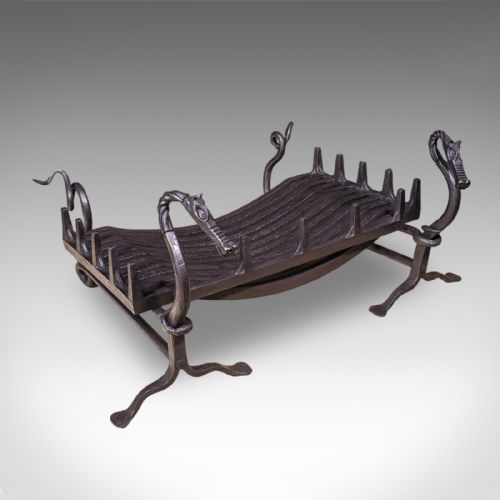
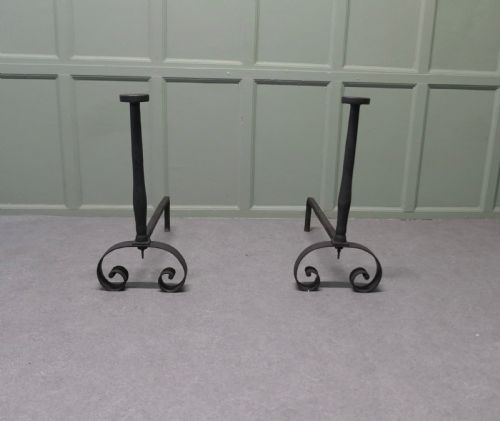
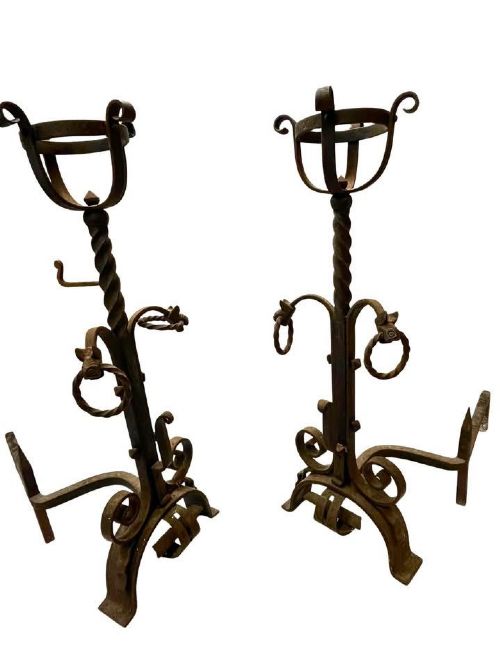


Traditional Iron Firedogs
Traditional iron firedogs anchor a hearth with practical strength, supporting logs above the hearth floor to improve airflow.
Traditional Iron Firedogs
Traditional iron firedogs support fuel wood within an open hearth, functioning as pairs of upright standards designed to keep logs elevated for better burning. These hearth accessories appear frequently in nineteenth-century Victorian forms, alongside earlier seventeenth-century and eighteenth-century examples.
Makers shaped these utilitarian objects for substantial inglenook fire grates and smaller domestic hearths alike. They often accompany fire baskets, grates, and matching fireside tool suites.
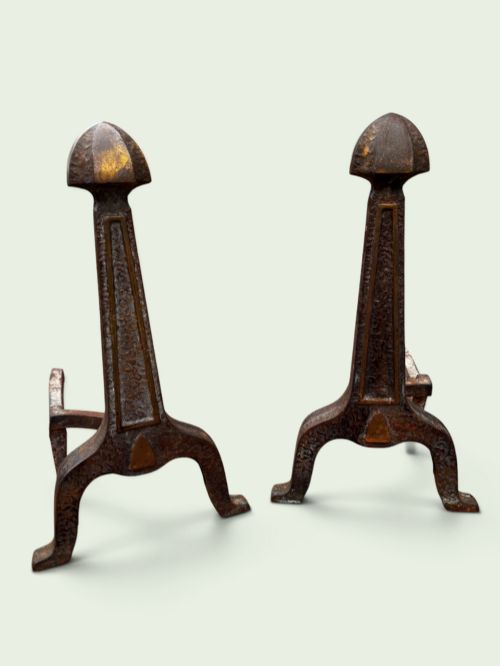
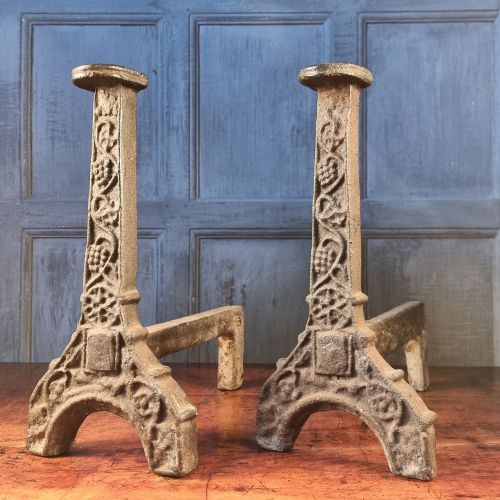
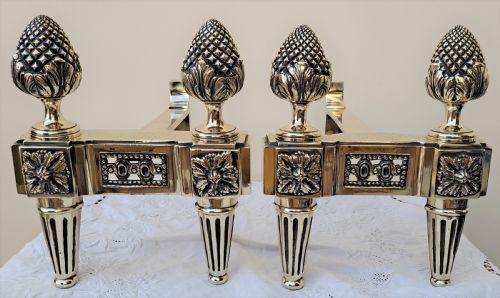
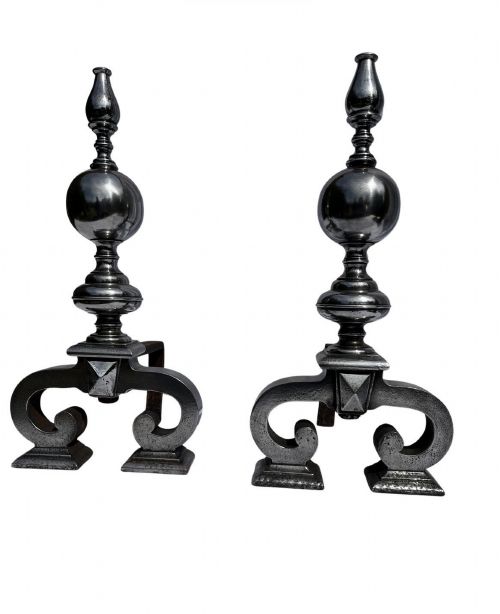
The inventory on this page ranges from heavy wrought iron and cast iron pairs to polished steel and forged iron variants. Buyers encounter simpler domestic designs alongside decorative Gothic revival and Arts and Crafts interpretations.
Materials and Making
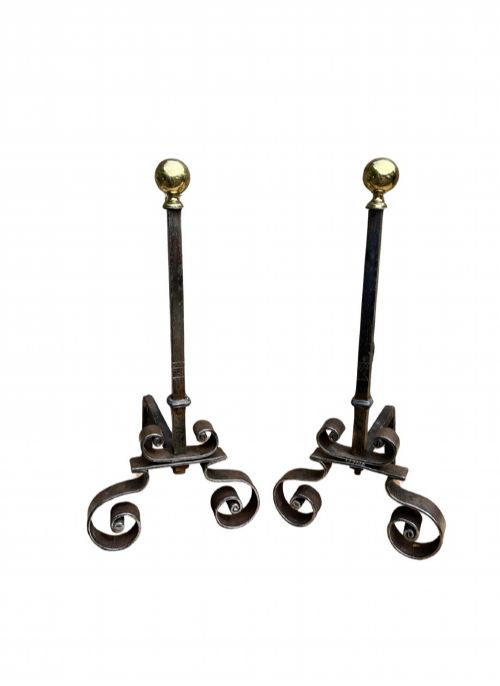
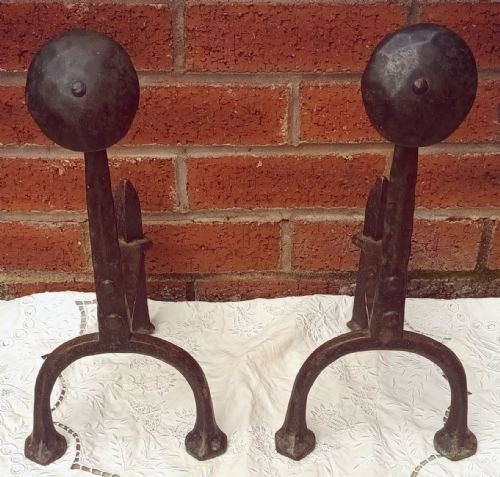
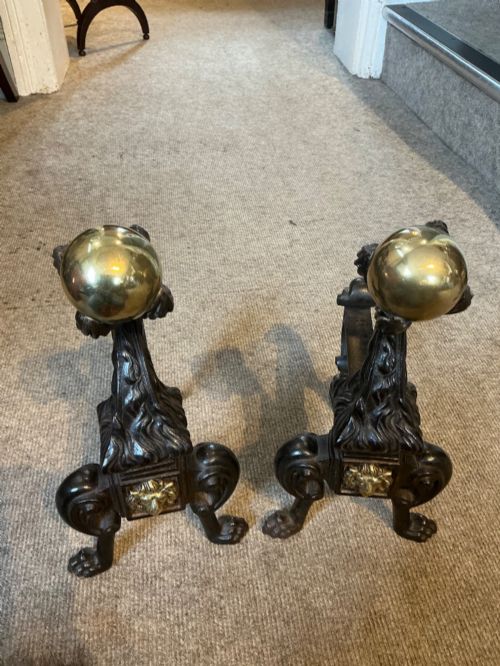
Blacksmiths and founders shaped traditional iron firedogs primarily through hand-forging wrought iron or casting molten iron in moulds. Wrought iron allows for hammered scrolls and sturdy shafts, whilst cast iron permits heavier body weights and relief ornamentation.
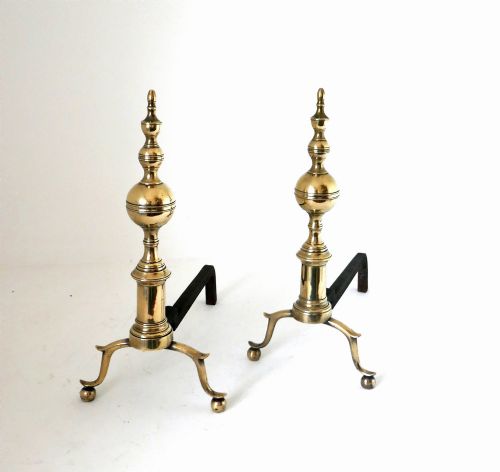
Many pairs combine these iron foundations with contrasting brass or copper elements, such as cast brass finials or decorative mounts riveted to the main body.
Materials across these hearth items include raw cast iron, forged iron, polished steel, copper, and bright brass.
Judging Quality
Quality in traditional iron firedogs rests upon the integrity of the metalwork and the balance of the proportions. Heavier, thicker sections of cast or forged iron indicate substantial utility rather than purely decorative output.
The refinement of surface finish, from neatly hand-hammered wrought details to crisp casting lines on decorative motifs, separates standard utility hardware from finer workshop production.
The Traditional Iron Firedogs Glossary
- Fire Basket
- A metal grate that holds coal or wood, frequently used in conjunction with firedogs. It sits between or upon the upright standards.
- Chenet
- The French term for a firedog or fire dog, often associated with more ornate cast brass or gilt metal designs. They served decorative as well as practical roles in continental hearths.
- Inglenook
- A large recessed fireplace space designed to accommodate heavy grates and firedogs. Such spaces require robust ironwork to withstand intense heat.
- Wrought Iron
- Iron that has been heated and hammered by hand into shape, showing distinct tool marks. This material provides high tensile strength for load-bearing hearth equipment.
Traditional Iron Firedogs: Frequently Asked Questions
What are traditional iron firedogs used for?
Traditional iron firedogs support logs off the hearth floor to allow air circulation underneath the fire. They also prevent rolling fuel wood from spilling out onto the room flooring.
Historically, they formed the central structural support for open hearth combustion before modern closed stoves became common.
How do I clean and maintain iron firedogs?
Maintenance involves brushing away ash and soot gently with a dry bristle brush after the metal cools completely. Avoid harsh chemical cleaners that strip protective oxide layers from the iron.
Applying a light coat of natural wax or specialised grate polish helps prevent moisture damage and surface corrosion.
Can I use antique firedogs in a working fireplace?
Many solid iron firedogs remain structurally sound for burning wood in an active open fireplace. Buyers should inspect pieces for deep structural cracking or extreme metal thinning from historical heat exposure.
Lighter decorative or purely brass-mounted pairs suit decorative hearth displays better than heavy daily burning.
How do I tell Victorian firedogs apart from earlier periods?
Victorian firedogs often incorporate revival aesthetics like Gothic Revival or Arts and Crafts styling alongside machine-assisted casting techniques. Earlier seventeenth and eighteenth-century examples display simpler hand-forged profiles with heavier forging marks.
Examining the assembly methods, such as hand-cut threads versus modern machine screws, helps clarify the manufacturing era.