



Black Iron Andirons
Black iron andirons anchor a hearth with severe utility, bringing heavy metalwork and practical warmth to a traditional fireplace.
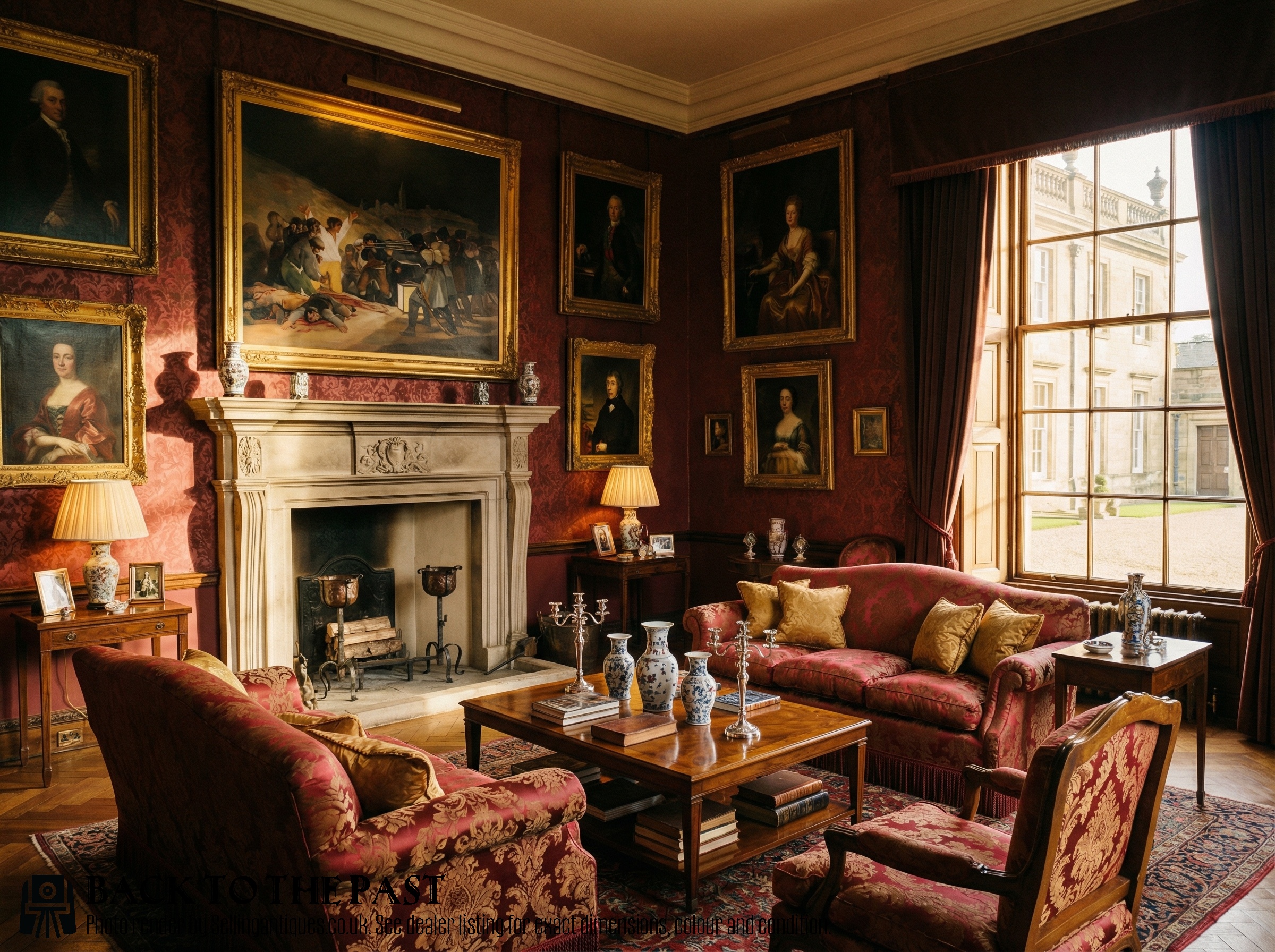
What black iron andirons are
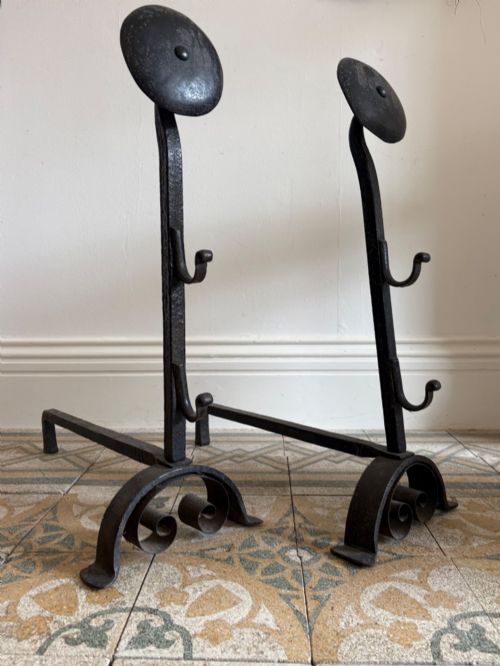
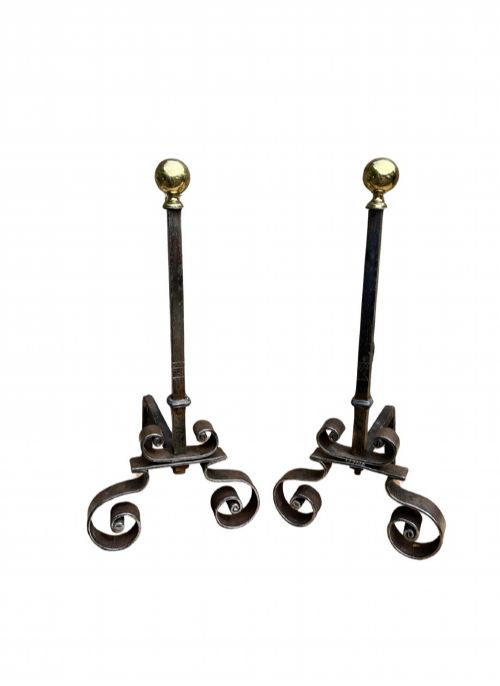
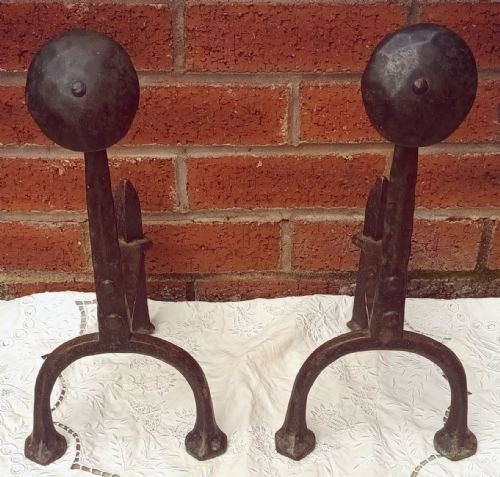
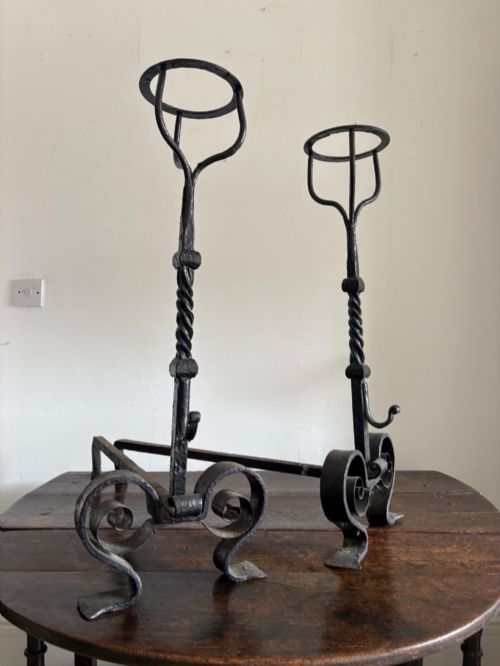
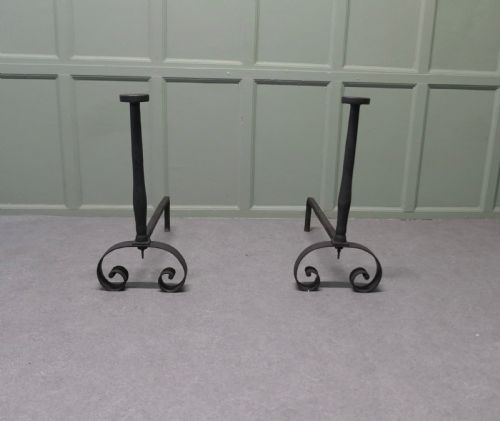
Black iron andirons are robust fireplace accessories designed to support logs above the hearth floor for better airflow and combustion. The selections here encompass sturdy pairs used historically to hold fuel in domestic and grand chimneys.
Most examples found on this page date from the nineteenth century, though earlier sixteenth-century forms appear alongside turn-of-the-century variations. These pieces range from simple French country shapes to elaborate Victorian and Gothic revival designs.
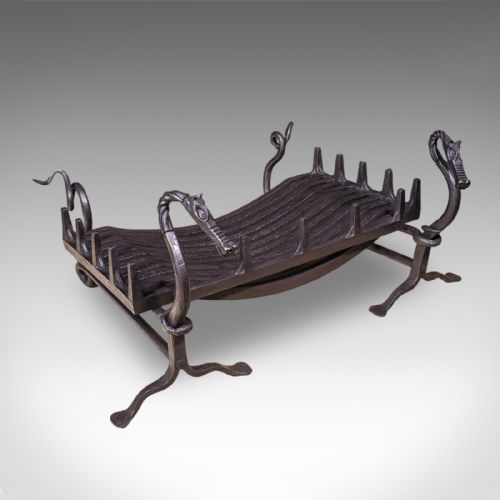
Forms extend beyond standard fire dogs to include heavy grates, fireside tool rests, and unusual planter adaptations. Origin points span English and French workshops, utilising the enduring strength of forged and cast metals.
How they were made
Makers shaped these utilitarian objects using cast iron and wrought iron, sometimes pairing them with copper elements for contrast. Heavy casting allowed for thick, durable forms capable of withstanding intense hearth temperatures over generations.
Wrought iron components required manual heating and hammering by blacksmiths, resulting in visible tool marks and robust structural joints. These techniques produced functional fire dogs built to bear the weight of heavy timber without buckling.
Retail Price Guide 2026
Typical UK retail prices for black iron andirons, calculated from the Sellingantiques database of over a million retail prices indexed since 2003. This retail price guide relies exclusively on Sellingantiques data; no external sources or auction records are used, so the figures do not describe the wider market.
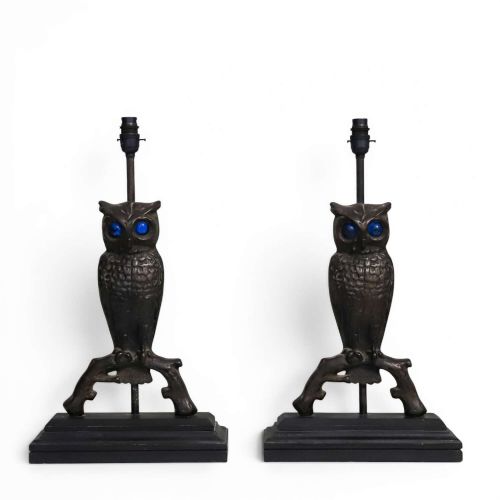
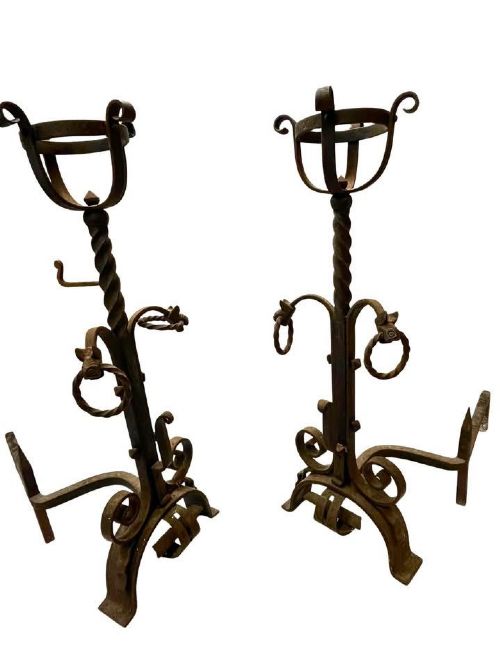
One unusual nineteenth-century pair doubles as planters, proving that even heavy hearth iron eventually finds a second life growing ferns.
What varies in quality
The distinction between standard hearth furniture and superior examples lies in the heft of the metal and the ambition of the design. Massive scale and heavy construction separate monumental pairs from lighter utilitarian items.
Stylistic detail marks the upper tier, where period characteristics such as Elizabethan dates, Art Nouveau curves, or Gothic revival motifs are executed with conviction. Proportion and structural integrity determine whether an iron pair remains an imposing architectural feature or a simple tool.
The Black Iron Andirons Glossary
- Andirons
- Supports made of metal used to hold logs in a fireplace. They typically feature a vertical front standard and horizontal bars extending backward.
- Fire dogs
- An alternative term for andirons, often used interchangeably in historical listings. These items support firewood above the ash bed.
- Wrought iron
- Iron that has been heated and hammered into shape by hand. This material shows fibrous textures and individual forge marks from the smith.
- Cast iron
- Molten iron poured into a mould to create solid forms. This technique permits repeatable patterns and heavy, thick construction suited to high heat.
Frequently Asked Questions
What are black iron andirons used for?
These metal supports elevate firewood inside a hearth to allow air to circulate underneath for a better burn.
Historically they also held spits for roasting meat or served as decorative focal points in the main room of a house.
How do I date an old pair?
Dating relies on stylistic clues, construction methods, and occasionally cast dates or maker marks found on the metal.
Sixteenth-century examples display Elizabethan forms, while nineteenth-century pieces often reflect Gothic revival or French country tastes.
Can I use them in a modern fireplace?
Most antique pairs remain structurally sound enough to hold logs in an active hearth.
Buyers should check the dimensions and weight to ensure the pair fits the specific depth and width of their chimney opening.
Are they all made of iron?
While the primary material is cast or wrought iron, some pieces incorporate copper elements for decorative contrast.
Heavier examples rely entirely on dense iron casting to withstand intense heat and heavy timber.