



Heavy Iron Fireback
These heavy iron fireback pieces protect the rear wall of a hearth while radiating heat back into the room, combining utility with decorative presence.
Heavy Iron Fireback
A heavy iron fireback is a substantial plate placed against the back wall of an open fireplace to shield the brickwork from intense heat and direct warmth forward. When searching for a heavy iron fireback, a buyer encounters forms ranging from simple cast plates to elaborate fireplace accessories complete with grates, fenders, and andirons.
The pieces appearing on this page span several distinct periods, with Victorian examples heavily represented alongside items dated to the seventeenth, eighteenth, and nineteenth centuries. Styles vary from functional church refectory designs to decorative pieces featuring neoclassical revival, carolean revival, and tudor revival motifs.
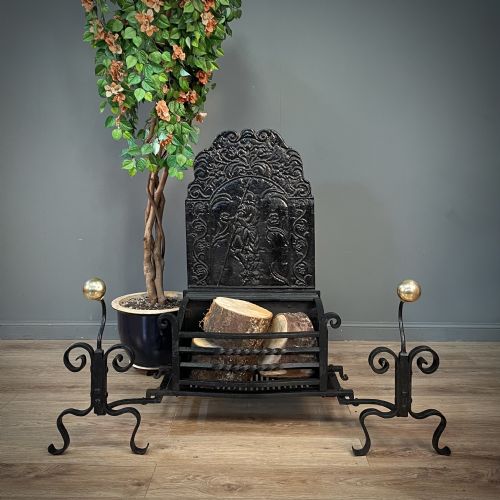
Many items function as fireplace reflectors, designed to stand behind fire baskets or grates to maximise thermal output. Forms include standalone firebacks as well as integrated fireplace grates and fire baskets incorporating matching andirons.
How they were made
Makers utilised cast iron and wrought iron as the primary materials for these fireplace components, occasionally incorporating brass elements for decorative contrast. Molten metal was poured into open sand moulds or carved beds to create the thick plates necessary to withstand continuous high temperatures.
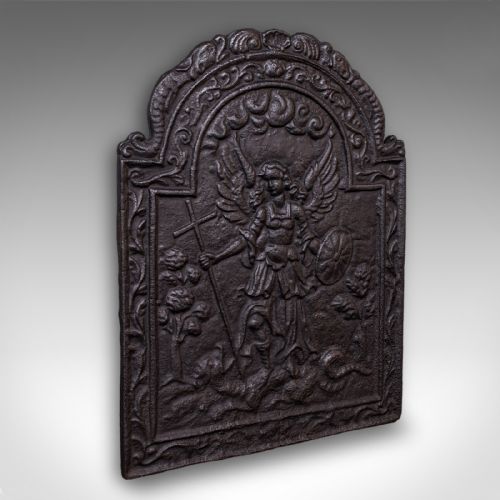
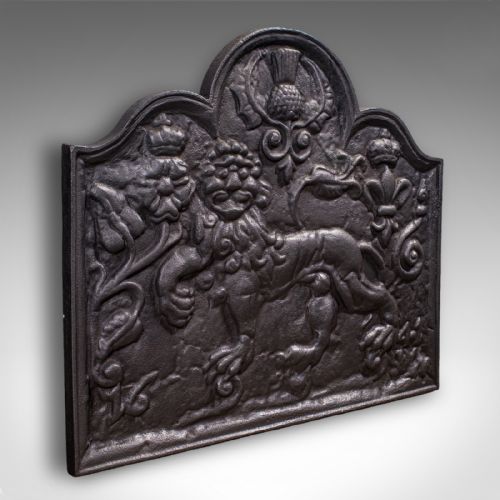
Surface decoration was achieved through relief casting, pressing carved wooden patterns or heraldic designs into the moulding sand before pouring the iron. This technique produced crisp motifs including tree of life patterns, horse and rider scenes, and classical revival ornamentation.
Listings feature items from the seventeenth century through to the Victorian era, utilising cast iron, wrought iron, and brass.
What varies in quality
Quality in a heavy iron fireback rests upon the depth and clarity of the relief casting, where sharper details and well-defined pictorial subjects distinguish finer plates from plainer utility items. The thickness of the metal plate and the integrity of the casting influence durability against thermal shock.
The presence of integrated hardware such as matching andirons, fire baskets, and grates elevates the completeness of an installation. Stylistic coherence across revival periods, from baroque influences to neoclassical detailing, separates standard utilitarian plates from ambitious decorative commissions.
The Heavy Iron Fireback Glossary
- Fireback
- A heavy iron plate placed at the rear of an open hearth to protect the masonry and reflect heat into the room. These panels often feature cast relief designs.
- Andirons
- Supporting metal bars or firedogs placed horizontally in a hearth to hold logs above the base of the fireplace. They frequently accompany fire baskets and heavy iron firebacks.
- Fire Basket
- An iron grate designed to hold coal or wood within an open fireplace, often positioned directly in front of a protective fireback.
- Relief
- A sculptural technique where figures or ornamentation project from a flat background. Iron firebacks utilise this method to display pictorial scenes and heraldic motifs.
- Reflector
- A polished or positioned metal surface intended to bounce thermal radiation back into the living space. Many fireplace accessories serve this dual structural and reflective purpose.
Heavy Iron Fireback: Frequently Asked Questions
What is a heavy iron fireback used for?
A heavy iron fireback serves to protect the masonry at the back of an open fireplace from the damaging effects of intense heat. By absorbing warmth during a fire, the thick metal plate gradually radiates that heat back into the room long after the flames die down.
Beyond its thermal function, a fireback acts as a striking decorative focal point within the hearth. Many historical examples feature elaborate relief work, transforming a purely utilitarian barrier into a piece of functional ironwork art.
How do I choose the right size fireback?
Choosing the correct size involves measuring the width, height, and depth of your fireplace opening to ensure the heavy iron fireback fits securely against the rear wall. It needs to stand stable and upright, often resting against the bricks or supported by the hearth base.
Consider the scale of any accompanying fire basket, grate, or andirons when selecting a plate. A well-proportioned fireback leaves adequate clearance around the edges while providing sufficient surface area to shelter the brickwork behind the fire.
Can I use an antique fireback in a modern fireplace?
Many antique heavy iron firebacks function effectively in modern open hearths provided the dimensions and weight are properly accommodated by the structure. The iron must be able to withstand active wood or coal fires without sustained thermal stress leading to fracture.
Checking the condition and thickness of the iron ensures it remains sound for daily use. Professional installation and careful placement against the back wall guarantee both safety and efficient heat reflection.
How do I date a cast iron fireback?
Dating a heavy iron fireback involves examining the stylistic motifs, casting methods, and lettering styles present in the relief work. Pieces associated with specific revivals, such as neoclassical or carolean revival styles, often reflect nineteenth-century interpretations of earlier aesthetics.
Early examples from the seventeenth or eighteenth centuries display simpler or more primitive casting characteristics and subject matter, such as distinct historical figures or early heraldry. Comparing the surface texture and edge finishing helps contextualize the manufacturing period.