


Cast Iron Fireback
A cast iron fireback protects the brickwork behind an open hearth while throwing heat back into the room.
Cast Iron Fireback
A cast iron fireback sits upright against the back wall of an open fireplace, serving both as a functional heat reflector and a decorative centrepiece. When searching this phrase, buyers encounter heavy rectangular or arch-topped iron plates shaped by historical revivals and functional hearth needs.
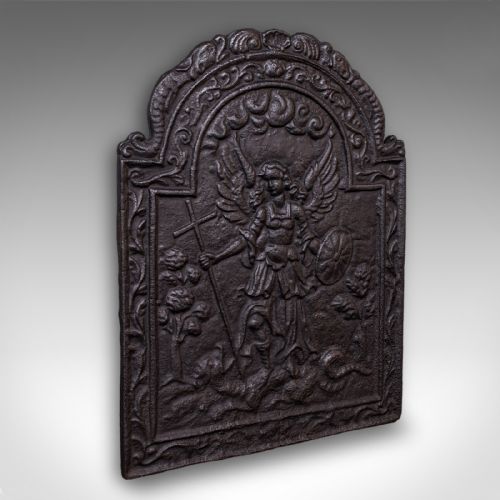
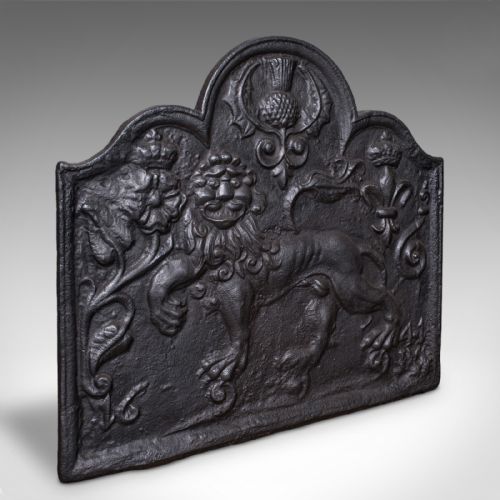
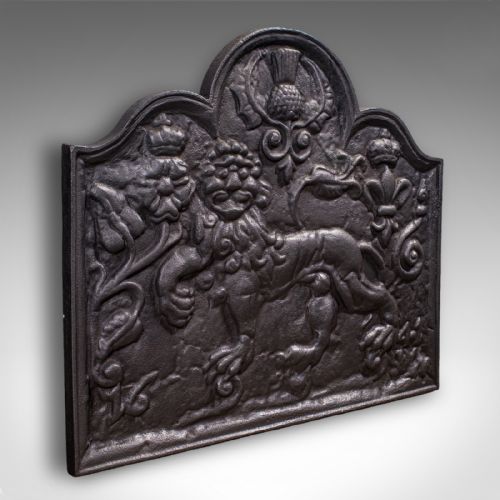
The pieces available span multiple eras, with Victorian interpretations forming a large share alongside earlier seventeenth-century examples and eighteenth-century French designs. Makers utilised styles ranging from plain utility panels to elaborate heraldic motifs, coats of arms, and figural scenes depicting horses, riders, or trees of life.
Many listings incorporate these plates into complete fireplace setups alongside grates, andirons, and fire baskets. The proportions vary from small hearth inserts to very heavy, large plates designed for substantial chimney breasts.
Quality factors in antique firebacks
The crispness of the cast relief separates standard utilitarian plates from superior decorative examples. Sharp details in heraldic crests, armour, or figural scenes indicate careful pattern-making and skilled foundry work.
Substantial thickness and heavy metal mass distinguish the better pieces, ensuring structural resilience against repeated thermal expansion and contraction in an active fireplace. The depth and artistic ambition of the moulding, whether French baroque or English neoclassical revival, determine the visual impact within the hearth.
Cast Iron Fireback Retail Price Guide 2026
Typical asking prices for cast iron fireback among the pieces listed under this phrase on Sellingantiques today, from the lower quarter to the upper quarter. They describe what is for sale here now, not the wider market.
One stubborn seventeenth-century fireback bears the initials CR and the year 1635, proving that ironworkers liked to leave their mark.
The Cast Iron Fireback Glossary
- Fireback
- A heavy iron plate placed at the rear of an open fireplace to protect the masonry and radiate heat. These panels often feature moulded relief designs.
- Andirons
- Horizontal metal supports placed in a hearth to hold logs above the floor for better airflow. They frequently accompany firebacks and fire baskets in complete fireplace setups.
- Register Grate
- A metal fireplace insert featuring a built-in damper to control the draught and smoke flow up the chimney. These units combine the grate and back into a single fitted assembly.
- Heraldic
- Pertaining to coats of arms, crests, and lineage symbols. Many period firebacks display royal or family heraldry cast directly into the iron surface.
Cast Iron Fireback: Frequently Asked Questions
How do I install a cast iron fireback?
A cast iron fireback stands upright against the rear brick wall of an open fireplace, usually supported by the hearth floor or resting directly behind the fire grate.
Because these plates are exceptionally heavy, ensure the base sits level and stable so the iron cannot tip forward during use.
Can I use an antique fireback in a working fireplace?
Most period cast iron firebacks were specifically engineered to endure high temperatures and protect masonry from intense heat.
Thermal shock can crack old iron if fires are built too large too quickly, so warm the metal gradually during initial use.
How do I clean soot off an iron fireback?
Remove loose ash and soot with a stiff natural bristle brush, avoiding harsh chemical strippers that can damage the aged surface patina.
Lightly applying a traditional grate polish or black lead helps protect the iron from moisture when the hearth is inactive.
How do I identify the age of a fireback?
Dating relies on stylistic clues such as neoclassical revival motifs, Victorian gothic framing, or seventeenth-century carolean designs moulded into the iron.
Inscriptions, initials, and specific casting techniques also offer clues to the period, though many revival pieces imitate earlier centuries.