


Black Iron Fire Back
A black iron fire back absorbs the heat from the hearth and radiates it back into the room with quiet efficiency.
Black Iron Fire Back
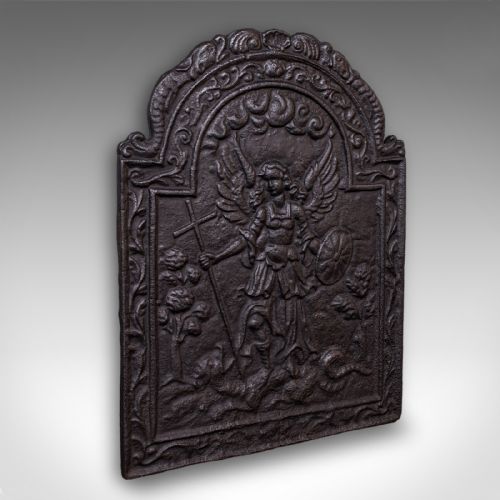
A black iron fire back protects the rear wall of an open hearth from intense heat while adding weight and structure to the fireplace. These heavy metal plates stand upright against the brickwork, often serving as decorative focal points within the room.
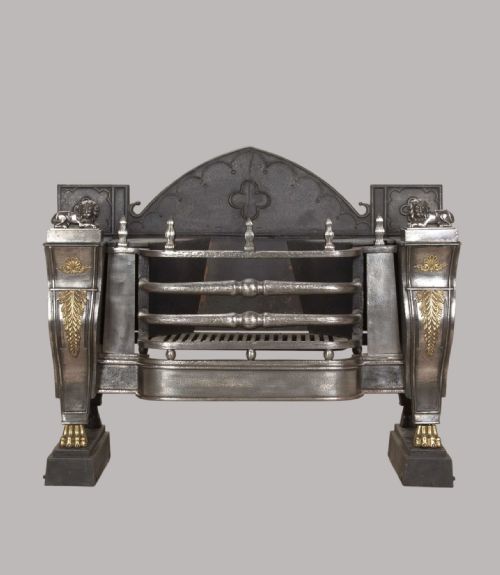
The pieces found here span several distinct periods including the Georgian and Victorian eras, alongside revivals of Neoclassical, Carolean, Tudor, and French Baroque styles. Forms range from standalone firebacks and fireplace reflectors to complete fire baskets, grates, and sets with andirons.
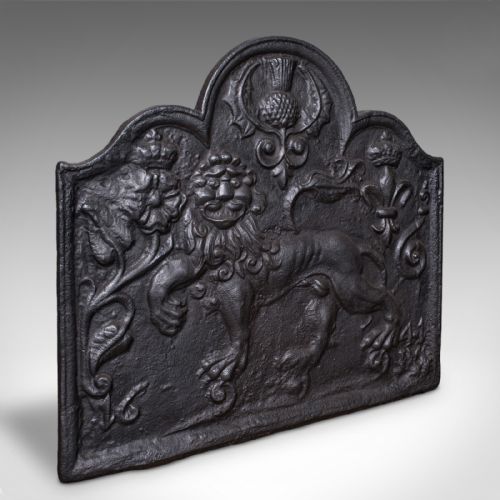
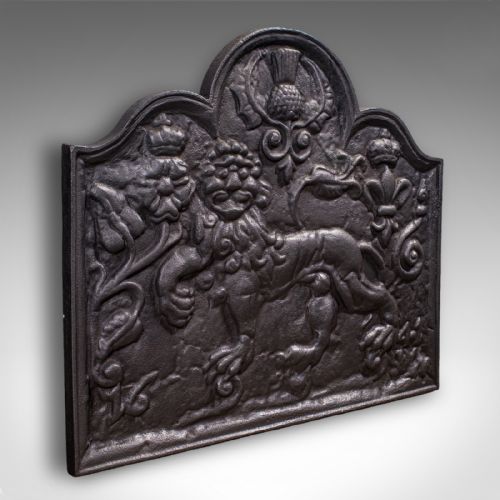
Most examples originate from English workshops, with occasional continental pieces appearing from sources such as Germany and France. They take the form of heavy rectangular or arch-topped plates bearing relief designs, trees of life, heraldry, or classical motifs.
How they were made
The primary material used is cast iron, chosen for its ability to absorb and slowly release heat without degrading under high temperatures. Wrought iron and brass appear in auxiliary components such as grates, fenders, and andirons.
Molten metal was poured into sand or open-face moulds to create the heavy relief plates, capturing intricate pictorial details like armour, eagles, and floral patterns. Subsequent finishing involved hand-dressing the metal and applying protective black coatings.
Black Iron Fire Back Retail Price Guide 2026
Typical asking prices for black iron fire back among the pieces listed under this phrase on Sellingantiques today, from the lower quarter to the upper quarter. They describe what is for sale here now, not the wider market.
Materials across the inventory include heavy cast iron, wrought iron, and occasional brass fittings.
What varies in quality
Quality rests in the depth and crispness of the cast relief work, where deeply incised details and sharp heraldic or botanical motifs distinguish superior artistic output. Thicker, heavier castings demonstrate greater material substance and structural integrity.
The sophistication of the stylistic revival dictates the character of the piece, moving from simple utilitarian plates to elaborate Neoclassical and Carolean compositions. Complete assemblies incorporating matching grates and andirons represent a higher level of domestic provision.
The Black Iron Fire Back Glossary
- Fireback
- A heavy metal plate placed at the back of an open fireplace to reflect heat into the room and protect the masonry. These plates often carry decorative relief designs.
- Andirons
- Horizontal metal bars supported by vertical legs, placed in a hearth to hold logs for burning. They frequently accompany firebacks and grates.
- Fire basket
- An open metal basket designed to hold coal or wood within a fireplace. They are often paired with a heavy iron back to complete the hearth arrangement.
- Reflector
- An alternative term for a fireback, referencing its function in throwing radiant heat forward from the rear of the hearth. These pieces are cast in iron to maximise thermal retention.
- Relief
- Sculpture or ornamentation projecting from a flat background. Firebacks utilise this technique to display pictorial scenes, coats of arms, and botanical patterns.
Black Iron Fire Back: Frequently Asked Questions
How do I install a fire back?
A heavy fire back simply stands upright against the rear brickwork of an open hearth, held in place by its own weight and sometimes supported by the grate itself.
Ensure the hearth floor is level and capable of supporting the substantial weight of the cast iron before positioning the plate.
Can I use an antique fire back with a modern fire?
These pieces were built for traditional open hearths burning wood or coal, and they function effectively in standard working fireplaces.
Check the dimensions of your opening carefully to ensure the plate fits comfortably against the back wall without obstructing the flue.
How do I clean a cast iron fire back?
Remove soot and ash with a soft brush and dry cloth, avoiding harsh chemical cleaners that can damage the historical surface.
Light applications of grate polish or oil help maintain the dark finish and protect the iron from moisture in the chimney.
What styles are common in these pieces?
Victorian and Georgian examples dominate, often drawing on Neoclassical, Carolean, Tudor, and French Baroque revival aesthetics.
Designs range from plain functional plates to elaborate compositions featuring coats of arms, trees of life, and classical figures.