
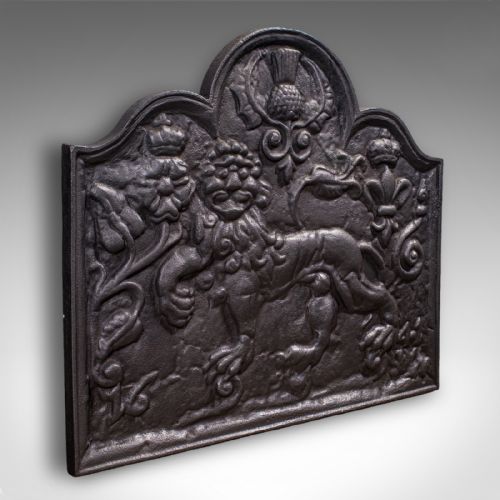


Relief Cast Fireback
A relief cast fireback stands at the heart of an open hearth, protecting the masonry while radiating steady warmth.
Relief Cast Fireback
A relief cast fireback sits against the rear wall of an open fireplace, shielding the brickwork from intense heat and throwing warmth back into the room. When searching for a relief cast fireback, you encounter heavy iron slabs shaped for hearth use.
The pieces listed span multiple eras, stretching from early seventeenth century examples to later nineteenth century revivals. You are most likely to meet Victorian interpretations on this page, often cast in the neoclassical or Tudor revival styles.
Forms vary from simple rectangular plates to heavy setups complete with matching andirons and grates. Some pieces take the form of specific subjects, such as a horse and rider dating around seventeen hundred, while others display heraldic motifs.
How they were made
These items are produced using cast iron, poured into open moulds carved in sand or loam on the foundry floor. The molten metal takes the impression of the carved relief, capturing raised figures, borders, and dates.
Wrought iron components occasionally appear alongside the main plate, particularly in associated grates and fenders. The resulting plates are immensely heavy and solid, built to withstand centuries of direct fire exposure.
Listings feature cast iron as the primary material, alongside occasional wrought iron elements found in grates and fenders.
What varies in quality
The crispness of the cast relief separates the finest plates from standard utilitarian examples. Sharply defined figures and deep moulding indicate careful pattern-making before the pour.
Thickness and weight also mark the distinction between everyday hearth guards and substantial decorative statements. Pieces that incorporate coherent matching fireplace accessories demonstrate a higher level of original ensemble planning.
The Relief Cast Fireback Glossary
- Cast Iron
- An iron-carbon alloy poured into moulds in a liquid state. It forms the heavy, rigid body of every fireback.
- Andirons
- Horizontal support bars placed in a fireplace to hold logs above the hearth floor. They frequently accompany larger fireback arrangements.
- Neoclassical Revival
- A nineteenth-century artistic movement drawing inspiration from classical Greek and Roman motifs. Pieces in this style feature formal symmetry and classical ornamentation.
- Fireplace Reflector
- An alternative term for a fireback reflecting radiant heat into the room. This function protects the rear brickwork from thermal shock.
Relief Cast Fireback: Frequently Asked Questions
What is a relief cast fireback used for?
A relief cast fireback protects the rear wall of an open fireplace from the damaging heat of the flames. By absorbing the thermal energy, it eventually radiates heat back out into the living space.
Beyond practical protection, these heavy iron plates provide a decorative focal point for the hearth. They often feature raised figures, coats of arms, or historical scenes.
How do I install a fireback?
Most firebacks simply stand upright against the rear brickwork of the hearth, held in place by their own considerable weight. Some setups utilise feet or lean slightly backward for added stability.
Ensure the hearth floor is level and clean before placing the iron plate into position. It should sit securely behind the grate or logs without rocking.
Can I use an antique fireback with a real fire?
Traditional cast iron firebacks are designed specifically to withstand intense heat from open fires. Their primary purpose in historic homes was enduring high temperatures while protecting the masonry.
Sudden extreme temperature changes can occasionally stress old metal. Building moderate fires initially helps the iron adjust to active use.
How do I date a cast iron fireback?
Dating relies on stylistic clues, manufacturing techniques, and any cast dates or maker marks present on the face. Seventeenth-century pieces often display simpler, deeper relief work, while Victorian revivals copy earlier aesthetics.
Examining the thickness of the iron and the sharpness of the casting provides further context. Revivals from the nineteenth century frequently mimic Tudor or seventeenth-century styles with distinct Victorian proportions.